I know I wasn't the best at sticking to a schedule before I went to college but it feels like I'm falling behind on writing this blog more than usual. I'm trying to catch up on the games, films and television shows I've missed while at college but I'm also working on a short game for when I go back to college, so it looks like I've done something over the summer. Finding time to write as well as do all of that can be tricky.
Today's blog came to mind a couple of weeks after reading a comment on my post about the reaction to the Rainbow Six: Siege stage demo at E3. It took a while but the comment, by Jazzby Bass, made me think about the different ways male and female sex workers were portrayed in Fallout: New Vegas. The latest Tropes Vs Women video had just been posted, so that was a topic of conversation:
"Oddly enough, my biggest beef with
the video is Fallout: New Vegas, even though there's all of two seconds
of it in the entire half hour.
I haven't played some of the game
she's using as ammo, but FNV man. Showing off a female hooker for two
seconds while conveniently forgetting there are male
prostitutes(Santiago and Old Ben), and even a robot one.
[...]
My
thoughts are it's not exclusively women and even the prostitutes in
general aren't portrayed as sex objects in the first place. Old Ben even
says it himself with his line that he quit because he felt like a piece
of meat. These are, to some degree or another, fleshed out characters
that even voice their thoughts on the very subject."
It should be said that I still haven't watched the "Women as Background Decoration" video and still have no plans to. After all, as Jazzby Bass says, there's all of two seconds of it in the entire half hour. However, one thing I did do was hop over to the Feminist Frequency website to find the video's transcript and see where and when Fallout: New Vegas was mentioned. One of the two gigolos mentioned in the comment above -- Santiago and Old Ben -- were actually mentioned by Anita. See for yourself:
"There do exist a handful of games which include a few male gigolos, though they are extremely rare…
Clip: Dragon Age: Origins “Here they are. Aren’t they beautiful? Remember, thirty silver up front.”
Clip: Fallout: New Vegas “Santiago is here to please, my prarie flower. Just a few caps and I’m yours.”
…and more often than not, the design and characterization is played for laughs.
Clip: Fable II “I’m even nicer without these all clothes on.”
Clip: Fallout: New Vegas “I wouldn’t mind takin’ a bite of you.”"
I intend for this blog to be about Fallout: New Vegas and not the Tropes Vs Women videos but, completely unintentionally, the point about male sexuality being played for laughs was something I wrote about in my last blog post, a couple of weeks ago. Remarkable coincidence.
There was a paragraph in the transcript after those quotes that gave a bunch of reasons why portrayals of male sex workers, of course, cannot compare to female ones but like I said, it's not a Tropes Vs Women blog. It was actually pretty insulting towards female sex workers though, implicitly stating that they help to diminish women's role in our culture. Have to love how pro-woman Anita is.
The more I thought about the portrayal of sex workersin Fallout: New Vegas, the more I felt like the game didn't belong in any video called "Women as Background Decoration". Even ignoring Anita's penchant for arguing "female examples are bad, male examples don't count", it's an example of how ignoring context can give a completely imbalanced and factually-incorrect view of a game. Which is nothing new for Anita.
There are two characters from Fallout: New Vegas that I thought were great examples of how to do things right and they are Beatrix Russell and Old Ben:
These two characters are tied to a quest that involves recruiting three escorts for a casino; a smooth talker, a ghoul -- which is a type of mutant in the Fallout series, the result of being exposed to radiation over a long period of time. They take on a decaying, corpse-like appearance, as can be seen in Beatrix' picture above -- in a cowboy outfit and a robot capable of performing sexual acts. Beatrix is the only ghoul who qualifies whereas Ben is one of two "smooth talkers" that can be hired for the job. Both of these characters break stereotypes about male and female attitudes towards sex.
Starting with Beatrix, she's very open to the idea of working at the casino as a dominatrix because, as she puts it, "who doesn't enjoy a little pinch and squeal every once in a while?" However, she also makes sure to point out that she doesn't want to be "owned" by anyone and one of the ways the player can convince her is by telling Beatrix that she can be independent. Beatrix goes on to dictate her own terms -- choosing her own customers, getting to enjoy herself by being "a little rough" with them, receiving a fair cut of the money and a discount on drinks -- and then agrees to work as an escort.
Beatrix breaks the stereotype about women not enjoying sex or being more prudish than men but is also an excellent example of how positively sex workers can be portrayed. She is completely independent, isn't forced into sex work and there is more to her character than just sex. In fact, she works as a guard for a different faction when the player first meets her.
Old Ben's storyline is simpler but just as relevant; he says he's done "a bit of everything", from courier to butcher to gun-for-hire and one of the jobs he mentions is working as an escort. However, he says that he had to quit this job after a while due to feeling like a piece of meat. When attempting to hire him for the quest, he mentions that his first time doing the job left him feeling empty inside.
While Beatrix breaks stereotypes about women not enjoying sex, I feel like Ben breaks stereotypes about the assumption that men cannot be objectified and the idea that "guys are only after one thing". It's clear that he views his time as an escort negatively rather than positively.
I don't know whether Anita focused on these two examples or not but if so, it's clear that they aren't "background decoration". If not, while there are examples of strippers in Fallout: New Vegas who only add to the atmosphere -- such as at the Gamorrah casino -- there are male, female and even ghoul strippers. As with the escorts, it isn't limited to women.
The point is that Fallout: New Vegas is a game that should please everyone when it comes to gender issues, shouldn't it? It breaks down stereotypes for both sexes rather than enforces them. Everyone who is interested in equal treatment of the sexes should be pleased with Fallout: New Vegas, from sex-positive feminists to men's rights activists. However, it seems like even the inclusion of sex workers in Fallout: New Vegas is enough to warrant it a place in the "Women as Background Decoration" video.
It's one thing when a feminist critic of gaming neglects to mention examples that would damage their argument. It's another to use games with examples that are the exact opposite of their argument as examples that support their argument.
What we have here is a game that is progressive but is being branded as regressive.
This bothers me quite a lot because I don't want to see any more hand-wringing from developers about things they could've or should've done better when in reality, they haven't done anything wrong. This was the case last year, with Anthony Burch of Gearbox Software sheepishly stating that Anita was right to include Borderlands 2 in her second Damsels In Distress video (even though the player could use a female character, thereby invalidating Anita's argument about men committing violence against women). It wouldn't be right for anyone from Obsidian Entertainment to do the same when not only did they not do anything wrong, they actually did something right and are now facing a backlash from a sex-negative feminist for their inclusion in the first place.
One more kind of unrelated thing before I finish. There's a Tumblr and Facebook group called Women Against Feminism -- which posts pictures of women holding signs about why they choose not to be feminists -- that received quite a bit of attention from some not-quite-mainstream sites over the last few days, such as BuzzFeed and the Huffington Post. What I found most hilarious was the article on Raw Story by Amanda Marcotte, who seemed certain that the only reason any of the women pictured could be against feminism was because of some eeeviiil men behind the camera, forcing the women to say they disliked feminism! That's noted feminist, Amanda Marcotte, saying that these women are both (A) incapable of setting up a tripod or taking a selfie and (B) incapable of being intelligent, independent human beings who can form their own thoughts and opinions about feminism. Men must be forcing them to write bad things about feminism!
The upshot of all of this is that a lot more women have discovered Women Against Feminism and the group's Facebook page has received a lot more submissions from other women who don't identify as feminists. It's similar to the Streisand Effect in many ways; although the group hasn't been censored, attempts to point and laugh at them has only given them more publicity. I have nothing but respect and praise for the women who submitted their pictures. It's brave of them to do that at any time but it takes a special kind of courage to do so only a few days after a handful of sites showed their scorn for Women Against Feminism.
You can now follow me on Twitter @themalesofgames, send an e-mail to themalesofgames@gmail.com or leave a comment below.
Even though my pageviews always spike whenever I write about Anita Sarkeesian's videos, I've decided to follow in the footsteps of other Feminist Frequency critics and not watch the video. The fact is that at this stage, even if I did watch it, I would just be making the same arguments that I have for her previous four videos. Lack of context when providing examples. Cherry-picking examples. Not acknowledging male examples of the same issue, only focusing on women. Claiming something without evidence -- damsels in distress being considered property, for example -- and making further arguments based on that assumption.
However, I would like to thank beste36 and gwadahunter2222 for their comments about Anita's latest video on my last blog. It's interesting to hear that Anita managed to offend sex workers and supporters of sex workers by referring to them as "prostituted women" (while giving male sex workers the courtesy of being referred to as "gigolos"). This criticism isn't specific to Feminist Frequency but anti-feminists often criticise feminism for portraying women as being unequal to men; saying "women need help, such as specific programs to get into STEM fields" while someone who considered men and women equal would say "women make their own choices to stay out of STEM fields and are more than capable of making their own decisions to enter or not".
This is what Anita did by using the term "prostituted women" instead of "sex workers". She deprived women of their agency and portrayed them as helpless objects rather than capable adults. The thing is, Anita does this a lot -- before her Damsels in Distress videos, I had always heard "objectification" used in conjunction with sexualisation; Anita was the first person I'd heard posit the theory that female characters are basically objects to be taken and "won" back, rather than fully-rounded characters that the protagonist cares about because he/she does not want to see them harmed -- but she picked the wrong industry to do it with this time.
The reasons why are clear; Anita is a sex-negative feminist, having criticised the "SlutWalk" marches in Toronto and describing herself as feeling alienated from feminism for embracing the word "slut". She's also been criticised by sex-positive feminists on Youtube. The problem, which Anita seems to have missed, is that sex workers have received an extremely bad rap over the years, with the struggle to have sex work recognised as a legitimate occupation, as a legal occupation, the problems with higher rates of violence in such a career, the problems with non-consensual sex (rape) being recognised by law when you're in a career that provides consensual sex to clients and just the general stigma of earning money through sex work in the first place. For that matter, an issue discussed in feminist circles is how female sexuality is often not recognised, supported or taken seriously (which I would argue is not the case), with straight male sexuality being "the norm".
With all this in mind, it's no wonder there was a backlash against a prominent feminist like Anita Sarkeesian portraying sex workers as the very objects and victims they fight against being stereotyped and stigmatised as. Although I'm afraid I have some bad news for everyone who is annoyed with Anita for referring to sex workers as "prostituted women"; your criticism will never be acknowledged by Anita, in the same way that she has not responded to any criticism directed at her since she's leapt into the spotlight. You're now part of the group that goes completely ignored by Anita unless she needs a reason to talk about how abusive people are being.
The other thing I learned about Anita's latest video from my last blog's comments section was that she made the following statement:
"[NPC women's] status as disposable objects is reinforced by the fact
that in most games discarded bodies will simply vanish into thin air a
short time after being killed."
Yeah.
There are some occasions when watching the Tropes Vs Women series when I haven't played a certain game (this happened a lot with Mario and Legend of Zelda games) and need to read some other people's explanations to know how and why Anita is incorrect. However, this is one of those things that everyone has seen in games and everyone knows is not specific to women. It is the one thing in all of Anita's videos that every single person watching can point at and say, "I know that's complete nonsense". To say that disappearing bodies reinforces women's status as disposable objects is verifiably, demonstrably false by doing nothing more than observing the same thing happening to men. Unless Anita has magically come across a game where it only happens to women.
Weirdly, this is probably one of the few occasions where even non-gamers can understand the problem; understanding why bodies disappear in games is very, very simple. I've actually just finished writing a couple of essays detailing, amongst other things, why this happens but here's the TL;DR version, only three sentences long (and I'll explain it in greater detail if anyone cares that much): you know how, at E3, many developers were pushing the fact that their games will run in "1080p, 60 frames per second (fps)"? Well, if there are a lot of things on-screen at once, that can slow the game down. Making bodies disappear helps the game to run smoother and reach that 60fps framerate because there's less stuff on the screen.
Oh yeah, and it happens to both men and women. Okay, that was a fourth sentence.
-----
Without a new Tropes Vs Women video to watch, I decided to watch another video that I've been putting off for about a month, ever since I discovered it existed. At the end of March, I wrote about a talk at the Game Developers Conference called "Fewer Tifas or More Sephiroths: Male Sexualisation in Games" by Michelle Clough. At the time, I don't believe the video of Clough's presentation was online but it is now and I believe it has been for a while. If you're not interested in watching it, you can read Michelle Clough's notes for the speech here -- sorry, no transcript as far as I know -- and the slideshow is posted on its own here. If you're just interested in skimming through it, that could be the best option.
Back in March, I assumed the best of Clough's talk and gave her the benefit of the doubt. After watching it? Well, if I had to sum it up in a word, that word would be "entitled".
Looking back at the first blog post I wrote about this, prior to having seen the presentation, a lot of my initial assumptions about the talk haven't changed (the "male power fantasy" argument -- although more frequently referred to as "male gaze" here, "power fantasy" does get name-checked at the end -- the idea that Clough's talk didn't rise much higher than "I want more of these character types in games just because I like 'em" and I still object to the idea that androgynous male characters are rare). However, my position on quite a few things have changed after seeing the talk and, I'm disappointed to say that most of them have changed for the worse.
There were some things I liked about the talk, albeit only a couple. I liked the way Clough compared various types of male heroes from different cultures to their modern counterparts. I felt as if that dug a little deeper than most. I also think Clough gave a good explanation of "male gaze", being more comprehensive and logical than other people I've heard discuss the issue. Having said that, I ended up disliking Clough's take on both for the simple reason that I wasn't convinced by either one.
When discussing European examples of gallant male heroes, for example, Clough compared the dapper Mr. Darcy from Pride & Prejudice to the suave and sophisticated James Bond as an example of a male character of a similar archetype in the present day. The thing is though, this one example isn't especially representative of European male heroes as a whole and even Bond himself has undergone many reinventions over the years. Plus, I found it interesting that Pierce Brosnan was the Bond chosen for Clough's example. Speaking as a British citizen, the biggest "fangirling" (for lack of a better term) over Bond in recent memory was Daniel Craig's scene in Casino Royale where he emerges from the sea in a pair of tight swimming trunks. Yet Craig's Bond is definitely in the running for the most rugged, placing him further from Mr. Darcy and closer to action heroes from American culture. However, Clough doesn't expand beyond male characters from Westerns, even though there are plenty of male characters from modern films -- or at least the eighties -- who fit the mould. This could be due to a lack of time, as Clough went on to rush her talk towards the end, but it still wasn't as comprehensive as it could be.
I'd also like to say that when it comes to film, the UK's male protagonists again stray from the romanticised and elegant image of Mr. Darcy that Clough displayed during the presentation; if there's one genre that UK film has excelled in over the last few decades, it's the crime genre. It's also the genre that Bob Hoskins, Ray Winstone and Jason Statham got their starts in, thanks largely to the presence of "celebrity criminals" in the UK such as the Kray Twins. Could they be dapper at times? Sure. Were they even close to Mr. Darcy? Far from it. I understand that Clough was discussing European courtly narratives as a whole but I'm failing to see the parallel between those and male characters in the present day. Bond (and Mr. Darcy) could be the exceptions rather than the rules. It's only a minor thing and isn't actually about any sexualised male characters in games but it bothered me slightly.
As for not being convinced by Clough's explanation of male gaze, it's the same criticism that I had with some of Anita Sarkeesian's arguments; I have to take Clough's word for it being the case but I don't see a guarantee that it (A) exists, (B) is the reason why certain "rugged" male characters are designed the way they are and (C) is the reason why certain situations, either involving sexualised women, or "awkward or comedic" non-sexualised naked men exist. And once again, I have to take someone else's word for it that I want to be these rugged male characters and any attraction straight women or gay men may have to them is accidental (Clough's words).
This is just my interpretation but what bothered me about this -- and the talk in general -- is the undertone that Clough's opinions and love of bishonen characters is "right" and to choose to create characters that don't appeal to her is "wrong". When you have sections called "who's doing it right?", it gives the impression that there's only one "correct" way of making sexually-appealing male characters. The same goes for when dimissing Max Payne as a brooding character done poorly while praising Final Fantasy VII's Vincent Valentine as a brooding character done well, while I would say the two characters are the other way around (although to Clough's credit she did use an image of Max Payne 3, which I've never played ... although after watching the first ten minutes on Youtube, that particular incarnation was one I could've done without seeing. What happened to all of Max's metaphors and similes? What happened to him making his peace with his family's deaths at the end of Max Payne 2?).
The problem with this assertion is that, obviously, there are women who find rugged male characters attractive and plenty of male gamers who don't relate to them at all. The opposite can obviously apply to bishonen characters, with not all female gamers being as enamored of them as Clough and it goes without saying that men can play as them without thinking twice about it. A female commenter on my last blog about Clough's talk actually said, "I never found the Sephiroth or Marluxia type of bishounen appealing.
Like maybe when I was 14." She also mentioned stumbling across some Call Of Duty yaoi once. If you have time, go to Google or DeviantArt and search for "call of duty yaoi". It exists!
It should be clear by now that there's no one big problem I had with Michelle Clough's presentation but a lot of small ones. For example, in my previous blog, I objected to Clough thinking that androgynous male characters were rare. Now that I've seen it, I've learned that the issue wasn't with sexualised being rare but them not being in any "core" games. To me, this led to a very muddled argument; firstly, Clough praised characters such as Thane (and others) in Mass Effect, which I would describe as a "core game". Secondly, she would go on to say "make sure sexualised characters are right for your game", before showing a mock-up of a Call Of Duty cover with a bunch of shirtless, muscular guys on the box, indicating an example of a game where it wouldn't be appropriate. I understand that Call Of Duty isn't the only "core" game out there but I would've been interested in hearing some suggestions from Clough. Thirdly, Final Fantasy VII was referred back to many times throughout the talk but the thing is ... the Final Fantasy series is still out there and still features androgynous characters. It's not exactly the fault of the developer that it's no longer the "core" series that it once was, so even though Clough is correct in that respect, it's also not through lack of trying that Final Fantasy isn't as popular as it used to be (or any game series for that matter; I'm sure most developers would give an arm and a leg for their games to be considered a "core" series like CoD or Assassin's Creed). So what point is being made by mentioning the lack of "core" games featuring sexualised male characters? Is someone to blame? Is it an example of how unfairly female characters have it in games, just because Square-Enix haven't been able to achieve the same success that they used to?
I don't want to ramble too much about this, particularly since it turns out I have as many criticisms as I do with the average Anita Sarkeesian video, but one final thing I noticed that disappointed me was how the slides on sexualised male characters were talked about with a light-hearted attitude while the rare occasions when sexualised female characters were the topic of conversation, Clough adopted a more serious tone; slides about Male Gaze,why sexualisation can be good while objectification is bad (focusing entirely on female characters, of course), comparing a male Starcraft character to a female one and comparing a shot of Jacob's buttocks in Mass Effect 2 to one of Miranda's were all treated as serious issues. Talking about male video game characters was the opportunity for Clough to crack some jokes and get a few chuckles from the audience.
My issue with that wasn't that jokes were being made at the expense of male characters. Having a funny presentation isn't the problem. It doesn't even bother me that the first talk about sexualised male characters ever wasn't taken seriously. Hell, you try condensing a subject down into twenty-five minutes when it's never been spoken about in such a prominent venue. It's not enough time to cover everything.
What bothers me is that it was purely from a feminist point-of-view. By that, I mean that Clough's stance wasn't one we haven't seen before. The idea of sexualised men was still a joke, in spite of Clough finding them appealing. In fact, it was considered a good thing, with Clough believing sexualised male characters could attract more women and gay men to gaming. Meanwhile, Clough reserved a modicum of seriousness when talking about female characters and I'd say the only time she mentioned them positively was in passing, when discussing how sexualised characters had to have traits other than their attractive appearance. Even then, it was glossed over, focusing on both Sephiroth and Tifa from Final Fantasy VII, rather than just Tifa.
I don't want it to seem like I'm against Clough having a feminist point-of-view just because it's a feminist point-of-view and give the impression that I'm foaming at the mouth with rage over it. I dislike it because it's a standpoint that seems dead-set against the idea that men can be portrayed negatively. One perfect example of it is when Michelle Clough mentions that when it comes to male nudity in games, it is always portrayed as "awkward or comedic". Hey, you'll get no argument on that from me. Where Clough and I differ, however, is where Clough sees the prominence of comedic nude male characters in games as being unequal treatment for women, as there were plenty of sexualised female characters but a lack of male ones, I see it as being unfair treatment of men.
This doesn't apply as much in games as it does in films, television shows and even real life but it's very rare for male sexuality to be treated as anything close to desirable, including in shows aimed at women; men are constantly portrayed as bumbling comedy figures when it comes to romance, someone for the down-to-earth female characters to roll their eyes at. Women are always portrayed as the desirable, effortlessly sexy party who useless male characters want to (and fail to) be with. Take a look at this advert from Wowcher in the UK for an example (which also portrays violence against men as comedy):
Or how about this advert for "Mullerlight Greek Style Luscious Lemon" yoghurt, which does show a male character as being desirable ... before he stumbles and the female main character (and narrator) laughs at his stupidity? I apologise but for some reason, the video isn't showing up when I try to embed it. Here's the link:
Then there's Harpic White & Shine, a lavatory cleaner. In this advert, a suave man in a white suit walks through some mist while words like "Dazzling", "Brilliant" and "Wow!" appear on the screen ... then he looks dejected as it turns out the words were referring to the lavatory cleaner and not him:
The reason I'm showing all of these television commercials is because Clough used a quote to make it seem as if the only reason why male sexuality is used as comedy is because "man is reluctant to gaze at his exhibitionist like". It's because of Male Gaze, in other words. However, these television commercials are all aimed at women; its "heroes" are female, the voiceover artists are female and hapless male figures are the butt of the joke. None of these adverts have anything to do with Male Gaze, so why does Clough believe that must be the case in games?
The funny thing is that treating male sexuality as comedy is actually the least offensive way of expressing a lack of desirability for men. When male sexuality is portrayed as being disgusting or even dangerous, it stops being comedy and actually creeps into prejudice; we end up with campaigns like "teach men not to rape", which is about as sexist as it gets and I'm not willing to go into it any further than that. This blog's long enough.
Finally, and this is a bit of a nitpick, but using Jin Kazama from Tekken as an example of a "power fantasy" when it comes to shirtless scenes? Literally any other shirtless Tekken character would've been a better option for Clough to pick if she wanted to make the "power fantasy" argument. Aside from Hwoarang, I'd say Jin fits Clough's criteria for a sexualised male character better than anyone else on the roster. He even has the same broodiness that Clough likes, which Namco Bandai plays up when Jin is the object of Ling Xiaoyu's affections:
Even though that ending turns out to be a dream, it's not that far from Jin's regular attitude.
I also have to point out something that I mentioned all the way back in September 2012; that Jin is one of several characters created to be a younger, better-looking successor to an existing character.
So like I said, it's nitpicking but I don't agree that Jin is close to a male power fantasy at all, particularly due to the standards that are usually used by feminists (Kratos and Marcus Fenix, for example).
Overall, and to summarise my problem with Michelle Clough's talk, in my previous blog on the presentation I gave her the benefit of the doubt because the topic of men being sexualised was never acknowledged. Now that I've watched the talk, I don't feel like it offered anything new at all. It didn't offer another side to the issue of sexualised characters, it just bolstered the position of the side that already controls the conversation on sexualisation (and other gender issues). And in spite of the fact that Clough was strapped for time, I have an unpleasant feeling that even if the presentation was twice as long, we wouldn't see sexualised male characters taken seriously (except to point out how good it is for straight women and gay men).
... The presentation was still more watchable than Tropes Vs Women though ...
-----
In other news, I finally took the plunge and joined Twitter. You can see my feed in the sidebar and I'm always happy for more followers.
You can also leave comments below or send me an e-mail at themalesofgames@gmail.com.
My first year of game development at college has come to an end and, although I haven't yet received my grades for the entire year, they're expected to be first-rate (although I don't wish to sound as if I'm bragging; if they're good, it's because I agonised over the work every day rather than because I'm necessarily more intelligent than the other students. I noticed that an insane level of commitment seemed to be a trend with the mature students). I can't say that I'm any closer to entering the games industry than when I started but it's only one year of college, so it isn't unexpected that I haven't come out of it "industry-ready".
Enrolling on a game development course also didn't give me the opportunity to discuss sexism as much as I had hoped. I think I had around three conversations about it in the entire year but other than that, as you'd probably expect, most people -- male and female -- didn't care about gender issues in games. Which is fine and completely understandable; in spite of all the articles about gender issues in games online, it has to be said that it is not an issue that the majority of gamers care about. A few people did seem interested in how Wil Wheaton spearheaded a movement that ended with Destructoid writer Ryan Perez being fired though, so that's something.
E3 took place last week and I really enjoyed it. I didn't have much interest in any of the current-gen consoles but with Bloodborne, Mortal Kombat X and No Man's Sky being the games that made a big impression on me, I suspect I'll buy a PS4 at some point (probably next year). Oh, and the Metal Gear Solid V: The Phantom Pain trailer blew me away.
Anyway, speaking of E3 and articles about gender issues, I suppose it was too much to hope for to think that E3 might pass without an accusation of sexism being aimed at someone or something. Off the top of my head, "scandals" I can recall include a lack of female presenters, a lack of games featuring female characters and, in case anyone has forgotten, the "rape" joke during the Killer Instinct presentation last year.
I followed the conferences on Gamespot and on June 10th, before the event was even finished, Tom McShea took it upon himself to write an editorial called "The Disturbing Representation of Women in the Rainbow Six: Siege E3 Demo". Tom's big problem? In the stage demo for Rainbow Six: Siege, a female character was a hostage. That's it. That's the entire issue. You can watch the demo at the link above but here's a Youtube version if you prefer:
Before I go into Tom McShea's article, what I took away from E3 with regards to gender issues was how many positive portrayals of female characters there were. All of them got their share of the spotlight. I'm sure I'm going to forget some but we had Bayonetta 2. Mirror's Edge 2. Alien: Isolation. Infamous: First Light. Rise of the Tomb Raider. Lara Croft and the Temple of Osiris. Plus, think of the games that had a mix of male and female characters, like Mortal Kombat X. Fable Legends. The Sims 4. Hyrule Warriors. If the predecessors of Bloodborne, Dragon Age: Inquisition and Mass Effect 4 are anything to go by, they'll all have the option to play as male or female characters too. Hell, it seemed like most games had a choice of male and female characters, from Broforce to the Dead Rising 3 DLC. In fact, would you like to know another game that had a positive female portrayal in the stage demo? Rainbow Six: Siege!
In case you didn't watch the video above, the demo -- which features the disclaimer "the following is pre-alpha footage captured from a multiplayer match" but is very blatantly staged -- features five online players trying to rescue the female hostage from their five opponents. Of the five players whose voices we hear, one of them -- playing as a sniper -- is female. She is portrayed as being just as capable as the male players on her team.
The point is that E3's representations of female characters should've been cause for celebration (or, if you're part of the "they shouldn't be praised for doing what's expected of them" crowd, at least it shouldn't have been cause for criticism). Yet Tom McShea, being a glass half-empty kind of chap, focused on the one example from the show that featured a woman in a damsel-in-distress role and argued:
"It was their decision to have a woman presented as an object, something
to be fought over--to be won--so that's the message that was hammered
home. So I can only look at the reality of this demonstration and wonder
why it's once again a woman placed in such a sad position."
The main reasons I still visit Gamespot are (A) habit and (B) the majority of people who post comments seem to be sensible and rational. In this case, I was impressed with how this excerpt from a comment by "tonkins22" got to the heart of the matter:
"Sexism in games needs to be tackled, and deserves a billion-word
discussion. But you can't use a non-example as your launchpad into that
point, or it makes the argument itself look thin, which is bad for the
cause. The author is writing an article about a serious forest fire and tries to get your attention by panicking about a lit match."
This is the central problem with McShea's article. It's a perfect example of making a mountain out of a molehill. McShea refers to women in games as "prizes", "rewards", "objects", "plot points" and "second-class citizens" throughout his editorial but the main thrust of his argument is based on this lone female hostage from Rainbow Six: Siege. There is no evidence that she is any of those things and the rescue team in the video are intending to rescue this hostage, not claim her in any way. That's McShea's own interpretation. He's the only one seeing her as an object rather than a human being. It's little wonder that the Gamespot members collectively roll their eyes at this when there is a positive female portrayal in the same video, many positive female portrayals in other games at E3 and there will be male hostages in Rainbow Six: Siege too.
Speaking of male hostages, McShea notably didn't mention Huey Emmerich being taken hostage and tortured in the Metal Gear Solid V: The Phantom Pain trailer (from 2:20 to 2:40 in that video). Both the protagonist and his "plus one" are taken hostage in the Far Cry 4 villain trailer (from 4:45 until the very end in that video). None of those three male characters are shown as being anything other than helpless, much like the female hostage in the Rainbow Six: Siege demo. However, McShea insists that "it's once again a woman placed in such a sad position". He even mentions Far Cry 4 in the final paragraph, using it as an example of "white male protagonists [being] placed front and center" (which is wrong because ... ?) without mentioning that the white male protagonist in question gets a bag placed over his head before being taken captive.
It's disappointing that this type of blatant misrepresentation of the facts has become so commonplace but that's what happens when people are desperate to promote an agenda that doesn't have any grounding in reality. There are gender issues that should be talked about and the portrayal of women in games is by no means perfect -- as tonkins22 said, "sexism in games needs to be tackled, and deserves a billion-word
discussion" -- but McShea took what should've been a success for women in games and turned it into a failure.
(When I began writing this part, I didn't plan on it being as long as it became. If you just care about gaming, you can stop reading now because this is related to real life.)
Hopefully, I won't go into this too much because it seems like I've discussed nothing else since it happened at the end of May. For those who don't know, on May 23rd a college student named Elliot Rodger murdered four men and two women and injured thirteen others. There were many reasons behind it; Rodger was a misanthrope. He loathed men, describing them as "obnoxious brutes" and left forum comments fantasising about a virus wiping out every man on earth except him so he could have his pick of the women. He loathed women too, referring to "blonde sluts" and fantasising about wiping all of them out too while sitting in a tower and watching at all. Rodger was also a racist, recoiling at interracial couples and showing disgust towards full-Asian men (Rodger himself was half-white, half-Asian and referred to himself as Eurasian several times. Three of the six victims were also Asian and, given that they were the three who were stabbed in his apartment rather than shot, these were apparently the predetermined murders).
It should also be mentioned that Rodger suffered from a mental illness. At times online, I've seen people react to that point with aggression, thinking that just pointing it out means he's being held up as an example of all sufferers of mental illness but that isn't the case any more than he's an example of all virgins or half-Asians. The point is that without acknowledging that Rodger suffered from a mental illness, the severity and significance of mental illness cannot be understood.
The reason I'm bringing this up isn't just because of Tom McShea's article on the subject. In fact, if Tom's editorial is the first you've read about the Isla Vista killings, you might be confused about why he's focusing so much on misogyny and violence against women. The fact is that in this case, McShea was just following in the footsteps of over a dozen other, more mainstream news sites that ignored every single motivating factor in the murders ... except for Rodger's hatred of women (although the blog itself was about how misinformation can be spread and perpetuated, the women of Honey Badger Radio have a decent list of around fifteen sites that focused specifically on violence against women. As they mention at the end, they're only a fraction of the total number).
Without wanting this to turn into a rant, the most disgusting aspect of the Santa Barbara killings if you followed the coverage was how it instantly and blatantly it became an event to promote an agenda ... and it wasn't just to raise awareness about violence against women. Men's rights activists were blamed, even though Elliot Rodger wasn't an MRA. White men were blamed, even though Elliot Rodger wasn't white. In the Huffington Post article I just linked to, feminist blogger Anne Theriault actually states:
"We have no evidence yet that he suffered from any kind of mental illness
or was under any sort of treatment. Immediately claiming that with no
proof to back that fact up leads to the further stigmatization of the
mentally ill, and contributes to the (incorrect) assumption that mental
illness equals violence, and vice versa."
This is in spite of the fact that the day before, Rodger's own father (speaking through an attorney) stated, "the 22-year-old was being treated by multiple therapists and was a student at Santa Barbara City College".
Phrases like "male entitlement", "male privilege" and "male rage" all became commonplace, effectively painting all men with the same Elliot Rodger-shaped brush. If you have the time, you can go through the Honey Badger Radio list of articles and find the number of pieces that use the phrase "six people were killed" before launching into a rant about Rodger's misogyny, entitlement and violence against women rather than say "four men and two women". That isn't a coincidence. Feminist bloggers and journalists leapt on the opportunity to use the deaths of a tragedy where more men were killed than women to promote awareness about an unrelated viewpoint.
I want to make it clear that I'm not just disappointed about the deaths of the four young men being used (or, more accurately, ignored) to further an agenda that attacked men on a regular basis. None of the six, including the two women, deserved to have their deaths used in this manner. They were people. Their deaths were not something to be politicised for personal gain. It's safe to say that over the last month, feminism reached full Jack Thompson territory.
Credit to Europa-Phoenix. This comparison went through my mind over the course of the last month too.
One reason I'm bringing this up is because mass shootings in the U.S. have affected me in a few different ways. When the 2012 Aurora cinema shooting happened, I was so unbelievably shaken that I intentionally (and probably selfishly) avoided reading anything about the Sandy Hook shooting when it occurred in case it affected me in a similar way.
Something that I've tried to keep up on this blog -- which I've admittedly been back and forth on at different times -- is avoiding using "feminists" as a blanket term. Sometimes I haven't used it at all, other times I've tried to soften the blow by saying "some feminists" or "the feminist argument", to try to communicate that I'm not blaming the movement as a whole. I've always been swayed by the "not all feminists are like that" (NAFALT) argument that comes up repeatedly when men's rights activists point out some of the ways that feminism has had a hand in the poor treatment of men.
Now? Well, as you might've noticed over the last half-dozen paragraphs or so, I'm not particularly concerned about sparing the feelings of the NAFALT crowd any more. While I reacted to the Aurora shooting with horror, I ended up reacting to the Isla Vista killings with anger and not just directed at Rodger. Some of the most despicable people -- making the most unpleasant, untruthful arguments -- came crawling out of the woodwork and every one of them was a feminist ... and too few feminists responded to these articles with anger, disappointment or disgust. The quiet, half-hearted opposition on forums and in comments sections doesn't do much to combat the loud dogmatism of feminist journalists like Laurie Penny, dismissing violence against men while telling me that I'm "part of the problem" ... for saying that not all men are like Elliot Rodger because that dismisses violence against women. Somehow.
On the plus side, she makes Tom McShea look like a saint.
Okay, so I had a lot more to say on this issue than I thought but it's probably better that I got all of this off my chest here and not just in the comments section of a news article. This may be primarily a games blog but a few occasions have been set aside to talk about men's issues in general. It annoys me that this shouldn't have been a men's rights issue -- Rodger wasn't even remotely related to the men's rights movement but that didn't stop Anne Theriault and others from branding him one -- but it became one, so it's worth being brought up.
Hope you all had a happy Father's Day! Feel free to comment or e-mail me at themalesofgames@gmail.com.
I'll be keeping this one short, although I'd like to start updating more regularly again. Practically all work I'm busy with should be completed by the end of the month and I'd like to get back to the more regular updates that I used to produce, pre-college games development course. I feel less involved with gender issues in the games industry and could do with being more active. I have to admit, I feel a twinge of envy when I visit Vicsor's site and see how involved he is with some cool, creative people on Twitter, like devi ever and even Tamara Smith (cowkitty), back when the whole Anita Sarkeesian art theft issue broke. Not being a fan of Twitter, I'll have to make do with updating this blog more frequently.
A couple of weeks ago, Jonathan McIntosh -- producer of Anita Sarkeesian's Feminist Frequency video series -- wrote an article for Polygon magazine titled "Playing with privilege: the invisible benefits of gaming while male". I'm not going to link to that particular article because, if you've ever seen a "male privilege checklist" article anywhere online, it's basically the same regurgitated information, only tailored to gaming. It's pointless to argue against McIntosh's points because, just like the ones seen in male privilege checklists, they're written based on assumptions and beliefs rather than evidence. I could provide every counter-argument in the world but it's clear that anyone who writes something like ...
"I can be relatively sure my thoughts about video games won’t be
dismissed or attacked based solely on my tone of voice, even if I speak
in an aggressive, obnoxious, crude or flippant manner."
... Isn't interested in facts.
I wasn't that interested in writing about this topic at all until I came across McIntosh's article mentioned on NPR. At the top of the page is a picture of Nathan Drake from Uncharted -- which isn't mentioned in the article at all -- with the following caption:
"Nathan Drake (foreground) is the lead protagonist of the Uncharted
series of games for the Sony PS3. His character is just one in a long
line of games where the dominant figure is a white male action hero."
If you're anything like me, the first thought that crossed my mind was "so?" and I'm still not sure what point Steve Mullis, the writer of that article, is trying to make. Is it a criticism of all games with white men in the leading role? If so, what's wrong with white men as action heroes or being the "dominant figure"? And if someone does think there's something wrong with it, again, so what? The developer does not have any responsibility to cater to a demanding audience -- regardless of the entitled Jason Schreiers and Tomodachi Life same-sex relationship campaigners of the world -- because their personal tastes are irrelevant to the project.
That one screenshot got me thinking about how I felt about "Gaming While Male" and, right off the bat, I'll say that I loathe the term (much like I did when I first read "Interneting While Female" from Anita Sarkeesian). The reason being that it's obviously derived from the term "Driving While Black".
For those of you who don't know "Driving While Black" is a term for the racial profiling of black motorists by police officers, pulling them over based on the colour of their skin alone. Discrimination under the law based on skin colour is obviously a hugely serious issue, which is why I hate terms that trivialise it like "Interneting While Female". Sorry for stating the obvious but black drivers also cannot change their skin colour to avoid the "crime" of "Driving While Black". There's nothing they can do to avoid it, which is why it's such a despicable act of discrimination.
So ... what am I supposed to do about "Gaming While Male"? Just like "Driving While Black", it's not something I can easily change, nor should I have to. Inadvertently, it feels like Jonathan McIntosh has made male gamers out to be victims; in this scenario, male gamers are the driver while McIntosh is the bigoted cop, tapping on the window and ready to give us an earful about a characteristic we can't change.
Now, McIntosh doesn't want to perform an arrest. All he wants is for male gamers to "become aware" of their privilege. Part of the problem with this issue -- once again, apart from McIntosh's arguments being based on feelings rather than facts -- is the same problem with every single "privilege" argument out there; denigrating the "dominant" group for their "privilege" does not help the "unprivileged" group in any way. What does it accomplish, except for some brief catharsis of the "I sure told them!" variety for the person making the argument? If McIntosh and others who make the privilege argument spent half as much time helping the "unprivileged" as they do disparaging the "privileged", equality in gaming could probably be achieved within a week ...
McIntosh touched upon the idea of men being "blissfully unaware" of their privilege or knowing about it but failing to understand it. However, maybe McIntosh would like to read "Why I'll Never Apologise for My White Male Privilege" by Tal Fortgang, published in TIME magazine. It's an excellent piece, with Fortgang facing the idea of "privilege" throughout his ancestry, basically facing proponents of privilege theory on their own terms. If McIntosh reads that piece, maybe he'll consider the idea that not only are men aware of privilege theory and understand it perfectly but just refuse to accept it. And with good reason.
In other news, the BBC recently aired a documentary called "Blurred Lines: The New Battle of the Sexes", which I watched in its entirety. If it covered any new ground with regards to gender issues then I would be happy to write about it extensively here but, as it happens, it was all the typical go-to non-issues for gender issues online nowadays; a lack of women on bank notes in the UK, rape jokes in stand-up comedy and, yes, Anita Sarkeesian. She did a few minutes, basically repeating everything from her TEDxWomen talk, her Conference talk, her CNN interview, etc. At this point, it feels like Anita has become a parody of herself. I'm just going to link to a Youtube response by a woman named Vipersword100, who perfectly sums up the issues with Anita's portion of the documentary.
This blog post features spoilers for The Wolf Among Us and Metal Gear Solid 2.
I apologise for not updating more regularly but, as you'll know by now, it's mainly due to college work building up at inopportune moments. The final five weeks are coming up soon and I sense that the assignments are all going to be crammed in at once. Plus, if that wasn't enough, I've been avoiding gaming sites like the plague because I was intentionally trying to stay away from any information about Dark Souls II, wanting to go in completely blind, so if any major news about gender issues in gaming cropped up, I haven't heard about it. I know Anita Sarkeesian accepted her GDC Ambassador award but I haven't watched her speech, and don't intend to.
Anyway, I'm finally able to finish this blog post that I started writing in early January. There'll be a few places where I write things like "lately" and "last week" but it's outdated in a few places. I even linked to the Penny-Arcade report at one point, which is no longer available. However, the majority of it was written today (and focuses on books from over ten years ago anyway), so it's not particularly important that it's a few months old:
Lately,
I've had to scour a bunch of books on gaming as part of a written
assignment, hoping to find anything that would help me with a
hypothetical game proposal (e.g. - info on target audiences, costs,
number of people in the development team, etc.). I found a few
interesting perspectives from women working within the industry. Nothing
groundbreaking but also not the typical opinions we read on gaming
sites.
Marketing
"Additionally, as you’re proofreading, keep your audience in mind. Does the press release appeal to your audience? While your ultimate audience is the person reading the news, your first audience is the gaming press. Who are these people? Well, they’re males— mostly. When asked about the male/female ratio of game reviewers at Gamespot, Andrew Park noted that, “currently it’s infinity, which is what you get when you divide by zero.” While the age range of the gaming press is typically viewed as very young, Park reports the average age of Gamespot reviewers as mid-20s to early 30s. Aishoshi of IGN sees an age range of 16 to mid-50s. He also notes the male to female ratio as “about five males to one female over the course of our existence.” Take a glance down the editor photos in a PC Gamer and you’ll see a row of seven white, male faces and, at least at the time this article was written, one female face.
So, what
does all that mean in terms of your press release? Not to say that these
guys aren’t in touch with their feminine side, but your best bet will
be to focus on the “dude!” elements of your story. How many levels? How
many Mechs? How many weapons? Any intense bands on the soundtrack? While
the number of female gamers appears to be growing, like it or not,
until more women join the ranks of the gaming media, you should probably
focus on the guy-appealing aspects of your game."
- Beverly Cambron, Secrets Of The Game Business (2002)
Last week, I was reading a blog over at Vicsor's Opinion about female representation in games and Vicsor brought up a game that I'd completely forgotten about over the last few months; Remember Me, the game that was at the centre of a Penny Arcade report about games starring female protagonists supposedly only being granted 40% of the marketing budget of a game starring a male protagonist. I don't think I mentioned that at the time but, if that's the case, it's pretty despicable that a publisher would actually designate more funding to games with male heroes. Yes, that is a significant case of women being held back in the games industry and everyone suffers because of it; we receive fewer interesting, varied protagonists and it shows a low opinion of the audience. Although I think it'd be interesting to see the budget breakdown of a game like Tomb Raider (2013), to see exactly how it can star a female character but need over five million sales to succeed. Although that's obviously the exception rather than the rule.
Vicsor's blog was in a similar vein. He took a look at the different
representations of male and female characters and I like that we share
the same opinions on varied characters. However, Vicsor did something
that I can't believe so few others have thought to do, me included; look
at the game sales. Although we'd need to look at more sales figures to see if there was a correlation, it did establish that in spite of the Penny Arcade report raising its stature, Remember Me still failed to sell. In spite of the criticism directed at cynical marketing teams, people didn'tbuy Remember Me to avoid turning the "people don't buy games with female protagonists" belief into a self-fulfilling prophecy.
The marketing and sales figures for games starring female protagonists is a chicken-and-egg situation; does a lack of marketing cause them to have low sales or do low sales lead publishers to give them a smaller marketing budget?
Beverly Cambron's quote above doesn't tell us anything we didn't already know but it's interesting to know that developers write press releases for the sake of the reviewers as well as the mainstream audience. It makes me wonder if and how marketing for games has changed since 2002. Part of me thinks that, with diversity and gender issues in gaming becoming a bigger issue, this kind of cynical stereotyping of audiences would've died down ... but with the prevalence of the "stubbled male protagonist, face-pointing-down, eyes-pointing-up" pose on box art, it feels like the opposite. As Cambron's quote above shows, this isn't an accident; it's clear that marketing teams know they're pandering to some "dudebro" audience and stereotyping gamers (particularly male ones) as a marketing tactic. Ken Levine said much the same thing when defending the box art for Bioshock Infinite, saying that the design was made following visits to "frathouses and places like that". The reason behind this is the same one that was directed at Anita Sarkeesian about why certain female portrayals and plot devices exist; because the games industry is a business, with developers intending to make money. It might be unfortunate but if something works, why change it? In fact, if the cover of Bioshock Infinite and other games are anything to go by, it must've been a marketing tactic that was so successful that developers begun to emphasise the "'dude!' elements" a lot more.
I have to admit, part of me also wanted to include the Beverly Cambron quote as a response to the people who used to tell me, "don't you know that negative male portrayals are made by men?!" as if that somehow made it justifiable. It's unrealistic to assume any situation in gaming we currently dislike is the fault of either sex specifically.
Currently, according to Beverly's Twitter feed, "My game industry days are (happily) over".
Portrayals & Character Design
"There are stereotypes that people in the past have gone with that we have moved away from now. I don’t know that it’s necessarily because we’re trying to appeal more to the female market, or whether we’re just growing up as an industry. In a role-playing game now you wouldn’t want to have a halfnaked barbarian girl be your reward for some victory or whatever. We try to keep really blatant sexism out of it. I think that’s come because we’re more grown up as an industry, but it may be because Stormfront in particular is very sensitive to gender issues. We always have been, from when the company started.
Still, we always try to make the player characters in games, the protagonists, feel heroic and be of heroic proportions. In other words, if I’m playing a game and I as a woman decide to play a male character, I don’t necessarily want to see a weedy, weak-looking guy. I want to play a big barbarian. And if I’m playing a female character, I want to play a very attractive, strong, dynamic-looking woman. I think no matter what gender a player character is, you want their representation on-screen to be heroic, to be superhuman. I don’t mean like Superman, but more idealized than a real human would be.
In game stories these days, stereotypes are being broken down a lot more. There aren’t just weak women and strong men. There are also strong women and weak men. There are evil women, there are evil men. It’s a lot more even. There are a lot more women in gaming now, more women players. So it may just be an evolution of the culture that we’re reflecting as well. I’ve read some figures that seem to indicate women players tend to dislike complex interfaces, and so it may be part of the broader movement towards making simpler interfaces that’s brought in a larger female audience."
- Sarah Stocker, Swords and Circuitry: A Designer's Guide to Computer Role-Playing Games (2002)
I think Sarah Stocker gets to the heart of what "escapism" is with these paragraphs. She describes exactly why we can (or should) accept exaggerated portrayals in games, in much the same way we do with comic book characters. I've heard female gamers on Youtube make the same comments about how characters of both sexes are exaggerated but it's refreshing to read these views from a woman actually working within the games industry.
I've been incredibly critical of the "male power fantasy" argument made by feminist critics in the past -- the idea that women in games are exaggerated because of sexism and objectification but men in games are exaggerated because "men want to look like that" -- and it's interesting to read Stocker's perspective on it. Unlike me, she supports the "power fantasy" argument but also states that it isn't gender-specific.
The theory that stereotypes are being broken down more and more is an interesting one. Remember that the above paragraphs were written in 2002 and, after a quick look at the games released in 2001 on Wikipedia, I can see why Sarah Stocker would make that claim. To be fair, I don't know when Stocker's piece for the book was written -- it could've been long before 2002, depending on how long it took for the book to be published -- but in 2001, we had prominent games such as:
Max Payne - Female antagonist.
Jak & Daxter - Male and female antagonist, featured a female mechanic as a supporting character.
Half-Life: Decay - The PS2 version of Half-Life, featuring an extra co-op mode where both playable characters were female.
Grand Theft Auto 3 - Female antagonist, "heroic" female criminals (such as Asuka, who provides the player with missions).
Onimusha: Warlords - Playable male and female characters, evil male and female characters, male and female damsels in distress.
Virtua Fighter 4 - Introduced female character Vanessa Lewis, with an unconventional muscular design.
Ico - Certainly broke stereotypes about protagonists and damsels in distress, making the player care about the characters involved.
Serious Sam - Parodied traditional stereotypes about big, strong, "manly" male heroes.
Alien Vs Predator 2 - Heroic male and female marines, female secondary antagonist in the marine storyline and, as in all Alien games, the Alien Queen is an antagonist.
Fatal Frame/Project Zero - Female hero, female antagonist, male damsel in distress.
Final Fantasy X - Several female protagonists, a female antagonist (Yunalesca), practically everyone is a damsel in distress at some point.
I'd also add Metal Gear Solid 2 to the list, since I think Olga, Fortune and Emma Emmerich are all strong female characters in their own way but that's more of a judgment call; they all die by the end of the game and I'm sure people would take issue with Olga being sexualised at the start of of the game (even though, y'know, the end of the game features the player controlling a naked Raiden). Oh, and there's also Oni, which has a female protagonist but I've never played it (so maybe she's portrayed horribly. Let me know in the comments if you've played Oni). I just thought I'd bring it up because that game looks awesome and I'm tempted to try it out ...
Anyway, what we should take away from all of this -- as well as the depression that comes from knowing we might never see a gaming year as good as 2001 again in our lifetimes -- is that Sarah Stocker's comments about stereotypes being broken is understandable because of the games on offer in 2001. I'm sure that people could just as easily point to Dead Or Alive 3 as an example of the opposite but that particular series skew the statistics regardless of the year we're looking at. As an example, if we look at the games released ten years later, in 2011, a Dead Or Alive game appears on the list again. It's fair to say that DOA is a series that is never going to break any stereotypes.
I'm not going to pretend that I've played as many games on the 2011 list as I have on the 2001 list but, from what I can see, I don't see as many stereotypes being broken. When it comes to gender issues, L.A. Noire, Final Fantasy XIII-2 and Batman: Arkham City seem to be reasonably by-the-numbers when it comes to stereotypical portrayals when it came to male heroes and villains -- sometimes remarkably, in the case of Arkham City -- but Dragon Age II and Uncharted 3 both featured female antagonists. The thing is, all of these games featured strong female characters (except perhaps L.A. Noire, from what I can recall), so that's certainly a quality that has stuck since Stocker's remarks in 2002.
However, when it comes to male portrayals, am I the only one who feels like things feel stagnant? The portrayals of female characters in Arkham City are very different from those in Final Fantasy XIII-2, which are just as different from those in Dragon Age II. With the exception of Nathan Drake -- a favourite protagonist of mine for being a character that doesn't take
himself too seriously, which is a rare quality in the days where the "Stubble
McBadass" archetype looms over the games industry (to use a term from
Michelle Clough) -- I feel like stereotypes for men have become more entrenched rather than broken down. 2011 was also the year when we saw Call Of Duty: Modern Warfare 3 released, just to hammer the point home. The women are varied, the men are similar.
I don't want it to seem like I'm cherry-picking my examples here and this is by no means a comprehensive list or study; like I said, I haven't played as many games from 2011 and I'm sure that if we looked at the 2001 list, we could see plenty of examples of male protagonists that are incredibly similar to the ones picked from 2011. Unfortunately, it does feel like stereotypes are the order of the day for male characters. Why? Possibly due to a lack of a push for varied male characters as there has been for female ones or maybe it's for the same reasons that Beverly Cambron focused on the "'dude!' elements" and Ken Levine appealed to frathouse gamers; they're the characters that sell games. I find it hard to believe that having a few more male characters in the vein of Ico and a few less in the vein of gravelly-voiced Cole McGrath of Infamous would be the worst thing in the world. Although considering the difference in how those games performed, sales-wise, I may be wrong ...
As an example of how male stereotypes are still alive and well in the games industry, let's take a look at a series that is ongoing right now; The Wolf Among Us from Telltale Games, developer of The Walking Dead. Similar to TWD, The Wolf Among Us is released in different "episodes" and, as of the latest episode, there's only one female villain but every single adult male human character is a scumbag in one way or another. Whereas the women are level-headed, independent, strong-willed and often victimised, the men are pimps, thugs, torturers, murderers, perverts, thieves and stalkers. Again, it feels like stereotypes have been broken down for women -- who are often portrayed as just trying to make a living -- while the men are just brutish or slimy, fighting each other rather than getting things done. The women are mature, the men are neanderthals.
One final thing about that Sarah Stocker quote. This last part:
"I’ve read some figures that seem to indicate women players tend to
dislike complex interfaces, and so it may be part of the broader
movement towards making simpler interfaces that’s brought in a larger
female audience."
I only included this due to the long-standing rumour that Anita Sarkeesian felt "a lot of female did not get into [Mirror's Edge] due to its difficult control scheme". I certainly don't believe that difficult controls will prevent any gamer, male or female, from playing a game -- and I'm not the only one -- and I think it's insulting towards female gamers to suggest that it is. However, I've pasted Sarah Stocker's quote about interfaces anyway, just because I thought it was relevant. I should also point out that it's not clear whether Anita did or didn't say that line about the controls in Mirror's Edge; due to the fact that she doesn't allow people to film her talks about gaming (only the talks about harassment), we have to rely on second-hand information and then wait for Anita's inevitable "don't believe everything you read online" tweet.
Sarah Stocker is formerly of Stormfront Studios and, as far as I can tell, currently works as a senior producer for Sony Computer Entertainment America.
*
Even though I haven't written anything for a month, I still read everyone's comments. I've had some very interesting ones lately, even though I haven't responded to them, so thank you for commenting. It's much appreciated. Feel free to do the same below or e-mail me at themalesofgames@gmail.com
I know it's been another month without any activity and, unfortunately, I currently only have time to write another short post. Maybe I'll write a longer one over Easter.
The Game Developers Conference is currently taking place and on Reddit, I came across a link to a Game Developer's Conference talk called, "Fewer Tifas or More Sephiroths? Male Sexualization in Games". The description of it is short, so I'll just copy and paste the entire thing:
"Sexualized
female characters are hotly debated in the industry, but their
counterparts, sexualized male characters are rarely discussed, and even
more rarely written! This talk examines desirable men in video games,
how they contrast with current male character trends, and how they can
create a more welcoming atmosphere for straight women, gay men and
others. Attendees will learn how (and why) to move beyond "male gaze"
when writing male characters while avoiding "equal objectification."
We'll also discuss non-Western male idealization, traditional media
presenting men as fan service, and games that "get it right," to compile
a useful toolbox for writers and designers.
Takeaway
Attendees
will take away a greater understanding of how to approach writing more
desirable male characters, and why. Developers will have greater
awareness of how "gaze" affects character construction and design, and
writers will leave with practical, sex-positive tips and resources for
making male characters appealing to wider audiences."
If you're a long-time reader of this blog, you'll remember that I brought up how I had issues with sexualised male characters when I was a teenager. Regardless of whether you thought my issues were justified or not, you'll notice that the summary of the talk above speaks about male sexualisation in a way that would never be considered acceptable for female ones outside of an internet forum. The summary treats sexualised male characters as a positive in games.
According to the GDC page, there's a video recording of the talk but as far as I can tell, it isn't available online. I could only find two real pieces of information about the talk; the first is a Famitsu article, which features photos of each PowerPoint slide and gives the impression that the speaker, Michelle Clough, is actually very fair-minded about the subject (although if anyone can translate the article better than Bing Translator can, I'd be interested in reading the details about it). The second is directly from Clough's site and gives the exact opposite impression.
I don't want to make any assumptions about Clough's talk because those two sites seem to contrast each other; the photos in Famitsu's article suggests that Clough is sex-positive for both men and women rather than only being in favour of male sexualisation while her own site is very one-sided. Judging from the PowerPoint presentation alone, the talk itself seems to deal more with facts while the GDC summary and Clough's site both deal more with feelings. Come to your own conclusions about what the talk was actually like because at the moment, we just don't know.
As a result, the only aspect of this that can be properly examined is the way it is presented on the GDC site and on Clough's own website. I have plenty of objections to Clough presenting male sexualisation as, "[a way to] create a more welcoming atmosphere for straight women, gay men and others". I can't imagine someone being given the stage at a GDC conference to defend sexualised female characters with "hey, straight guys and lesbians like 'em!". When the world of gaming journalism has cast female gamers as a demographic to be helped and straight male gamers as an entitled, socially-awkward group who harasses anyone who isn't a straight male gamer like them, I can't see that argument convincing anyone. If anything, it would be taken as an example of male gamers being unwelcoming towards female ones, whereas praising the sexualisation of male characters is not treated the same way.
Likewise, I object to Clough's assertion that androgynous male characters are rare. Even in the PowerPoint presentation, she doesn't seem to stray outside of the Final Fantasy series except to show a piece of fanart (I assume) of Nero from Devil May Cry 4. It's not that Clough is wrong -- in fact, she's dead-on -- but if the way she briefly writes about "China, Korea and Japan" on her blog is anything to go by, it sounds as if she has a better grasp on Eastern games than most. I would've thought she would cast her net a bit wider when it came to selecting characters. Plus, I think Clough is a bit too dismissive of "the common Stubble McBadass archetype", as she calls it. It feels a bit too much like she's falling back on the idea that this archetype automatically appeals to straight men (which is not necessarily true) and nobody else (which is not necessarily true either). There's a good chance that young male gamers feel as self-conscious about those character archetypes as I did about bishonen characters in my teens.
I don't want it to sound like I have anything against Michelle Clough because, for all I know, her talk may have been completely fair about the sexualisation of both men and women. If anything, I have nothing but praise for acknowledging the fact that women are not the only sex who can be sexualised, contrary to popular opinion and the silly "male power fantasy" argument. I'd be very interesting in hearing more from her on the subject. It's simply the promotion of the talk that bothers me; with every single discussion about sexualisation in games being about how negatively-portrayed women are, it's difficult not to collectively roll our eyes and scoff when the one time the issue of sexualised men is brought up on a significant stage, it's about how positive it can be.
And not a male opinion in sight. That's part of the problem. Not that Clough shouldn't be allowed to speak but it's a men's issue. I think hearing how male gamers feel about it might be worthwhile.
Overall, I'm just disappointed in the GDC. Like I said, I can't imagine a talk like this ever taking place with the sexes reversed, especially if a male speaker wrote on his website, "I may have wanted an excuse to cram a slideshow full of Lara Croft pictures" and "how we can use sexualised women to greater advantage".
Also, I came across a few links on Reddit a while ago that should put the unproven "male power fantasy" claim to rest (although I know they won't). These articles feature some very interesting facts about how often men and boys suffer from body image issues:
That second one, in particular, struck a chord with me; it mentions that "by the age of eight children already had definite body ideals, which are
influenced by their peers, the media and gender stereotypes". The article goes on to say this is largely due to the influence of sports figures but, given that I was never interested in sports but gaming (particularly Final Fantasy) as a strong influence when I was around the same age, much of the article still managed to resonate with me. I also came across this infographic about eating disorders amongst men (I apologise for not knowing the original creator but if you leave a comment or send me an e-mail at themalesofgames@gmail.com, I'll be sure to credit you).
With these facts in mind, it's pretty clear that "muscular male characters are a male power fantasy" is a myth, existing solely to dismiss the issues of one sex while campaigning for the issues of the other. So regardless of Michelle Clough's love of sexualised male characters, I think the GDC, the gaming press and the industry needs to grow up and start telling the other side of the story.
I haven't created any new posts in a while so, just so everyone doesn't think I've disappeared off the face of the earth, I thought I'd give an update on what's going on. The short answer is "college work" but the bigger issue is the amount that has been heaped onto the entire games course for the end of February is remarkable. Basically, this happened because a lot of deadlines extended due to everyone being behind on a 2D game project. As great as that sounds, it quickly became an issue when all the students realised that now, assignment deadlines for every class except two are due in the same week. Still, I got to try out the Oculus Rift yesterday, so it's not all bad.
So what have I missed in the time that I haven't been blogging? Actually, before Christmas, I watched Indie Game: The Movie for college and was a lot more interested in it than I thought I'd be. For those of who haven't seen or heard of the film, it's a documentary that follows three indie games during different stages of development: Super Meat Boy, Fez and Braid. Early on in the documentary, Phil Fish (developer of Fez) and Jonathan Blow (developer of Braid) talk candidly about the abuse they received from the online community. I'd recommend the film even without that part but it stood out to me because of how often gaming sites promote the idea that online abuse is something that only affects women. This 2013 article from Polygon goes into online harassment in more detail, including other developers and harassment against women.
Around the same time, there was the harassment of Zoe Quinn over her game, Depression Quest, that she put on Steam Greenlight. Much like with Anita Sarkeesian, I have to say that the abuse she received was horrible. However, what immediately sprung to mind when I saw several articles claiming the usual harassment against female developers was Indie Game: The Movie and comments telling Phil Fish to "kill himself". Judging by the format, the comments also came from 4chan (or one of its similarly-unpleasant sister forums, like 7chan and 420chan); as we know, 4chan isn't known for being a welcoming place. Plus, Depression Quest is largely text-based; it's described as "interactive fiction" more than a game so I would've been surprised if there wasn't a backlash of some sort.
It sounds a lot like I'm defending this behaviour but in actuality, I just want to get two points across; there were circumstances surrounding the abuse unrelated to Quinn's gender and that women are not always the only ones affected. Oh, but actually giving her abusive phone calls? I've had abusive phone calls before, so that really annoys me. Hopefully, Quinn actually reported this and didn't just change her number because it bothers me that people -- even trolls -- would resort to criminal behaviour because they didn't like a game (if that is why it was happening; supposedly, the phone calls were erotic in nature, so I think this goes far beyond your typical internet troll).
I wasn't going to go into this too much. I've reached a point where I'm somewhat "over" Anita Sarkeesian, so I was just going to write "click Gamespot's 'Top Comments' button to see how I feel about this" and then more-or-less move on. However, I checked my e-mail and noticed that a reader had sent me a link to this report on another site, GamesIndustry.biz, which is a site where industry professionals (or those studying to get a job in the industry) post comments under their real names. Specifically, the e-mailer directed me to a commenter, whose name I won't write here for his own sake, who had left a comment that has since been edited but had been suspended and was told -- by a producer at BioWare, no less -- "don't expect any of us to be racing to snap you up when you've finished [studying games design]".
Here's his original comment:
"Anonymous rape and death threats on twitter are utterly meaningless and I
expect a very high percentage of them are just trolls, if all these
women just ignored these trolls then they would stop but they don't,
what they do is play the victim "ohh look at me im getting all these
death and rape threats over twitter poor me my life is hard!" I have no
idea why they do this (I would love to know if they are attention whores
or just very naive). Then of course video game sites/SJW blogs pick up
on it (because real journalism is to hard) and it turns into a shitstorm
which just amplifies the trolling towards that person."
The thing is, it seems like the e-mailer wanted me to defend this person but I have to say, I don't find him particularly sympathetic. Now, I get what he was trying to say. Having said that, there are right ways and wrong ways to discuss it and throwing around terms like "attention whores" is a wrong way. Is saying a game developer won't hire him after he graduates fair? Almost certainly not but hey, at this point in time, who can blame the BioWare producer for writing that?
So I'm not interested in defending this person's post but there are a lot of very reasonable comments on that GamesIndustry.biz article that are being unfairly criticised. There's the typical "too many white guys" comments, dismissing people's arguments based on their sex and colour of their skin (even though there wouldn't actually be much of a discussion without them in that comments section). One critic of Anita's writes "I now have about 20 tweets about me as a woman hater", even though his "edgiest" comments involved referring to Anita as a "troublemaker" and recommending that people report sexism to the authorities instead of complaining about it online. In fact, that same person gave an excellent rebuttal to the "too many white guys" commenters:
"There is an appropriate word to describe people who make sweeping
statements and generalisations based on just gender and colour, and I'm
guessing he won't like it when he figures out what it might be"
What bothers me the most about all this is the assumption that criticising Anita Sarkeesian's views is comparable to promoting sexism. Obviously, it's no surprise. It isn't the first time that opposing a feminist viewpoint has been treated as unacceptable and it won't be the last. Having said that, these opinions are about as reasonable as it gets without outright agreeing with the opposite viewpoint.
With so many perfectly reasonable comments being so heavily scrutinised, I'm not willing to post in the GamesIndustry.biz comments section. For one thing, I am interested in entering the games industry at some point. Technically, I could join, either with the title "Blogger" or "Studying Game Design". I used to have my real name in the sidebar of this very blog but removed it when I realised that, as passionate as I am about men's rights, my anti-feminist viewpoints may be frowned upon by people who automatically assume that criticism of feminism is the same thing as sexism. Plus, the conversation has stopped over there and I would likely be repeating arguments I've made here.
So I'll say what I'd like to say here, rather than there; I'm sure this won't sway a single person but for anyone who thinks that any of the critics of Anita Sarkeesian or feminism in general in that GamesIndustry.biz thread are against equality, you're incorrect. Those critics are as in favour of equality as you are but are more realistic in how it's being lobbied for and would prefer to see it done properly -- with more inclusivity and fewer faulty arguments -- than a video series that is very easy to pick apart by someone who does not face up to the criticism received.
A big issue that I've had in mind for a while now is the praise Anita receives for "creating a discussion" around gender issues in games. However, I don't see how on earth she can be credited with that when she is so intent on shutting down any criticism against her and her supporters seem all-too-happy. The thing about a discussion is there has to be "back-and-forth". Arguments from both sides. With Anita, there is only "forth". No "back".
The fact is that there are some severely closed-minded attitudes on display in that comments section, many of them not coming from the "attention whores" commenter I quoted above. The thing is, you have Mike Bithell -- developer of Thomas Was Alone -- writing comments that include statements like this:
"Young men looking to get into industry: Leave your phobias and gamer bro
bullshit off of sites read by future employers. Ideally, grow out of
it. Sooner or later you're going to have to step away from the computer
and into an environment filled with human beings. Human beings of
beautiful variation and awesome differences. It's not scary, it rocks.
And you will be so embarrassed by the silly little opinions you had on
feminist theory in your late teens."
This is ignorant of every single criticism against Anita that was posted and the ad hominem attacks -- insisting that all of her critics are teenagers, male, "gamer bros", fearful of variation, computer-obsessives and carrying nothing but "silly little opinions" -- come across as defensive. I think it shows that Bithell doesn't really have an appropriate response to the criticisms against Sarkeesian, so he has to sling insults against the people making them instead. It hasn't occurred to Bithel -- or it has and he's dismissed the idea -- that other people could have formed their opinions of feminism due to greater knowledge and study of the movement and not less.
Edited 16th February 2014: Interestingly, Mike Bithell linked to my blog on Twitter. Here's what he wrote (and two other tweets that I assume are directed at me):
What Mike calls "selective quoting", I call "relevant quoting". People are free to check out Mike's full comment on the website I linked to and at no point did I indicate that the above quote was Mike's full comment. However, that's the part where Mike so clearly displays his unwillingness to accept any information that doesn't fit his set-in-stone worldview. Case in point: "college aged chap" and "teenage pursuit". Not that I particularly care about someone getting my age wrong but I can only assume that Mike is as egotistical as he joked about and scrolled right past the "About Me" to find his own name.
The fact is that up until my late teens, I probably would've called myself a feminist. I didn't have a concept of what "men's rights activism" was and, except for negative portrayals of men in US sitcoms -- hardly something worth campaigning against -- there weren't any "men's issues" that I was aware of. Then I became aware of things such as a lack of domestic violence shelters for men in the UK. I visited Refuge's website -- Refuge is the name of a series of women's shelters in the UK -- and saw constant references to abusers as "he" and victims as "she", which I thought not only undermined male victims but also female victims in same-sex relationships. I became a frequenter of Glenn Sacks' site (Mike, he's not a teenager) and, in recent years, Karen Straughan -- GirlWritesWhat on Youtube -- has been my favoured source for news about men's rights activism (again, Mike, not a teenager. Or male. Or straight. Or a "gamer bro").
I find the thing that Mike, for all his fun jabs at this blog on Twitter, is capable of but actually unwilling to understand is that people who disagree with Anita Sarkeesian can still be supportive of equality. Better portrayals in games, less online abuse, equal marketing budgets regardless of the sex of the protagonist, etc, etc. I've even agreed with Anita on occasion. I suppose only glancing at a few paragraphs doesn't communicate that very well. However, I, and other gamers like me, have our own issues with game content and the industry that is ignored and belittled when we try to bring it up.We care about accuracy in our arguments and fair treatment for gamers regardless of race, sex, sexuality, religious beliefs and disability. The problem is that this sometimes involves saying phrases like, "you know, men have exaggerated body types in games too". This isn't saying that women don't have exaggerated body types and it doesn't do anything to diminish the argument that they are but, when this is brought up, we're accused of "derailing" the issue.
In other words, wanting both sexes to receive equal treatment goes against the grain of "women are victims, men are not". Yet that's all we're interested in; equal treatment. This blog's been in existence for a year and a half now and there's a plethora of posts that say the exact same thing, on a variety of different issues (and if you would like to see the logical arguments I've written against Anita's views, they can be found here, here, here and here). However, to quote one of Mike Bithell's own tweets, "I'm not sure idiots like this really care though :)"
End of Edit.
The short version of this is "Anita Sarkeesian receives an award that some people think she didn't deserve. Their reasonable viewpoints are met with dismissiveness based on their race and sex, as well as belittling insults and accusations of bigotry".
I've written about ten more paragraphs on that than I would like to and what was intended to be a short, not-too-serious blog post has turned into a lengthy one that has made me incredibly irritable. So I'll try to finish on the light-hearted note that I had originally planned; Anita herself retweeted something from a fan of hers yesterday:
"So what's the big deal?" you ask. Well let's just say that this isn't the first time that Feminist Frequency has been used in an assignment for a class:
(Screencapped, rather than copied & pasted, just in case of programs and websites that check to see if assignments have been copied online. It's mine but I just don't want to have to go over it with my tutor.)
Yep, I used Anita's misrepresentation and failure to cite sources as an example of the difference between primary and secondary research. Better yet, for that particular assignment, I got a Distinction grade. So a big thank you to Vicsor, for uncovering all the stolen videos in the first place and an even bigger thank you to Anita Sarkeesian! Without you, I don't think I'd have been able to come up with a gaming-related example.
Feel free to leave a comment or e-mail me at themalesofgames@gmail.com. I still visit frequently, even if I haven't been able to post as often.


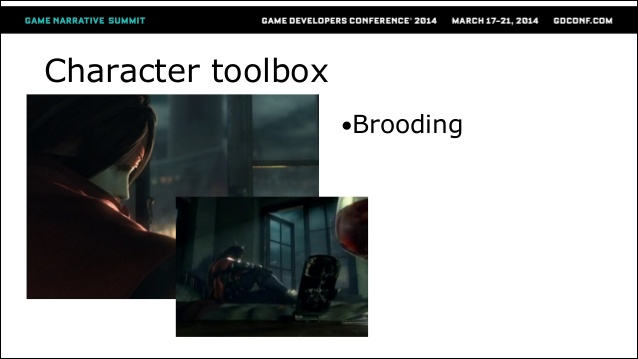


![a lot of female did not get into [Mirror's Edge] due to its difficult control scheme](http://i.imgur.com/i8rQ1cn.jpg)
