Showing posts with label metal gear solid. Show all posts

Monday, 16 June 2014

E3 2014: "Rainbow Six: Sexism"? Far from it.

My first year of game development at college has come to an end and, although I haven't yet received my grades for the entire year, they're expected to be first-rate (although I don't wish to sound as if I'm bragging; if they're good, it's because I agonised over the work every day rather than because I'm necessarily more intelligent than the other students. I noticed that an insane level of commitment seemed to be a trend with the mature students). I can't say that I'm any closer to entering the games industry than when I started but it's only one year of college, so it isn't unexpected that I haven't come out of it "industry-ready".

Enrolling on a game development course also didn't give me the opportunity to discuss sexism as much as I had hoped. I think I had around three conversations about it in the entire year but other than that, as you'd probably expect, most people -- male and female -- didn't care about gender issues in games. Which is fine and completely understandable; in spite of all the articles about gender issues in games online, it has to be said that it is not an issue that the majority of gamers care about. A few people did seem interested in how Wil Wheaton spearheaded a movement that ended with Destructoid writer Ryan Perez being fired though, so that's something.

E3 took place last week and I really enjoyed it. I didn't have much interest in any of the current-gen consoles but with Bloodborne, Mortal Kombat X and No Man's Sky being the games that made a big impression on me, I suspect I'll buy a PS4 at some point (probably next year). Oh, and the Metal Gear Solid V: The Phantom Pain trailer blew me away.

Anyway, speaking of E3 and articles about gender issues, I suppose it was too much to hope for to think that E3 might pass without an accusation of sexism being aimed at someone or something. Off the top of my head, "scandals" I can recall include a lack of female presenters, a lack of games featuring female characters and, in case anyone has forgotten, the "rape" joke during the Killer Instinct presentation last year.

I followed the conferences on Gamespot and on June 10th, before the event was even finished, Tom McShea took it upon himself to write an editorial called "The Disturbing Representation of Women in the Rainbow Six: Siege E3 Demo". Tom's big problem? In the stage demo for Rainbow Six: Siege, a female character was a hostage. That's it. That's the entire issue. You can watch the demo at the link above but here's a Youtube version if you prefer:


Before I go into Tom McShea's article, what I took away from E3 with regards to gender issues was how many positive portrayals of female characters there were. All of them got their share of the spotlight. I'm sure I'm going to forget some but we had Bayonetta 2. Mirror's Edge 2. Alien: Isolation. Infamous: First Light. Rise of the Tomb Raider. Lara Croft and the Temple of Osiris. Plus, think of the games that had a mix of male and female characters, like Mortal Kombat X. Fable Legends. The Sims 4. Hyrule Warriors. If the predecessors of Bloodborne, Dragon Age: Inquisition and Mass Effect 4 are anything to go by, they'll all have the option to play as male or female characters too. Hell, it seemed like most games had a choice of male and female characters, from Broforce to the Dead Rising 3 DLC. In fact, would you like to know another game that had a positive female portrayal in the stage demo? Rainbow Six: Siege!

In case you didn't watch the video above, the demo -- which features the disclaimer "the following is pre-alpha footage captured from a multiplayer match" but is very blatantly staged -- features five online players trying to rescue the female hostage from their five opponents. Of the five players whose voices we hear, one of them -- playing as a sniper -- is female. She is portrayed as being just as capable as the male players on her team.

The point is that E3's representations of female characters should've been cause for celebration (or, if you're part of the "they shouldn't be praised for doing what's expected of them" crowd, at least it shouldn't have been cause for criticism). Yet Tom McShea, being a glass half-empty kind of chap, focused on the one example from the show that featured a woman in a damsel-in-distress role and argued:
"It was their decision to have a woman presented as an object, something to be fought over--to be won--so that's the message that was hammered home. So I can only look at the reality of this demonstration and wonder why it's once again a woman placed in such a sad position."
The main reasons I still visit Gamespot are (A) habit and (B) the majority of people who post comments seem to be sensible and rational. In this case, I was impressed with how this excerpt from a comment by "tonkins22" got to the heart of the matter:
"Sexism in games needs to be tackled, and deserves a billion-word discussion. But you can't use a non-example as your launchpad into that point, or it makes the argument itself look thin, which is bad for the cause. The author is writing an article about a serious forest fire and tries to get your attention by panicking about a lit match."
This is the central problem with McShea's article. It's a perfect example of making a mountain out of a molehill. McShea refers to women in games as "prizes", "rewards", "objects", "plot points" and "second-class citizens" throughout his editorial but the main thrust of his argument is based on this lone female hostage from Rainbow Six: Siege. There is no evidence that she is any of those things and the rescue team in the video are intending to rescue this hostage, not claim her in any way. That's McShea's own interpretation. He's the only one seeing her as an object rather than a human being. It's little wonder that the Gamespot members collectively roll their eyes at this when there is a positive female portrayal in the same video, many positive female portrayals in other games at E3 and there will be male hostages in Rainbow Six: Siege too.

Speaking of male hostages, McShea notably didn't mention Huey Emmerich being taken hostage and tortured in the Metal Gear Solid V: The Phantom Pain trailer (from 2:20 to 2:40 in that video). Both the protagonist and his "plus one" are taken hostage in the Far Cry 4 villain trailer (from 4:45 until the very end in that video). None of those three male characters are shown as being anything other than helpless, much like the female hostage in the Rainbow Six: Siege demo. However, McShea insists that "it's once again a woman placed in such a sad position". He even mentions Far Cry 4 in the final paragraph, using it as an example of "white male protagonists [being] placed front and center" (which is wrong because ... ?) without mentioning that the white male protagonist in question gets a bag placed over his head before being taken captive.

It's disappointing that this type of blatant misrepresentation of the facts has become so commonplace but that's what happens when people are desperate to promote an agenda that doesn't have any grounding in reality. There are gender issues that should be talked about and the portrayal of women in games is by no means perfect -- as tonkins22 said, "sexism in games needs to be tackled, and deserves a billion-word discussion" -- but McShea took what should've been a success for women in games and turned it into a failure.

Then again, this is the same person who wrote "The Santa Barbara Killer Is a Product of Our Culture, and We Shouldn't Hide From That Fact".

-----

(When I began writing this part, I didn't plan on it being as long as it became. If you just care about gaming, you can stop reading now because this is related to real life.)

Hopefully, I won't go into this too much because it seems like I've discussed nothing else since it happened at the end of May. For those who don't know, on May 23rd a college student named Elliot Rodger murdered four men and two women and injured thirteen others. There were many reasons behind it; Rodger was a misanthrope. He loathed men, describing them as "obnoxious brutes" and left forum comments fantasising about a virus wiping out every man on earth except him so he could have his pick of the women. He loathed women too, referring to "blonde sluts" and fantasising about wiping all of them out too while sitting in a tower and watching at all. Rodger was also a racist, recoiling at interracial couples and showing disgust towards full-Asian men (Rodger himself was half-white, half-Asian and referred to himself as Eurasian several times. Three of the six victims were also Asian and, given that they were the three who were stabbed in his apartment rather than shot, these were apparently the predetermined murders).

It should also be mentioned that Rodger suffered from a mental illness. At times online, I've seen people react to that point with aggression, thinking that just pointing it out means he's being held up as an example of all sufferers of mental illness but that isn't the case any more than he's an example of all virgins or half-Asians. The point is that without acknowledging that Rodger suffered from a mental illness, the severity and significance of mental illness cannot be understood.

The reason I'm bringing this up isn't just because of Tom McShea's article on the subject. In fact, if Tom's editorial is the first you've read about the Isla Vista killings, you might be confused about why he's focusing so much on misogyny and violence against women. The fact is that in this case, McShea was just following in the footsteps of over a dozen other, more mainstream news sites that ignored every single motivating factor in the murders ... except for Rodger's hatred of women (although the blog itself was about how misinformation can be spread and perpetuated, the women of Honey Badger Radio have a decent list of around fifteen sites that focused specifically on violence against women. As they mention at the end, they're only a fraction of the total number).

Without wanting this to turn into a rant, the most disgusting aspect of the Santa Barbara killings if you followed the coverage was how it instantly and blatantly it became an event to promote an agenda ... and it wasn't just to raise awareness about violence against women. Men's rights activists were blamed, even though Elliot Rodger wasn't an MRA. White men were blamed, even though Elliot Rodger wasn't white. In the Huffington Post article I just linked to, feminist blogger Anne Theriault actually states:
"We have no evidence yet that he suffered from any kind of mental illness or was under any sort of treatment. Immediately claiming that with no proof to back that fact up leads to the further stigmatization of the mentally ill, and contributes to the (incorrect) assumption that mental illness equals violence, and vice versa."
This is in spite of the fact that the day before, Rodger's own father (speaking through an attorney) stated, "the 22-year-old was being treated by multiple therapists and was a student at Santa Barbara City College".

Phrases like "male entitlement", "male privilege" and "male rage" all became commonplace, effectively painting all men with the same Elliot Rodger-shaped brush. If you have the time, you can go through the Honey Badger Radio list of articles and find the number of pieces that use the phrase "six people were killed" before launching into a rant about Rodger's misogyny, entitlement and violence against women rather than say "four men and two women". That isn't a coincidence. Feminist bloggers and journalists leapt on the opportunity to use the deaths of a tragedy where more men were killed than women to promote awareness about an unrelated viewpoint.

I want to make it clear that I'm not just disappointed about the deaths of the four young men being used (or, more accurately, ignored) to further an agenda that attacked men on a regular basis. None of the six, including the two women, deserved to have their deaths used in this manner. They were people. Their deaths were not something to be politicised for personal gain. It's safe to say that over the last month, feminism reached full Jack Thompson territory.

Credit to Europa-Phoenix. This comparison went through my mind over the course of the last month too.
One reason I'm bringing this up is because mass shootings in the U.S. have affected me in a few different ways. When the 2012 Aurora cinema shooting happened, I was so unbelievably shaken that I intentionally (and probably selfishly) avoided reading anything about the Sandy Hook shooting when it occurred in case it affected me in a similar way.

Something that I've tried to keep up on this blog -- which I've admittedly been back and forth on at different times -- is avoiding using "feminists" as a blanket term. Sometimes I haven't used it at all, other times I've tried to soften the blow by saying "some feminists" or "the feminist argument", to try to communicate that I'm not blaming the movement as a whole. I've always been swayed by the "not all feminists are like that" (NAFALT) argument that comes up repeatedly when men's rights activists point out some of the ways that feminism has had a hand in the poor treatment of men.

Now? Well, as you might've noticed over the last half-dozen paragraphs or so, I'm not particularly concerned about sparing the feelings of the NAFALT crowd any more. While I reacted to the Aurora shooting with horror, I ended up reacting to the Isla Vista killings with anger and not just directed at Rodger. Some of the most despicable people -- making the most unpleasant, untruthful arguments -- came crawling out of the woodwork and every one of them was a feminist ... and too few feminists responded to these articles with anger, disappointment or disgust. The quiet, half-hearted opposition on forums and in comments sections doesn't do much to combat the loud dogmatism of feminist journalists like Laurie Penny, dismissing violence against men while telling me that I'm "part of the problem" ... for saying that not all men are like Elliot Rodger because that dismisses violence against women. Somehow.

On the plus side, she makes Tom McShea look like a saint.

Okay, so I had a lot more to say on this issue than I thought but it's probably better that I got all of this off my chest here and not just in the comments section of a news article. This may be primarily a games blog but a few occasions have been set aside to talk about men's issues in general. It annoys me that this shouldn't have been a men's rights issue -- Rodger wasn't even remotely related to the men's rights movement but that didn't stop Anne Theriault and others from branding him one -- but it became one, so it's worth being brought up.

Hope you all had a happy Father's Day! Feel free to comment or e-mail me at themalesofgames@gmail.com.

Sunday, 20 April 2014

Comparing 2002 to 2014: How Have Things Changed?

This blog post features spoilers for The Wolf Among Us and Metal Gear Solid 2.

I apologise for not updating more regularly but, as you'll know by now, it's mainly due to college work building up at inopportune moments. The final five weeks are coming up soon and I sense that the assignments are all going to be crammed in at once. Plus, if that wasn't enough, I've been avoiding gaming sites like the plague because I was intentionally trying to stay away from any information about Dark Souls II, wanting to go in completely blind, so if any major news about gender issues in gaming cropped up, I haven't heard about it. I know Anita Sarkeesian accepted her GDC Ambassador award but I haven't watched her speech, and don't intend to.

Anyway, I'm finally able to finish this blog post that I started writing in early January. There'll be a few places where I write things like "lately" and "last week" but it's outdated in a few places. I even linked to the Penny-Arcade report at one point, which is no longer available. However, the majority of it was written today (and focuses on books from over ten years ago anyway), so it's not particularly important that it's a few months old:

Lately, I've had to scour a bunch of books on gaming as part of a written assignment, hoping to find anything that would help me with a hypothetical game proposal (e.g. - info on target audiences, costs, number of people in the development team, etc.). I found a few interesting perspectives from women working within the industry. Nothing groundbreaking but also not the typical opinions we read on gaming sites.

Marketing
"Additionally, as you’re proofreading, keep your audience in mind. Does the press release appeal to your audience? While your ultimate audience is the person reading the news, your first audience is the gaming press. Who are these people? Well, they’re males— mostly. When asked about the male/female ratio of game reviewers at Gamespot, Andrew Park noted that, “currently it’s infinity, which is what you get when you divide by zero.” While the age range of the gaming press is typically viewed as very young, Park reports the average age of Gamespot reviewers as mid-20s to early 30s. Aishoshi of IGN sees an age range of 16 to mid-50s. He also notes the male to female ratio as “about five males to one female over the course of our existence.” Take a glance down the editor photos in a PC Gamer and you’ll see a row of seven white, male faces and, at least at the time this article was written, one female face.

So, what does all that mean in terms of your press release? Not to say that these guys aren’t in touch with their feminine side, but your best bet will be to focus on the “dude!” elements of your story. How many levels? How many Mechs? How many weapons? Any intense bands on the soundtrack? While the number of female gamers appears to be growing, like it or not, until more women join the ranks of the gaming media, you should probably focus on the guy-appealing aspects of your game."
- Beverly Cambron, Secrets Of The Game Business (2002)

Last week, I was reading a blog over at Vicsor's Opinion about female representation in games and Vicsor brought up a game that I'd completely forgotten about over the last few months; Remember Me, the game that was at the centre of a Penny Arcade report about games starring female protagonists supposedly only being granted 40% of the marketing budget of a game starring a male protagonist. I don't think I mentioned that at the time but, if that's the case, it's pretty despicable that a publisher would actually designate more funding to games with male heroes. Yes, that is a significant case of women being held back in the games industry and everyone suffers because of it; we receive fewer interesting, varied protagonists and it shows a low opinion of the audience. Although I think it'd be interesting to see the budget breakdown of a game like Tomb Raider (2013), to see exactly how it can star a female character but need over five million sales to succeed. Although that's obviously the exception rather than the rule.

Vicsor's blog was in a similar vein. He took a look at the different representations of male and female characters and I like that we share the same opinions on varied characters. However, Vicsor did something that I can't believe so few others have thought to do, me included; look at the game sales. Although we'd need to look at more sales figures to see if there was a correlation, it did establish that in spite of the Penny Arcade report raising its stature, Remember Me still failed to sell. In spite of the criticism directed at cynical marketing teams, people didn't buy Remember Me to avoid turning the "people don't buy games with female protagonists" belief into a self-fulfilling prophecy.

The marketing and sales figures for games starring female protagonists is a chicken-and-egg situation; does a lack of marketing cause them to have low sales or do low sales lead publishers to give them a smaller marketing budget?

Beverly Cambron's quote above doesn't tell us anything we didn't already know but it's interesting to know that developers write press releases for the sake of the reviewers as well as the mainstream audience. It makes me wonder if and how marketing for games has changed since 2002. Part of me thinks that, with diversity and gender issues in gaming becoming a bigger issue, this kind of cynical stereotyping of audiences would've died down ... but with the prevalence of the "stubbled male protagonist, face-pointing-down, eyes-pointing-up" pose on box art, it feels like the opposite. As Cambron's quote above shows, this isn't an accident; it's clear that marketing teams know they're pandering to some "dudebro" audience and stereotyping gamers (particularly male ones) as a marketing tactic. Ken Levine said much the same thing when defending the box art for Bioshock Infinite, saying that the design was made following visits to "frathouses and places like that". The reason behind this is the same one that was directed at Anita Sarkeesian about why certain female portrayals and plot devices exist; because the games industry is a business, with developers intending to make money. It might be unfortunate but if something works, why change it? In fact, if the cover of Bioshock Infinite and other games are anything to go by, it must've been a marketing tactic that was so successful that developers begun to emphasise the "'dude!' elements" a lot more.

I have to admit, part of me also wanted to include the Beverly Cambron quote as a response to the people who used to tell me, "don't you know that negative male portrayals are made by men?!" as if that somehow made it justifiable. It's unrealistic to assume any situation in gaming we currently dislike is the fault of either sex specifically.

Currently, according to Beverly's Twitter feed, "My game industry days are (happily) over".

Portrayals & Character Design

"There are stereotypes that people in the past have gone with that we have moved away from now. I don’t know that it’s necessarily because we’re trying to appeal more to the female market, or whether we’re just growing up as an industry. In a role-playing game now you wouldn’t want to have a halfnaked barbarian girl be your reward for some victory or whatever. We try to keep really blatant sexism out of it. I think that’s come because we’re more grown up as an industry, but it may be because Stormfront in particular is very sensitive to gender issues. We always have been, from when the company started.

Still, we always try to make the player characters in games, the protagonists, feel heroic and be of heroic proportions. In other words, if I’m playing a game and I as a woman decide to play a male character, I don’t necessarily want to see a weedy, weak-looking guy. I want to play a big barbarian. And if I’m playing a female character, I want to play a very attractive, strong, dynamic-looking woman. I think no matter what gender a player character is, you want their representation on-screen to be heroic, to be superhuman. I don’t mean like Superman, but more idealized than a real human would be.

In game stories these days, stereotypes are being broken down a lot more. There aren’t just weak women and strong men. There are also strong women and weak men. There are evil women, there are evil men. It’s a lot more even. There are a lot more women in gaming now, more women players. So it may just be an evolution of the culture that we’re reflecting as well. I’ve read some figures that seem to indicate women players tend to dislike complex interfaces, and so it may be part of the broader movement towards making simpler interfaces that’s brought in a larger female audience."
- Sarah Stocker, Swords and Circuitry: A Designer's Guide to Computer Role-Playing Games (2002)

I think Sarah Stocker gets to the heart of what "escapism" is with these paragraphs. She describes exactly why we can (or should) accept exaggerated portrayals in games, in much the same way we do with comic book characters. I've heard female gamers on Youtube make the same comments about how characters of both sexes are exaggerated but it's refreshing to read these views from a woman actually working within the games industry.

I've been incredibly critical of the "male power fantasy" argument made by feminist critics in the past -- the idea that women in games are exaggerated because of sexism and objectification but men in games are exaggerated because "men want to look like that" -- and it's interesting to read Stocker's perspective on it. Unlike me, she supports the "power fantasy" argument but also states that it isn't gender-specific.

The theory that stereotypes are being broken down more and more is an interesting one. Remember that the above paragraphs were written in 2002 and, after a quick look at the games released in 2001 on Wikipedia, I can see why Sarah Stocker would make that claim. To be fair, I don't know when Stocker's piece for the book was written -- it could've been long before 2002, depending on how long it took for the book to be published -- but in 2001, we had prominent games such as:
  • Max Payne - Female antagonist.
  • Jak & Daxter - Male and female antagonist, featured a female mechanic as a supporting character.
  • Half-Life: Decay - The PS2 version of Half-Life, featuring an extra co-op mode where both playable characters were female.
  • Grand Theft Auto 3 - Female antagonist, "heroic" female criminals (such as Asuka, who provides the player with missions).
  • Onimusha: Warlords - Playable male and female characters, evil male and female characters, male and female damsels in distress.
  • Virtua Fighter 4 - Introduced female character Vanessa Lewis, with an unconventional muscular design.
  • Ico - Certainly broke stereotypes about protagonists and damsels in distress, making the player care about the characters involved.
  • Serious Sam - Parodied traditional stereotypes about big, strong, "manly" male heroes.
  • Alien Vs Predator 2 - Heroic male and female marines, female secondary antagonist in the marine storyline and, as in all Alien games, the Alien Queen is an antagonist.
  • Fatal Frame/Project Zero - Female hero, female antagonist, male damsel in distress.
  • Final Fantasy X - Several female protagonists, a female antagonist (Yunalesca), practically everyone is a damsel in distress at some point.
I'd also add Metal Gear Solid 2 to the list, since I think Olga, Fortune and Emma Emmerich are all strong female characters in their own way but that's more of a judgment call; they all die by the end of the game and I'm sure people would take issue with Olga being sexualised at the start of of the game (even though, y'know, the end of the game features the player controlling a naked Raiden). Oh, and there's also Oni, which has a female protagonist but I've never played it (so maybe she's portrayed horribly. Let me know in the comments if you've played Oni). I just thought I'd bring it up because that game looks awesome and I'm tempted to try it out ...

Anyway, what we should take away from all of this -- as well as the depression that comes from knowing we might never see a gaming year as good as 2001 again in our lifetimes -- is that Sarah Stocker's comments about stereotypes being broken is understandable because of the games on offer in 2001. I'm sure that people could just as easily point to Dead Or Alive 3 as an example of the opposite but that particular series skew the statistics regardless of the year we're looking at. As an example, if we look at the games released ten years later, in 2011, a Dead Or Alive game appears on the list again. It's fair to say that DOA is a series that is never going to break any stereotypes.

I'm not going to pretend that I've played as many games on the 2011 list as I have on the 2001 list but, from what I can see, I don't see as many stereotypes being broken. When it comes to gender issues, L.A. Noire, Final Fantasy XIII-2 and Batman: Arkham City seem to be reasonably by-the-numbers when it comes to stereotypical portrayals when it came to male heroes and villains -- sometimes remarkably, in the case of Arkham City -- but Dragon Age II and Uncharted 3 both featured female antagonists. The thing is, all of these games featured strong female characters (except perhaps L.A. Noire, from what I can recall), so that's certainly a quality that has stuck since Stocker's remarks in 2002.

However, when it comes to male portrayals, am I the only one who feels like things feel stagnant? The portrayals of female characters in Arkham City are very different from those in Final Fantasy XIII-2, which are just as different from those in Dragon Age II. With the exception of Nathan Drake -- a favourite protagonist of mine for being a character that doesn't take himself too seriously, which is a rare quality in the days where the "Stubble McBadass" archetype looms over the games industry (to use a term from Michelle Clough) -- I feel like stereotypes for men have become more entrenched rather than broken down. 2011 was also the year when we saw Call Of Duty: Modern Warfare 3 released, just to hammer the point home. The women are varied, the men are similar.

I don't want it to seem like I'm cherry-picking my examples here and this is by no means a comprehensive list or study; like I said, I haven't played as many games from 2011 and I'm sure that if we looked at the 2001 list, we could see plenty of examples of male protagonists that are incredibly similar to the ones picked from 2011. Unfortunately, it does feel like stereotypes are the order of the day for male characters. Why? Possibly due to a lack of a push for varied male characters as there has been for female ones or maybe it's for the same reasons that Beverly Cambron focused on the "'dude!' elements" and Ken Levine appealed to frathouse gamers; they're the characters that sell games. I find it hard to believe that having a few more male characters in the vein of Ico and a few less in the vein of gravelly-voiced Cole McGrath of Infamous would be the worst thing in the world. Although considering the difference in how those games performed, sales-wise, I may be wrong ...

As an example of how male stereotypes are still alive and well in the games industry, let's take a look at a series that is ongoing right now; The Wolf Among Us from Telltale Games, developer of The Walking Dead. Similar to TWD, The Wolf Among Us is released in different "episodes" and, as of the latest episode, there's only one female villain but every single adult male human character is a scumbag in one way or another. Whereas the women are level-headed, independent, strong-willed and often victimised, the men are pimps, thugs, torturers, murderers, perverts, thieves and stalkers. Again, it feels like stereotypes have been broken down for women -- who are often portrayed as just trying to make a living -- while the men are just brutish or slimy, fighting each other rather than getting things done. The women are mature, the men are neanderthals.

One final thing about that Sarah Stocker quote. This last part:

"I’ve read some figures that seem to indicate women players tend to dislike complex interfaces, and so it may be part of the broader movement towards making simpler interfaces that’s brought in a larger female audience."
I only included this due to the long-standing rumour that Anita Sarkeesian felt "a lot of female did not get into [Mirror's Edge] due to its difficult control scheme". I certainly don't believe that difficult controls will prevent any gamer, male or female, from playing a game -- and I'm not the only one -- and I think it's insulting towards female gamers to suggest that it is. However, I've pasted Sarah Stocker's quote about interfaces anyway, just because I thought it was relevant. I should also point out that it's not clear whether Anita did or didn't say that line about the controls in Mirror's Edge; due to the fact that she doesn't allow people to film her talks about gaming (only the talks about harassment), we have to rely on second-hand information and then wait for Anita's inevitable "don't believe everything you read online" tweet.

Sarah Stocker is formerly of Stormfront Studios and, as far as I can tell, currently works as a senior producer for Sony Computer Entertainment America.

*

Even though I haven't written anything for a month, I still read everyone's comments. I've had some very interesting ones lately, even though I haven't responded to them, so thank you for commenting. It's much appreciated. Feel free to do the same below or e-mail me at themalesofgames@gmail.com

Thursday, 5 September 2013

I sense an incoming Metal Gear Solid backlash.

Earlier today, Hideo Kojima -- creator of the Metal Gear Solid series -- tweeted about wanting some of the characters of MGSV redesigned to be more "erotic". He cited appealing to cosplayers and selling more figurines of the game's characters as the reasons why he wanted these redesigns.

I suspect we'll be seeing some vexed responses to this in the next few days. Personally, I'm delighted.

First of all, I love how different the attitude towards sexualisation is in Japan compared to the West. When I wrote about Dragon's Crown, I brought up how the most sexualised characters broke my immersion in the game. From what I hear, the only mention of the exaggerated character designs in Japan was joking about how big a deal was made of it outside the country. Unfortunately, I haven't been able to find any Japanese articles saying that directly (obviously because the Japanese language isn't my forté and English isn't much use at finding Japanese articles in search engines) but I'd like to read some of them first-hand if I get the chance.

I'd love to be able to have that same nonchalant attitude towards sexualised characters in the media that they have in Japan. Logically, I can see why people would argue that living in a culture with so much fiction featuring sexualised women would lead people within that culture to have a lower opinion of real women; women being sex objects in games could lead to people viewing them as such in real life. Having said that, I completely disagree. If anything, I think that Japan's line between fiction and reality is more distinct; Dragon's Crown's art style can be joked about because it's clear that a sexualised, anime-esque mermaid doesn't represent real women in any way. The connection hasn't been made between reality and fiction in the same way it has in the West, so it's easier to view sexualised characters purely as entertainment.

That's just a guess, so don't quote it as if it's fact. The point is that I see the integration of sexual characters in everyday media to be a far healthier attitude than trying to stamp it out because we dislike it. There are times when I don't think it'd be appropriate but providing it fit in with the setting/art style and wasn't aimed at kids, I think it'd be fine.

Luckily, Metal Gear Solid isn't a series that has ever had to worry about a Dragon's Crown-level of controversy but it's odd to see so many people in the comments section on Gamespot condemning Hideo Kojima for his decision. I'm surprised at that and, even though I don't like to play the "they've probably never played the game" card, I feel it's appropriate in this case; for those of you who don't know, the Metal Gear Solid series has always had a light-hearted, almost Benny Hill-esque approach to eroticism. From figuring out which soldier is female by staring at their behinds to distracting lustful guards with non-nude erotica magazines, the Metal Gear Solid series, more often than not, treats eroticism as being funny. So why this response to Metal Gear Solid V?

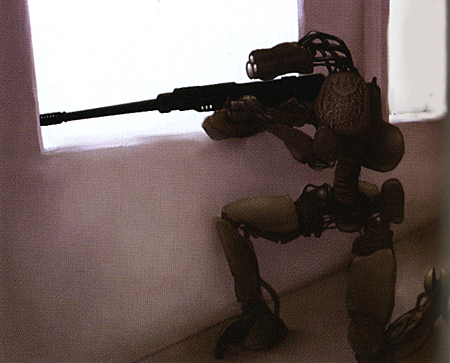
Assuming Kojima's critics have played previous games in the Metal Gear series, it could simply be because Kojima is being so blatant. "I want to appeal to cosplayers and to sell figurines". Making decisions based on merchandising has left a bitter taste in the mouths of fanbases in the past, most notably for Star Wars. Perhaps it's because he joked that the CG model for Quiet -- the female sniper seen in the Metal Gear Solid V trailer -- being revealed this Friday would be "uncosplayable". Personally, I think that statement was just to create some hype for the reveal and possibly to get a rise out of people. If that's the case, it seems to have worked.

Quiet is dressed beneath the border of this picture, I should point out.

It's also very possible that they think eroticism has no place in video games; there are certainly a few comments underneath that Gamespot article that make the typical comments we saw during the Dragon's Crown controversy, such as erotica "only appealing to twelve-year-olds". There's also at least one mention of this kind of attitude preventing games from being "art".

I've never been particularly interested in the "are games art?" debate because, to me, it seems inconsequential; I enjoy games and that's all that really matters. I don't particularly care if they're recognised as art or not. Having said that, I have to wonder why featuring eroticism is enough to categorise a game as not being art. Not that I think the Metal Gear Solid V erotica -- if there is any, apart from Quiet's character design -- is going to be at all serious, in which case I have to ask why should MGSV change? If you've played the previous games in the series, noticed the light-hearted attitude towards sex (as well as other immature content like one character being the victim of constant diarrhoea jokes), then why should the next game in the series be any different?

As for erotica "only appealing to twelve-year-olds", I've often thought that an inability to handle erotica -- especially the comedic take MGS puts on it -- is a greater sign of immaturity than enjoying it. The Metal Gear Solid series is for adults, so why shouldn't adult themes be present? I can't help but feel that not featuring the light-hearted erotica in MGS would be comparable to putting your hands over a child's ears whenever you mention something sexual. Or trying to convince people that storks deliver babies. It exists, we might as well laugh at it.

I'd also quickly like to mention that Kojima stated he'd be revealing Quiet's CG model on Friday but he may not have been talking about her when he mentioned the erotic redesign; anyone who remembers MGS2's naked Raiden will know that the gentlemen of Metal Gear Solid aren't immune to comedic sexualisation either. I'd still place bets on Quiet but you never know.

Anyway, it'll be interesting to see how this develops over the next couple of days, before Quiet's CG model is revealed, and the fallout afterwards, until it's engulfed (hopefully) with news from the Tokyo Game Show.

Thanks for all the comments last time, by the way. Very interesting reading.

Added on 6th September 2013 - And, to the surprise of absolutely nobody, someone has complained! Someone rather high-profile too.

David Ellis, a designer on Halo, commented on Twitter after seeing Quiet's design "our industry should be better than this" and the "industry is full of man-babies". Take a look at the article here and I highly recommend reading the highest-rated comments below. They say everything better than I could. I'd never heard of David Ellis before this article but when I was in high school, Halo was the game that everyone talked about playing online. It was the precursor to games played by so-called "man-baby" audiences such as Call Of Duty so who is David Ellis to point the finger at anyone else?

And remember, boys and girls; designing a scantily-clad female sniper who works in the middle of the desert is wrong. On the other hand, designing a needlessly large-chested and scantily-clad female character who is literally an object is just fine!


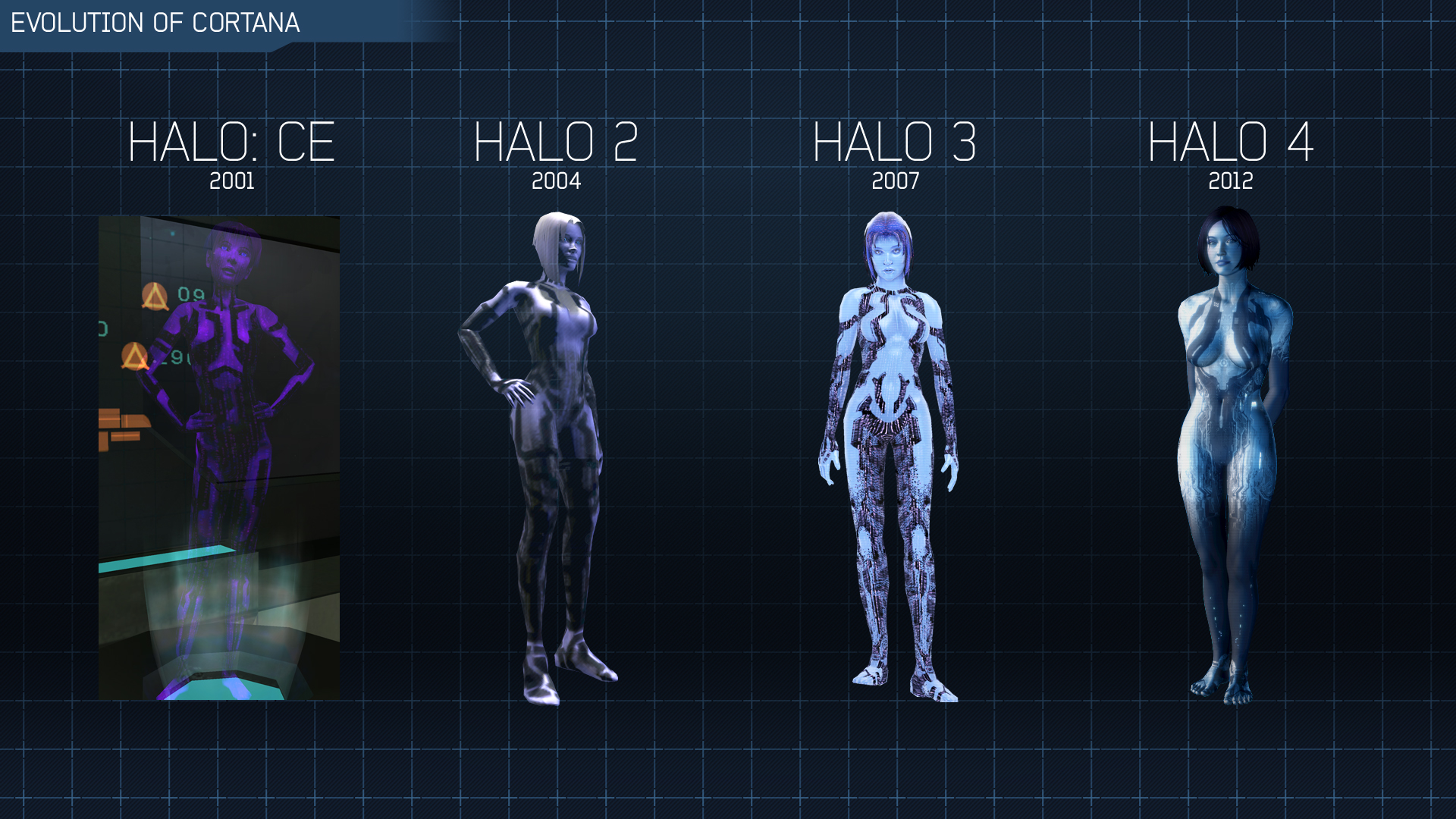
This picture is worth looking at if you want to see how Cortana became more sexualised when David Ellis and 343 Industries got their hands on Halo. A member of the NeoGAF forums also made a short and simple post about male sexualisation in the Metal Gear Solid series that didn't even mention naked Raiden. It's worth pointing to if anyone ever thinks Hideo Kojima only ever sexualises female characters.

As for David Ellis, I have no idea how anyone can be so hypocritical and yet so completely unaware, about both his own series' character designs and its "man-baby" influence. Speaking of which, it's disheartening to see just how many gamers, journalists and even developers casually throw out insults about immaturity towards people who have a different opinion to them.

I'm sorry for stating the obvious but there is nothing immature about people holding opinions different from your own, regardless of what the subject is. Insulting those people for having a different opinion, on the other hand, is very immature. That's something children do in playgrounds. If David Ellis really wants to talk about how "our industry should be better", I'd start with that.

Saturday, 3 August 2013

Damsel in Distress: Part 3 - Tropes Vs Women in Video Games

I've noticed a spike in viewers today because Dragon's Crown has been released. I'd like to get around to making another blog about that but, unfortunately, I live in Europe and our release date for the game is "Q3/Q4 2013". Amazon's estimate is October. Still, it's my birthday soon so I'll probably import it for that.

Of the three damsel in distress videos that Anita Sarkeesian has planned, this is the one I've been looking forward to the most. To me, this is the one that could make or break her arguments. As this is the video that concerns male damsels in distress -- or the "dude in distress" as she calls them -- how Anita treats this issue could be what sets the tone for the whole series.

At least to Anita's critics, this video could be the turning point. Maybe she'll try to justify the existence of male captives and attempt to dismiss it as an issue entirely. If that's the case, it's nothing particularly new and her critics have been justified in calling her arguments and examples cherry-picked and biased. On the other hand, maybe she'll treat male captives with the analytical eye they deserve; maybe she'll notice that they're not that different from female captives and perhaps she'll notice that men are tortured more often to create sympathy. If that's the case, maybe Anita can win over a few cynics. Maybe her videos won't be seen as a propaganda piece anymore and instead a more reasonable, if deeply flawed, analysis of sexism in video games for both men and women. When writing about part two of Anita's damsels in distress series, I stated, "when it comes to gender stereotypes, her heart is in the right place". That opinion has wavered a bit since then but who knows? Maybe Anita can come good at last and her silencing of others, her plagiarism of other people's videos and her misquoting of studies will just be stumbling blocks along the way.

I just hope that Anita has kept her own tweet in mind while making this video:


As of this writing, I haven't seen the video. So let's see what Anita has for us ...


Before I watched this video, I wanted Anita to say one of two things in this video; the first would be, "the dude in distress is a horrible, damaging trope because male damsels often have to go through torture and unsympathetic treatment that female damsels often don't". That's not quite my position -- I don't particularly mind damsels in distress if it makes sense in terms of the story but I do question why male characters have to be tortured to gain player sympathy -- but that would be something. The other thing I was hoping Anita might say would be, "I think having male damsels in distress is great because it's a deconstruction of gender roles and shows that the damsel plot device isn't gender-specific. It's a sensible and progressive attitude for developers to take regarding kidnapped characters".

Anita didn't take either of these stances on the subject. In fact, she didn't say much on it at all; only a third of the twenty-three-and-a-half minute video focused on the "dude in distress" and it was sharply dismissed with nothing more than a, "it's sexist when it's a woman. It's fine when it's a man". The rest of the video focused on more damsels in distress, with some focus on the use of "ironic sexism" in games.

So it looks like Anita has, in fact, chosen to be sexist by denying and dismissing the sexism against men that permeates our culture. You'd think she'd know better.

The funny thing is just how few games featuring "dudes in distress" Anita listed. She mentioned a grand total of six. I'd also like to point out that this was the first time I was made aware of the fact that, in Anita's eyes, the "distressed" character has to be the opposite sex of the hero character. Before now, I was operating under the assumption that the sex of the "damsel" was important but the sex of the hero was completely irrelevant. Even so, six games is still an incredibly small number to highlight. There was no mention of any of the games with male damsels listed in KiteTales' response to Anita's first video, all of which did feature female characters saving male ones. She didn't go into, say, Onimusha, a series that featured women saving men in all three games of the original trilogy. She didn't mention Raiden in Metal Gear Solid 2, having to be released from his torture device by a woman. Oh, and she didn't bring up this blog's favourite go-to game for sexism; Heavenly Sword. It wasn't long after she mentioned these six games that she rattled off a lengthy list of indie and mobile games featuring damsels in distress, as if to lessen the significance of the six games featuring "dudes in distress" that she brought up.

Still, let's focus on Spelunky, a game that Anita focused on because she believed it highlighted the difference between the "dudes" and the "damsels". Here's a couple of points Anita made beforehand:
"First there’s been no shortage of men in leading or heroic roles in video games or in any other creative medium for that matter. In fact one recent study found that only about 4% of modern titles are exclusively designed around a woman in the leading role. Since men are still largely the default for protagonists, the rare dude in distress plotline does not add to any longstanding gendered tradition in storytelling."
It's worth mentioning that the 4% statistic doesn't mean the other 96% of modern titles are exclusively designed around a male leading character; that 96% includes sports games and games where your character's sex is optional, bear in mind.
"Second, and perhaps more importantly, damsel’ed female characters tend to reinforce pre-existing regressive notions about women as a group being weak or in need of protection because of their gender, while stories with the occasional helpless male character do NOT perpetuate anything negative about men as a group since there is no long-standing stereotype of men being weak or incapable because of their gender."
First of all, there's nothing to suggest that damseled female characters reinforce any stereotypes about women as a whole; individual damsels do not represent women as a whole. They're also not necessarily weak or in need of protection because of their gender (and I'd be surprised if there were any games out there that outright stated that). Those are both stigmas that Anita herself has attached to female damsels. Much like her declaration that damsels in distress are more like property than people, it's a conclusion that Anita has arrived at without evidence. The stereotype may exist but a damsel in distress doesn't perpetuate it simply by existing.

Anyway, Spelunky was singled-out by Anita because the 2012 HD remake of the game featured the ability to switch out the large-chested female damsel with a "Chippendales-style hunk" or even a dog. So it was the perfect game to focus on the differences between male and female damsels. In Anita's own words:
"Setting aside the fact that – if a female character is easily interchangeable with a dog then its probably a pretty good indication that something is wrong – Merely providing an optional gender-swap is not a quick and easy fix, especially where stock character style damsels are concerned.
The two may appear the same, but they don’t mean the same thing in our culture.  This [damsel] is still a problem while this [dude] is not. Again because one reinforces pre-existing stereotypes about women, while the other does not re-enforce any pre-existing stereotypes about men."
Anita's argument is "these types of token role reversals do absolutely nothing to diminish the issues inherent in using the trope in the first place" but this is nothing more than her opinion. If anything, I think the fact that a female character being interchangeable with a man or a dog is a good indication that the gender (or even species) of the damsel isn't an issue; it is an easy fix, in that the damsel isn't particularly relevant to the story, nor is her gender and the fact is that she can't reinforce a pre-existing regressive notion about women as a group if she doesn't necessarily have to be a woman.

Not to mention that the hero doesn't have to be male, something that Anita failed to mention; even in the original game, the player could unlock a mode to play as a damsel and save spelunkers, rather than the other way around. The HD remake added playable female characters too.

This is another case of creating an unwinnable situation for developers. Regardless of the effort put in by the developer to create a more progressive game -- removing the gender issue entirely by providing the option of female playable characters and male (and animal) damsels in distress -- it's dismissed for its progressiveness and derided for its perceived sexism; when talking about "ironic sexism", Anita had no problem stating:
"In Spelunky the damsel can be knocked out, picked up, carried around and thrown at enemies before rewarding the player with an extra heart via a smooch of victory (if you manage to get her limp unconscious body to the end of each level while still alive that is)."
However, doesn't this completely ignore the facts that Anita provided above? The damsel doesn't have to be female but Anita still uses the game as an example of "ironic sexism" (in this case, parodying the uselessness typically displayed by damsels in distress). Again, I have to ask why isn't the issue removed when the genders are switched? In fact, if Anita can hold up the female Spelunky damsel as an example of a character reinforcing stereotypes about being weak and incapable, couldn't I do the same for the male Spelunky damsel and say that being thrown at enemies is an example of male disposability and reinforces the fact that we don't care about men in games? Which wouldn't make any sense because the gender of both the protagonist and damsels can be picked by the player.

Putting aside all the specifics, I can't help but call this what it is; hypocrisy. An attempt to rid gaming of female damsels while coming up with flimsy justifications -- or excuses, more accurately -- to keep male ones. We have to go back to the tweet at the beginning of this blog post; she's denying and dismissing the sexism that permeates our culture. It's Anita wanting to have her cake and eat it too. To plant her flag on the moon of victimhood and claim it for womankind, if I may use a horrible metaphor.

While that might sound like a snarky and grandiose thing to accuse Anita of, here's a couple of examples that I think will clarify it; one of the six (six!) games that featured a male damsel was a game called Primal, featuring the female protagonist's boyfriend, Lewis, being kidnapped by evil forces. The protagonist, Jen, develops some powers and goes to get him back. That's a very simplified version of the game's events but it sums up the basics. What Anita didn't mention is that Lewis, in addition to being a damsel in distress, is also the final boss of the game, having been brainwashed (again, an oversimplification), and he dies shortly after his defeat. There's a hint that he could return after his death but, if the after-credits scene is anything to go by -- Jen reading to Lewis while he is comatose -- it isn't a certainty. There isn't any movement in Lewis to hint that he'll awaken.


My big problem with Anita's coverage of this is that, while there's a hint in her video that Lewis dies, there's no mention of him being the final boss. There's no mention of Jen being the one who kills him. Given that the meat of Anita's second damsels in distress video was about the implications of domestic violence when a male protagonist attacks his brainwashed (or otherwise coerced) girlfriend in a video game, mentioning these facts would be the minimum I'd expect her to do.

Also, it really does have to be said that the lack of focus on protagonists saving damsels of their own sex damages Anita's point; like I said earlier, up until this video I was under the impression that the sex of the damsel was the only important thing, rather than the sex of the damsel and the protagonist. I'm willing to wager that more men are in need of rescue in games starring male protagonists than in games starring female protagonists. Yes, I understand that's due to a lack of female protagonists -- and more varied protagonists is something I'm entirely in favour of -- but there's a plethora of male captives to be found in games with male protagonists and by refusing to include them, Anita isn't painting a complete picture. It makes the "dude in distress" out to be rarer than it actually is.

Even worse is one of the links Anita provided as a source on her website. It's a link to a PDF file called "Spelunky & Sexism", archived from a site called "How To Not Suck At Game Design". It brings up the option to switch sexes (and species) of the protagonist and damsels in Spelunky and states "this is very progressive and forward-thinking. Great concept". After that, it quickly goes downhill (excuse the few spelling and grammatical errors. They were present in the original source):
"But in a concrete manner, it makes everything even worse. Since saving is not an option, you get to choose not who to save, but who to exploit and abuse. Since we do not have as much problems in pop culture and society with abuse of men for being men, the buff guy is not that much problematic as a damsel style. It still is kinda ugly to witness, but at least it does not endorse common real-life abuse.

Animal abuse on the other hand is quite real, so smacking a dog around and using the dog as shuriken, maybe accidentally killing him, really does not feel any better, then doing it with another human being."
If you've read some of my previous posts, you might know that concern over domestic violence against men was the "main" issue that caused me to identify as a men's rights activist. To say that the paragraphs quoted above make me uncomfortable is an understatement. In fact, I don't think I've ever read anything quite as ignorant about gender issues in the many years I've followed video game websites. This is stating the obvious but domestic violence against men is also "quite real" -- without wanting to be especially preachy about the issue, hopefully this article can shine a small spotlight on an incredibly widespread issue -- and not only is the writer of the paragraphs not above treating the abuse of men as secondary to the abuse of women but also the abuse of dogs.

None of the scenarios outlined endorse any kind of abuse -- whether the damsel is a man, a woman or a dog -- but it's quite despicable that the writer treats male victims of abuse as non-existent. I would've thought it'd be worse that the abuse of men in popular culture wasn't considered an issue and that's why it should be criticised, rather than swept under the rug as "not that much problematic". Unfortunately, the writer of the paragraphs above takes an attitude of "if it ain't broke, don't fix it" or "if the masses don't consider it an issue, I won't make it one". How a site can completely unironically be titled "How To Not Suck At Game Design" and then provide such a blatant double standard, I'll never know.

So both Anita and her sources are determined to dismiss the poor treatment of men to perpetuate the victimhood of women. Even so, this may be the first time I've been more irritated by Anita's sources than her videos. Having said that, in spite of the speech I've written above, there wasn't very much in Anita's videos to feel annoyed by. Oh, it was bad; if you thought Anita was judgmental of Shigeru Miyamoto, wait until you see how she treats indie developers. Although apart from that, the rest of the content was just there and aside from Spelunky, I'm mostly critical of what wasn't in Anita's videos rather than what was. So her sources bother me a lot; there aren't any misquoted studies this time around (as far as I'm aware) but a couple of the sites linked to are just complaints about Fat Princess.

Which leads us to the content that makes up the second two-thirds of the video and honestly, I don't have much to say about it. There are only three things I want to write about regarding Anita's commentary on "ironic sexism".

One. Personally, I've always thought that no topic should be off-limits for comedy. I hope I'm not the only one who wonders how Anita would react if she watched a controversial stand-up comedian. It's certainly within an indie developer's right to portray the damsel in distress -- or anyone else -- satirically. It doesn't have to fall within the bounds of Anita Sarkeesian's narrow view of satire; "There is a clear difference between sexist parody and parody of sexism. Sexist parody encourages the players to mock and trivialize gender issues while parody of sexism disrupts the status quo and undermines regressive gender conventions."

Some of the games listed certainly deconstructed and parodied the damsel in distress more than Anita gave them credit for but earned criticism because they didn't fit her definition of "parody". More on that in a second. This really is a case of "if you don't like it, don't play it" though. Satire is not Anita's to dictate and trying to do so just makes her seem entitled.

Two. When talking about indie games, Anita falls into the same traps as she did in her first episode when discussing retro games; rather than simply accepting that developers either don't have the time, the budget or just the wish to implement a deep storyline. Her accusations towards Super Meat Boy stand out in particular; she shows the game's intro sequence, which is an almost frame-for-frame remake of the the intro sequence from 1989's Adventures Of Lolo. Rather than accept it for the homage that it is, Anita brands it "a shallow meta-commentary" and criticises it for not "challenging or disrupting what the damsel in distress trope says about the role of women in such narratives".

... Who said the developer had to? Anita goes on to praise games such as Fez and Superbrothers: Sword & Sorcery EP simply because they don't fit this mould. The problem here is that there's nothing wrong with Super Meat Boy paying homage to a retro game with its intro sequence but it still faces Anita's ire because ... it's not the retro quality she wants to see in a game. Again, this comes across as very entitled on her part. Rather than listing examples of games with damsels in distress, she's passing judgment based on preferences. This isn't the critical analysis that Anita claimed on her blog. It's closer to a soapbox or pulpit.

Three. This quote:
"The bad ending of the indie game Eversion (2008) features a similar joke; when the hero finally reaches the princess, she turns into a monster and eats you alive.
A similar end game punchline can also be found in Castle Crashers (2008). After you’ve saved the 4th princess, and then fought and killed your friends over who gets to claim her, it turns out that she has horrible clown face.
In each case the joke derives from the fact that after completing the long and perilous journey to save his woman, our hero is hilariously cheated out of his “rightful” reward."
When I watched the video for the first time, the exact thought that ran through my head was "okay, so the male hero is the butt of the joke; he gets eaten in one ending and in the other, he's deprived of any satisfaction when it turns out the princess has a clown face (and therefore has probably tricked the hero)". So how did Anita follow that up?
"In other words the comedy comes at the damsel’s expense."
 ... How? No, really, I mean how!? Only Anita Sarkeesian could see a princess eating a male hero as a sign that the damsel is being made fun of.

If I might go off on a tangent here, a few years ago I was watching any and all US comedy that I could to see if anything caught my attention. I became a fan of a few series that I'd never seen before, like Cheers and Scrubs, while some others fell by the wayside, like King Of Queens. One of the series that didn't make the cut was a sitcom called Just Shoot Me, starring David Spade. One episode featured Spade's character faced with the prospect of having a threesome with two women and as a result, he was able to persuade every male character he ran into that day to help him out because none of them wanted to ruin every man's dream (sarcasm) of being with two women at the same time. Here's the relevant part of the episode on Youtube. It ends with him being tricked, the two women who promised to have a threesome with him orchestrating an argument so they'd have an excuse to go back on the deal.

In this case, we're supposed to laugh at Spade's character. He's the butt of the joke. His sexuality and lack of sexual gratification is the butt of the joke. All the men who help him and appear at the end to applaud him are the butt of the joke too; they've all been fooled and we're meant to laugh at men for being so gullible.

The reason I'm writing all this about Just Shoot Me is because I heard a theory that Anita said "the comedy comes at the damsel's expense" because the damsel's value is supposedly lessened in the eyes of the male heroes because they turn out to be ugly (and therefore, not what the hero wants or expected). I couldn't disagree more; the damsels are no worse off than they were when the male protagonist thought they were just regular old princesses. The male protagonists, however, are David Spade's character in Just Shoot Me. They're the dorks and losers who don't get the reward they were hoping for and we're supposed to laugh at them for it. The damsels aren't devalued in any way. The damsels win.

The male protagonist is made to look stupid in these situations (or dead, in Eversion's case). While I see them as individual instances, the fact is that if Anita really is against "reinforcing pre-existing stereotypes", she really could do worse than starting with Castle Crashers. Given that Anita somehow manages to warp even that around to being offensive to women, however, that's obviously never going to happen.

Anyway, that brings this lengthy post to an end. I'd like to say that I won't watch another Feminist Frequency video but I think we all know that's a complete lie. Besides, with a brand new topic, the next time I write about a Feminist Frequency video, it'll seem more fresh. I really can't stress enough just how little of this video interested me. If anything, I was just disappointed that Anita acted so predictably, dismissing "dudes in distress" without much of a fanfare or even an interesting argument. If not for Spelunky, this blog would be much, much shorter. Again, we just have to look back on Anita's hypocritical tweet -- which I honestly did take a screenshot of before I ever saw the video -- and realise that the chances of her ever giving men's issues a fair hearing are zero.

Well, whatever. Feel free to leave a comment or send me an e-mail at themalesofgames@gmail.com.

Wednesday, 24 July 2013

Women Are More Innocent (and more on Anita Sarkeesian)

Women aren't as evil as men. Everyone knows that! Although in case you didn't, game developers have a helpful way to educate you; if there's a female villain in a game, she's the most likely of the bunch to switch to the heroic side or she'll have been hypnotised or brainwashed into being evil instead. One of the two.

Although I try to avoid referring to TV Tropes too often -- I'm a fan of the site but I know Anita Sarkeesian is criticised for taking it at its word a few too many times -- but it has some information on this on the "High Heel Face Turn" and "Females Are More Innocent" pages. The "Sorting Algorithm Of Face Heel Turning" is also worth a quick look ("face" and "heel" are the professional wrestling terms for "good guy" and "bad guy" respectively, in case you didn't know).

The "High Heel Face Turn" trope gets the basic point across but I think it's missing something; going by the definition on that page, the female villain would have to be the lone female on a team of villains to qualify. Not that it's incorrect or any better when it's only a single female villain rather than several but I can think of a game series where all the female villains either switch sides, aren't as villainous, are coerced into being evil via brainwashing or repent how evil they are shortly before death. If you don't want to be kept waiting, I'm thinking of Metal Gear Solid.

Let's start with some others though. Back when I blogged about Batman: Arkham City, I wrote the following:
"There are barely any bad women in the game. Catwoman is an anti-hero. So is Talia Al-Ghul and her all-female army of assassins. Poison Ivy keeps to herself. Harley Quinn is the closest thing to "evil" a woman gets in the game and she plays the comic relief role."
Meanwhile, Mr. Freeze is the closest the game has to a male villain switching sides. He's a lot like Poison Ivy, in that he wants to keep to himself. Even so, he acts pretty selfishly; while Poison Ivy only attacked when Catwoman entered her territory, Mr Freeze shattered a vial of a cure that could save Batman from the illness that plagues him throughout the game purely out of spite. Well, leverage supposedly -- he wanted Batman to help get his wife back but there was nothing to suggest Batman wouldn't have done so anyway -- but clearly spite.

One of the traits that is always present in Mortal Kombat's messed-up canon is Kitana shaking off her brainwashing and joining the good guys. She's raised to believe that she is the daughter of the villain, Shao Kahn, but it doesn't take long for her to find out the truth; that Shao Kahn killed her father, forced her mother, Sindel, into marrying him and adopted Kitana himself. Kitana switches sides, as does her best friend, Jade. Jade was only siding with the villains to keep watch over her best friend. Depending on the timeline you look at for the Mortal Kombat games, Sindel may follow suit and join the heroic side too (but in that particular timeline, so do Ermac and Smoke ... and Raiden turns evil. It's a bit of a mess as the series continues). Kitana and Jade's side-switching is a mainstay of both the old and new Mortal Kombat timelines though, so it looks like there's no way of keeping them evil.

Even in games where the male and female villains are evil for the same reasons, there can be subtle differences. Take the first Mass Effect game, for example. Saren (a male Turian) and Matriarch Beneziah (a genderless Asari but physically female, like all Asari) are both evil because they're in the thrall of Sovereign, a massive ship-slash-AI with mind-controlling powers. Even then, however, Beneziah is given a more sympathetic backstory than Saren.

Then there's Metal Gear Solid, a series where all the female villains have excuses for being evil. In Metal Gear Solid 2, Olga Gurlukovich switched sides because her daughter had been taken from her by the real bad guys (which is an oversimplification but for the sake of this blog, a longer explanation isn't needed). Fortune also turned against at least one of her former villainous colleagues, going so far as to save the good guys' lives before dying of a gunshot wound. In Metal Gear Solid 3, we had The Boss. Long story short, she was never evil. She posed as being evil but the actions of one of the villains led to her plan spiralling out of control and she eventually had to be killed. In Metal Gear Solid 4, there's an all-female team of villains called the Beauty & The Beast Corps. All four women share the same backstory; they all suffer from post-traumatic stress disorder. Their fragile mental state was exploited and they were each given hi-tech suits to make them deadly soldiers. They're tragic figures more than anything else (or they would be, with a bit more character development).
Sniper Wolf from Metal Gear Solid is the only female villain who didn't either switch sides before dying or get her start by being coerced or brainwashed. Even she is given the noble death that she wants and isn't as much of an extremist as some of the other MGS villains. A few other male villains receive treatment along the same lines as Sniper Wolf -- Vulcan Raven, for example, and Grey Fox is probably more of a tragic figure than anyone in the B&B Corps -- but none along the same lines as, say, Olga or Fortune. Even characters who are supposedly doing good things resort to extremist tactics to do so; this turned out to be Revolver Ocelot's schtick by the end of the series.

This isn't to say that you won't find male villains switching sides or female heroes crossing over to join the bad guys. These few examples aren't the be-all and end-all of female turncoats either. All the games listed do have examples of male characters either switching sides or being coerced into being evil ... but often, the subtle differences between the male and female villains send out different messages. On its own, a female villain switching sides wouldn't matter very much but it raises questions when male and female villains are evil for the same reasons -- like Saren and Beneziah -- but the woman comes across more sympathetically than the man. It's hard not to wonder if there's a motive when, in a game with an even split between male and female villains -- like Arkham City or the Metal Gear Solid series -- the male villains are more evil than the female ones. There's no real reason for it and it can feel like a slightly insulting gesture.

Anyway, onto other things; there are two big important pieces of news this week. Firstly, the blog has a banner! It doesn't fit properly! I'm too lazy to fix it!

Secondly, a blog called Vicsor's Opinion rooted out something surprising about Anita Sarkeesian's damsel in distress videos; none of the game footage shown in the videos were recorded by Anita herself. They all come from Let's Play videos on Youtube and the owner of the blog, Vicsor, has comparison screenshots to prove it. He also made sure to contact some of the owners of the channels hosting the Let's Play videos and posted a reply on his blog to confirm that Feminist Frequency did not contact them to request permission to use their videos in her series.

So what does this mean for Feminist Frequency? Well it doesn't confirm anything except for the fact that Anita didn't use any of the $158,922 she received from Kickstarter to invest in a capture card. It throws up a lot of questions about how the money is being spent, however; we don't know whether there's been any investment in audio/video equipment at all, given that there's no visible or audible change in the quality of Anita's videos. The only difference is a new introduction logo. We also have to wonder if the many months in-between Anita's videos are spent playing games or simply watching Let's Plays. I know it sounds cynical and before this information came out, I wouldn't have even suggested it but hey, who's to say now that it turns out Anita didn't use her own footage?

This is just another addition to a long line of Anita's screw-ups. Questionable money-making methods. Flawed, occasionally sexist arguments with cherry-picked examples. Complete bastardisation of a study to fit the point she wanted to make. And now, stolen footage.

Anita's supporters may think I'm being too harsh. Maybe she doesn't own the games she took footage from. Maybe some were too old to get hold of and it wasn't wise to invest in dated games and consoles. Maybe they were released after she went on the initial spending spree that produced this famous picture. Even so, none of those points explain why she didn't ask permission to use other footage from other people's Let's Play videos. The only explanations for that is that she was either hiding behind "fair use", she didn't think she'd get caught or she arrogantly didn't think she had to ask permission. It's also worth mentioning that on Feminist Frequency's Kickstarter page, Anita states that she plans to reward large donations with a DVD featuring all the episodes of her Tropes Vs Women In Games series. It isn't clear whether she actually plans on selling these DVDs -- personally, I doubt it, considering how large a donation it takes for just one to be given away -- but even giving them away will probably be difficult if even one person takes offence to Anita using their footage in her series.

You know what else this means? Any one of the people whose footage was taken has a legitimate reason to flag Anita's videos as inappropriate and have them removed. I don't believe their case will be watertight but as far as I can see, they may have a chance with factor one of the fair use guidelines. Time will tell.

As always, feel free to leave a comment or e-mail me at themalesofgames@gmail.com

Thursday, 21 March 2013

Men are the Expendable Gender

Sorry I haven't updated for a while. I know I'm a slow updater anyway but I was sick all of last week.

It's a given that if a game developer needs some generic enemies to kill of in a game, men will be the ones to fill the role. Unless the game features monsters as the primary enemies, men are the ones who will be the main victims of the hero's gun-toting, sword-swinging adventure.

It's no secret why this is the case. If I may wear my Anita Sarkeesian historian hat for a moment, we're used to society portraying men in combat roles. In real life, men make up the majority of soldiers and the most hazardous jobs are performed predominately by men. In popular culture, we see men being gunned down by James Bond in movies, Jack Bauer on television and The Punisher in comic books, just to list a few examples. Of course, they occasionally fight a female villain or two but the average person they shoot or beat up is male. The standard enemies, usually without names and who only serve to provide token resistance for the hero, who quickly kills them to show off his/her abilities. It's so frequent and the audience is so used to seeing it by now that we don't bat an eyelid when they die. This is part of being expendable. The same goes for enemies in video games.

Right away, I'll say that this isn't necessarily a bad thing. I don't want it to sound like I'm crusading against violent games or even ones that predominately feature men as enemies. That attitude leads to things like the German version of Half-Life, which featured robots instead of marines (as well as no blood and doctors/security guards who sat down and shook their heads instead of dying). It's completely fine to use men as enemies in games. They're as good as anyone else, such as women, monsters, robots, etc.

The key words there are "as good as". The problem is when game developers go out of their way to portray violence against men as more acceptable than any other victim of it.

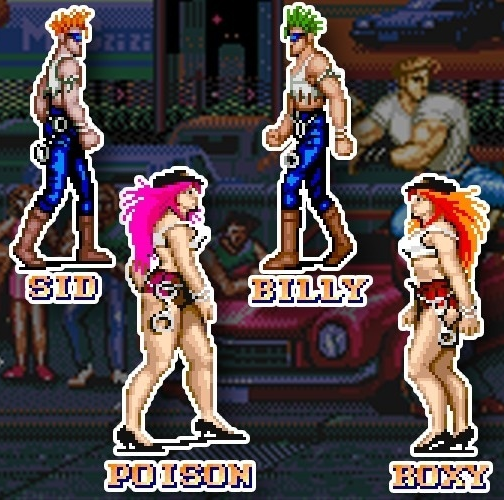
For example, back when the side-scrolling beat 'em up Final Fight was released in 1989, the Japanese version of the game featured two female enemies called Roxy and Poison. For the American release of the game, Roxy and Poison were removed from the game and replaced with two male punk characters called Sid and Billy, because "hitting women was considered rude". It was originally suggested that Roxy and Poison be considered male-to-female transsexuals -- this is how the famous confusion began over Poison's sex -- but supposedly, Capcom's developers figured that "wasn't enough" to deter critics of the two female enemies (wisely, in my opinion) so they replaced them entirely.


There's a site I found that has a good name for this trend; "Sidbillies". The writer of this article at ScrollBoss shows examples from other nineties' games like Sonic Blast Man, Ninja Warriors Again and Sunset Riders. The most interesting game mentioned, however, is Final Fight 2. The reason being that the second game in the Final Fight series had a playable female character, Maki. So it seems like the Final Fight series was embracing equality for the first time, having both heroic and villainous male and female characters ... but once again, the female enemies, Eliza and Mary, were removed in the American version and replaced with male ones, Robert and Leon.

In a way, this is actually worse than the German version of Half-Life replacing the marines with robots. That was done because someone determined that violence against human beings was completely wrong, so the human enemies were replaced with something non-human. It was ridiculous but morally, I can't fault them for it. The makers of Final Fight (and the other games listed on ScrollBoss) decided that violence against women was wrong ... but violence against men was completely fine, or at least more acceptable. It's one thing for this to be the case in the first Final Fight, where the three playable characters were all male, but it's quite another in the second, where one was female. You could justify having Sid and Billy in the first game if you were wary about encouraging male-on-female violence. The flipside to that, however, is because there's a female playable character in Final Fight 2 but there are no female enemies, Capcom are inadvertantly encouraging female-on-male violence. It makes me wonder why Maki was left in the game at all; is beating up men as a woman considered progressive in a way that men beating up women isn't?

Capcom aren't the only ones guilty of this and it certainly didn't die out with 2D games. Even though sprites are gone, so female characters can't simply be papered over with male ones, developers have come up with a much easier way of avoiding controversy; leaving out female enemies altogether. 

Lots of game developers seem to have (figuratively) taken their cues from Final Fight 2 by doing this. Back in one of my first blog posts, I said that the villainous Civil Protection in Half-Life 2 probably did feature women in its ranks but their voices were altered and their feminine physiques hidden underneath the Civil Protection’s bulky security outfits (or perhaps their bodies were altered too). However, this doesn't let Half-Life 2 off the hook because they still appear to be male to the audience, while the good guys -- resistance members -- feature both men and women in their ranks. During development, Valve apparently intended to make the Overwatch Sniper enemy female but, looking at the concept art, there's very little there that I could describe as "female". It looks very robotic, so there aren't many female qualities to be found. Unlike the Civil Protection in the final game, who still look human, act human and fall like human beings when they're killed.

An argument that I've heard both for and against female soldiers in games is about realism; people opposed to them argue that it'd be unrealistic because women only account for a small percentage of the military in real life (and only now in the US are being considered for combat roles). People in support of female soldiers in games point out that realism isn't really an issue when you're dealing with fiction, at least in a lot of games.

Personally, I think the realism argument doesn't make sense for either side when you think about games like Final Fight 2, Half-Life 2 or Final Fantasy VIII, which all featured female characters on the good side but only male characters on the evil one. Unless the developers of these games intended to make the villains out to be huge misogynists -- which they didn't -- there's no real reason for female characters to only be on the heroic side.

I would love to see more generic female soldiers and warriors in games, particularly on the opposing side. Because as it stands now -- and not just in the games mentioned above but Uncharted, Metal Gear Solid, Mercenaries, Tomb Raider and many, many others -- we're used to seeing men being killed. In all of those games, it's our objective to kill men, and only men (excluding the occasional boss). This is developers treating men as disposable and unimportant. So the realism argument falls flat when one side is single-sex and the other is co-ed. It's very unrealistic ... but it's also completely sexist because men are the only ones the player is meant to kill. That overshadows the realism argument.

Interestingly, Bethesda came up with another way to emphasise male disposability when making Fallout 3. One of the perks -- special abilities the player character could earn when levelling-up -- available to the player was to cause ten percent extra damage to characters of the opposite sex. However, because there were many, many more male enemies in Fallout 3 than female ones, the perk was a lot more useful if playing as a female character. It's minor but nevertheless puts a greater emphasis on killing men than women. As a result, two extra perks were added to Fallout: New Vegas to award the damage bonus against members of the same sex.

The Lady Killer and Black Widow perks.

Surprisingly, EA is one of the few developers I've seen with a decent split when it comes to the sexes of enemies in their games. Mass Effect, Dragon Age and Kingdoms Of Amalur: Reckoning all seemed to have a fair balance between male and female enemies (as well as aliens and monsters). Of course, Mass Effect heavily influenced the other two but they're all separate games nonetheless. They all serve to treat women the same as men.

There's an alternative to having an even split between male and female enemies; making everyone in the game only male or female. Surprisingly, it's not as crazy as it sounds. Starhawk only featured a single female character (who picked up a gun and joined the battle towards the end of the single-player mode, just like the men) but it worked for the setting; Starhawk was going for a "space western" theme and, given that most gunslingers were male, it suited the game. All the enemies seemed to be male too but they were just monstrous enough that it didn't really matter. Hunched over, with odd skin colours and bones that were on the outsides of their bodies. However, even though Starhawk managed to make it work, I wouldn't recommend it for every game. Although even that was better than emphasising male disposability with male enemies and mixed heroes.

Long story short, the idea that it's more acceptable to kill one sex over the other disturbs the hell out of me and I hope to see more female enemies in games in the future. This isn't a case of a lack of women in games anymore, as it was back in the days of Final Fight. Gaming has evolved to a point where women are in games now ... but developers are paranoid about making it the player's job to kill them in the same way they kill men.

To close, here's Lara Croft brutally killing men. Enjoy!