Showing posts with label bioshock. Show all posts

Sunday, 20 April 2014

Comparing 2002 to 2014: How Have Things Changed?

This blog post features spoilers for The Wolf Among Us and Metal Gear Solid 2.

I apologise for not updating more regularly but, as you'll know by now, it's mainly due to college work building up at inopportune moments. The final five weeks are coming up soon and I sense that the assignments are all going to be crammed in at once. Plus, if that wasn't enough, I've been avoiding gaming sites like the plague because I was intentionally trying to stay away from any information about Dark Souls II, wanting to go in completely blind, so if any major news about gender issues in gaming cropped up, I haven't heard about it. I know Anita Sarkeesian accepted her GDC Ambassador award but I haven't watched her speech, and don't intend to.

Anyway, I'm finally able to finish this blog post that I started writing in early January. There'll be a few places where I write things like "lately" and "last week" but it's outdated in a few places. I even linked to the Penny-Arcade report at one point, which is no longer available. However, the majority of it was written today (and focuses on books from over ten years ago anyway), so it's not particularly important that it's a few months old:

Lately, I've had to scour a bunch of books on gaming as part of a written assignment, hoping to find anything that would help me with a hypothetical game proposal (e.g. - info on target audiences, costs, number of people in the development team, etc.). I found a few interesting perspectives from women working within the industry. Nothing groundbreaking but also not the typical opinions we read on gaming sites.

Marketing
"Additionally, as you’re proofreading, keep your audience in mind. Does the press release appeal to your audience? While your ultimate audience is the person reading the news, your first audience is the gaming press. Who are these people? Well, they’re males— mostly. When asked about the male/female ratio of game reviewers at Gamespot, Andrew Park noted that, “currently it’s infinity, which is what you get when you divide by zero.” While the age range of the gaming press is typically viewed as very young, Park reports the average age of Gamespot reviewers as mid-20s to early 30s. Aishoshi of IGN sees an age range of 16 to mid-50s. He also notes the male to female ratio as “about five males to one female over the course of our existence.” Take a glance down the editor photos in a PC Gamer and you’ll see a row of seven white, male faces and, at least at the time this article was written, one female face.

So, what does all that mean in terms of your press release? Not to say that these guys aren’t in touch with their feminine side, but your best bet will be to focus on the “dude!” elements of your story. How many levels? How many Mechs? How many weapons? Any intense bands on the soundtrack? While the number of female gamers appears to be growing, like it or not, until more women join the ranks of the gaming media, you should probably focus on the guy-appealing aspects of your game."
- Beverly Cambron, Secrets Of The Game Business (2002)

Last week, I was reading a blog over at Vicsor's Opinion about female representation in games and Vicsor brought up a game that I'd completely forgotten about over the last few months; Remember Me, the game that was at the centre of a Penny Arcade report about games starring female protagonists supposedly only being granted 40% of the marketing budget of a game starring a male protagonist. I don't think I mentioned that at the time but, if that's the case, it's pretty despicable that a publisher would actually designate more funding to games with male heroes. Yes, that is a significant case of women being held back in the games industry and everyone suffers because of it; we receive fewer interesting, varied protagonists and it shows a low opinion of the audience. Although I think it'd be interesting to see the budget breakdown of a game like Tomb Raider (2013), to see exactly how it can star a female character but need over five million sales to succeed. Although that's obviously the exception rather than the rule.

Vicsor's blog was in a similar vein. He took a look at the different representations of male and female characters and I like that we share the same opinions on varied characters. However, Vicsor did something that I can't believe so few others have thought to do, me included; look at the game sales. Although we'd need to look at more sales figures to see if there was a correlation, it did establish that in spite of the Penny Arcade report raising its stature, Remember Me still failed to sell. In spite of the criticism directed at cynical marketing teams, people didn't buy Remember Me to avoid turning the "people don't buy games with female protagonists" belief into a self-fulfilling prophecy.

The marketing and sales figures for games starring female protagonists is a chicken-and-egg situation; does a lack of marketing cause them to have low sales or do low sales lead publishers to give them a smaller marketing budget?

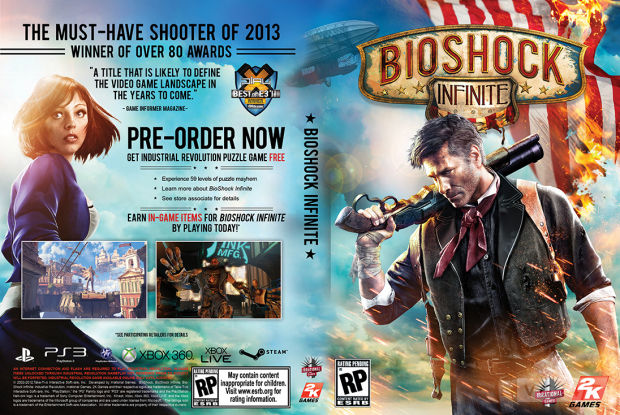
Beverly Cambron's quote above doesn't tell us anything we didn't already know but it's interesting to know that developers write press releases for the sake of the reviewers as well as the mainstream audience. It makes me wonder if and how marketing for games has changed since 2002. Part of me thinks that, with diversity and gender issues in gaming becoming a bigger issue, this kind of cynical stereotyping of audiences would've died down ... but with the prevalence of the "stubbled male protagonist, face-pointing-down, eyes-pointing-up" pose on box art, it feels like the opposite. As Cambron's quote above shows, this isn't an accident; it's clear that marketing teams know they're pandering to some "dudebro" audience and stereotyping gamers (particularly male ones) as a marketing tactic. Ken Levine said much the same thing when defending the box art for Bioshock Infinite, saying that the design was made following visits to "frathouses and places like that". The reason behind this is the same one that was directed at Anita Sarkeesian about why certain female portrayals and plot devices exist; because the games industry is a business, with developers intending to make money. It might be unfortunate but if something works, why change it? In fact, if the cover of Bioshock Infinite and other games are anything to go by, it must've been a marketing tactic that was so successful that developers begun to emphasise the "'dude!' elements" a lot more.

I have to admit, part of me also wanted to include the Beverly Cambron quote as a response to the people who used to tell me, "don't you know that negative male portrayals are made by men?!" as if that somehow made it justifiable. It's unrealistic to assume any situation in gaming we currently dislike is the fault of either sex specifically.

Currently, according to Beverly's Twitter feed, "My game industry days are (happily) over".

Portrayals & Character Design

"There are stereotypes that people in the past have gone with that we have moved away from now. I don’t know that it’s necessarily because we’re trying to appeal more to the female market, or whether we’re just growing up as an industry. In a role-playing game now you wouldn’t want to have a halfnaked barbarian girl be your reward for some victory or whatever. We try to keep really blatant sexism out of it. I think that’s come because we’re more grown up as an industry, but it may be because Stormfront in particular is very sensitive to gender issues. We always have been, from when the company started.

Still, we always try to make the player characters in games, the protagonists, feel heroic and be of heroic proportions. In other words, if I’m playing a game and I as a woman decide to play a male character, I don’t necessarily want to see a weedy, weak-looking guy. I want to play a big barbarian. And if I’m playing a female character, I want to play a very attractive, strong, dynamic-looking woman. I think no matter what gender a player character is, you want their representation on-screen to be heroic, to be superhuman. I don’t mean like Superman, but more idealized than a real human would be.

In game stories these days, stereotypes are being broken down a lot more. There aren’t just weak women and strong men. There are also strong women and weak men. There are evil women, there are evil men. It’s a lot more even. There are a lot more women in gaming now, more women players. So it may just be an evolution of the culture that we’re reflecting as well. I’ve read some figures that seem to indicate women players tend to dislike complex interfaces, and so it may be part of the broader movement towards making simpler interfaces that’s brought in a larger female audience."
- Sarah Stocker, Swords and Circuitry: A Designer's Guide to Computer Role-Playing Games (2002)

I think Sarah Stocker gets to the heart of what "escapism" is with these paragraphs. She describes exactly why we can (or should) accept exaggerated portrayals in games, in much the same way we do with comic book characters. I've heard female gamers on Youtube make the same comments about how characters of both sexes are exaggerated but it's refreshing to read these views from a woman actually working within the games industry.

I've been incredibly critical of the "male power fantasy" argument made by feminist critics in the past -- the idea that women in games are exaggerated because of sexism and objectification but men in games are exaggerated because "men want to look like that" -- and it's interesting to read Stocker's perspective on it. Unlike me, she supports the "power fantasy" argument but also states that it isn't gender-specific.

The theory that stereotypes are being broken down more and more is an interesting one. Remember that the above paragraphs were written in 2002 and, after a quick look at the games released in 2001 on Wikipedia, I can see why Sarah Stocker would make that claim. To be fair, I don't know when Stocker's piece for the book was written -- it could've been long before 2002, depending on how long it took for the book to be published -- but in 2001, we had prominent games such as:
  • Max Payne - Female antagonist.
  • Jak & Daxter - Male and female antagonist, featured a female mechanic as a supporting character.
  • Half-Life: Decay - The PS2 version of Half-Life, featuring an extra co-op mode where both playable characters were female.
  • Grand Theft Auto 3 - Female antagonist, "heroic" female criminals (such as Asuka, who provides the player with missions).
  • Onimusha: Warlords - Playable male and female characters, evil male and female characters, male and female damsels in distress.
  • Virtua Fighter 4 - Introduced female character Vanessa Lewis, with an unconventional muscular design.
  • Ico - Certainly broke stereotypes about protagonists and damsels in distress, making the player care about the characters involved.
  • Serious Sam - Parodied traditional stereotypes about big, strong, "manly" male heroes.
  • Alien Vs Predator 2 - Heroic male and female marines, female secondary antagonist in the marine storyline and, as in all Alien games, the Alien Queen is an antagonist.
  • Fatal Frame/Project Zero - Female hero, female antagonist, male damsel in distress.
  • Final Fantasy X - Several female protagonists, a female antagonist (Yunalesca), practically everyone is a damsel in distress at some point.
I'd also add Metal Gear Solid 2 to the list, since I think Olga, Fortune and Emma Emmerich are all strong female characters in their own way but that's more of a judgment call; they all die by the end of the game and I'm sure people would take issue with Olga being sexualised at the start of of the game (even though, y'know, the end of the game features the player controlling a naked Raiden). Oh, and there's also Oni, which has a female protagonist but I've never played it (so maybe she's portrayed horribly. Let me know in the comments if you've played Oni). I just thought I'd bring it up because that game looks awesome and I'm tempted to try it out ...

Anyway, what we should take away from all of this -- as well as the depression that comes from knowing we might never see a gaming year as good as 2001 again in our lifetimes -- is that Sarah Stocker's comments about stereotypes being broken is understandable because of the games on offer in 2001. I'm sure that people could just as easily point to Dead Or Alive 3 as an example of the opposite but that particular series skew the statistics regardless of the year we're looking at. As an example, if we look at the games released ten years later, in 2011, a Dead Or Alive game appears on the list again. It's fair to say that DOA is a series that is never going to break any stereotypes.

I'm not going to pretend that I've played as many games on the 2011 list as I have on the 2001 list but, from what I can see, I don't see as many stereotypes being broken. When it comes to gender issues, L.A. Noire, Final Fantasy XIII-2 and Batman: Arkham City seem to be reasonably by-the-numbers when it comes to stereotypical portrayals when it came to male heroes and villains -- sometimes remarkably, in the case of Arkham City -- but Dragon Age II and Uncharted 3 both featured female antagonists. The thing is, all of these games featured strong female characters (except perhaps L.A. Noire, from what I can recall), so that's certainly a quality that has stuck since Stocker's remarks in 2002.

However, when it comes to male portrayals, am I the only one who feels like things feel stagnant? The portrayals of female characters in Arkham City are very different from those in Final Fantasy XIII-2, which are just as different from those in Dragon Age II. With the exception of Nathan Drake -- a favourite protagonist of mine for being a character that doesn't take himself too seriously, which is a rare quality in the days where the "Stubble McBadass" archetype looms over the games industry (to use a term from Michelle Clough) -- I feel like stereotypes for men have become more entrenched rather than broken down. 2011 was also the year when we saw Call Of Duty: Modern Warfare 3 released, just to hammer the point home. The women are varied, the men are similar.

I don't want it to seem like I'm cherry-picking my examples here and this is by no means a comprehensive list or study; like I said, I haven't played as many games from 2011 and I'm sure that if we looked at the 2001 list, we could see plenty of examples of male protagonists that are incredibly similar to the ones picked from 2011. Unfortunately, it does feel like stereotypes are the order of the day for male characters. Why? Possibly due to a lack of a push for varied male characters as there has been for female ones or maybe it's for the same reasons that Beverly Cambron focused on the "'dude!' elements" and Ken Levine appealed to frathouse gamers; they're the characters that sell games. I find it hard to believe that having a few more male characters in the vein of Ico and a few less in the vein of gravelly-voiced Cole McGrath of Infamous would be the worst thing in the world. Although considering the difference in how those games performed, sales-wise, I may be wrong ...

As an example of how male stereotypes are still alive and well in the games industry, let's take a look at a series that is ongoing right now; The Wolf Among Us from Telltale Games, developer of The Walking Dead. Similar to TWD, The Wolf Among Us is released in different "episodes" and, as of the latest episode, there's only one female villain but every single adult male human character is a scumbag in one way or another. Whereas the women are level-headed, independent, strong-willed and often victimised, the men are pimps, thugs, torturers, murderers, perverts, thieves and stalkers. Again, it feels like stereotypes have been broken down for women -- who are often portrayed as just trying to make a living -- while the men are just brutish or slimy, fighting each other rather than getting things done. The women are mature, the men are neanderthals.

One final thing about that Sarah Stocker quote. This last part:

"I’ve read some figures that seem to indicate women players tend to dislike complex interfaces, and so it may be part of the broader movement towards making simpler interfaces that’s brought in a larger female audience."
I only included this due to the long-standing rumour that Anita Sarkeesian felt "a lot of female did not get into [Mirror's Edge] due to its difficult control scheme". I certainly don't believe that difficult controls will prevent any gamer, male or female, from playing a game -- and I'm not the only one -- and I think it's insulting towards female gamers to suggest that it is. However, I've pasted Sarah Stocker's quote about interfaces anyway, just because I thought it was relevant. I should also point out that it's not clear whether Anita did or didn't say that line about the controls in Mirror's Edge; due to the fact that she doesn't allow people to film her talks about gaming (only the talks about harassment), we have to rely on second-hand information and then wait for Anita's inevitable "don't believe everything you read online" tweet.

Sarah Stocker is formerly of Stormfront Studios and, as far as I can tell, currently works as a senior producer for Sony Computer Entertainment America.

*

Even though I haven't written anything for a month, I still read everyone's comments. I've had some very interesting ones lately, even though I haven't responded to them, so thank you for commenting. It's much appreciated. Feel free to do the same below or e-mail me at themalesofgames@gmail.com

Saturday, 24 August 2013

Reversing The Sexes

I've been really bored lately, even with Dragon's Crown. I played Gone Home recently too but thought that was a letdown. While I suspect there'll be something to write about following Gamescom, it's all very slow-going right now. Not that there's a shortage of gender issues concerning men in video games to write about but, it has to be said, it's so much easier to write about current issues and have links at my fingertips than it is to hunt down pictures and videos myself. Still, with nothing else to do, let's talk about reversing the sexes.

A few days ago, I read a comment on Youtube that said something along the lines of "reversing the sexes is  a standard defensive, kneejerk response to accusations of sexism in video games". I can't recall the video I saw it under (and after spending most of the day searching, can't find it either) but that statement left me scratching my head. Hypothetically reversing the sexes of a situation has always, to me at least, seemed like an easy and effective way to examine whether it's sexist or not. In fact, people like me who get involved in the bubble of gender issues can forget how easy it is to become bogged-down with complicated terms (like "patriarchy", "hypoagency", "rape culture" and other phrases that I like to steer clear of while writing this blog) so reversing the sexes is actually an incredibly useful, accessable tool to people who aren't as interested in gender issues; it's easy to do and doesn't overcomplicate any issues. So let's try a few.

There's a moment in Star Wars: Knights Of The Old Republic that always confused me; the player character meets a hunter on Tatooine who is stranded and needs the player's help. The wife of this hunter has rigged his hunting droids to explode if he takes another step. He had no choice but to wait for help, possibly dying of thirst in the process. The hunter isn't smart enough to figure out how to disarm them, so he asks the player character for help. It isn't the situation itself that's questionable -- even if it is the Star Wars equivalent of a bumbling husband being at the mercy of his more intelligent wife -- but if the player chose Bastila Shan, a female Jedi and something of a mentor to your own character, to accompany them, she has some eyebrow-raising things to say about the hunter's situation:


Bastila says, "I say leave him". The hunter replies with, "you're pretty heartless for such a pretty lady, you know?" Bastila responds, "I take it back. Let's congratulate his wife".

To me, this always seemed like a huge overreaction, especially for the supposedly good-natured Bastila. So much for "the Jedi do not believe in killing their prisoners", as she states earlier. Leaving prisoners to die of thirst, however, is apparently completely acceptable.

The uploader of that Youtube video comments that, as out-of-character as it may seem, it hints at Bastila having anger issues that would later be used to turn her to the dark side. Personally, I find it a bit hard to connect "irritation over clumsy come-ons" with "dark lord of the Sith". Not that I think the uploader is incorrect but it seems like an odd thing to foreshadow side-switching with.

So do you think it's sexist? I'm torn. The hunter isn't portrayed as a sympathetic character; using droids to hunt is a no-no in KOTOR and he has a habit of flirting with women in spite of being married. Plus, in spite of Bastila's comments, the player earns Light Side points for helping the hunter, so it doesn't seem like the game is encouraging punishing the hunter for his comments. On the other hand, it takes a lot to advocate murder (and congratulate the murderer) just because you're irritated over someone's pick-up lines.

Reverse the sexes and I think there's only one big difference; it sounds a lot more harsh to me to think of a male Jedi offering to congratulate an unintelligent woman's husband for plotting to murder her. It would come across as unbelievably petty for a male character to be so irritated by some (admittedly obnoxious) come-ons to advocate such a serious act of domestic violence. As we know, however, domestic violence against men isn't awarded the same seriousness as it is against women. Having said that, I'm still coming down on the side of "not sexist", solely because the player is rewarded with Light Side points for helping the hunter.

Helpfully, there are a few games that provide surprisingly accurate gender-flipped counterparts to each other in spite of the fact they're more-or-less unrelated. Take Heavenly Sword and Resident Evil 4 as an example:


And back when I wrote "The Violence Double Standard", I brought up a moment in Final Fantasy XIII when Lightning punched Snow -- her sister's boyfriend -- twice in the face for failing to keep her sister safe.


I went on to say, "according to Square-Enix, she was conceived as "a female version of Cloud", from Final Fantasy VII. I must've missed the version of Final Fantasy VII where Cloud clocks Tifa in the jaw angrily. Twice." It was only this month that I received a long reply in the comments that ended with a link to this video from Final Fantasy VII, where Cloud attacks Aeris in a moment of stress. Skip to 14:40:


Comparing these four moments is a good way to highlight the differences when violence is portrayed against colleagues in games. They are, more or less, gender-flipped versions of each other.

The big difference, first of all, is that the men aren't in control of their actions when they attack the women. In Resident Evil 4, Leon is being controlled by the parasite inside his body and in Final Fantasy VII, Cloud's stress causes him to have an out-of-body experience; literally, a ghostly image of Cloud appears that the player controls while the corporeal Cloud attacks Aeris and the player is unable to stop him in any way. In contrast to the two of them, both Nariko in Heavenly Sword and Lightning in Final Fantasy XIII are well aware that they're harming their own colleagues. So it's acceptable for female characters to hit male ones (which is shocking, I know) but for male ones to hit female ones requires a trance of some kind.

It's also worth noting the reaction to each one. Nariko's choking of her fellow clanmember is broken up quickly but there isn't any concern shown for the man. Lightning punching Snow is practically ignored by their fellow teammates. Certainly, no concern is shown for Snow. On the other hand, Ada reacts to being choked by kneeing Leon in the ribs and stabbing him in the thigh to break him out of his trance. He ends up thanking her for this. So no matter who is being choked and who is doing the choking, violence against the male character ends up being acceptable in both situations. In Final Fantasy VII's case, the remaining party member (Barret, in the video above) quickly rushes in to knock Cloud out and prevent him from hurting Aeris any further.

It seems like trances are an easy way to have violence stay reasonably inoffensive; reverse the sexes of either the Leon or Cloud attacks and they're practically the same. The hero doesn't come across as any worse because of the attack, regardless of his/her sex or the sex of the victim. Part of the reason for that is because the attack isn't the important part, whereas the trance is; both Leon and Cloud attack women because it's such an extreme action, it shows how far their sanity is slipping. Women attacking male characters on their own side is just ... a quality. Game audiences aren't supposed to think anything of it, except perhaps "I'm glad that guy got taught a lesson". As a result, reversing the sexes of the Heavenly Sword and Final Fantasy XIII attacks does make things seem worse; a male character in complete control of his faculties choking or punching a woman who refuses to fight back is just asking to be called out for its misogyny.

I suspect its moments like these -- strikes against male characters by female ones -- that make up the majority of examples that don't really stand out until we reverse the sexes. They're so quickly dismissed when they're against a male character that either we ignore them or we're supposed to ignore them. Take Bioshock Infinite. It's a very basic example but Elizabeth strikes Booker DeWitt in the face with a wrench that isn't brought up again after it happens. It knocks him out-cold, giving Elizabeth enough time to flee but Booker still doesn't have a word to say about it.


I don't know if the gaming public is prepared to see a male character doing this to a woman, although I think it's possible to give gamers a bit more credit. Take the Mass Effect series as an example. It's possible for the main character, Commander Shepard, to punch a female reporter attempting to smear his/her (although for this example, let's go with "him") reputation in all three games. Sure, it's not the same thing, in quite a few significant ways; the reporter isn't on Shepard's side, punching her is a "Renegade" option and, as previously mentioned, Shepard can be either male or female. Each of those points lessens the impact and controversy of a male character punching a woman. Even so, there doesn't seem to have been any backlash at all against the Mass Effect series for this. In fact, it's been praised because the reporter is intentionally unlikeable. Who knows if a male character intentionally punching, choking or bludgeoning a stubborn (like Snow) or sexist (like the clanmember) woman on their side could be as accepted as women doing it to men is now (irritatingly)?

As always, feel free to leave a comment or send me an e-mail at themalesofgames@gmail.com.

Thursday, 30 May 2013

Damsel in Distress: Part 2 - Tropes vs Women in Video Games

Anita's back again, with the second part of her three-part series on the damsel in distress. Let's jump right back into it. Since this video deals with the deaths of characters, there will be spoilers throughout this blog post, mostly for older games but for some as recent as Bioshock Infinite. So read at your own peril.


I'm not a fan of Anita Sarkeesian. That should go without saying. Without going too deeply into why, let's just say that it's been a rocky road for Anita over the last year. She made a few too many questionable decisions for me to trust that her video series would be anything but one-sided. To my surprise, her latest video -- part two of three in her damsels in distress series, focusing mainly on damsels in distress who are killed, sometimes by the main character -- was one that I didn't find completely disagreeable. She hasn't won me over. I'm not convinced that Anita is a force for good in gaming and the negatives continue to outweigh the positives. What I am convinced of is that, when it comes to gender stereotypes, her heart is in the right place. Unfortunately, other points put forward by Anita are so biased and outright contradictory at times that having her heart in the right place doesn't help her case in the slightest.

Let's keep it positive though. I'll try not to quote Anita too much this time around and just give some basic summaries but at this point, I'd like to. Talking about male video game characters who lose their wives and daughters -- Max Payne and God Of War's Kratos are the two examples used -- Anita puts forward the idea that the reason these characters go on their roaring rampages of revenge is not because they're trying to avenge the loss of their wives and daughters, whom they loved very much.
"I’d argue that the true source of the pain stems from feelings of weakness and/or guilt over his failure to perform his “socially prescribed” patriarchal duty to protect his women and children.

In this way these failed-hero stories are really about the perceived loss of masculinity, and then the quest to regain that masculinity, primarily by exerting dominance and control, through the performance of violence on others.

Consequently violent revenge based narratives, repeated ad nauseum, can also be harmful to men because they help further limit the possible responses men are allowed to have when faced with death or tragedy. This is unfortunate because interactive media has the potential to be a brilliant medium for people of all genders to explore difficult or painful subjects."
That last paragraph is the important one. The one that I have plenty of praise for. Anita takes note of the fact that male gender roles are very limiting; aggression, dominance, protectiveness, chivalry, resourcefulness ... it's a risk for men to step out certain gender roles and can be frustrating for the ones who don't feel that they can.

One of the problems, however, is that Anita only seems to be stating this because she believes it supports her idea about women being objects rather than fully-rounded people that the protagonist cares about. They're property to get angry about being "taken" from them rather than people to miss. I don't think one guarantees the other. If I also might state the obvious for a moment, another problem is that these are video games. Revenge stories tend to work far better for gameplay purposes than stories about mourning and how to deal with loss. Max Payne and God Of War are based on film noir and violent Greek revenge-stroke-tragedy myths; not the kind of genres that have the heroes reaching for boxes of tissues. At the end of her video, Anita gives a few examples of games that she believes handle the subject of death in games more maturely (specifically Dear Esther, The Passage and To The Moon). Not that I hold anything against these games for doing that but they're not likely to become the standard. I adored To The Moon but haven't touched it ever since I completed it and I'm more likely to play Max Payne before I go near it again.

I'll come back to this later on but there's a much more significant reason why my goodwill towards Anita over acknowledging this hurtful gender stereotype didn't last. The big chunk of the video revolved around what Anita described as "the Euthanised Damsel". This is what happens in a game where a hero manages to catch up to a person he/she has been searching for -- usually a damsel in distress, as the name indicates -- only to find them begging the hero to kill him/her. Perhaps they've been turned into a monster or altered in some other way by the bad guys and they don't wish to live anymore. They'll beg for their rescuer to kill them and the rescuer will respect their wishes. That's the Euthanised Damsel in a nutshell.

The problem is that, while I don't want to say Anita was moving the goalposts at any time, it was a very large pool she was drawing from, based on a varied list of criteria. At one point, it was just women who were beyond saving. Then it was love interests who were too far gone and had to be killed. Then it was family members, mostly mothers. Then it was love interests who didn't have to be killed but did have to be fought to break them out of whatever spell or ailment it was that made them attack the heroes.

We have to wait for Anita's next video to hear her talk about male examples but I have a tendency to pick out a few male analogues to Anita's accusations while she's discussing them. Each time the Euthanised Damsel definition was expanded, there were a few examples that immediately sprang to mind, be they characters like Sinclair in Bioshock 2, Jecht from Final Fantasy X, Steve's father from Resident Evil: Code Veronica and plenty who only had to be attacked, rather than killed, such as Leon in Resident Evil 4 and Baralai in Final Fantasy X-2.


However, there were very few examples I could come up with featuring a male love interest being killed by a female hero. That's partly because, as Anita points out, there are so few female protagonists but even fewer with male love interests. This is slightly off-topic but I think the inclination to place female protagonists in the "strong, independent woman" archetype is a reason why male love interests aren't often featured; perhaps the belief that the heroine is motivated by a man betrays the "independent" part of that archetype. On-topic, however, I read a suggestion on a Youtube video that made me think that a woman euthanising a male "damsel" isn't the real analogue to men euthanising a female one. No, the real analogue is male heroes who die to save their damsels in distress; just like the female characters Anita brings up who request death rather than live as an abomination, male characters are often expected to have no thought for their own safety as long as the female characters are okay.

Capcom is very fond of doing this. In Onimusha 2, one of the story branches features Kotaro sacrificing himself to save Oyu, a woman who he has been largely antagonistic towards for most of the game. In Devil May Cry 4 -- which Anita brought up to point out the damsel in distress, in spite of the fact the game also features Nero being captured -- has Credo betraying his religious order in an attempt to save his sister, Kyrie, and it costs him his life. In Resident Evil: Code Veronica again, Steve is turned into an invincible monster at the end of the game but manages to fight off the transformation, his love for Claire Redfield is so strong. He dies shortly afterwards. This one is quite close to the love interest being killed by the heroine, in that Steve was a "damsel" moments earlier but he dies because his body can't take the transformation rather than because Claire pulled the trigger herself.

Then there's the huge sacrifice made by the hero of Shadow Of The Colossus (although he doesn't die). In Bioshock 2, the hero, Subject Delta, dies regardless of the ending the player receives, while the young woman he set out to save, Eleanor Lamb, lives on. Bioshock Infinite features a similar story, with many different incarnations of Elizabeth drowning her father, Booker DeWitt (who accepts his death willingly), so he doesn't go on to become the game's villain and kidnap her in the first place. That probably sounds confusing if you haven't played Bioshock Infinite and trust me, it's hard enough to understand even if you have.

One of the flaws in Anita's argument is also making the assumption that developers only use the Euthanised Damsel when they wish to shock people. I find that hard to believe. While there are doubtless examples that do exist just to be edgy, it seems like Anita isn't willing to consider the possibility that the writers wanted to create a tragic storyline. Or a storyline with a twist. I can't help but think Anita came to the conclusion that being edgy was the reason why the Euthanised Damsel existed before she looked at her many examples and then just found a way to make them fit her viewpoint.

Those are my thoughts on the "main" portion of Anita's video but in spite of my criticisms, I don't see much of a problem with Anita's dislike of the "Euthanised Damsel". Unlike her first video, Anita isn't as judgemental. There isn't any demonising of Shigeru Miyamoto, for one thing. The attitude is still there though; Anita explains why she dislikes the Euthanised Damsel -- and don't get me wrong, I completely understand why -- but I'm not really given a reason why I should care beyond conjecture and guesswork. The Jack Thompson parallels are still there, this time with regards to domestic violence. More on that later.

That's the important thing -- and, more to the point, the reason I can't get behind Anita as a force for good in gaming -- Anita states, "one of the really insidious things about systemic & institutional sexism is that most often regressive attitudes and harmful gender stereotypes are perpetuated and maintained unintentionally". Unfortunately, Anita herself had already reinforced and condoned harmful gender stereotypes herself at this point. Long story short, she talked at length about domestic violence but her definition followed the Duluth model.

If you know about domestic violence, that should say it all. For those of you who don't, however, the Duluth model is the assumption that domestic violence is "patriarchal"; domestic violence is an act done by men against women and children. If you've been following me for a long time, you'll know that hearing statistics about male victims of domestic violence on television was what interested me in men's rights in the first place. So domestic violence against men is a very prickly subject for me and I do not appreciate having male victims dismissed with gendered language in sentences like "people of all genders tend to buy into the myth that women are the ones to blame for the violence men perpetrate against them". Aside from ignoring male victims and female abusers, it also ignores violence in same-sex couples and doesn't acknowledge reciprocal violence. It is not a healthy, intelligent or accurate image of domestic violence to promote.

Aside from this major problem with Anita's argument, I find her videos peppered with smaller ones too. While Anita's latest video didn't have me shouting curses at my monitor, I did find myself sighing and shaking my head a lot. Her heart may be in the right place -- albeit deep, deep down -- but her solutions are impractical, biased and based on questionable logic and outright contradictory statements. For example, she criticises and dismisses Devil May Cry 4 (and others) for being a "crude, unsophisticated male power fantasy" but also does the same for Ico with "the most decidedly patronizing examples depictions of female vulnerability are used for an easy way for writers to trigger an emotional reaction in male players". That, in particular, made me cringe. Some time ago, Anita removed her video on Bayonetta from her channel because she thought she came across badly in it -- she shrugged off the story and dumbed it down to make it seem insignificant -- and as far as I'm concerned, she's doing the exact same thing with Ico here, with regards to the main gameplay element. You've probably already noted, as I did, Anita's inability to consider that perhaps female players could feel emotionally attached to the characters in Ico.

At one point, Anita repeats the same sentence over and over, wanting to get a point across about a trend: "In [game] your wife is brutally murdered and you then have to rescue your daughter." She seems to believe that the trend of daughters being captured is disempowering to women but apparently doesn't consider the possibility that the reason daughters are so frequently kidnapped instead of sons (and possibly husbands too) is because female characters are automatically more sympathetic than male ones, simply because they're female. Games like Heavy Rain, featuring a kidnapped son, are very rare. We feel more for Max Payne and Kratos because they lost daughters, not sons. In Bioshock 1 and 2, the reason for Little Sisters rather than Little Brothers was because it would be more difficult -- and morally questionable -- for the player to sacrifice little girls rather than little boys. In Bioshock 2 and Infinite, the protagonist's main mission is to find mistreated female characters, not male ones. It's the same principle behind "missing white woman syndrome", where the media is more willing to spotlight missing people if they're middle- or upper-class white women than if they're, say, a poor black male.

While it might seem like a good idea for Anita to decide against including violence against women who are treated as equals -- female soldiers and fighting game characters, for example -- there are a number of reasons why it carries some unfortunate implications for men. Back in February, I wrote about the sexism in Heavy Rain, comparing and contrasting two death scenes in particular; one of playable character Madison Paige, having a drill used on her genitals and one of Leland White, the villain of "The Taxidermist" DLC story, who has a chainsaw used on his. White's death is much more violent than Madison's, showing the genital mutilation in full, gory detail while Madison's is treated with more sensitivity; instead of showing the death, the camera cuts to the outside of the house and we hear a scream. The problem is that under Anita's definition, White's death is actually more acceptable than Madison's because he's not a damsel in distress at the time. The grisly nature of his death becomes irrelevant because he still has his agency. While Anita may believe helplessness is required for her definition of "violence against women", I'm afraid that I don't.

Time and again, we're asked to trust in Anita's word only because we're supposed to. We're told to believe the Euthanised Damsel is done for the sake of being edgy, just because that's what Anita thinks is the reason for it. We're told to see the damsels as objects instead of people, since that's the conclusion Anita has come to. While she points out that playing the games she features will not "magically transform players into raging sexists", she also says "media narratives do have a powerful cultivation effect helping to shape cultural attitudes and opinions". There's no explanation why she thinks video games/the trend of damsels and Euthanised Damsels contribute to these cultural attitudes though and that is when we get back into Jack Thompson territory.

This is becoming longer than I intended but I didn't want to leave anything out, so I'll wrap it up. Even without Anita's stance on domestic violence, I wouldn't be able to accept this video. There are just too many little details, too many conclusions drawn from questionable logic for me to support it. That's a shame and I genuinely mean that because, not enjoying depictions of violence against men, I can sympathise with the fact that she is so strongly against the idea of the Euthanised Damsel. However, when Anita says something like "violence against women is a serious global epidemic; therefore, attempts to address the issue in fictional contexts demands a considerable degree of respect, subtlety and nuance", she doesn't seem to realise that she's demanding special treatment. I agree that violence against women deserves to be treated respectfully but she's reading too much into a few too many situations; for example, I'm not sure how many people compare the hero having to kill his fused-with-a-monstrous-alien girlfriend when she asks him to do so in Prey with domestic violence.

Finally, it has to be said ... these are video games. As it happens, there are many important real-life issues that aren't treated with subtlety and nuance. War, for example, has been glamorised ever since Wolfenstein. To ask that all game developers consider how they treat the deaths of soldiers, however, isn't practical for video games. When all is said and done, I could be the most ardent anti-war protestor on the planet but not have any say in what developers should be doing with their own games. The final say is theirs, and rightfully so. The same goes for Anita and her feeling about violence against women in games. That's about all there is to say about it.

Addendum

If you only care about video games, you can stop reading now. This is where I put my investigative hat on and check out the resources Anita used for her video.

Anita posted the list of resources she used for this video on the Feminist Frequency site and they are very telling. Anita's sole resource for the idea that game developers must feature the deaths of women to be "edgy" is this blog post and video. If she actually believes the statement Daria makes in the video then she's actually being more judgmental than I gave her credit for earlier.

While I can't find anything that goes against the claim that "every 9 seconds a woman is assaulted or beaten in the United States and on average more than three women are murdered by their boyfriends husbands, or ex-partners every single day", the Every 9 Seconds website states "there are over 4700 U.S. women incarcerated for defending their lives". Let's just say that the founders of Every 9 Seconds may be playing fast and loose with their definition of the term "defending their lives"; I live in the UK but if any of you have been following the trial of Jodi Arias over there in the US, you may know that she claimed she was acting in self-defence and was a victim of domestic violence. Having followed a few cases of women on trial for murder or wounding charges over the years, Arias certainly isn't the first to make this claim.

One of the other resources Anita posts a link to is for the Wellspring Alliance, which looks fine. In fact, on their FAQ page, they mention that they take everyone, "regardless of race, color, national original, gender, sexual orientation, disability or age". Likewise, on the page linked to on Feminist Frequency's website, they state "Men are also victims of domestic violence, as are couples in same-sex relationships". Apparently, Anita decided to ignore that part when she talked about domestic violence herself.

The resource I'd like to focus on the most is "The normalization of violence in heterosexual romantic relationships: Women's narratives of love and violence" by Julia T. Wood. It's from looking at this study that Anita comes to the following conclusion, which she states in her video:
"Research consistently shows that people of all genders tend to buy into the myth that women are the ones to blame for the violence men perpetrate against them. In the same vein, abusive men consistently state that their female targets “deserved it”, “wanted it” or were “asking for it”."
Looking at the study itself, that is not what was said. First of all, this is a single study, with twenty heterosexual women who used to be in abusive relationships. "Consistently" and "people of all genders" are completely misleading. Nothing of the sort is written about this in Wood's research. Secondly, abusive men are not shown to have stated that their female targets "deserved it", "were asking for it" or anything similar. When these phrases come up in Wood's study, they're actually used as reasons why the female abuse victims stayed in abusive relationships:
"The women in this study described their partners' violence against them as understandable at the time it occurred. They justified it using a variety of reasons: 'I deserved it,' 'He didn't really mean it,' 'He was drinking,' 'It could have been worse,' and so forth."
It's very unpleasant, yes, but this isn't what Anita said. She made a claim about how "people of all genders" view abuse that research "consistently" shows but none of the sources provided on feministfrequency.com confirm Anita's claim. I don't know if Anita or her team at Feminist Frequency can provide sources that back up her claim but this, at least, is an outright fabrication.

Monday, 1 April 2013

I Hate the Gaming Community

I do, or at the least the members of the community in high-profile positions. Journalists and certain developers. It's been one of those frustrating weeks, so this'll probably be more of a rant than a well thought-out blog and I intend to keep it short. Two things have been bothering me: the refusal to accept any opinion that isn't thoroughly pro-feminist, including Anita Sarkeesian's videos, and the attitude that the industry needs to mature while significant members of it refuse to mature themselves.

Let's start with Cliff Bleszinski, game designer for Epic Games (developer of Gears Of War). Back on March 11th, he posted a blog about Anita Sarkeesian that we've come to expect from individuals in the industry. Endless praise of Anita and the continued dismissal of all of her critics as "trolls". At this point, it's old news, but talking about Feminist Frequency over the last few days on forums, I can't help but take issue with some of Bleszinski's claims.

Basically, it's occurred to me that many of Anita's supporters have a worldview that is so set in stone that it would shatter if they ever acknowledged that there is some genuine criticism of Anita Sarkeesian. Their fingers would leap from their hands and run away from their keyboards rather than type, "you know, the critics might have a point". When it comes to the claims Anita makes, there's a general attitude of "we hold these truths to be self-evident, so criticism can easily be dismissed as nonsensical trolling". It doesn't matter how many points are made about Anita's lack of objectivity, cherry-picked examples, questionable money-making methods and censorship, the critics continue to be included with the abusers.

I was looking through some responses to Anita last night -- either to her Damsels In Distress: Part 1 video or her original Kickstarter -- and it's remarkable how many of them make an effort to point out that they think she's tackling important issues ... but she's just making a hash of it. They want to make it clear that they support the issues, or at the very least are not flinging insults and abuse in her direction, but they just think Anita is handling it badly. The Amazing Atheist spells it out with, "if you're expecting some stupid "pwnage" video, you're going to be disappointed". Kite Tales -- with my new favourite video on the subject -- spends the beginning and end of her video stating how much she respects Anita's opinion and hopes that the two sides of the argument can work together to create a better whole. Even one of her Kickstarter backers, while otherwise praising her, berates her for refusing to answer her criticism.

These people will all be ignored by the mainstream gaming press. It doesn't matter how much work went into their videos, they'll still be dismissed along with the misogynists. All this just makes me wonder what the point is.

For example, take a look at this paragraph from Bleszinski's blog:
"We’re the gamers, the dorks. We’re the ones who were on our computers during prom. We’re the ones that were in the back of the lunch room who were playing D&D instead of tossing a football around on the quad. We were supposed to be the open, friendly ones, the ones who welcomed all into our wonderful geeky circle.

We’re not supposed to be a mob that’s storming the gates with our pitchforks and torches.

We’re not the bullies."
Okay Cliff, fair enough. We're not the bullies. So why are we being treated as if we are? Why is sexism in gaming blamed on "privileged manchildren" and "dudebros", which is bullying in itself? Those of us who are in the back of the lunch room playing D&D, why are we being treated like sexists by publishers who think games won't sell with women on the box? Why do game journalists agree with that?
"More than that, it's kind of creepy to me that so few female leads, if any at all, are actually allowed to be in straight relationships, lest it incur the homophobic insecurity of the male audience."
Yes, it's a Jim Sterling quote. What he's saying here is that basically, female leads in straight relationships would only appeal to female gamers because the straight male gaming audience is too homophobic to enjoy it.

Game journalists and supporters of Anita Sarkeesian have this idea that the only reasons anyone could possibly oppose their brand of "equality" in gaming is because they oppose equality. Not because they oppose their arguments or methods of doing things. As Bleszinski said:
"Heaven forbid a woman actually take a magnifying glass to our beloved hobby and actually try to unravel and figure out why things are the way they are in the effort that somehow she might change things?"
And from Rock, Paper, Shotgun:
"All this talk of sexism isn’t going away, nor should it. The gaming industry’s sick, and the symptoms are plain as day. Mystifyingly often, however, the immediate reaction to even the faintest hint of that suggestion is “No, nuh-uh! You just want to censor expression! Give me one good reason we actually need to change.”* Well, if you really want to move beyond “Because jeez, it’s basic human decency to treat someone else the way you’d like to be treated,” Dragon Age III lead writer David Gaider’s got a laundry list of practical reasons for you.

*This can also be translated as “I’m a blathering numbskull. Gobble gobble gobble ptttthrtppt” I’m sorry. I tried to be mature. Instead I just made you read more of the article."
It's clear that journalists don't want to listen. They want to blame. There are plenty of places they could go to online if they want reasonable feedback about sexism in gaming but they've instead adopted an "us vs. them" mentality, even though it makes no sense. They've invented a mythical oppressor; a white teenager who shouts sexist slurs into his microphone while playing online multiplayer. This is the person they wish to blame everything on and it's a stereotype they force everyone who disagrees with the popular opinion into, especially if they're a straight white male.

However, let's take a look at some of the well-reasoned arguments against Anita Sarkeesian, from both her Kickstarter and her Damsels In Distress: Part 1 video. InuitInua, for example, who is female. Kite Tales, who made this video after Anita's Kickstarter video (as well as the one linked to above), is female too. This comment from a woman named "Elsa" has also been doing the rounds. And that's before we get to male examples such as The Amazing Atheist above, Thunderf00t, Instig8ive Journalism and J.J. McCullough. All of whom are doomed to be ignored by mainstream gaming journalism.

As I said, all of this makes me wonder what the point is. How long can gaming journalists and developers go without acknowledging that Anita Sarkeesian may not have all the answers? That men may face issues in games too? That putting Elizabeth on the back of the Bioshock Infinite box wasn't a big deal because she was only a supporting character?


It wasn't the first and it won't be the last but it was the only one singled out. As someone who has played Bioshock Infinite from beginning to end, the critics made a mountain out of a molehill. There was nothing so special about Elizabeth that she deserved a spot on the front cover any more than Emily in Dishonored, Kai in Heavenly Sword or Ashley Graham in Resident Evil 4.

I was going to write about controversy over the IGDA hosting a party with "inappropriate" dancers but ... I can't be bothered, so I'll keep it short. All I'll say is this is what they looked like:


Sounds to me like the IGDA just wanted to create a party atmosphere by putting on some entertainment that happened to feature dancing women. From the way it's been treated -- two people resigned (although one was leaving anyway) over the "inappropriate" "objectified" women -- people have been acting like strippers were giving lapdances. I've read people making the claim that it didn't belong in a professional setting, which sounds like an excuse to me. I can understand that being said about the ridiculous Adria Richards debacle (which I'm not explaining. Just Google "Donglegate") but this was entertainment put on by the International Game Developers Association. It was done by the professionals so the other professionals could enjoy themselves.

In a link to Eurogamer I posted above, in an article about Remember Me -- Capcom's upcoming sci-fi game starring a female protagonist -- they write about how the gaming industry won't mature if it isn't more accepting of female protagonists, which I agree with. Cliff Bleszinski also echoed David Cage's sentiment about the industry needing to "grow up". However, how on earth is our industry ever going to grow up if we take such an immature attitude towards (A) other people's opinions and (B) inoffensive entertainment at the Game Developers Conference? The games industry has much more basic and fundamental strides it needs to take if it wants to mature, never mind the ones where money is involved.

Rant over.

By the way, I'm not too pleased with any of my articles about Anita Sarkeesian. I feel like I've given a decent argument about her work but it's spread out over three blog posts. I'm not happy with it and I think all of the others I've linked to in this post have given better arguments than me. Particularly Kite Tales. As I said, it's my new favourite video on the subject. I still have more to say about Anita though ... and I hope her Damsels In Distress: Part 2 video gives me the material to write a better blog. I know I can do better.

As always, leave a comment below or write to me at themalesofgames@gmail.com