Showing posts with label batman. Show all posts

Wednesday, 24 July 2013

Women Are More Innocent (and more on Anita Sarkeesian)

Women aren't as evil as men. Everyone knows that! Although in case you didn't, game developers have a helpful way to educate you; if there's a female villain in a game, she's the most likely of the bunch to switch to the heroic side or she'll have been hypnotised or brainwashed into being evil instead. One of the two.

Although I try to avoid referring to TV Tropes too often -- I'm a fan of the site but I know Anita Sarkeesian is criticised for taking it at its word a few too many times -- but it has some information on this on the "High Heel Face Turn" and "Females Are More Innocent" pages. The "Sorting Algorithm Of Face Heel Turning" is also worth a quick look ("face" and "heel" are the professional wrestling terms for "good guy" and "bad guy" respectively, in case you didn't know).

The "High Heel Face Turn" trope gets the basic point across but I think it's missing something; going by the definition on that page, the female villain would have to be the lone female on a team of villains to qualify. Not that it's incorrect or any better when it's only a single female villain rather than several but I can think of a game series where all the female villains either switch sides, aren't as villainous, are coerced into being evil via brainwashing or repent how evil they are shortly before death. If you don't want to be kept waiting, I'm thinking of Metal Gear Solid.

Let's start with some others though. Back when I blogged about Batman: Arkham City, I wrote the following:
"There are barely any bad women in the game. Catwoman is an anti-hero. So is Talia Al-Ghul and her all-female army of assassins. Poison Ivy keeps to herself. Harley Quinn is the closest thing to "evil" a woman gets in the game and she plays the comic relief role."
Meanwhile, Mr. Freeze is the closest the game has to a male villain switching sides. He's a lot like Poison Ivy, in that he wants to keep to himself. Even so, he acts pretty selfishly; while Poison Ivy only attacked when Catwoman entered her territory, Mr Freeze shattered a vial of a cure that could save Batman from the illness that plagues him throughout the game purely out of spite. Well, leverage supposedly -- he wanted Batman to help get his wife back but there was nothing to suggest Batman wouldn't have done so anyway -- but clearly spite.

One of the traits that is always present in Mortal Kombat's messed-up canon is Kitana shaking off her brainwashing and joining the good guys. She's raised to believe that she is the daughter of the villain, Shao Kahn, but it doesn't take long for her to find out the truth; that Shao Kahn killed her father, forced her mother, Sindel, into marrying him and adopted Kitana himself. Kitana switches sides, as does her best friend, Jade. Jade was only siding with the villains to keep watch over her best friend. Depending on the timeline you look at for the Mortal Kombat games, Sindel may follow suit and join the heroic side too (but in that particular timeline, so do Ermac and Smoke ... and Raiden turns evil. It's a bit of a mess as the series continues). Kitana and Jade's side-switching is a mainstay of both the old and new Mortal Kombat timelines though, so it looks like there's no way of keeping them evil.

Even in games where the male and female villains are evil for the same reasons, there can be subtle differences. Take the first Mass Effect game, for example. Saren (a male Turian) and Matriarch Beneziah (a genderless Asari but physically female, like all Asari) are both evil because they're in the thrall of Sovereign, a massive ship-slash-AI with mind-controlling powers. Even then, however, Beneziah is given a more sympathetic backstory than Saren.

Then there's Metal Gear Solid, a series where all the female villains have excuses for being evil. In Metal Gear Solid 2, Olga Gurlukovich switched sides because her daughter had been taken from her by the real bad guys (which is an oversimplification but for the sake of this blog, a longer explanation isn't needed). Fortune also turned against at least one of her former villainous colleagues, going so far as to save the good guys' lives before dying of a gunshot wound. In Metal Gear Solid 3, we had The Boss. Long story short, she was never evil. She posed as being evil but the actions of one of the villains led to her plan spiralling out of control and she eventually had to be killed. In Metal Gear Solid 4, there's an all-female team of villains called the Beauty & The Beast Corps. All four women share the same backstory; they all suffer from post-traumatic stress disorder. Their fragile mental state was exploited and they were each given hi-tech suits to make them deadly soldiers. They're tragic figures more than anything else (or they would be, with a bit more character development).
Sniper Wolf from Metal Gear Solid is the only female villain who didn't either switch sides before dying or get her start by being coerced or brainwashed. Even she is given the noble death that she wants and isn't as much of an extremist as some of the other MGS villains. A few other male villains receive treatment along the same lines as Sniper Wolf -- Vulcan Raven, for example, and Grey Fox is probably more of a tragic figure than anyone in the B&B Corps -- but none along the same lines as, say, Olga or Fortune. Even characters who are supposedly doing good things resort to extremist tactics to do so; this turned out to be Revolver Ocelot's schtick by the end of the series.

This isn't to say that you won't find male villains switching sides or female heroes crossing over to join the bad guys. These few examples aren't the be-all and end-all of female turncoats either. All the games listed do have examples of male characters either switching sides or being coerced into being evil ... but often, the subtle differences between the male and female villains send out different messages. On its own, a female villain switching sides wouldn't matter very much but it raises questions when male and female villains are evil for the same reasons -- like Saren and Beneziah -- but the woman comes across more sympathetically than the man. It's hard not to wonder if there's a motive when, in a game with an even split between male and female villains -- like Arkham City or the Metal Gear Solid series -- the male villains are more evil than the female ones. There's no real reason for it and it can feel like a slightly insulting gesture.

Anyway, onto other things; there are two big important pieces of news this week. Firstly, the blog has a banner! It doesn't fit properly! I'm too lazy to fix it!

Secondly, a blog called Vicsor's Opinion rooted out something surprising about Anita Sarkeesian's damsel in distress videos; none of the game footage shown in the videos were recorded by Anita herself. They all come from Let's Play videos on Youtube and the owner of the blog, Vicsor, has comparison screenshots to prove it. He also made sure to contact some of the owners of the channels hosting the Let's Play videos and posted a reply on his blog to confirm that Feminist Frequency did not contact them to request permission to use their videos in her series.

So what does this mean for Feminist Frequency? Well it doesn't confirm anything except for the fact that Anita didn't use any of the $158,922 she received from Kickstarter to invest in a capture card. It throws up a lot of questions about how the money is being spent, however; we don't know whether there's been any investment in audio/video equipment at all, given that there's no visible or audible change in the quality of Anita's videos. The only difference is a new introduction logo. We also have to wonder if the many months in-between Anita's videos are spent playing games or simply watching Let's Plays. I know it sounds cynical and before this information came out, I wouldn't have even suggested it but hey, who's to say now that it turns out Anita didn't use her own footage?

This is just another addition to a long line of Anita's screw-ups. Questionable money-making methods. Flawed, occasionally sexist arguments with cherry-picked examples. Complete bastardisation of a study to fit the point she wanted to make. And now, stolen footage.

Anita's supporters may think I'm being too harsh. Maybe she doesn't own the games she took footage from. Maybe some were too old to get hold of and it wasn't wise to invest in dated games and consoles. Maybe they were released after she went on the initial spending spree that produced this famous picture. Even so, none of those points explain why she didn't ask permission to use other footage from other people's Let's Play videos. The only explanations for that is that she was either hiding behind "fair use", she didn't think she'd get caught or she arrogantly didn't think she had to ask permission. It's also worth mentioning that on Feminist Frequency's Kickstarter page, Anita states that she plans to reward large donations with a DVD featuring all the episodes of her Tropes Vs Women In Games series. It isn't clear whether she actually plans on selling these DVDs -- personally, I doubt it, considering how large a donation it takes for just one to be given away -- but even giving them away will probably be difficult if even one person takes offence to Anita using their footage in her series.

You know what else this means? Any one of the people whose footage was taken has a legitimate reason to flag Anita's videos as inappropriate and have them removed. I don't believe their case will be watertight but as far as I can see, they may have a chance with factor one of the fair use guidelines. Time will tell.

As always, feel free to leave a comment or e-mail me at themalesofgames@gmail.com

Thursday, 13 September 2012

The Sexism Of Batman: Arkham City

A few years ago, I came across a site that reviewed movies from a men's rights perspective. It was called "Men's Movie Guide" and, unfortunately, it isn't there anymore. Their reviews made for pretty interesting reading, particularly their review of Knocked Up by a female member of the site. One of the interesting things about the site was that it gave two ratings; one was a rating of the overall quality and the other was for how "male-friendly" the movie was. For example, Mrs Doubtfire received a low quality rating but was considered very male-friendly because of Robin Williams' impassioned rant about how much his kids meant to him at the end of the film.

However, the weird thing is that I don't think the same rating could work for video games. I've seen other sites try it, specifically a Christian site about how faithfully games follow Christian values, but I'm not convinced. Gaming is unique in that, even if a game features content that deeply offends you, it can still be a great game that you enjoy. If a movie contains scenes you find uncomfortable to watch, it might be enough to make you dislike that movie and not want to watch it again, but it doesn't really matter if you're morally offended by a game as long as the gameplay is good.

All this is just explaining why I don't want this to be a blog for reviewing games. There are a few games I'll be devoting entire posts to though and, even though they're all sexist against guys, they're also all worth at least one play. Yes, that includes Heavenly Sword in the previous blog post.

Today, it's Batman: Arkham City.


You might notice on the right side of my blog, I have a link to TV Tropes. Well, shortly after Arkham City was released, there was a huge discussion over there about how sexist it was. If you want, you can head over there and save yourself the bother of reading the rest of this blog. Basically, it boiled down to two groups; the people who thought it was sexist against women and the people who thought it was sexist against men. And most of it revolved around Catwoman.

I'm going to skip everything that isn't about Catwoman because, to be honest, I've already tried and I don't think I was getting my point across well enough. I enjoy explaining things to people who haven't played the games but writing about the League Of Shadows felt like a bit of a hassle. So instead, this blog will solely be about the criticism of Catwoman's character.

The argument from people who believed Arkham City was misogynistic was twofold; Catwoman's outfits (obviously) and comments from the male inmates

Let's start with the stuff that wasn't; basically, for those of you who've never played the game, Arkham City is a walled-off portion of Gotham City that was built to house all of Gotham's criminals. The argument from people who believed Arkham City was misogynistic was twofold; Catwoman's outfits (obviously) and comments from the inmates about how they'd like to "get their hands on Catwoman", implying they wished to rape her. That one's easiest to get out the way first because it's exactly the same as the point about Tomb Raider from two posts ago; having people mention rape isn't misogynistic at all. Nobody is raped in Arkham City but, apparently, there are rapists. All male, naturally. So what about a game featuring awful male characters is sexist against women?

Now onto Catwoman's outfit. It's the typical objectification argument you hear whenever a female character is dressed provocatively. "Her butt wiggles too much". "She shows too much cleavage". "She's a hyper-sexualised object who only appeals to men".

Let me take a moment to point out a few things here. In Arkham City, you can unlock audio files to listen to that gives a bit of backstory for each character. They all revolve around the character, usually a villain, talking to Hugo Strange, the man who runs Arkham City. Catwoman's audio tapes feature two very specific quotes that highlight her attitudes towards men:

Strange: "I believe you would have escaped if greed had not got the better of you. [Batman] was actually in the process of rescuing you, was he not?"
Catwoman: "I didn't need his help."
Strange: "Or any man's, it appears."
Catwoman: "C'mon, you're going somewhere with this? Spit it out."
Strange: "I've been studying you."
Catwoman: "So I see. My eyes are up here, by the way."

Strange: "Your father. Did you ever meet him?"
Catwoman: "Never knew the son of a bitch."

The second quote is pretty straightforward. A "disappeared dad", just another of the plethora of bad men in Arkham City. The first is more interesting because it's about Catwoman intentionally dressing provocatively. A later exchange between the two outright states that Catwoman doesn't trust men and that Batwoman must be spoken for because how else could he "resist this":


So Catwoman uses her sexuality to her advantage. The critics will say this doesn't matter but it's part of her character, at least in this incarnation. It's also worth mentioning that Catwoman plays a pivotal role in the story. Batman saves her in the very first mission of the game, so Catwoman returns the favour later on. Saving the main character is enough to characterise her as more than just an "object" and the fact that you can play as her and defeat swathes of (male) enemies is enough to show how capable she really is.

So let's recap; she calls her father a son of a bitch. She doesn't trust men. She beats up men. And she dresses provocatively, which means one of two things; either she thinks all men are perverts or the developers of the game think all men are perverts. And either way? She's dressing that way to appeal to the men she holds in so little regard. In other words, if you're a male gamer, you're being called a pervert and the men Catwoman is beating up represents you.

Need I remind you that Catwoman is one of the good guys? We're meant to cheer for her and applaud her for attacking guys and breaking their bones (something Batman can't do with female enemies). A male gamer feeling uncomfortable about playing as a sexist apparently didn't cross the mind of the developers. Who is this character meant to appeal to? To men? Somehow, I don't think that's the case and, if it is, it shows an incredibly lack of foresight. To women? That seems the more likely option, in my opinion. It's far better than everything about the character basically saying "guys suck".

There are a couple of other sexist issues with Arkham City that I'll sum up quickly:
  • There are barely any bad women in the game. Catwoman is an anti-hero. So is Talia Al-Ghul and her all-female army of assassins. Poison Ivy keeps to herself. Harley Quinn is the closest thing to "evil" a woman gets in the game and she plays the comic relief role.
  • Even though we're told over the public address system that Arkham City is a unisex facility, female supervillains are the only criminals we see. And, as I said above, they're not exactly evil. So the people you do see and beat up? The thieves, murderers and rapists? All male.
That's Arkham City in a nutshell. A great game, ruined by the Catwoman downloadable content. Even if it wasn't sexist against guys, the fact that Catwoman is an awful character to play as and her missions break up the game's narrative would be enough to put me off downloading it. But if you don't download it? You've got an incomplete game!

If you have an suggestions for blogs, leave them in the comments below or contact me at themalesofgames@gmail.com
Monday, 10 September 2012

The Violence Double Standard

I don't know if other men's rights activists had one specific moment where they became an MRA but I can remember one moment that significantly affected me more than any others I'd experienced. About six or seven years ago, I regularly watched a daytime television show here in the UK. Their content was always very varied and they usually had pieces about fashion, cookery, celebrity and soap "gossip", men's and women's health and the occasional celebrity interview. I'm guessing there are similar shows in the US. Obviously, it was aimed at a female audience but there were enough interesting celebrity interviews on there that I regularly watched too.

Occasionally, this show liked to have segments about important issues. Homelessness, drug addiction and suicide, for example. It was only natural that they covered domestic violence a few times. Now before anybody gets worried that a show aimed at women dismissed men's issues, they actually handled them very well. They pointed out the statistic of men being four times more likely to commit suicide than women and for the domestic violence segment, even though the presenters didn't focus on male victims, they did mention them. They mentioned the stigma of men coming forward and then made mention of the following statistic: even though there were five-hundred domestic violence shelters for women in the UK, men had a grand total of ... twelve. That was enough to encourage me to develop an interest in men's rights and, after some research online, a second statistic cemented it. I don't remember the figure but while UK domestic violence statistics showed that men were slightly less likely to be victims of DV than women, young men in my age group -- I believe the group was 16-20 year olds -- were slightly more likely to be victims than their female counterparts. So that's when I started looking at violence against men in a different light.

However, aside from the Hitman trailer in my previous post, I can't recall any gender issues in video games about the issue of violence. If there ever is a debate about violence in video games, gender doesn't factor into it; it's always the violence itself, such as Manhunt being controversial because of the executions and Mortal Kombat back when it was first released. So why is gender never an issue? The only answer I can come up with is that violence against women in video games is so rare that nobody has ever needed to speak up on it. That's why we hear far more about objectification of women instead. And violence against men? Well ... who cares? They're just men. I have a few examples that aren't filled with blood and gore at all but they are representative of a double standard of violence in video games, the reason being that if any of these examples featured women attacking men, there'd be a backlash. Some of these speak for themselves, others require explanations:

Final Fantasy XIII


I know people are going to hate me for this ... but I actually quite liked Final Fantasy XIII. I really did. Sure, compared to other Final Fantasies, it doesn't even measure up. The gameplay leaves a lot to be desired. I think the story held together for longer than other FFs did and it remains the only Final Fantasy game where I've actually liked the characters. As far as I'm concerned, Sazh is the best character in any FF game. I couldn't have asked for a finer example of a male character in a game and all credit has to go to the writers for portraying him as a father who wants nothing but his son to be safe.

However, while there were a few FFXIII characters I liked, main character Lightning was not one of them. According to Square-Enix, she was conceived as "a female version of Cloud", from Final Fantasy VII. I must've missed the version of Final Fantasy VII where Cloud clocks Tifa in the jaw angrily. Twice.

Uncharted: Drake's Fortune


Here's a quick rundown of what you're seeing above, for anyone who's never played Uncharted: basically, Elena Fisher is a filmmaker creating a documentary on Nathan Drake. Very early in the game, Nate and his partner ditch her while she's making a phone call. When they finally reunite, Elena takes Nate by surprise and punches him in the face for being a jerk and leaving her.

Sounds fair enough, right? Well, as is always the best thing to do in these situations, reverse the sexes. Can you ever recall a male character punching a female hero and still being allowed to remain as one of the good guys, no repercussions? Let's say Lara Croft ditched a "non-action guy" and when they finally came across each other again, he punched her. What would happen? I doubt he would remain as one of the good guys. That might be enough to turn him into the villain of the piece and have him search for the treasure on his own or, more probably, turn him into the cowardly weasel, the second-in-command to the real villain, hiding behind a bigger, scarier adversary so Lara couldn't get at him.

I came to this conclusion because there have been plenty of soap operas, drama series' and so forth where, no matter what else happens in a certain scene, everything grinds to a halt if there's violence by a man against a woman. She slaps him? Whatever, no problem. The slap is part of every woman's arsenal in a television show. He slaps her? Monster. The attitude of "he can take it, he's a man" waters down how significant an issue domestic violence against men is. Naturally, the reverse would wander into "don't hit a girl" territory, meaning any guy who did hit a girl in a video game would have to be portrayed as a monster or fear a backlash. The only real exception to this rule that comes to mind -- apart from fighting games, for obvious reasons, and free-roaming sandbox games because they would look odd without any women in the world -- is the Mass Effect series. I'm not quite sure why it gets a pass. Because Shepard can be a member of either sex? Because the player can choose not to punch the female reporter? The large female fanbase for Mass Effect?

Heavenly Sword

I have a lot I could write about Heavenly Sword. I'm almost certain I'll devote an entire blog post to it at some point, once I've played through it again. However, this is just about the violence against men.

Just watch this video. Start from around the 4:40 mark:


For anyone who's not quite sure what they're seeing there, each of the bosses in the game is defeated with a quick-time event. This is the final boss, King Bohan, being defeated by the main character, Nariko. And this quick-time event features, amongst other attacks, Nariko elbowing Bohan in the genitals from a great height, followed by stabbing him in the thighs twice. Up until recently, I actually thought Nariko stabbed him in the genitals twice, thanks to how close the camera is to Bohan. We don't get a clear look until the camera angle changes.

What's wrong with this should be obvious. Even if you don't agree with me about a male character punching a female one, similar to the Uncharted example above, how do you think a game would be perceived if a male character attacked a woman's genitalia and then appeared to stab her in the same region? I get the eerie feeling that someone will mention the crotch-punches in Saints Row 3 but come on, if it was a game where crotch attacks were meant to be taken seriously.

While that was the main groin attack in Heavenly Sword that stuck out in my mind, I came across this trailer while I was browsing, which I then uploaded to my YouTube channel:


So let's make something very clear; the developers of Heavenly Sword, Ninja Theory, didn't just feature genital mutilation in their game. They actually used it to advertise their game. Remind me; why did anyone ever say Heavenly Sword was sexist against women again? Oh, right, Nariko's clothes. Silly me.

Metal Gear Solid 4


In Metal Gear Solid 4, Meryl Silverburgh made her return to the series after being gone since the first game. She was different. Older. Tougher. She also had some cute lines like, "Men. Selfish, egotistical pigs". The reason she had this attitude? She found out that the man she thought was her uncle was actually her father, so she was pissed off at him. In spite of the fact that this same father ordered the main character to save his daughter's life, used his connections to get her a job in the military in the Middle East and help her become the leader of her own unit, which is where we're reintroduced to her in Metal Gear Solid 4. Not bad for a "womanizing piece of shit", as Meryl refers to him at one point. She goes so far as to blame him for being with a younger woman even though she was lusting after an older man in the first game.

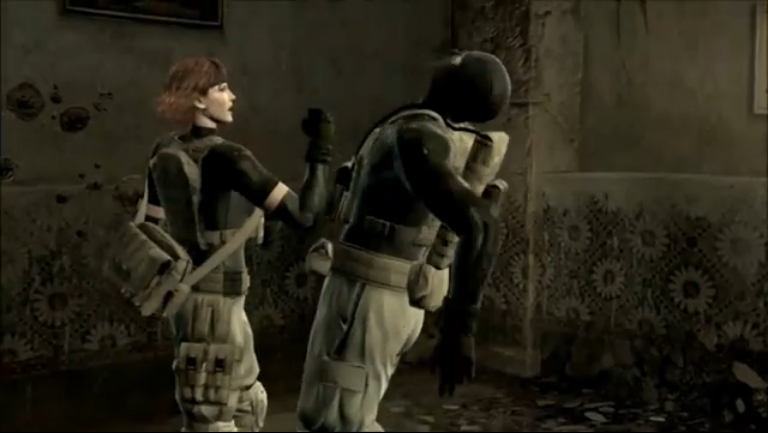
So while Meryl has clearly grown into a misandrist in the time between Metal Gear Solid 1 and 4, it doesn't stop with verbal insults. There is one member of her team called Johnny Sasaki, who MGS fans will know as the series' comic relief character, the humour coming from him being stricken with diarrhoea at inopportune moments. In MGS4, his role is expanded greatly, so he's one of the members of Meryl's squad. He's so useless in this role that Meryl frequently punches him and the audience is supposed to laugh.

Now, never mind the fact that a man being punched by a woman is deplorable enough on its own. Being punched by a sexist woman without any repercussions is ridiculous. Honestly, remember that "selfish, egotistical pigs" line from above? Snake, a male character, only reacts to it with a grunt. We don't get a "screw you, Meryl. If it wasn't for men, you'd be dead by now," from Snake. Just a grunt! It's almost as if we're meant to sympathise or agree with Meryl; she's one of the good guys and nobody debates her sexist points, so what other conclusion are we supposed to come to? I've even been informed that Meryl's abuse of Johnny would be grounds for a court martial. Don't worry though, folks, it has a happy ending:


For those of you who've never played Metal Gear Solid 4, trust me, I was as stunned as you. Yes, the abusive woman and her victim get married in the ending sequence.

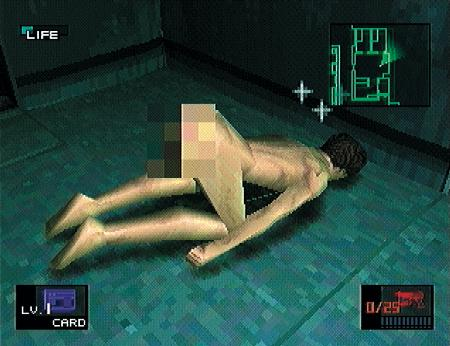
Amazingly enough, MGS4 isn't even the first time Meryl is abusive to Johnny. Here's an image from MGS1:


That's Johnny, immediately after being beaten unconscious by Meryl and having his uniform stolen. Now at the time, they were adversaries, so you could at least justify her treatment of him in this case. However, if MGS4 is to be believed, this is the moment that Johnny realised he was in love with Meryl.

So let's do what we always do in these situations and flip the sexes. This is how things are chronologically:
  • Man beats female guard into unconsciousness, steals her clothes and leaves her naked.
  • The female guard joins that man's squad later in life, where she's subjected to regular beatings for being inept and the man has an incredibly low opinion of women.
  • The female guard unmasks and the man stops beating her because she's pretty.
  • The female guard reveals she's loved how he's abused her all these years.
  • The two of them get married and live happily ever after.
This is a lot like the Uncharted example above but with all the dials turned up to eleven. Rather than just one punch, it's regular attacks. Rather than taking it out on the male character for being a jerk, the woman does it because the guy keeps making mistakes. And, of course, Elena wasn't a huge sexist, as Meryl was. Yet we're still supposed to see Meryl as a hero, as always in these cases.

There are many more games that feature a double standard when it comes to violence. Mirror's Edge and Faith's groin-kick. In addition to other sexist occurrences, Batman: Arkham City featured male enemies having their bones broken (by a woman, in some instances) while the female ones suffered knockout punches and kicks. How many games have you played that feature both men and women as members of the heroes' team/army but an all-male opposing force? Not main characters, just your standard NPCs and enemies. Final Fantasy VIII did this with Balamb Garden's heroic students of both sexes battling the all-male Galbadian army. In Half-Life 2, the villainous Civil Protection probably weren't all-male, if the disturbing experiments in the final chapter are anything to go by. However, they looked male and they sounded male. So to the casual observer, the final few chapters featured a mix of male and female freedom fighters battling an all-male totalitarian regime. Hell, if you don't count games with actual good armies and start including named characters, that list shoots up to include Uncharted 1 and 2, Metal Gear Solid 1-3 (where all the female villains turned good before their deaths or were just pretending to be evil all along) and even the Crash Bandicoot games technically qualify.

It's worth bearing in mind, too, that these are only the games I've played. I'm actually morbidly curious about games starring female characters such as Bayonetta, Lollipop Chainsaw and Wet. I've noticed a video on YouTube showing all the cutscenes from Lollipop Chainsaw so that's on my To Do list. If anybody has played those three and would like to educate me about them, I'd be happy to listen.

From the sounds of things, it doesn't seem as if violence against men is something that concerns developers in the slightest. Here's a Gamespot article about God Of War: Ascension. For anyone who didn't read the article, it's basically David Hewitt, the game design manager of Sony Santa Monica, briefly discussing about how the development team has "pulled back" from featuring violence against women in the God Of War series. So basically, Kratos, the murderous, amoral, psychotic, sadistic star of the God Of War series who has had no problems slaughtering people by the thousands throughout the series ... is now going to restrict his violence to people with penises?

This story, however, does have a happy ending. Looking at the comments below really reaffirms your faith in the gaming community. Take a look at a few of the comments and maybe we can end this blog on a happy note:

---
"As a Female Gamer i'm quiet disgusted with the amount of idiotic female "interest grops" out there putting their selfishness first before the freedom of expression in video-games."

"Oh right, because ripping a male apart is humane, but ripping a female apart is pure EVIL. I see the equality. So, ripping apart transgenders is what? Frowned upon?"

"am just waiting for Wonder Woman to come out and am complain about violence against men if lays even 1 finger on any man"

"Might it be more sexist to take such things out?  After all, in this modern age women deserve equal rights.  They deserve equal opportunity, equal pay, and, of course, an equal opportunity to get their heads pulled off by Kratos."

"What about violence against men?"

"Well thats just straight up BS. How many men have been brutally murdered by Kratos? Not to mention other games out there. A few female characters get killed and its some big freaking deal? Seems more like a pleasant change."

"Aren't men and women equal?"

"Message received.  It's morally ok to kill men.  Thanks game devs."
---

That'll do for now but I'd like to leave you with one final comment from a Gamespot member called MysteryJ0ker that perfectly sums up both Gamespot's recent slew of biased articles on sexism and my fears for the gaming industry as a whole.

"I like how the gaming industry is now fully turning into a political statement"

As always, if there are any topics you'd like me to write about or you have questions or feedback, leave a comment below or contact me at themalesofgames@gmail.com. All comments are welcome!