Showing posts with label lara croft. Show all posts

Sunday, 24 May 2015

What Studying "Critical Approaches" is Actually Like

Over the past two months or so, I've been "fortunate" enough to take part in a "Critical Approaches to Creative Media Products" unit that deals with many of the same issues that we have read about and heard talked about in the games industry over the past few years. I don't know if it's anywhere close to the same as the "Social and Political Thought" class that Anita Sarkeesian took but the themes and language used are very reminiscent of her videos. The class itself isn't horrible ... but all the thoughts you have ever had about "cultural criticism" not being a real job are reinforced by it.

Let's start with the biggest reason why: there are no wrong answers. Absolutely everything is open to interpretation. Your own ideology and how much you read into things are more important than being accurate; it doesn't matter if the content creator actually did put the same spin into their work that you claim, it only matters that you make the claim and are able to justify it in some way.

Some of you may have heard of a subject known as "semiotics"; the study of the meaning behind signs and symbols. This doesn't specifically refer to signs but can refer to a body of work (a text, like a movie, game or television series). It's all about the "decoder" (the viewer) figuring out the message and the reasons why the "encoder" (the content creator) created the work the way they did.

Is it correct? Doesn't matter. Can you read something into it? If the answer is yes, then you're on the right track.

If you think I'm exaggerating, I'll use an example given by the tutor herself; when talking about the 2001 Tomb Raider movie starring Angelina Jolie, she brought up a scene near the end where Lara Croft visits her father's grave. The tutor's "decoding" of this scene is that the filmmakers and audience are only comfortable accepting a woman in a "masculine" action role if she also sticks to "her place" as a woman and outwardly displays that she's still feminine.

There's a big problem with this. Let's say Lara attended her father's grave in a suit. Couldn't I interpret that as the filmmakers refusing to show that a woman can be an action hero while also being feminine? That she has to be masculine to be believable? Only today, I looked up Jupiter Ascending on Wikipedia and read the phrase "Hollywood typically portrays strong women in action films as "Arnold Schwarzenegger with boobs"," so couldn't that standpoint be argued and be just as valid?

Of course it could. Because there are no wrong answers.

This "no wrong answers" approach is a key aspect of critical approaches that isn't picked up on by gaming journalists. It's all interpretation, based on the decoder's ideology more than the text. Gaming journalists miss this and treat the critique of people like Anita Sarkeesian as fact. Which is unsurprising, since she herself seems to have failed to grasp the fact that the critical approaches subject is based entirely around interpretation. This is why we hear blunt, insulting statements from Anita about people like Toru Iwatani, who she claimed had "regressive personal or cultural notions about women". It's her interpretation but she's stating it as fact.

More than that, and this is another major point that both gaming journalists and Sarkeesian have not acknowledged, even if your interpretation is 100% correct and you've nailed the reasons behind why a game developer did what they did ... you can still be factually incorrect about the game's content. Anita has brought that to the table in spades, cherry-picking examples that support her argument and ignoring the ones that don't (strong female examples and negative male examples). No, violence against innocent female strippers in Hitman Absolution is not "implicitly encouraged". Yes, MaleShep does have his own nickname. No, NPC bodies disappearing does not reinforce women's status as disposable objects. Even if being a "cultural critic" allows you to say whatever you like about a content creator's ideology, you can't ignore facts and evidence in order to prove your point. That is an area where there certainly are some wrong answers.

I don't want it to sound like my Critical Approaches class was horrible and I have to give my tutor credit in some areas. She wasn't on board with the nonsensical "it's impossible to be sexist against men" attitude espoused by Anita and other high-profile feminists. One other significant point she made about sub-cultures vs. the mainstream. An "out-group" vs. an "in-group". Basically, as sub-cultures become more and more of an "out-group", they become more at odds with the mainstream.

You may also have heard a phrase that goes something along the lines of "the oppressors never see themselves as oppressors". Judging from their reactions over the last year, it seems as though there are a bunch of high-profile mainstream figures in the games industry who still see themselves as being part of a downtrodden sub-culture. People like Anita, Leigh Alexander and Brianna Wu see themselves as oppressed, helpless victims being piled on by their oppressors ... but then do a great job of killing that image by landing television interviews, college talks and articles in mainstream newspapers to talk about how oppressed they are. It doesn't matter that they're wealthy. Or funded by Intel. Or the heads of PR agencies. Or were given hundreds of thousands of dollars by their parents to start their own businesses. Or have friends in high places, like film directors and mainstream journalists who are happy to promote them as being victims. They still don't see themselves as being part of the mainstream. Or they do and know how well-off they are but have to keep up appearances for the sake of profiting off their victimhood.

I want to make it clear that I'm not limiting this to those three. Gaming journalism as a whole (more or less) seems to fit this mould. It seems to be a trend with feminism as a whole too; feminist writers and bloggers appear to think that feminism is the sub-culture when, in actual fact, it's the mainstream. In his interview with TechRaptor last year, Daniel Vavra talked about how, "there is a group of people that think they know what’s right and what’s wrong and that they have a mission to make the world a better place and protect the oppressed by any means. They don’t even care what the “oppressed” people think". This isn't specific to games either. It's in all forms of media and ridiculously common in comic books (such as the controversy over the Milo Manara Spider-Woman cover variant). "If you don't like it, don't buy it" is not a phrase they consider acceptable. The demand is that nobody should be allowed to buy it unless it suits their sensibilities. It's very immature. Feminist critique isn't a subculture. It's the mainstream and it has been for about thirty to forty years. Critics of feminist critique are the subculture.

*

I was surprised to find that I still get at least a hundred visitors to the blog a day, even when I haven't updated for months. I apologise for that but if you read my last update, you'll know that I don't keep in touch with mainstream gaming news anymore. I get by on word of mouth and a few smaller gaming news sites that care more about the games than the politics. We all want to like games and I feel like buying the games I'm interested in is the best way of doing that. If it annoys critics because it has "regressive" portrayals of women, even better.

Regardless of whether people love or hate what I have to say, I appreciate everyone who visits and feel guilty about not updating more often. My readers (and especially commenters) are all great people and I don't want to let you down after you've done so much for me. I'm not going to stop updating, I guarantee that, but as side projects go, this blog is actually pretty draining.

I have to give a long-overdue thank you to Adrian Chmielarz for his numerous links to this blog in his "Top Ten Critiques of Feminist Frequency" article in February. It's much appreciated and his article was a great read. Thanks a lot to Adrian.

Tuesday, 24 February 2015

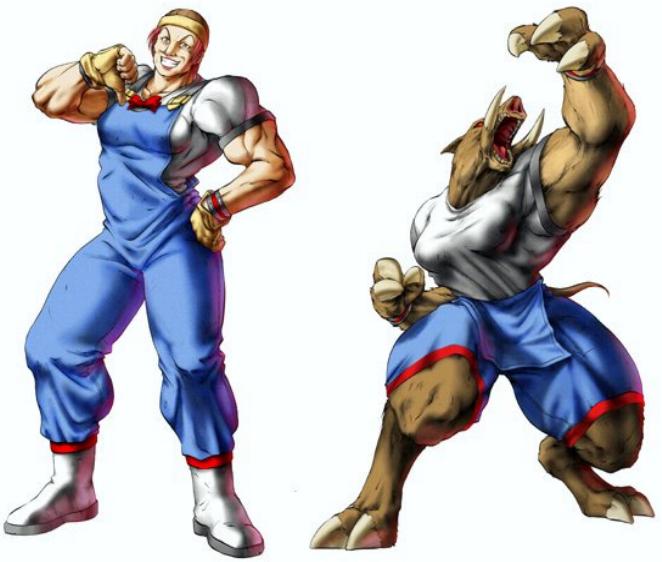
Final Fantasy XV's Female Cid

I apologise for not updating in January and I'd be lying if I said that wasn't due to feeling burned out on gender politics in gaming. Since I started this blog, I spent a lot of my time while writing each post seeking out information on the subject, often hunting down as many articles from the gaming media as I could on a particular subject. Even if those articles made me roll my eyes or cringe at the double standards the author happily promoted.

Now -- and I put this largely down to joining Twitter and becoming smothered by the issue -- I tend to avoid these articles and avert my gaze from the latest ridiculous statements from "pop culture critics", IGF judges and game journalists who seem to hate their own audience. I don't see a reason to read something that I know will irritate me but there'll be no point in responding because it will just be ignored. More high-profile figures than me have responded to these criticisms of gaming without any response. It didn't matter whether they were game developers, game journalists or women and minorities themselves (and obviously, there's plenty of overlap between those groups). Regardless of who they were, they were ignored, insulted, added to blocklists or dismissed for being white and male (even when they weren't, bafflingly).

It feels like each individual gamer's voice online matters less than ever before. Game journalists actively try and cultivate communities where nobody has the right to offer a dissenting opinion. Game journalism is basically one very big ivory tower, with journalists at the top bellowing what is "right" to the world while gamers are at the bottom, their criticisms going unheard.

With that said, growing discontent amongst gamers is clearly being felt by game journalists as well and it's interesting to see how it's affecting them. Take Dying Light, for example, which I know very little about other than "it's the zombie parkour game". Recently, Techland, the developer of Dying Light, chose not to feature a quote from a reviewer or game journalist on the posters for the game, instead choosing to feature a quote from Pewdiepie, the Youtube Let's Player.

Seeing game journalists' seething reactions to this shows how petrified they are about their monopoly being broken. Several different sites referred to Techland's actions as "ridiculous", "shady" and "an ethical can of worms". This is ignoring the fact that PewDiePie's endorsement is no different from a celebrity endorsement in any other medium. Authors promote their books by putting quotes from other authors on the back cover. Films sometimes feature quotes from other directors on their posters (one that stands out in my mind was a Quentin Tarantino quote for Kevin Smith's Red State). I can't even turn on my television without seeing George Clooney advertising coffee and Kevin Bacon shilling for mobile phone networks.

What gets under the skin of game journalists is that they are becoming less and less relevant. Why would a game developer seek a quote from a reviewer or website who might give a game a lower score based on the size of its female characters' breasts or other issue unrelated to the game's quality? Or who only gave it a high score because of how many incentives they were given by the developer? When there's a gamer on Youtube with 34 million subscribers as of this writing, why wouldn't you reach out to that audience and use his quotes about your game? There's no reason not to.

This is basically gaming journalists behaving like children and throwing a tantrum because their parents aren't giving them the attention they want but, just like children, they're very, very loud. It seems as if they're afraid that gamers are listening to -- shock, horror -- other gamers, giving their opinions as they play games, rather than game journalists preaching about how horrible gamers are, how all games are sexist and then recommending you buy Gone Home.

Unfortunately, not everyone has the audience that PewDiePie does. I don't, so my voice doesn't get heard as much as I'd like. Game journalists are still the dominant voice in gaming. That's frustrating. Two weeks ago, a writer called Liana Kerzner wrote a five-part series called "Why Feminist Frequency almost made me quit writing about video games". Liana goes into a lot of analysis of Anita Sarkeesian's Tropes vs Women series so far and, as so many have done before her, pokes huge holes in her arguments. If you've read these types of arguments before, I recommend skimming Liana's articles but they're worth reading for her perspective on the matter.

I actually disagree with Liana on quite a few things but she comes at the topic in some important ways; not just as a woman but as a woman whose voice has been ignored and as a woman with a large chest who is being stereotyped by Sarkeesian for her views on women with large breasts in video games. I was surprised by how much it resonated with me; just as Liana is frustrated over her viewpoint being ignored and people speaking for her, in spite of the fact she belongs to the group being spoken for, I feel the same way when it comes to her flawed arguments about men. The gaming press listens to Sarkeesian but does not seek out different opinions as they should and not once have they suggested that peer review may be a good thing. In short, Liana and I are quite alike; we both write ridiculously long analyses on Anita's videos but ultimately, our feelings boil down to being the same. Liana was tempted to quit writing about video games due to Feminist Frequency, which is also a big part of the reason behind my long hiatus (although mine ties into game journalism as a whole but because Feminist Frequency's influence is largely responsible for the current climate, that's a circular argument).

Liana's arguments in part four of her series ties into what I want to write about today and, honestly, something I should've written about a month-and-a-half ago. The big news that in Final Fantasy XV, Cid -- a recurring name for different characters throughout the series -- will be given to a female character for the first time.

-----


The reaction to the latest version of Cid being female reminds me of a few other occasions when a piece of news that should have been considered a victory for female portrayals in games hasn't been welcomed as you would expect. Aliens: Colonial Marines' developer adding female characters was criticised by Carolyn Petit on Gamespot, for example. Anita Sarkeesian dismissed Princess Peach's inclusion in Super Mario Bros. 2 because it was "by accident" because it was a modified version of Japan's Yume Kōjō: Doki Doki Panic. It feels like a similar story with Final Fantasy XV.

I don't want to describe the female version of Cid as being "monumental" or "ground-breaking" for women in games but if you're a fan of the Final Fantasy series, it is significant. Having a Cid in a Final Fantasy game has been a theme since Final Fantasy II in 1988 and the size of the role each Cid plays varies depending on the game. However, they tend to have something in common; providing the protagonists with transport for getting around the world (often an airship). This seems to be the direction FFXV is heading in too, with Cid being a mechanic. It's likely that she provides -- or repairs -- the car we see the heroes travelling in during each of the gameplay trailers.

So what's the big issue with Cid?

I plan on keeping my criticism here very short; what we have here is several examples of people who care less about what a woman does and more about how a woman looks.

First of all, let's dispel the myth that Cid's design is "the typical Final Fantasy female character". Thinking about female Final Fantasy characters, your mind could go to any number of conservatively-dressed women, such as Aeris, Yuffie, Yuna, Penelo, Ashe and all of the female characters from Final Fantasy VIII, IX and XIII (unless bare midriffs or legs are considered sexualised. By Lightning Returns, some of Lightning's costumes were clearly designed with fanservice in mind but prior to that, her outfits were modest). That's without going back to the 2D era.

Even thinking about other characters, what constitutes being sexualised? Rikku was introduced in Final Fantasy X with a shot focused on her behind but she wasn't portrayed sexually throughout the rest of the game, nor was her outfit revealing. The same can be said of Lulu, who wore a dress that showed her cleavage but was far from being a sexualised character. Even though Tifa is sometimes held up as a sexualised character, you'd be hard pressed to find any examples of her being sexualised in Final Fantasy VII. I don't know if further games and movies changed that.

This is slightly off-topic but it bothers me somewhat that some people -- hopefully a vocal minority -- have stigmatised Final Fantasy with this label about women while BioWare sexualise the hell out of their female characters but receive nothing but praise for being a "progressive" developer. It doesn't make sense but by now, I've accepted that's often the case.

All-in-all, Cid's critics basically pushed aside the fact that for the first time in a Final Fantasy game, Cid is going to be female. They ignored the important point that she is working in a traditionally male-dominated profession. All they focused on was her body and her outfit. It staggers me that the critics can so unironically and harshly judge fictional women based on their breast size and their attire and then complain that there are no good female characters. When you judge women so cruelly that you think "revealing clothing = bad character" and "large breasts = zero worth", that's the type of conclusion you arrive at. The same critics have attempted to retcon Lara Croft from being a tough, intelligent, witty, independent icon of the PlayStation and most successful female video game character of all time -- the Guinness Book of World Records even says so -- into nothing but a sex object or teenage boy's fantasy.

Plus, male Final Fantasy characters are unrealistically attractive too. From around a dozen androgynous hunks to plenty of gents sporting the open-shirt look, men's bodies and clothing in the Final Fantasy series has long been as over-the-top as the women's, if not more so. Yet it gets ignored or dismissed as -- you guessed it -- a "male power fantasy". Lack of awareness and objectivity concerning male characters is always a stumbling block when these arguments are made about female characters.

Also, and this should go without saying -- in fact, many of these points should -- but there is nothing wrong with making any character attractive or giving them revealing clothing. That does not automatically make them a bad character, nor does it make them sexualised. From what we've seen so far, Cid is not sexualised.

I think with announcements of this nature, we see a significant divide between two groups of people; those who actually want to see more good female representation in games and the entitled bunch who think stomping their feet, playing the victim and demanding their own way will override a game developer's creative freedom. Final Fantasy XV's Cid is a better example of how to make a female character own a traditionally-male role than, say, Jason Aaron's female Thor, and deserves to be treated as such. She should be judged on her own merits as a character and not, as her critics want, as an object.

Besides, even if Cid was sexualised, God knows male blue collar workers have never been sexualised, right?

Finally, and I'm not going to go into this at all, if you want to see true hypocrisy, look up the reactions to the sexualised male hero of Mevius Final Fantasy, an upcoming mobile game. If you ever needed proof that gender equality is certainly not being argued for in games, go and read some of the celebrations by feminist gamers over a male character being sexualised. It doesn't come as a surprise how quickly they abandon their principles over sexualised characters when they're not the victim, nor can they deny it exists against men. Yay equality?

Leave a comment or e-mail me at themalesofgames@gmail.com. My posting may be more sporadic from now on.

Saturday, 2 March 2013

Good Female Characters

Even though I spend a lot of my time agonising over the treatment and portrayal of male characters in video games, they're not the only ones who get the short end of the stick. There are lots of very strong, interesting and intelligent female characters in games. Lots of them. However, they're often dismissed because of the way they look, the way they're dressed or simply because they're not in a game made by Valve.

By now, I'm sure you know that Aliens: Colonial Marines wasn't well-received. Well, last week on Gamespot, writer Carolyn Petit posted an article of hers, "Fear of a Woman Warrior", that, among other things, criticised Aliens: Colonial Marines for adding female multiplayer characters late in development:
"First, there's the ill-fated Aliens: Colonial Marines. A Reddit post, picked up and reported on by Kotaku, indicated that female marines, rather than being part of the game from the earliest stages of development, were a last-minute feature request. Let that sink in for a second. Female marines were a feature request, a special addition, a change made to the game at the last minute. This is difficult for me to wrap my head around. During Colonial Marines' development, people working on the game declared their abiding reverence for the film Aliens. It's hard for me to believe in this reverence, not just because the game ultimately failed to deliver an experience worthy of the Aliens name on any level, but because any reasonable understanding and appreciation of what made Aliens a great film acknowledges the important role of women in it. Women are not hard to come by in the film. In fact, they're pretty damn important. One might even say that they're the equals of their male counterparts. Crazy, I know! The notion of a vision of the Aliens universe without women in it seems like about as major a betrayal of the source material as I can imagine.
And yet, somehow, for years and years, development on Aliens: Colonial Marines progressed, apparently without anyone stopping to say, 'Hey. You know how there are women in Aliens? Remember Vasquez, the tough-as-nails marine? Remember Ferro, the dropship pilot who says, "We're in the pipe, five by five"? Remember how Sigourney Weaver was the star of all the Alien movies? Well, I just had this crazy thought. What if we put some women…in the game?!'
Women should not be an afterthought in an Aliens game."
The funny thing about this is that I already knew female marines were added to Aliens: Colonial Marines late in development and not because of a Reddit post, which was then reported on Kotaku. I knew about it because last July, Gamespot posted news about the fan petition to include female multiplayer characters in Aliens: CM. So how on earth did it take Carolyn this long and another website to learn about it when it was posted on her very own site, eight months ago?

That's besides the point though. For all of the failings of Gearbox Software, the developer of Aliens: Colonial Marines, adding female characters is not one of them. Ideally, yes, they would've had enough intelligence to realise the significance of women in the Alien series and added them early on, but they didn't. When it came to their attention that they'd dropped the ball, however, they went out of their way to add them. And yet even that effort is criticised in articles like this one. Why? They should be praised for listening to the fans and correcting their mistake, not criticised for the original error.


It isn't just the female characters in Aliens: Colonial Marines that suffer. Appearance is one of the major deciding factors for the critics about whether a female character is good or bad. In Carolyn's article, she praises Lara Croft and Samus for being two examples of female characters from highly successful franchises, only to dismiss them for their sex appeal just two paragraphs later. Or at least their sex appeal being used as a reward players/to advertise the game (which I find highly hypocritical, considering Gamespot has adverts for affiliate sites at the foot of the article, advertising features like "The 20 Hottest Daughters From The Sports World" and "Hottest WAG of Each NFL Team". Apparently, criticising female video game characters for their sex appeal is fine but Gamespot'll be damned if it's going to refuse to objectify real women to gain money from referrals!).

Lara Croft is a particularly strong example of this, much like the Aliens: Colonial Marines one. This is a character who, for years, has been held up as a (if not the) prime example of objectification in video games. In some circles, her appearance would be more important than the games she starred in. So when Crystal Dynamic made the effort to revamp her appearance, giving her a more realistic figure, it would presumably be well-received, wouldn't it? Not the case, at least for Tomb Raider. After the game was displayed at E3, she was immediately faced with criticisms such as "she suffers sexual assault" and "she makes orgasm noises when hurt". Neither of which are true, of course; it's the critics seeing what they want to see. It was the same with Aliens: Colonial Marines; if Gearbox Software leave out female marines, they're blamed for leaving out female marines. If they include female marines, they're blamed for not having them in the first place.

What feminist critics of the gaming industry, such as Carolyn Petit, are doing is creating a no-win situation. I don't want to spend too much longer on Carolyn's article but she goes on to write about a man I'm not familiar with called Ryan Creighton:
"In a blog entry posted on Gamasutra last month, Ryan Creighton, a designer on Spellirium, confessed that his game is dominated by white male characters 'for fear of someone calling me out for my non-white or non-male character being stereotypical, offensive, or - at the absolute worst - outright racist or sexist.'
"The world of writing and designing games is tremendously male-dominated; sadly, this absurd fear of creating complex, human women who star in games is not limited to Creighton, but is a widespread problem."
Carolyn criticises Ryan Creighton's decision to leave out non-white and non-male characters, calling it "an absurd fear" but given that she just wrote an entire article about the pitfalls of creating female characters -- criticising some of the examples that fall into them -- how is it absurd in the slightest? At some point, game developers like Ryan Creighton just ask "why bother?" and don't add female characters at all because women like Carolyn Petit have created a no-win situation. And we're going to see a lot more attitudes like Ryan Creighton's in the future if feminist gamers don't start appreciating that the entire industry is bending over backwards to make them feel welcome and all they're doing is throwing it back in the industry's face. They're biting the hand that feeds them, so developers will naturally start doing what's sensible and avoid female characters altogether because they don't want to navigate the minefield of getting female characters "right". As a result, female characters are the ones who are going to suffer, as feminist critics can't appreciate the good qualities of the characters that they're given.

That's enough about the article but certainly not the end of the good female characters. Let's talk about Soul Calibur because there's no shortage of good female characters there. Yet nobody ever praises Talim, Xianghua, Seung Mina, Hilde, Amy, Cassandra and (at a push) Tira because they're too busy criticising the breast sizes of Ivy, Taki and Sophitia. Three great characters, all dismissed by feminist critics because of the way they look. It baffles me that women would do that, since they're judging other women on their looks far, far more harshly than any male gamer ever would. They're the ones seeing them as sex objects to get rid of rather than interesting characters to keep. The same applies to the Dead Or Alive series, albeit to a lesser extent; the women are the poster girls for the series and the men receive far less recognition. However, the makers of Dead Or Alive have also made no effort to hide the titillating aspects of the series, with titles like Dead Or Alive: Extreme Beach Volleyball under their belts.

Women in fighting games in general tend to be given the "they're objectified, so they're no good" dismissive attitude. I'm going to take a moment to discuss the double-edged sword that comes with a phrase like that; male characters who are judged on their appearance aren't taken seriously. I think being a female character who is dismissed because of her appearance is much worse, however, because there are so many great ones out there who don't receive the recognition they deserve because of their outfit or breast size.

Take Tekken as an example. For Tekken Tag Tournament 2, Namco Bandai offered a swimsuit alternate costume for every character in the game as a pre-order bonus (and later through a free update). They did provide swimsuit costumes for both male and female characters, interestingly -- here's the trailer, if you want some examples -- but what surprised me was the differences between swimsuits for different male characters. Attractive, muscular male characters, like ninety percent of the Tekken cast, are given the skimpy fundoshi outfit (which you can see a real-life version of here, if you don't mind seeing a man's behind). Then there are the characters like Wang, Dr. Bosconovitch, Bob and Ganryu; old or overweight. Unattractive, in other words. They're given old-fashioned beachwear that completely covers their entire body, like the kind seen on this TV Tropes page.

As surprising as it might sound, I was actually mildly offended that they'd do something like that. The Ganryu outfit, in particular, is confusing, since he only wears a sumo mawashi for his regular costume anyway. It was the costume for Bob that irritated me though, in no small part because Tekken Tag 2 added Slim Bob; a thin version of the normally-overweight Bob. He first appeared in Bob's Tekken 6 ending and was added as a playable character in TTT2.

You can customise each character's appearance in Tekken Tag Tournament 2 and Slim Bob, like most of the other male characters, has an option to be shirtless. Regular Bob doesn't. As mentioned above, Slim Bob has a fundoshi swimsuit costume, like all the other attractive male characters. Regular Bob doesn't. Slim Bob even has an outfit reminiscent of Lee Chaolan's bondage outfit (which I've featured on this blog before), as it has a similar emphasis on his perfectly-sculpted abs:


Call me picky but I can't help feeling that there's something ... unjust about giving a thin version of a fat character some alluring costumes and not giving the fat version the same treatment. So for all the talk from feminist critics that male characters are a lot more varied than female ones, that's true but they also face the barbed treatment of being judged on their looks. Attractive men are given outfits to emphasise their physical attractiveness, unattractive ones are given a sheet to put over their hideousness, essentially. Maybe this is all just a personal gripe I have with Tekken.

Would I like to see more varied female characters in video games? Yes. Does that mean game developers are doing something wrong right now? No. They could just be doing things more right, if that makes sense (although I certainly will say that Gearbox Software messed up by not giving female characters a larger role in Aliens: Colonial Marines from the start). So I recommend feminist video game critics stop judging characters like Soul Calibur's Ivy based on their looks because they're only hurting female characters in general. We could certainly use a few more characters like the wonderful Mitsuko from Bloody Roar but that doesn't mean we need fewer Ivys. If appearance was taken out of the equation, I think feminist critics would be a lot more appreciative of how many great female characters there really are and how judging them on their appearance is actually very petty. Hell, even Nariko from Heavenly Sword has faced criticism for her appearance and the most skin she shows is her midriff. Small-chested, no shots of her rear, no sexual dialogue ... and yet I've still seen her turn up on lists of sexualised female characters, presumably by people who've never played the game. Although if you've read anything I've written on Heavenly Sword before, you'll understand why I don't consider her a great female character.

And that's before we get to the great female characters who don't face this kind of dismissive criticism. Chell from Portal. Jade from Beyond Good And Evil. Jennifer Mui from Mercenaries. Mona Sax from Max Payne. Elena Fisher from Uncharted. Alyx Vance from Half-Life. Zelda. Jill Valentine and Claire Redfield from Resident Evil. Almost every female Final Fantasy character.

A lot of these characters aren't given the recognition they deserve because they're overshadowed by talk of how video games feature nothing but women with big boobs and a tendency to get kidnapped. Not only do I think that does a disservice to the developers who worked so hard on these characters, I think it does a disservice to the characters. If great female characters are truly what you want in games, feminist critics, try to realise it when you have them. Understand that being sexually attractive doesn't negate the other qualities of a character and -- it's been said before but never hurts to hear it again -- male video game characters are sexually appealing too. Not because it's a "male power fantasy", which is an eye-rolling explanation I hear batted around far too often nowadays, but because traits given to our male heroes, whether muscular and square-jawed or androgynous with perfect hair, look appropriate to gamers in the West or Japan, depending on the game.

And if you're looking for more great female characters, Awesome Lady Tropes has you covered.

As always, feel free to leave a comment or send me an e-mail at themalesofgames@gmail.com.

Friday, 4 January 2013

The Rape Double Standard

This post will contain spoilers about Far Cry 3

I've written about rape once before and weighed up the pros and cons of delving into the issue in video games but didn't really write about any double standards when it comes to the subject. There was one small one involving RapeLay but I didn't think enough games featured the rape of men, nor had there been enough articles written about them, to come to a satisfactory conclusion. Now, however, as hard as it is to believe, I've recently learned that there's a significant double standard against men when it comes to rape in video games.

Specifically, because of Far Cry 3:

For those of you who don't know the story of Far Cry, the short version is that a bunch of American tourists travel to an island to celebrate and are captured by pirates. The player character, Jason Brody, escapes and sets out to rescue his friends and take revenge on the people who captured him. It may sound clichéd but it tries to mix things up by making Jason unwilling to kill, having just been a normal kid before setting foot on the island.

One of Jason's friends, Keith, is held captive by an Australian criminal by the name of Buck. Rather than explain what happens when Jason comes to his rescue, it's better to just watch it. Basically, without outright saying it, Buck has been raping Keith while he's been held prisoner. It's very blatant, they just don't say the word "rape" for some reason. The rape content itself is only around four minutes long, so I recommend watching it to see what the problem is.

I'll give my thoughts on the rape itself later in the blog but it's worth stating how I came across this first. I don't own Far Cry 3. What I know about the story is cobbled together from lots of reading, the video above, the start of a Let's Play and a video of the two endings on Youtube. That's about it. I started looking into the male-on-male rape scene a few days ago, when a friend sent me a message about it. Almost immediately, I wondered why I hadn't heard about it sooner, thanks in no small part to the one game last year that did get a lot of attention for a (non-existent) rape scene: Tomb Raider. I'm sure I don't have to give a link to the original story after all this time but here it is anyway, for the people that missed it at the time. In the process of looking up articles to research this blog, I came across two more games that featured male victims of rape. F.E.A.R 2 featured it significantly at the end of the game and Mafia 2 had a man attempt to rape the male player character while in prison.

Since Tomb Raider received so much coverage for its "non-rape" scene last year, that's the game I found myself comparing Far Cry 3 to the most. They're both AAA titles, after all, but while one received a ton of press coverage, the other went ignored. I did some searching for any comparisons between the two games but outside of being mentioned in this forum post, I couldn't find anyone else who connected the dots between the two.

This is the basis for the rape double standard in games. The reactions of the gaming media. While Tomb Raider was faced with a very public backlash, Far Cry 3 wasn't. F.E.A.R 2 and Mafia 2 slipped under the radar too. Why? Why was Far Cry 3's rape not faced with the same backlash as Tomb Raider's non-rape? Is it because Keith isn't Lara Croft or simply because he's not female? WhatCulture comes up with a very good reason too; it was because the Tomb Raider developers actually singled out rape in their E3 preview, while other games featuring rape have kept quiet about it. That's a interesting possibility and I'm willing to give gaming journalists the benefit of the doubt by picking that one. Rape isn't exactly a topic that should be talked about when you want to promote your game.

When looking for articles about the supposed Tomb Raider rape scene, I didn't find as many as I thought I would. Even articles about rape in video games in general were hard to find. Maybe it was easier to find them closer to the time of the controversy. I also had to rule out using "Tomb Raider features rape" articles, since it obviously doesn't. They'd be arguing from outdated information and some of their objections would no longer apply. The WhatCulture article is one of the few that I found that didn't depend on knee-jerk reactions and pandering to a feminist viewpoint -- put it this way; I'm not going to humour the arguments of any article that mentioned "patriarchy" or that rape in video games "contributed to rape culture". Only sensible, legitimate reasons for including or not including rape will be taken under consideration -- but even the WC article seems to move the goalposts on why Tomb Raider is supposed to be controversial.

From what I can recall of articles I saw earlier in the year, these were the reasons people raised to object to the "rape" in Tomb Raider:
  • Rape should not be in games, full-stop.
I can completely respect this attitude. If you think rape has no place in video games, that's a position I'm fine with and can accept.
  • Lara Croft is a character who should never be threatened with rape.
At a push, I can accept this too. I don't think there's anything particularly wrong with the threat being used by villains in games; provided the act itself doesn't occur, what's the problem? Bad people do bad things and in games, practically all of them commit murder. The threat alone shouldn't be an issue. Having said that, since Lara has never had to deal with this in Tomb Raider before and I can certainly sympathise with those who object to a "gritty" reboot, it's fine if people don't want Lara to even be subjected to the threat.
  • Female characters are the only ones ever threatened with rape, not male ones.
This is one of the places where I find myself disagreeing with the objections. Not least because of the Mafia 2 example; the protagonist isn't raped but the threat of rape is the reason he fights back against his attackers. So even with that one example, the objection proves to be untrue.

One of the objections that ties into this point was something that Crystal Dynamics executive producer Ron Rosenberg said while speaking to Kotaku:
"They're more like 'I want to protect her.' There's this sort of dynamic of 'I'm going to this adventure with her and trying to protect her."
Apparently, people disliked the idea of protecting Lara Croft rather than being Lara Croft. This is something I don't understand; you have the desire to protect every character when you play a game because if you don't, you die. The point of most games is to protect your character, to keep them alive until the game is completed. Yet the WhatCulture article, not without its flaws, states, "The whole idea of wanting to protect Lara is absurd. She’s able to handle her self, or we wouldn’t have a very compelling action game." To Corey Milne, who wrote that article, I'd like to suggest he plays one of the previous Tomb Raider games, guides Lara to a dangerous area, then puts the controller down on the floor and sees just how well Lara handles herself without the player there to protect her.

The desire to protect characters in games is nothing new. Take a look at that Mafia 2 video linked to above. Can anyone say that they don't want to protect the main character from being raped? Perhaps a better question would be does your desire to beat up the people threatening you outweigh your desire to protect the main character from being raped? Hopefully, your answer to that is "no" and you want to protect the main character more than you want to beat up the bad guys. Given the choice between safely walking away from unharmed rapists or beating them to a pulp but being raped anyway, I know which one I'd pick. Rape doesn't even have to be involved; imagine if it was a shooting game where you could kill that last enemy but not without him killing you. Staying alive is the sensible, logical choice, isn't it? So it doesn't make sense for anyone to be upset about wanting to protect Lara.

In Far Cry 3's case, rape is the motivator for wanting to rescue Keith from Buck. The rape in F.E.A.R 2 is an odd one; it happens while the player character is unconscious and hallucinating, but we catch glimpses and flashes of what's happening while the player faces the final boss. So in a sense, it's the worst of the bunch because the rape actually takes place to the player character in a first-person shooter and we even see bits and pieces of it. In another sense, it's actually not so bad. The rape isn't graphic and without anyone using it as a threat, it doesn't come across as blatant in the same way that the rape scenes in Far Cry 3 and Mafia 2 do. It's used for narrative purposes more than in those games. That's not to say it's not disturbing -- the villainess, Alma, places the character's hand on her womb after he regains consciousness, suggesting she got pregnant by her rape of him -- but it's a horror game and you could say that's the intention.

One final thing to bear in mind is that not everyone objected to female characters being threatened with rape in games. Those of us who are interested in video games as a serious art form -- as well as those who just didn't mind the threat of rape in a game -- made sure to voice their support. Not necessarily for there to be rape in Tomb Raider but just an openness to the inclusion in games. In my first "real" post on this blog, I posted a link to an article on Destructoid by Holly Green. I looked over it again today and found a segment I really liked:
"Given the statistics on sexual assault, rape is a pretty common experience for women. We talk so much about wanting games to grow up and feature the female perspective, and yet we shy away from the one experience that nearly all of us share. And why? Because it's too real?"
Even if, as the critics believed, that men weren't threatened with rape in games, this sounds like a good jumping-on point to open up discussions about featuring rape in video games. I remember there being more supporters of a more mature attitude to the subject of rape in games, so Green certainly isn't alone, and I hope to see more debates on it in the future.
  • Female characters are the only ones who have to be broken down to be built back up, not male ones.
This is where I think the WhatCulture article falls flat, as well as other bloggers who decided to make this argument after it turned out the Tomb Raider reboot didn't have a rape scene. It moves the goalposts to focus on weakness instead of rape. To me, that comes across as an attempt to keep criticising the Tomb Raider reboot when you've lost the original reason. I know it sounds cynical but I feel like it's an attempt to gain hits for your articles while the game is still in the public consciousness.

Anyway, WhatCulture's article sums up the point above with this statement:
"There seems to be a different set of rules when taking about male and female leads. Men are naturally talented and efficient killers where as Lara apparently needs to be broken down before she can shine."
First of all, we should eliminate the idea that showing weakness is a bad thing. Back in September, I wrote this:
"Did Sarah Connor's weakness in Terminator stop her from being strong in Terminator 2? What about Ripley in Alien? It's not even specific to women; did Peter Parker have super-strength even while being beaten up by bullies? It sounds like certain audiences wouldn't be satisfied unless Lara was clutching a pair of handguns at birth."
I stick by what I said back then. Bearing that in mind, even assuming that it was only women who were broken down and built back up, the flipside of the argument is that men always being portrayed as automatically strong isn't a good thing. Interestingly, Rhianna Pratchett, of all people, makes a good point about this in an interview with Eurogamer from November last year:
"It can be a little jarring, seeing her crying and being vulnerable, because we haven't seen this Lara before. We're taking a risk, making her appear scared and doubt herself, but that's where bravery comes from. You can't have bravery without fear. And fear is a dangerous thing to show in games, because we're so used to capable characters who can do everything."

According to Pratchett, this is not a gender issue. "Male characters are often undercooked. We probably suffer from the fact we don't think about them as being human - they're heroic and there's not much else to them. That is a problem."
I've criticised Pratchett a few times on this blog but I have to give credit where credit's due; she hits the nail on the head with the statements above. Without delving into any specific games -- pick any modern shooter, I'm sure you'll get one -- I'm very tired of seeing the "heroic and not much else to them" characters. I enjoy characters with pronounced qualities other than just heroism, whether it's humour, quirkiness and, yes, weakness. If all else fails, mute characters are great too; it allows you to project a personality of your own onto the character.

The heart of the matter, however, is that women aren't the only ones to be broken down to be built back up. Jason Brody, the protagonist of Far Cry 3, has this in spades. Faced with hordes of pirates who kidnapped his friends and murdered his brother, he's a terrified twenty-five-year-old kid from Hollywood who suddenly has to learn to kill people. Although, knowing the writer of Far Cry 3 (more on him later), this was probably some weird attempt at "meta-commentary" on the status quo of gaming and how he wanted to subvert it.

Jason Brody isn't alone. Metal Gear Solid 3's Naked Snake -- the man who would become Big Boss -- had to have his limbs broken and get thrown off a bridge before he could come back and save the day. Plus, I'm sure none of us will forget the torture scene where he was beaten so badly that he wet himself and then had his eye shot out. Heavy Rain was a game featuring nothing but the breaking down of the main character. Fable 2, even though your character could be male or female, started with the main character being kicked out of a window as a child before beginning their journey to heroism. Outside of gaming, remember how I mentioned Sarah Connor above? Well couldn't the same thing be said about her son, John? Even though he's a character who grows up to be an inspirational military leader, he wasn't that way as a teenager. He tried to act tough but his crying made for a couple of rather poignant moments in Terminator 2. He was also rather helpless, never using a gun himself but always handing ammunition to either his mother or the T-800, Arnold Schwarzeneggar's Terminator.

Saying that all the objections raised in the bullet points above are reasons why examples of male rape aren't more widely condemned in video games, like the Tomb Raider "non-rape" was, is quite a big stretch. I admit that. I'm quite happy to go with WhatCulture's explanation that Tomb Raider was singled-out because Crystal Dynamics mentioned rape in their E3 presentation and featured it prominently. However, I think my responses are worth bearing in mind if you want to discuss the pros and cons of featuring rape in video games. Leaping to the idea that rape or even weakness in video games is only something that affects women just promotes the double standard.

For more information on the positives and negatives of including rape in video games, I highly recommend this article by GamingSymmetry: Rape in Video Games: Where is the Line? It's definitely supportive of the inclusion of rape in video games but it's a fantastic read, regardless of your stance.

I don't want to seem too negative on the reactions towards rape in the gaming industry because, in spite of the backlash against Tomb Raider, I haven't noticed any other games that feature rape receiving the same attention (other than RapeLay, of course, for obvious reasons). In fact, all the articles I've seen that write about the rape in Far Cry 3 have treated it with the seriousness that it deserves:

Kotaku - Here Are Three Possible Reasons For Including Rape In Far Cry 3
Kill Screen - Why is there a rape in Far Cry 3 and why is it different from the rape scene in Pulp Fiction?
Rock, Paper, Shotgun - What I Loathe About Far Cry 3 

For Kotaku, I'd only read their third reason; "Rape as a thing that not even Ubisoft knows WTF is doing in the game". Like Patricia Hernandez, writer of that article, I think it's the most likely of the three reasons.

I was very critical of Rock, Paper, Shotgun back in my criticism #1ReasonWhy and, while I still dislike the blog post I linked to back then, I have a lot of praise for them this time around. Their opinions about the rape in Far Cry 3 gel with my own (which I'll write about towards the end of this blog post) and I think they hit the nail on the head:
"And then there’s the rapey bit. (Oddly, this paragraph is also a spoiler.) General rule: unless your game is about rape, or willing to truly deal with the subject, maybe steer clear of rape. It’s way too big of a subject to nonchalantly include, and it’s pretty abhorrent to use it as a mere plot beat. The rape in FC3 is threatened and implied, rather than witnessed, but it’s so thrown away, used to say, “This man who did it is terrible!” rather than to explore the true horror for the repeatedly abused victim. The perpetrator happens to be one of the best written and acted characters in game – especially acted. It’s a fantastic performance. And his being a monster makes that all the more affecting. But in the end, the reveal of Jason’s victimisation is flippant, and the ludicrous mystic-trippy scene in which you QTE kill Buck is just plain offensive in the context. I think it was intended to further the brutal horror faced by these rich suburban kids, but in the end it’s an awkward, potentially upsetting misfire."
This is a very welcome criticism of the rape in Far Cry 3, since I think it hits upon the important reasons why it offends and why it doesn't fit into a video game.

That'd be enough on its own but then we get to the interview that Rock, Paper, Shotgun did with the writer, Jeffrey Yohalem. Yohalem already gave an interview to Eurogamer before the one with RPS and already, his ideas seem incredibly "out-there". From what I understand, reading articles about Far Cry 3 that weren't about the rape, the story faced a lot of criticism because the plot surrounded a typical American white guy who helps save the natives of the island that he's on and becomes their chosen warrior. In popular culture, this trope is jokingly called "Mighty Whitey", in that a lone white man ends up saving the day for his black companions. You've probably already seen a bit of criticism on the three sites linked to above.

Anyway, this has to be explained because I'd like to write a little bit about one of the Far Cry 3 endings (NSFW). It doesn't have anything to do with rape but I don't want to write another blog post about Far Cry 3, so this seems like a good place to put it. According to Eurogamer:
In one ending, Jason chooses to live out his days with Citra, where he - being the ultimate badass that he is - will continue to protect the island. Only Citra has other plans and decides to murder the oblivious bloke instead.
As it turns out, Citra never really needed to be saved and the whole thing is a commentary on the princess rescuing complex that permeates the medium. "Jason conjures up this whole idea that Citra needs saving and he's gonna save her, when in reality it was all a ritual she created to find a sperm donor, and she kills him," Yohalem explained.
“Sex, violence, and the player is killed. Here are the things that satisfy our animal side as men, but they're subverted because it's a female doing it." Yohalem likened the ending to Princess Peach stabbing Mario. “Now that I'm thinking about it, that final scene should have been Citra castrating Jason. Seriously, that's the point! It is like, 'You win, motherf*****!' It's totally like, 'F*** you, you misogynist idiot!'”
I don't quite know where to begin with an argument so ... insane.

First of all, it sums up male disposability and the disregard for fathers in one fell swoop. A sentence at the beginning of the Eurogamer interview says, "Far Cry 3's questionable writing has often been criticised after writer Jeffrey Yohalem stated the game would be about 'subverting video game clichés', when in fact the game seemed to be filled with regular old video game clichés". To me, that sentence describes Yohalem's skewed view on that ending. Video games are already a medium where violence by women against men is a lot more accepted than the reverse, so what cliché is being subverted by having Citra stab Jason at the end of the game?

Presumably, Yohalem is referring to his "Princess Peach stabbing Mario" line. We never see the damsel-in-distress stabbing the hero. However, we've seen plenty of games with "sexy, violent" women so, again, what's being subverted here? If I understand this correctly, Yohalem seems to be under the impression that the player allowing Jason to have sex with Citra acts as his reward; it "satisfies our animal side as men". Not only does that show a depressingly low opinion of men but I'd like to point out that for Jason to reach this point, he has to kill his friends in order to do it. To me, that sounds (A) like a typical video game binary choice of ending, like Star Wars games tend to have if you want to turn to the dark side or not and (B) not much of a reward at all. The bad ending. It appeals to men though, right? Sex with a hot girl!

No. Reverse the sexes. While a female FPS protagonist being stabbed in the middle of sex would be an incredible subversion, it'd also be seen as incredibly insulting. As in "misogynistic beyond belief". If some insulting stereotypes about women could be added into the mix, like having the female protagonist talk about shoe shopping, that'd be perfect. The fact is that I can't imagine that scenario being faced with anything other than a backlash. Yet this scenario, the one actually in Far Cry 3, is described by Yohalem as "f*** you, you misogynist idiot"? This ending is about as misandrist as it can get, without resorting to Yohalem's even-more-ridiculous castration ending, and he thinks that this is some great act of revenge against a misogynist?

Yohalem's arguments are incredibly offensive and downright bizarre. Thankfully, Rock, Paper, Shotgun's interview with Jeffrey Yohalem is a delight to read. They pull absolutely no punches and, to me, it reads like Yohalem struggles to justify his supposed "meta-commentary" on gaming. He seems to have an inflated opinion of his writing. However, I'm just here to write about the rape, and here's what RPS and Yohalem had to say about it:
Jeffrey Yohalem: I thought we went so extreme in such a huge number of ways, that we had been totally exaggerated. I’ve played all of these games, so the shocking thing for me is that people would think this is serious. At the same time, all of the articles coming out didn’t come out for other games. So there must be some form of exaggeration, I must have succeeded at exaggerating. For example, the rape by Buck being glossed over, where he rapes Keith, or implied rape, that’s so exaggerated because it’s taking the exploitation of female characters in videogames and saying, well what if it’s a man, how do you feel then?
In most games that exploitations is glossed over, so in this case it’s glossed over. So by swapping out the Keith character for a female character, and then not having this deep emotional scene acknowledging the sadness from how these guy feels from that, it makes you really uncomfortable.
I'm going to pause here for a moment because, while I normally refrain from insulting the people making the argument, I think this quote shows just how clueless Jeffrey Yohalem really is. This idea that Keith being raped was something exaggerated, for example. It stems from the idea that men haven't been exploited and couldn't be exploited. In Yohalem's view, with all his ideas about stabbing the white male hero who fantasises about sex with a hot girl, seems to think that exploitation is something to be used against male gamers. In this case, the rape of a male character isn't any serious commentary on men being raped in real life or an acknowledgement that "yes, men are raped too and yes, it's just as horrible". It's just something to make male gamers feel uncomfortable because it doesn't fit into the "male power fantasy" that Yohalem wants to subvert so desperately.

I can't express just how ignorant this is because, obviously, men are raped in real life. The game's content is one thing, and I'll come to my thoughts on that soon enough, but what Yohalem explains in the interview here is his desire to take a serious issue (that he doesn't seem to think is serious) and use it to make his gaming audience feel uncomfortable ... just because. Because women have been exploited in games too. As if Yohalem wants to say, "so there, Far Cry 3 player, how do you feel now!?" I can't explain just how much this cheapens an important and widespread real-life issue and how anyone could be so stupid as to want to put it in the game for that reason.

Anyway, Yohalem finishes answering that particular question -- he mentions his wish to castrate Jason Brody again -- and luckily, RPS share my feelings on the subject for the next question:
RPS: You say the rape scene is critiquing how mawkishly rape scenes can be shown, but I’m not sure I understand your point when you say you changed it to a man to say something. When I played it, I saw that it was a situation where a man had been repeatedly raped. I didn’t think, “Ah, but it’s a man rather than a woman.” I didn’t find anything to make me compare it to rape scenes featuring women. What I fear with that scene is that it ends up becoming a sarcastic remark, at the expense of a really traumatising subject.
Jeffrey Yohalem: Well, I don’t think it downplays a traumatising subject. Keith is not okay after that. He says very little for the rest of the game. You know, in Assassin’s Creed II your mother is raped, and she doesn’t talk for the rest of the game. So Keith is very similar. What he says after the rape is he tells you your brother is dead. Then he doesn’t talk. I don’t think that it downplays or is sarcastic. None of this is intended to be ironic – I don’t like games, or jokes, that hold people at arm’s length – that the only emotion that people can experience is the irony or the sarcasm of it, which is something I think was going on a lot in entertainment three or four years ago, maybe even two years ago, where it was all about, “Look how funny we are – we’re making fun of this.” That’s not the point at all.
It’s not intended to be glossed over in that sense. The intent was to not allow there to be some kind of cathartic sad scene where people get to deal with the fact that Keith’s been through this. I don’t give you the satisfaction, and it is a satisfaction, when you watch a character go through experiencing the torture of what they’ve just been through, it satisfies the player’s expectations of that thing being addressed. So that scene is taken away from the player. So you have this disturbing exchange of power, something Jason and Buck experience, where Buck forces Jason to call him sir, demeans Jason and his manhood, this diminishing of who Jason is – of who the player is, because the player is in Jason’s body.
And then the player experiences what Buck did to Keith. I really do think that it being a man matters. Throughout the game you have Daisy and Lisa, and Citra, and you expect certain things, the mistreatment of those characters, because of how past videogames have treated them. I don’t think you’re expected Keith to be treated as an object in that way. The fact that Buck did that is shocking, because it hasn’t really happened in videogames before. And at the same time, videogames have a primarily male audience, so it’s very easy to have this gratuitous portrayal of women in other games be glossed over and allowed by its audience, because it’s not them. To really hit someone where they live, I think destabilises the trope. I’m hoping in the future when you encounter the objectification of women in games, you go, “Maybe this is uncomfortable, the way I felt uncomfortable in Far Cry 3.”
The first thing I'd like to point out about Yohalem's answer to this question is that he seems to contradict himself. He begins by saying "none of [Keith's rape] is intended to be ironic" but finishes by saying that the fact that he's male is meant to be ironic. This is meant to make you feel bad for the female characters who've been exploited in video games, without much concern for Keith himself. He's just a device Yohalem is using to make you think about female exploitation. That's the biggest problem here; Yohalem has trivialised an incredibly serious issue here -- rape -- in order to raise awareness about a much less serious one -- female exploitation in popular culture. I'd also like to ask any of my readers this question; has any female character ever been exploited as horribly, offensively and pointlessly as Keith in Far Cry 3? Please let me know. It'll also be interesting to find out if they were knowingly exploited, as Yohalem did to Keith, or if they were exploited purely out of ignorance, such as bad writing or character design.

It's also worth mentioning that I'm confident female gamers would feel just as uncomfortable as male gamers about Keith's rape and I'm sure there are plenty of male gamers who've felt uncomfortable about female exploitation in games before. So has Yohalem pointlessly trivialised rape for an issue that didn't really exist?

I have so much respect for Rock, Paper, Shotgun for echoing the sentiments of the gaming community in their question; seeing Keith's rape not as "rape, with a woman switched out for a man" but as "a man being raped". To me, that emphasises just how out-of-touch Yohalem is and I hope this interview comes back to bite him.

I've written all about the reactions (or lack of reactions) to rape in video games in this post but I haven't given my opinion on the rape in Far Cry 3 itself. It's worth mentioning that I wrote all of this before reading Jeffrey Yohalem's twisted interview. Well, I'm in two minds about it; on the one hand, I feel like Keith's reaction to it was reasonably well-done. It isn't played for laughs and there's one moment, just before Keith reunites with his friends, when he turns to Jason and says, "don't tell them about this". That actually made me feel uncomfortable, which I think was the intended effect; it's worth bearing in mind that Far Cry is a very mature game. It's often meant to shock and disturb. So I feel like Keith's desire to keep his rape a secret, even in the middle of a situation where he and his friends had all had to suffer the ordeal of captivity, brutal treatment and their friends and family members being killed, to be a depressingly realistic portrayal. Even in that horrible scenario, he still felt too ashamed to speak up.

On the other hand, Far Cry 3 also does a great job of showing exactly why rape shouldn't be featured in a video game. Very shortly after reuniting with Keith, the player is put back in control of Jason so he can have a knife fight with Buck. To me, this is where the whole issue falls apart. In spite of the fact that I wrote a moment ago that Far Cry is often meant to shock and disturb, there are times when it just plumbs the depths of bad taste and offensiveness. I would probably object to this happening later in the game anyway but the player is still reeling from discovering how traumatised Keith is when they're put back in control of Jason and told to have a knife fight with the bad guy.

Not only does it happen too soon but remember when there were concerns that Lara's run-in with her assailant would be a quick-time event? As in "press X to avoid rape"? Technically, that's exactly what happens in Far Cry 3. Without saying it, it's implied that failing the knife fight quick-time event would kill Jason and leave Buck to rape Keith as much as he liked. This is exactly what people were worried about with the Tomb Raider example, so where's the outcry for Far Cry 3? Also, if there's a sequence in a game that trivialises rape more than the knife fight itself, I'd be interested in seeing it; it's as if the game is saying to the player, "play this fun quick-time knife fight! Earn an achievement by killing the rapist!" And yes, you really do earn an achievement. The fact that you had to do a typical video game fetch quest in order to save a rape victim also leaves a bad taste in my mouth. Plus, as mentioned above, Keith's rape serves as our introduction to the character, is glossed over ridiculously quickly and isn't delved into for the rest of the game.

What confuses me about this whole situation is that Far Cry 3 is a prime example of all the good and bad that can come with featuring rape in a video game. It treats it seriously in some places but trivialises it in others. If the gaming community actually wants to debate the benefits vs. the downsides of portraying rape in video games, you won't find a better case for both than Far Cry 3. So we spent most of June and July debating the pros and cons of rape in a game that doesn't have any while we've completely ignored one of the ones that does. For now, let's give video game journalists and bloggers the benefit of the doubt and say that they would've reacted just as strongly if the rape scenes in Far Cry 3, F.E.A.R 2 and Mafia 2 had been known about before they were released. It's a lot to ask -- Jeffrey Yohalem has practically outright said his writing was intended to be misandric and there hasn't been an outcry yet (please, gaming journalists, can you make a bigger example of him?) -- but all the sites I've seen about Far Cry 3 have treated the male-on-male rape with the seriousness it deserves. To that end, you could even say that there isn't a double standard ... but annoyingly, Yohalem's offensive answers keep me from writing that.

Besides, who knows? Maybe a game featuring a male rape victim being taken seriously will make gamers consider the issue a little more themselves. Maybe Yohalem's incredibly offensive intentions will have the opposite reaction. I can only hope.

As always, feel free to leave a comment or send me an e-mail at themalesofgames@gmail.com.
Wednesday, 24 October 2012

A Criticism of Rhianna Pratchett

This post will be much shorter than some of the others I've written and, yes, we're back on the subject of Tomb Raider.

For those of you who don't know who Rhianna Pratchett is, she's a professional writer who has worked on games such as Heavenly Sword, Mirror's Edge and the Overlord games. She's also the daughter of Terry Pratchett, writer of the Discworld series. More to the point, she's the lead writer of the Tomb Raider reboot.

She did an interview with Gamespot a few days ago, discussing the game, and I have a few issues with it. Here's just a few of the quotes from the interview:
Pratchett has the task of finding a side to Lara's personality that has been lost over the years in favour of an increasingly clichéd male sexual fantasy.

"[The way Lara was portrayed] shifted the focus away from what was particularly cool about her: the tough, action heroine and archaeology lover," Pratchett says. "It made me feel that these were games aimed squarely at guys, and therefore weren't necessarily for me."

"In the past developers have definitely forgotten about the brains bit [when dealing with female game characters], mainly because that’s an aspect of a character that can’t be depicted visually, it has to be done through smart dialogue and appropriate action. There’s absolutely nothing wrong with a female character being attractive, even sexy, it’s just when it’s done in a purely 'tits out for the lads' way that it becomes rather embarrassing."
I should state that the last Tomb Raider game I played was Tomb Raider: Legend. So maybe someone can enlighten me; in Anniversary and Underworld, did Lara Croft suddenly stop loving archaeology and stop being tough? Did she suddenly lack intelligence and wit? From the Tomb Raider games I played, Lara was not lacking in any of the areas Pratchett criticised her for but, who knows, maybe something happened in the two latest Tomb Raider games. We'll give her the benefit of the doubt and if anyone wants to inform me of how true Pratchett's statements are, that'd be very welcome.

However, something I do take issue with is this assumption of what Lara is vs. what she should be. It's even more pronounced later in the interview. It reminds me of our old friend Anita Sarkeesian. Like Sarkeesian, Pratchett views a character in a certain way that others may not share. Unlike Sarkeesian -- at least for the time being -- Pratchett is in a position to change that character to be more to her liking.

That's a big, big problem. First of all, while I have no problems with characters being changed for legitimate reasons, I take issue with the idea that a character is in some way not "right" unless they're changed to fit a certain mould. Let's say Pratchett's right and Lara had lost her lustre in Anniversary and Underworld. If she wishes to restore Lara's personality as a witty archaeology-lover, that's fine. There's a chance she may want to do something else, however, that I'll take a moment to explain:

In a previous blog, I wrote, "I'm a member of a comic book forum, amongst others, and I rarely visit there any more because every other thread is about the portrayal of women in comics and more diversity on superhero teams". The threads about the portrayal of women in comic books ranges from their appearance (expect eye-rollingly hypocritical attitudes to the unrealistic appearances of men vs. the unrealistic appearances of women) to personalities. Normally, there'll be something along the lines of "DC is much better than Marvel in regards to female characters" and plenty of Marvel-blaming for not doing more to promote female heroes.

This is willfully ignoring the fact that whenever Marvel puts out a book starring a female character, it gets cancelled, often long after the sales numbers said it should be. Ms. Marvel, She-Hulk, X-23, S.W.O.R.D. ... the list goes on. Yet Marvel continue to do so, even though it's bad business to keep putting out books that get cancelled! Inevitably, the cancellation of these titles will be met with responses of "this just proves the inherent sexism of comic book readers" and "are male readers just incapable of relating to female characters?" This just ignores the fact that a ton of male superheroes have had their books cancelled too. Ghost Rider, Moon Knight and my old favourite, the critically-acclaimed Captain Britain & MI:13. Hell, Dr. Strange has never been able to hold down a series. Obviously, none of these examples are evidence of sexism against men, and they're not, but none of the cancellation of the superheroines' series are either. That doesn't stop the fans -- if you can call them that -- from crying misogyny at every opportunity.

Anyway, that's just to give you an idea of what comic book fandom has become. The point is that in the attempts to keep these female characters' series afloat, several superheroines -- Wonder Woman, the aforementioned Ms. Marvel -- are pigeonholed into the "strong, independent woman" archetype. Earlier this year, Ms. Marvel was rebranded as Captain Marvel and given a popular female writer (Kelly Sue DeConnick, who has also appeared at Comic-Con's deeply patronising "Women Of Marvel" panels) in the hope that her book would survive. Time will tell if she will but just take a look at Comic Book Resources' preview of the first issue. It's something to behold; the misogynist villain offset by Captain America's heroic obedience. It's particularly jarring if you're a comic book fan; the villain being fought in that issue, Absorbing Man, was actually part of a supervillain duo with his wife, Titania. So of all the villains to make a misogynist, the married man who reguarly worked alongside a woman was a bizarre choice.

Kelly Sue DeConnick and Rhianna Pratchett are completely different people, however. There's a very good chance Lara won't end up being the silly battler of misogyny that Ms. Marvel has become. Although there is a point in all this; Pratchett has this idea that there is something wrong with a female character that needs to be fixed and she has an idea about how to fix it. She also is rather outspoken about the industry as a whole, as the "developers have definitely forgotten about the brains bit [when dealing with female game characters]" sentence above states. There's also this quote from Wikipedia, from when she was featured in Edge magazine's 'Game Industry's 100 Most Influential Women' list: 
"Games narrative is getting better, but we still have a long way to go. As the industry looks towards attracting a greater share of the mainstream audience, improving the way our games are told, as well as how they are played, will be more important than ever."
Now here's my criticism of Pratchett; this idea that there's something wrong with games or with characters. In my experience, Lara Croft was not a broken character in need of reinvention. Perhaps the games themselves needed a boot up the backside to make them fresh again (speaking of which, has any of the Tomb Raider reboot gameplay footage convinced anyone of that? Or is it all focused on the narrative?) but Lara Croft has been an all-around well-received character since her creation in the mid-nineties. Pratchett saw this woman as someone who needed to be fixed.

Likewise, her view of the gaming industry. "It's getting better" is something you say about sick people after an operation, not about writing in the gaming industry. Plus, and this is my real issue with Pratchett, if the quality of her writing is anything to go by, to put down the industry's writing as a whole (as well as Lara's characterisation in previous Tomb Raider games) is the pot calling the kettle black.

I don't like writing this kind of criticism, as it's not strictly about the portrayal of men or women in video games. However, I've played three of the games Pratchett has been the lead writer for and taken issue with the content in all of them. I'd have to play Overlord 1 and 2 to refresh my memory but I can recall the big reveals of the final bosses receiving very little build up. Don't quote me on that, however, because it's been a long time since I played the games. The other Rhianna Pratchett game I've played was Heavenly Sword. And between the misandry and unexplained plot elements, I think I said all there was to say about Heavenly Sword a few posts ago.

So not only has this woman has taken it upon herself to brand a beloved gaming icon as "wrong" and as someone whose sexiness was "done in a purely 'tits for the lads' way", she's also been put in charge of writing for that character. How insulting is it towards men that Pratchett outright said Lara was no longer a good character and the only ones who would like her were men, because of her appearance? Why not just say "guys are perverts" and get it out of the way? While we're on the subject, I hate the fact that Gamespot -- always a paragon of "unbiased" reporting -- states "Pratchett has the task of finding a side to Lara's personality that has been lost over the years in favour of an increasingly clichéd male sexual fantasy" as if it's a fact rather than Pratchett's opinion and nothing more.

I'm not going to say anything as ridiculous or unfair as "Pratchett is a useless writer". She's not. Heavenly Sword had hope. Overlord 1 had some good ideas. If she cuts down on the arrogance and, in Heavenly Sword's case, the incredible amount of misandry, she might be onto something decent. We'll have to wait and see in Tomb Raider's case but I'm not hopeful for the moment. To sum up, this attitude that there's something "wrong" with storytelling in the gaming industry or with female characters that she dislikes is insulting to everyone in the gaming industry who's ever written a script. It's even more insulting to the previous writers of the Tomb Raider games. And remember guys, even if you like a female character's personality, if Rhianna Pratchett thinks there's something wrong with her, she'll think you just like her because she's sexy and you like ogling hot girls!

I'm posting less these days, I've noticed. Not because of a lack of stuff I could write about but some wouldn't make for very good reading. For example, I'm tempted to write about the poor portrayals of men in Heavy Rain but the more I think about it, the more I think it'd just be a list of character names with a description next to them. I could write about the expendability of males in games but where do you start with a topic that big? It would probably be the easiest blog I ever had to write, given how prevalent it is, but couldn't you just hold up gaming as a whole? We occasionally hear the laughable sentence "gaming is institutionally misogynistic", so it'd be the perfect counterpoint to that. But isn't it a bit too ... obvious? To the point where it doesn't even need to be written about?

Anyway, thanks for reading and, as always, you can leave a comment below or sent me an e-mail at themalesofgames@gmail.com. Feel free to suggest a topic. I'm off to play Dishonored!

Sunday, 23 September 2012

The Objectification Double Standard


This is a very long blog. Put aside some time.

The very first blog I wrote on gender issues in video games was about two things; a “Games For Girls” advertising campaign here in the UK at the time and the subject of attractive men and women in video games. This was way back in January of 2008 on Gamespot. First of all, I'd like to point out that I did object to women being objectified in video games if it was particularly blatant, such as Dead Or Alive: Xtreme Beach Volleyball or a Metal Gear Solid 4 trailer from the 2007 Tokyo Game Show that featured Dr Naomi Hunter talking into a video camera and it just happened to bump into her cleavage. You can watch it in the first fifteen seconds of this video, if you're interested.

However, outside of extreme examples, I was reasonably indifferent to the idea of attractive women in videogames. While I know there are certain parties who react strongly to every female character who shows a bit of skin or has a large bust, I don't fit into that group. Here's a paragraph from my old blog on Gamespot:

"The traditional heroine in a videogame is, apparently, any lead female character with large breasts. This stereotype presumably comes from Lara Croft but it's astonishing how few female characters follow this model. In so many developer videos discussing character design and the lead female character, it's often said that they seek to "break the stereotype" of the videogame heroine. Aside from Lara, there are very few noteworthy cases of this. Nariko, despite being scantily-clad, had small breasts. Jennifer Mui from the Mercenaries games, Alyx Vance from Half-Life 2 and Elena Fisher from Uncharted: Drake's Fortune were all fully clothed with a normal, proportionate physique. As are all of the Final Fantasy women up until FFX-2. In fact, Lara Croft herself's breasts were reduced in size for Tomb Raider Legend, although more of her midriff was shown and her bum was "peachier" than ever as a compromise."

Even five years ago, Lara and Nariko were my go-to female examples. Although that last line about Lara is even truer today than it was then; the Tomb Raider reboot seems to have dispensed with Lara's exaggerated physical attributes entirely. Here's a picture that was hosted on GamesRadar:


So while I do object to the more blatant examples of objectification in games, I don't see anything particularly wrong with scantily-dressed female characters or women with an emphasis on the more sexually-appealing parts of their body. Such as Lara, or the majority of female fighting game characters, sans boob jiggle. I could do without that, even if the majority of fighting games don't do it to the same level as Dead Or Alive.

I don't see it as damaging or detrimental to the female characters who are portrayed this way. After all, Lara Croft was awarded "Most Successful Video Game Heroine" by the Guinness Book Of Records. That says more than enough to state that Lara has done well enough to stand on her own two feet as a character, rather than just as an attractive fictional woman. Basically, I think the critics need to get over their dislike of female characters who show more skin than they'd like or have a body type they disagree with or "grunt in a sexual manner when hurt". None of those qualities are anywhere near as detrimental to a female character as the critics think.

We also need to deal with the fact that, yes, there are issues with the appearance of men in video games. I'll say right off the bat that I don't feel anywhere near as strongly about the appearance of men in games as I do about violence against them. That's obviously the more significant issue. I'll also say that I have absolutely no doubt that women are sexually objectified more than men in games. However, that's not to say that the appearance of men doesn't play a role in video games at all and I have taken issue with the appearances of some male characters in games before.


Top row, L-R: Cloud, Reno, Sephiroth, Vincent (Final Fantasy VII), Squall (Final Fantasy VIII), Zidane (Final Fantasy IX), Tidus (Final Fantasy X).
Bottom row, L-R: Vaan, Larsa (Final Fantasy XII), Dante (Devil May Cry 3), Octavianus (Shadow Of Rome), Jutah (Silent Bomber), Sion (The Bouncer), Wander (Shadow Of The Colossus).

I don't want it to seem like I'm picking on the Final Fantasy series in the above image. I was just looking at my games collection when making that picture and the Final Fantasy games were the first ones my eyes went to.

I'm not as irritated by the young male "pretty boy" characters, or "bishonen", in video games as I used to be. The first time I read about size zero models and Barbie dolls creating an "unrealistic standard of beauty" (keep that sentence in mind) for women was when I was a teenager. However, this was also the period when the Final Fantasy series was at its peak and that was my main exposure to the characters above. For me to be irritated by them, they had to have two qualities: handsomeness (obviously) and "Mary Sue" characteristics. For those who don't know what a Mary Sue is, here's an excerpt from TV Tropes to describe it:

"She's exotically beautiful, often having an unusual hair or eye color, and has a similarly cool or exotic name. She's exceptionally talented in an implausibly wide variety of areas, and may possess skills that are rare or nonexistent in the canon setting. She also lacks any realistic, or at least story-relevant, character flaws — either that or her "flaws" are obviously meant to be endearing."

"The canon protagonists are all overwhelmed with admiration for her beauty, wit, courage and other virtues, and are quick to adopt her as one of their True Companions, even characters who are usually antisocial and untrusting; if any character doesn't love her, that character gets an extremely unsympathetic portrayal."

That paragraph describes a female character but a male variant -- the "Marty Stu" -- exists. So appearance alone wasn't enough for me to be irritated by bishonen characters. They also had to display Mary Sue characteristics. Sure enough, some of the characters above don't display those traits (but they'll be just as relevant later on), such as Octavianus and Wander, but there are also several who do. And I apologise to Final Fantasy fans but their main characters were often prime offenders.

Let's start with Squall, since his example is the best, in my opinion. When I was a teenager, I was a lot more shy than I am now and Squall was a very aloof character in FFVIII. I read his dialogue and thought, "OMG I can sooooo relate". Then I grew a bit older, played FFVIII again and realised that Squall was actually a stand-offish jerk. Yet over the course of the game, Squall is made "commander" of Balamb Garden (the headquarters of FFVIII's good guys), in spite of the fact that, as far as I know, he was only made a SeeD (special forces agent) that year. One of the most recent promotions to SeeD, in other words, so he wouldn't be qualified to lead. At another point, Rinoa, the love interest, is lecturing Squall on how the party all wishes he would trust them enough to talk to them more, to the point that she eventually says, "we all love you. There, I said it". But why does the rest of the party love Squall? You could argue that he's done things worth respecting as their leader but love? That was too farfetched for me, especially since he insulted most of them at various points during the game.

I don't want to go into every single one but the other characters have similar examples; Jutah lectures his female commanding officer (and love interest) to prove how battle-hardened he is to the player. Tidus is a cocky douchebag who irritates strangers by climbing all over them and stealing their binoculars but Yuna (the love interest, again) still wants to make him one of her "Guardians" only two days after meeting him and after they've had only a few conversations. Dante, especially in his Devil May Cry 3 incarnation, was the most ridiculous show-off you could ever see in a video game. He gets stabbed by demons to no effect, spouts silly lines and nods his head to awful music on his jukebox ... all at the same time. Be honest, DMC fans; if you met a guy in real life who acted like Dante -- not a demon hunter, just a random guy in your office -- you would think, "what a jackass", right? In fact, I was probably the only person who was happy about his DmC redesign. Not because I thought it was good but because everyone finally hated him as much as me! There are more examples for each character but I get the feeling this blog will be long enough as it is.

Now why is all this important? Well being a bishonen on its own is fine but when it's combined with the traits of a Mary Sue, it becomes a problem. It equates good looks with success because a character like Squall is awarded a huge promotion when there are, presumably, people far more qualified for the job. It equates good looks with popularity because love interests and party members immediately gravitate towards these feminine male characters regardless of negative qualities, such as Tidus being made Yuna's guardian in spite of the fact that he's a boastful ass who she barely knows. For anyone who's not a perfect-looking specimen of humanity and has the same flaws that everyone else does, all these infallible male models can become annoying after a while.

To show that I'm not being unfair towards bishonen characters, I'll give you a few examples that I don't mind because they lack the Mary Sue qualities. Octavianus in the above image is one. His femininity actually plays a role in the gameplay; all but one of his gameplay sections involve stealth and he can adopt disguises to avoid detection. One of the disguises he can use is a maid's uniform, so it'd look very odd if he was a burly hero. He also displays a knack for speaking in a woman's voice during a cutscene. This is a far cry from FFVII's Cloud, who, during his crossdressing adventure, is described as "a tough-looking guy like that". Besides, Shadow Of Rome is a game that doesn't skimp on masculine male characters; the other player character, Agrippa, is a mountain of a man. Likewise, I mentioned in a previous blog that I'm probably one of the few people who liked Final Fantasy XIII and one of the bishonen characters in FFXIII was Hope, a teenage boy. During the game, Hope blames fellow party member Snow for allowing his mother to die and mentions how much of a jerk his father is. He's wrong on both counts. So for once, the teenage idiot in an FF game is treated like a teenage idiot. That's a realistic and praiseworthy portrayal of a teenager who blows things out of proportion and misunderstands the situation, rather than silly stoic/arrogant warriors that teenagers in other FF games are.

There's also an issue with series' that replace their masculine male characters with more feminine ones after several games to appeal to the demographic that is used to bishonen main characters. While the West equates square jaws, broad shoulders and big muscles with masculinity, Japan is the opposite, seeing more feminine characteristics as the height of masculinity instead. So, as an example, Devil May Cry 3 was a prequel, so DMC2's masculine Dante was replaced with a more feminine one. However, Capcom didn't want Devil May Cry 4 to be another prequel, so they aged Dante up and added -- surprise, surprise -- cocky smartarse Nero into the mix too.

Seem familiar?

So with all my criticism of bishonen characters, you'd think I'd love masculine male characters, right? Not quite. Earlier, I wrote, "I'm not as irritated by the young male "pretty boy" characters, or "bishonen", in video games as I used to be." That's because they've largely become a minority in the current generation of consoles, to be replaced by this:

That's an image from IGN called "The devolution of character design". You can see their point.

In recent years, games have become home to the "gritty" and "badass" characters over other types. They'll talk in a gruff voice, they'll probably mix a few curse words into their sentences and, the worst part in my opinion, they'll deliver "joke" lines that aren't actually funny ... but aren't meant to be either. They're meant to add to the character's "badass" persona and nothing else. They'll have a slight edge and they're intended to make the player smile, but in a "OMG that person is so badass" way rather than a "OMG that line was so funny" way. I don't know about everyone else but this character archetype doesn't appeal to me; rather than finding them "badass", I find them boring.

Let's just focus on appearance for the meantime though. Take a look at this bunch:

Clockwise from top left: Chris Redfield (Resident Evil), King (Tekken), Nathan Hale (Resistance), Marcus Fenix (Gears Of War).
These are all examples of various face and body types you're likely to see on male characters in games:
Chris Redfield is your typical modern Hollywood action hero; not the most masculine hero you'll ever see but, hey, he's athletic, he's got stubble and he speaks in a dull voice. He fits the criteria.

King is an odd one. According to Tekkenpedia -- not the most reliable source, I know -- he's 6'6". I used to watch wrestling (don't judge me) and, even though it's not impossible for a wrestler that tall and with a perfectly-sculpted muscular body to perform standing moonsaults and flipover hurricanranas (Frankensteiner), it's rare. Mexican wrestlers are usually shorter and with more lithe physiques than King. Still, this is a game with fighting robots and people who can transform into devils, so maybe we're not meant to take it seriously.

Nathan Hale is a prime example of a modern video game hero. He emphasises the "gritty" nature of the archetype, more than Chris Redfield, and Resistance was a PS3 launch title, meaning he predates many of the IGN characters above. In fact, at the time of Resistance's release, he may have been the most generic example of this type of character.

Marcus Fenix is a square-jawed mass of muscles who, along with his squadmates, slips "F-bombs" into every sentence. I would be fine with this if he was parodying this kind of gritty character in some way, just as Duke Nukem was for eighties action heroes, but he seems to be intended to be a serious example. Sure, the Gears Of War dialogue is less serious than that of most sci-fi games but Fenix is still intended to be an example of the ultimate "badass" character.

I know this blog is long enough already but trust me, I'm building up to a point with all of this. However, before we get to it, there's one more video game hero we need to mention:


Yep. Ryu of Street Fighter fame.

The reason I've singled out Ryu is because, as you can see above, he's run the gamut of appearances of the years, from feminine to masculine. Compare the first image to the second and third ones. The hair and cheeks are rounder, softer. His body is muscular, without question, but it suits his youthful features. The second picture is ... odd, to say the least. His hair is more spiky but curved at the back, his jaw is lower and his cheeks more angular. His body, on the other hand, is frighteningly muscular! I'm not quite sure what the artist was going for but I'm reasonably confident that they didn't want him to look like he was hooked on steroids. Just focus on the face instead. The third picture continues the trend. The third Ryu's jaw is the lowest of all and his hair is spiky all over. His neck is the thickest and his cheeks aren't curved at all.

Now, I'm sure there are plenty of people reading everything I've written here and thinking, "well so what? This doesn't really prove anything about the appearance of men in video games. All you've said so far is that bishonen Mary Sues annoy you. The Ryu pictures were even just different art styles and you used that as proof!" Yes, and that's the point; no matter who the developer or character designer is, they all have one thing in common; they all have a different idea about what masculinity is. If you asked five different character designers to all design their idea of a masculine male hero, they would return to you with five different male characters with very different physical attributes emphasised.
To the critics who would either (A) criticise Lara Croft as a bad female character because of her breast size (or any other female character) or (B) say that male objectification in games doesn't happen, can you honestly look at any of the pictures above and say that certain male physical attributes aren't emphasised over others?  Can you say that Ryu's muscles in the second picture aren't more prominent than the ones in the first because the artist had a different idea of how to emphasise Ryu's masculinity? Or that the first one doesn't have softer features than the first because both artists had different definitions on what a male hero should look like? Can you say that King's muscles make much sense for a man who can perform standing moonsaults, rather than them simply being aesthetically pleasing for the designer? Or Cloud -- "a tough-looking guy like that" -- giving off a different idea of "masculine" than Nathan Hale?

Basically, we've got the whole gamut of face and body types here and a whole mess of "unrealistic standards of beauty", exactly like female characters in video games. You could argue that it doesn't show their sexual characteristics as prominently but their masculine ones? That's all there is to any of these characters, even the ones who, by our Western standards, seem feminine. Half the characters look androgynous and half should be filling the pages of Muscle & Fitness. They're all bombarding us with the message: "This is what a male hero looks like. This is masculinity".

I'd like to point out one final thing that a reader said to me in an e-mail. He said, "just to be clear, I don't believe any game designers are evil because they use ideal or powerful features in characters". I completely agree with that. Game developers are allowed to make the game they want to make. For all the talk of "gamer's entitlement" surrounding something like the complaints about the Mass Effect 3 ending or DLC on release, what is demanding a change in character designs if not gamer's entitlement? Let's just try and deal with it because you know what? I'd hate it if games featured nothing but realistic characters. We're on the road to that already with the IGN examples above and I dread to think where we'll be in years to come if the trend towards realism continues.

As always, leave comments below or contact me at themalesofgames@gmail.com if you have any feedback or suggestions.