In spite of not following gender issues in gaming as closely as I used to, I still follow plenty of people on Twitter to keep myself informed of what gaming's most easily-offended critics are currently annoyed about and how gender issues play a part in gaming nowadays.
It isn't like there has been a shortage of issues to write about. For Street Fighter V, Capcom released an update that switched camera angles for two characters -- Cammy and R. Mika -- to make their poses less provocative. There have been two localisation changes for Xenoblade Chronicles X; adding more clothing to a bikini-clad thirteen-year-old character and removing a slider to change a custom female character's bust size. The Western release of the newest Fatal Frame game has several revealing alternate costumes omitted, replaced with costumes paying tribute to Samus and Zelda instead. And most recently, Koei Tecmo US has chosen not to releaseDead or Alive Xtreme 3 in the West, only for Play-Asia.com to criticise the move and pledge to sell the English-language version released in Asian markets through their website.
There are two reasons behind all of this censorship/refusal to ship games to the West. The first is specific to Xenoblade and Fatal Frame and it's due to Nintendo's steadfast family-friendly image. They're basically doing the exact same thing they did back in the late eighties and early nineties, when they would censor minor instances of nudity, as was the case in games like Final Fantasy VI, seen here:
Examples from the Japanese Super Famicom/GBA, American SNES and Western GBA releases of FFVI.
Where this falls apart is when games like Fatal Frame deal with horror, death and suicide and these are somehow considered less controversial than a woman in lingerie as an alternate costume. The number of games that feature dismemberment, disembowelings and beheadings are somehow considered acceptable compared to a game featuring women playing volleyball. The gaming media has stirred up a non-controversy to such an extent that Japanese developers are under the impression that all Western gamers are uncomfortable or offended by sexuality, rather than just a very vocal minority with high-profile positions. And no talented game developer wants to be called a 14-year-old boy by some talentless hack at Kotaku.
Which leads to the second reason: good ol' fashioned prudishness. I know I've said this before -- probably several times -- but it's remarkable that an audience who claim to want video games to "mature" as a medium have such a fundamentally immature attitude towards sexuality in games. What kind of adult feels threatened by a bunch of polygons on a screen? Essentially what we have here is a tiny contingent of critics who feel it is appropriate to bully and shame developers into making the games they want, based on what they feel is suitable for all Western audiences. Gaming critics have reached the peak of entitlement and the worrying thing is that they're the ones being pandered to by game developers now.
Obviously, there is nothing wrong with characters in games being sexually attractive. Developers have a right to create any kinds of characters they want and audiences, men and women, have the right to enjoy them (as a matter of fact, one of the criticisms against Xenoblade's removal of the bust size slider was that it prevented large-chested female gamers creating characters similar in appearance to themselves). Petty authoritarian bullies stomping their feet and throwing a tantrum because they feel uncomfortable is their issue. It isn't the developer's responsibility to change their game because of hurt feelings.
Regarding Dead or Alive Xtreme 3, game developer American McGee wrote this on Facebook regarding the whole issue. He isn't the only person to speak out against this type of censorship. Following the news that DOAX3 wasn't going to receive a Western release, a female voice actress tweeted this:
(The tweet has since been deleted so, out of respect for the voice actress, I've redacted her name. I wouldn't want her to suffer online harassment or lose voice acting work for speaking out against feminism.)
Apart from the obvious reasons why this is an issue -- games having content removed/not being localised because of puritanical outrage -- it's also an issue because of the recurring claim from gaming's Social Justice Warrior and feminist critics that "we're not coming to take your games away". Katherine Cross wrote about it on Polygon, also quoting Carolyn Petit saying the same thing. Jim Sterling said it about Anita Sarkeesian too.
Yet it's remarkable when censorship of games does occur, how quick this same crowd preaching about sexism from their soapboxes acts as if they don't have anyreal power whatsoever. As if these same journalists who have given countless column inches to Anita Sarkeesian for the past three years, who called game developers 14-year-old boys, awarded Bayonetta 2 lower scores due to being offended by a sexualised character rather than anything to do with the game's quality, warped #GamerGate to be about sexism rather than ethics in journalism and gleefully used a mass shooting to their advantage tell people to get over Dead or Alive Xtreme 3 not coming to the West are suddenly the least-influential people in the games industry.
As Anita Sarkeesian is so fond of telling us in her Tropes Vs Women videos, "these examples do not exist in a vacuum" and I've only mentioned a few examples. Do these people really think high-profile gaming sites and Kickstarter/Intel-funded Youtube critics who have been arguing against sexually-attractive women in games for years are completely unrelated to sexualised elements in games being removed for the West (or the games not being localised at all)?
If so, it sounds like another example of playing the victim to me; even with their monopoly on gaming journalism and the many years of hammering home the same warped sexism narrative, they still insist that they're helpless, silenced victims.
I actually planned on writing about Feminist Frequency's new video -- Jonathan McIntosh's "5 Ways Men Can Help End Sexism", the first video from Feminist Frequency I've watched in around two years -- but had more to say on this subject than I thought. I may write about McIntosh's video too because, even though it's more of what we've come to expect from McIntosh and Feminist Frequency -- Jonathan sounds more like Anita than Anita does, bizarrely -- it is a hilarious video.
I apologise for not updating in January and I'd be lying if I said that wasn't due to feeling burned out on gender politics in gaming. Since I started this blog, I spent a lot of my time while writing each post seeking out information on the subject, often hunting down as many articles from the gaming media as I could on a particular subject. Even if those articles made me roll my eyes or cringe at the double standards the author happily promoted.
Now -- and I put this largely down to joining Twitter and becoming smothered by the issue -- I tend to avoid these articles and avert my gaze from the latest ridiculous statements from "pop culture critics", IGF judges and game journalists who seem to hate their own audience. I don't see a reason to read something that I know will irritate me but there'll be no point in responding because it will just be ignored. More high-profile figures than me have responded to these criticisms of gaming without any response. It didn't matter whether they were game developers, game journalists or women and minorities themselves (and obviously, there's plenty of overlap between those groups). Regardless of who they were, they were ignored, insulted, added to blocklists or dismissed for being white and male (even when they weren't, bafflingly).
It feels like each individual gamer's voice online matters less than ever before. Game journalists actively try and cultivate communities where nobody has the right to offer a dissenting opinion. Game journalism is basically one very big ivory tower, with journalists at the top bellowing what is "right" to the world while gamers are at the bottom, their criticisms going unheard.
With that said, growing discontent amongst gamers is clearly being felt by game journalists as well and it's interesting to see how it's affecting them. Take Dying Light, for example, which I know very little about other than "it's the zombie parkour game". Recently, Techland, the developer of Dying Light, chose not to feature a quote from a reviewer or game journalist on the posters forthe game, instead choosing to feature a quote from Pewdiepie, the Youtube Let's Player.
Seeing game journalists' seething reactions to this shows how petrified they are about their monopoly being broken. Severaldifferentsites referred to Techland's actions as "ridiculous", "shady" and "an ethical can of worms". This is ignoring the fact that PewDiePie's endorsement is no different from a celebrity endorsement in any other medium. Authors promote their books by putting quotes from other authors on the back cover. Films sometimes feature quotes from other directors on their posters (one that stands out in my mind was a Quentin Tarantino quote for Kevin Smith's Red State). I can't even turn on my television without seeing George Clooney advertising coffee and Kevin Bacon shilling for mobile phone networks.
What gets under the skin of game journalists is that they are becoming less and less relevant. Why would a game developer seek a quote from a reviewer or website who might give a game a lower score based on the size of its female characters' breasts or other issue unrelated to the game's quality? Or who only gave it a high score because of how many incentives they were given by the developer? When there's a gamer on Youtube with 34 million subscribers as of this writing, why wouldn't you reach out to that audience and use his quotes about your game? There's no reason not to.
This is basically gaming journalists behaving like children and throwing a tantrum because their parents aren't giving them the attention they want but, just like children, they're very, very loud. It seems as if they're afraid that gamers are listening to -- shock, horror -- other gamers, giving their opinions as they play games, rather than game journalists preaching about how horrible gamers are, how all games are sexist and then recommending you buy Gone Home.
Unfortunately, not everyone has the audience that PewDiePie does. I don't, so my voice doesn't get heard as much as I'd like. Game journalists are still the dominant voice in gaming. That's frustrating. Two weeks ago, a writer called Liana Kerzner wrote a five-part series called "Why Feminist Frequency almost made me quit writing about video games". Liana goes into a lot of analysis of Anita Sarkeesian's Tropes vs Women series so far and, as so many have done before her, pokes huge holes in her arguments. If you've read these types of arguments before, I recommend skimming Liana's articles but they're worth reading for her perspective on the matter.
I actually disagree with Liana on quite a few things but she comes at the topic in some important ways; not just as a woman but as a woman whose voice has been ignored and as a woman with a large chest who is being stereotyped by Sarkeesian for her views on women with large breasts in video games. I was surprised by how much it resonated with me; just as Liana is frustrated over her viewpoint being ignored and people speaking for her, in spite of the fact she belongs to the group being spoken for, I feel the same way when it comes to her flawed arguments about men. The gaming press listens to Sarkeesian but does not seek out different opinions as they should and not once have they suggested that peer review may be a good thing. In short, Liana and I are quite alike; we both write ridiculously long analyses on Anita's videos but ultimately, our feelings boil down to being the same. Liana was tempted to quit writing about video games due to Feminist Frequency, which is also a big part of the reason behind my long hiatus (although mine ties into game journalism as a whole but because Feminist Frequency's influence is largely responsible for the current climate, that's a circular argument).
Liana's arguments in part four of her series ties into what I want to write about today and, honestly, something I should've written about a month-and-a-half ago. The big news that in Final Fantasy XV, Cid -- a recurring name for different characters throughout the series -- will be given to a female character for the first time.
-----
The reaction to the latest version of Cid being female reminds me of a few other occasions when a piece of news that should have been considered a victory for female portrayals in games hasn't been welcomed as you would expect. Aliens: Colonial Marines' developer adding female characters was criticised by Carolyn Petit on Gamespot, for example. Anita Sarkeesian dismissed Princess Peach's inclusion in Super Mario Bros. 2 because it was "by accident" because it was a modified version of Japan's Yume Kōjō: Doki Doki Panic. It feels like a similar story with Final Fantasy XV.
I don't want to describe the female version of Cid as being "monumental" or "ground-breaking" for women in games but if you're a fan of the Final Fantasy series, it is significant. Having a Cid in a Final Fantasy game has been a theme since Final Fantasy II in 1988 and the size of the role each Cid plays varies depending on the game. However, they tend to have something in common; providing the protagonists with transport for getting around the world (often an airship). This seems to be the direction FFXV is heading in too, with Cid being a mechanic. It's likely that she provides -- or repairs -- the car we see the heroes travelling in during each of the gameplay trailers.
So what's the big issue with Cid?
I plan on keeping my criticism here very short; what we have here is several examples of people who care less about what a woman does and more about how a woman looks.
First of all, let's dispel the myth that Cid's design is "the typical Final Fantasy female character". Thinking about female Final Fantasy characters, your mind could go to any number of conservatively-dressed women, such as Aeris, Yuffie, Yuna, Penelo, Ashe and all of the female characters from Final Fantasy VIII, IX and XIII (unless bare midriffs or legs are considered sexualised. By Lightning Returns, some of Lightning's costumes were clearly designed with fanservice in mind but prior to that, her outfits were modest). That's without going back to the 2D era.
Even thinking about other characters, what constitutes being sexualised? Rikku was introduced in Final Fantasy X with a shot focused on her behind but she wasn't portrayed sexually throughout the rest of the game, nor was her outfit revealing. The same can be said of Lulu, who wore a dress that showed her cleavage but was far from being a sexualised character. Even though Tifa is sometimes held up as a sexualised character, you'd be hard pressed to find any examples of her being sexualised in Final Fantasy VII. I don't know if further games and movies changed that.
This is slightly off-topic but it bothers me somewhat that some people -- hopefully a vocal minority -- have stigmatised Final Fantasy with this label about women while BioWare sexualise the hell out of their female characters but receive nothing but praise for being a "progressive" developer. It doesn't make sense but by now, I've accepted that's often the case.
All-in-all, Cid's critics basically pushed aside the fact that for the first time in a Final Fantasy game, Cid is going to be female. They ignored the important point that she is working in a traditionally male-dominated profession. All they focused on was her body and her outfit. It staggers me that the critics can so unironically and harshly judge fictional women based on their breast size and their attire and then complain that there are no good female characters. When you judge women so cruelly that you think "revealing clothing = bad character" and "large breasts = zero worth", that's the type of conclusion you arrive at. The same critics have attempted to retcon Lara Croft from being a tough, intelligent, witty, independent icon of the PlayStation and most successful female video game character of all time -- the Guinness Book of World Records even says so -- into nothing but a sex object or teenage boy's fantasy.
Plus, male Final Fantasy characters are unrealistically attractive too. From around a dozen androgynous hunks to plenty of gents sporting the open-shirt look, men's bodies and clothing in the Final Fantasy series has long been as over-the-top as the women's, if not more so. Yet it gets ignored or dismissed as -- you guessed it -- a "male power fantasy". Lack of awareness and objectivity concerning male characters is always a stumbling block when these arguments are made about female characters.
Also, and this should go without saying -- in fact, many of these points should -- but there is nothing wrong with making any character attractive or giving them revealing clothing. That does not automatically make them a bad character, nor does it make them sexualised. From what we've seen so far, Cid is not sexualised.
I think with announcements of this nature, we see a significant divide between two groups of people; those who actually want to see more good female representation in games and the entitled bunch who think stomping their feet, playing the victim and demanding their own way will override a game developer's creative freedom. Final Fantasy XV's Cid is a better example of how to make a female character own a traditionally-male role than, say, Jason Aaron's female Thor, and deserves to be treated as such. She should be judged on her own merits as a character and not, as her critics want, as an object.
Besides, even if Cid was sexualised, God knows male blue collar workers have never been sexualised, right?
Finally, and I'm not going to go into this at all, if you want to see true hypocrisy, look up the reactions to the sexualised male hero of Mevius Final Fantasy, an upcoming mobile game. If you ever needed proof that gender equality is certainly not being argued for in games, go and read some of the celebrations by feminist gamers over a male character being sexualised. It doesn't come as a surprise how quickly they abandon their principles over sexualised characters when they're not the victim, nor can they deny it exists against men. Yay equality?
Leave a comment or e-mail me at themalesofgames@gmail.com. My posting may be more sporadic from now on.
Even though my pageviews always spike whenever I write about Anita Sarkeesian's videos, I've decided to follow in the footsteps of other Feminist Frequency critics and not watch the video. The fact is that at this stage, even if I did watch it, I would just be making the same arguments that I have for her previous four videos. Lack of context when providing examples. Cherry-picking examples. Not acknowledging male examples of the same issue, only focusing on women. Claiming something without evidence -- damsels in distress being considered property, for example -- and making further arguments based on that assumption.
However, I would like to thank beste36 and gwadahunter2222 for their comments about Anita's latest video on my last blog. It's interesting to hear that Anita managed to offend sex workers and supporters of sex workers by referring to them as "prostituted women" (while giving male sex workers the courtesy of being referred to as "gigolos"). This criticism isn't specific to Feminist Frequency but anti-feminists often criticise feminism for portraying women as being unequal to men; saying "women need help, such as specific programs to get into STEM fields" while someone who considered men and women equal would say "women make their own choices to stay out of STEM fields and are more than capable of making their own decisions to enter or not".
This is what Anita did by using the term "prostituted women" instead of "sex workers". She deprived women of their agency and portrayed them as helpless objects rather than capable adults. The thing is, Anita does this a lot -- before her Damsels in Distress videos, I had always heard "objectification" used in conjunction with sexualisation; Anita was the first person I'd heard posit the theory that female characters are basically objects to be taken and "won" back, rather than fully-rounded characters that the protagonist cares about because he/she does not want to see them harmed -- but she picked the wrong industry to do it with this time.
The reasons why are clear; Anita is a sex-negative feminist, having criticised the "SlutWalk" marches in Toronto and describing herself as feeling alienated from feminism for embracing the word "slut". She's also been criticised by sex-positive feminists on Youtube. The problem, which Anita seems to have missed, is that sex workers have received an extremely bad rap over the years, with the struggle to have sex work recognised as a legitimate occupation, as a legal occupation, the problems with higher rates of violence in such a career, the problems with non-consensual sex (rape) being recognised by law when you're in a career that provides consensual sex to clients and just the general stigma of earning money through sex work in the first place. For that matter, an issue discussed in feminist circles is how female sexuality is often not recognised, supported or taken seriously (which I would argue is not the case), with straight male sexuality being "the norm".
With all this in mind, it's no wonder there was a backlash against a prominent feminist like Anita Sarkeesian portraying sex workers as the very objects and victims they fight against being stereotyped and stigmatised as. Although I'm afraid I have some bad news for everyone who is annoyed with Anita for referring to sex workers as "prostituted women"; your criticism will never be acknowledged by Anita, in the same way that she has not responded to any criticism directed at her since she's leapt into the spotlight. You're now part of the group that goes completely ignored by Anita unless she needs a reason to talk about how abusive people are being.
The other thing I learned about Anita's latest video from my last blog's comments section was that she made the following statement:
"[NPC women's] status as disposable objects is reinforced by the fact
that in most games discarded bodies will simply vanish into thin air a
short time after being killed."
Yeah.
There are some occasions when watching the Tropes Vs Women series when I haven't played a certain game (this happened a lot with Mario and Legend of Zelda games) and need to read some other people's explanations to know how and why Anita is incorrect. However, this is one of those things that everyone has seen in games and everyone knows is not specific to women. It is the one thing in all of Anita's videos that every single person watching can point at and say, "I know that's complete nonsense". To say that disappearing bodies reinforces women's status as disposable objects is verifiably, demonstrably false by doing nothing more than observing the same thing happening to men. Unless Anita has magically come across a game where it only happens to women.
Weirdly, this is probably one of the few occasions where even non-gamers can understand the problem; understanding why bodies disappear in games is very, very simple. I've actually just finished writing a couple of essays detailing, amongst other things, why this happens but here's the TL;DR version, only three sentences long (and I'll explain it in greater detail if anyone cares that much): you know how, at E3, many developers were pushing the fact that their games will run in "1080p, 60 frames per second (fps)"? Well, if there are a lot of things on-screen at once, that can slow the game down. Making bodies disappear helps the game to run smoother and reach that 60fps framerate because there's less stuff on the screen.
Oh yeah, and it happens to both men and women. Okay, that was a fourth sentence.
-----
Without a new Tropes Vs Women video to watch, I decided to watch another video that I've been putting off for about a month, ever since I discovered it existed. At the end of March, I wrote about a talk at the Game Developers Conference called "Fewer Tifas or More Sephiroths: Male Sexualisation in Games" by Michelle Clough. At the time, I don't believe the video of Clough's presentation was online but it is now and I believe it has been for a while. If you're not interested in watching it, you can read Michelle Clough's notes for the speech here -- sorry, no transcript as far as I know -- and the slideshow is posted on its own here. If you're just interested in skimming through it, that could be the best option.
Back in March, I assumed the best of Clough's talk and gave her the benefit of the doubt. After watching it? Well, if I had to sum it up in a word, that word would be "entitled".
Looking back at the first blog post I wrote about this, prior to having seen the presentation, a lot of my initial assumptions about the talk haven't changed (the "male power fantasy" argument -- although more frequently referred to as "male gaze" here, "power fantasy" does get name-checked at the end -- the idea that Clough's talk didn't rise much higher than "I want more of these character types in games just because I like 'em" and I still object to the idea that androgynous male characters are rare). However, my position on quite a few things have changed after seeing the talk and, I'm disappointed to say that most of them have changed for the worse.
There were some things I liked about the talk, albeit only a couple. I liked the way Clough compared various types of male heroes from different cultures to their modern counterparts. I felt as if that dug a little deeper than most. I also think Clough gave a good explanation of "male gaze", being more comprehensive and logical than other people I've heard discuss the issue. Having said that, I ended up disliking Clough's take on both for the simple reason that I wasn't convinced by either one.
When discussing European examples of gallant male heroes, for example, Clough compared the dapper Mr. Darcy from Pride & Prejudice to the suave and sophisticated James Bond as an example of a male character of a similar archetype in the present day. The thing is though, this one example isn't especially representative of European male heroes as a whole and even Bond himself has undergone many reinventions over the years. Plus, I found it interesting that Pierce Brosnan was the Bond chosen for Clough's example. Speaking as a British citizen, the biggest "fangirling" (for lack of a better term) over Bond in recent memory was Daniel Craig's scene in Casino Royale where he emerges from the sea in a pair of tight swimming trunks. Yet Craig's Bond is definitely in the running for the most rugged, placing him further from Mr. Darcy and closer to action heroes from American culture. However, Clough doesn't expand beyond male characters from Westerns, even though there are plenty of male characters from modern films -- or at least the eighties -- who fit the mould. This could be due to a lack of time, as Clough went on to rush her talk towards the end, but it still wasn't as comprehensive as it could be.
I'd also like to say that when it comes to film, the UK's male protagonists again stray from the romanticised and elegant image of Mr. Darcy that Clough displayed during the presentation; if there's one genre that UK film has excelled in over the last few decades, it's the crime genre. It's also the genre that Bob Hoskins, Ray Winstone and Jason Statham got their starts in, thanks largely to the presence of "celebrity criminals" in the UK such as the Kray Twins. Could they be dapper at times? Sure. Were they even close to Mr. Darcy? Far from it. I understand that Clough was discussing European courtly narratives as a whole but I'm failing to see the parallel between those and male characters in the present day. Bond (and Mr. Darcy) could be the exceptions rather than the rules. It's only a minor thing and isn't actually about any sexualised male characters in games but it bothered me slightly.
As for not being convinced by Clough's explanation of male gaze, it's the same criticism that I had with some of Anita Sarkeesian's arguments; I have to take Clough's word for it being the case but I don't see a guarantee that it (A) exists, (B) is the reason why certain "rugged" male characters are designed the way they are and (C) is the reason why certain situations, either involving sexualised women, or "awkward or comedic" non-sexualised naked men exist. And once again, I have to take someone else's word for it that I want to be these rugged male characters and any attraction straight women or gay men may have to them is accidental (Clough's words).
This is just my interpretation but what bothered me about this -- and the talk in general -- is the undertone that Clough's opinions and love of bishonen characters is "right" and to choose to create characters that don't appeal to her is "wrong". When you have sections called "who's doing it right?", it gives the impression that there's only one "correct" way of making sexually-appealing male characters. The same goes for when dimissing Max Payne as a brooding character done poorly while praising Final Fantasy VII's Vincent Valentine as a brooding character done well, while I would say the two characters are the other way around (although to Clough's credit she did use an image of Max Payne 3, which I've never played ... although after watching the first ten minutes on Youtube, that particular incarnation was one I could've done without seeing. What happened to all of Max's metaphors and similes? What happened to him making his peace with his family's deaths at the end of Max Payne 2?).
The problem with this assertion is that, obviously, there are women who find rugged male characters attractive and plenty of male gamers who don't relate to them at all. The opposite can obviously apply to bishonen characters, with not all female gamers being as enamored of them as Clough and it goes without saying that men can play as them without thinking twice about it. A female commenter on my last blog about Clough's talk actually said, "I never found the Sephiroth or Marluxia type of bishounen appealing.
Like maybe when I was 14." She also mentioned stumbling across some Call Of Duty yaoi once. If you have time, go to Google or DeviantArt and search for "call of duty yaoi". It exists!
It should be clear by now that there's no one big problem I had with Michelle Clough's presentation but a lot of small ones. For example, in my previous blog, I objected to Clough thinking that androgynous male characters were rare. Now that I've seen it, I've learned that the issue wasn't with sexualised being rare but them not being in any "core" games. To me, this led to a very muddled argument; firstly, Clough praised characters such as Thane (and others) in Mass Effect, which I would describe as a "core game". Secondly, she would go on to say "make sure sexualised characters are right for your game", before showing a mock-up of a Call Of Duty cover with a bunch of shirtless, muscular guys on the box, indicating an example of a game where it wouldn't be appropriate. I understand that Call Of Duty isn't the only "core" game out there but I would've been interested in hearing some suggestions from Clough. Thirdly, Final Fantasy VII was referred back to many times throughout the talk but the thing is ... the Final Fantasy series is still out there and still features androgynous characters. It's not exactly the fault of the developer that it's no longer the "core" series that it once was, so even though Clough is correct in that respect, it's also not through lack of trying that Final Fantasy isn't as popular as it used to be (or any game series for that matter; I'm sure most developers would give an arm and a leg for their games to be considered a "core" series like CoD or Assassin's Creed). So what point is being made by mentioning the lack of "core" games featuring sexualised male characters? Is someone to blame? Is it an example of how unfairly female characters have it in games, just because Square-Enix haven't been able to achieve the same success that they used to?
I don't want to ramble too much about this, particularly since it turns out I have as many criticisms as I do with the average Anita Sarkeesian video, but one final thing I noticed that disappointed me was how the slides on sexualised male characters were talked about with a light-hearted attitude while the rare occasions when sexualised female characters were the topic of conversation, Clough adopted a more serious tone; slides about Male Gaze,why sexualisation can be good while objectification is bad (focusing entirely on female characters, of course), comparing a male Starcraft character to a female one and comparing a shot of Jacob's buttocks in Mass Effect 2 to one of Miranda's were all treated as serious issues. Talking about male video game characters was the opportunity for Clough to crack some jokes and get a few chuckles from the audience.
My issue with that wasn't that jokes were being made at the expense of male characters. Having a funny presentation isn't the problem. It doesn't even bother me that the first talk about sexualised male characters ever wasn't taken seriously. Hell, you try condensing a subject down into twenty-five minutes when it's never been spoken about in such a prominent venue. It's not enough time to cover everything.
What bothers me is that it was purely from a feminist point-of-view. By that, I mean that Clough's stance wasn't one we haven't seen before. The idea of sexualised men was still a joke, in spite of Clough finding them appealing. In fact, it was considered a good thing, with Clough believing sexualised male characters could attract more women and gay men to gaming. Meanwhile, Clough reserved a modicum of seriousness when talking about female characters and I'd say the only time she mentioned them positively was in passing, when discussing how sexualised characters had to have traits other than their attractive appearance. Even then, it was glossed over, focusing on both Sephiroth and Tifa from Final Fantasy VII, rather than just Tifa.
I don't want it to seem like I'm against Clough having a feminist point-of-view just because it's a feminist point-of-view and give the impression that I'm foaming at the mouth with rage over it. I dislike it because it's a standpoint that seems dead-set against the idea that men can be portrayed negatively. One perfect example of it is when Michelle Clough mentions that when it comes to male nudity in games, it is always portrayed as "awkward or comedic". Hey, you'll get no argument on that from me. Where Clough and I differ, however, is where Clough sees the prominence of comedic nude male characters in games as being unequal treatment for women, as there were plenty of sexualised female characters but a lack of male ones, I see it as being unfair treatment of men.
This doesn't apply as much in games as it does in films, television shows and even real life but it's very rare for male sexuality to be treated as anything close to desirable, including in shows aimed at women; men are constantly portrayed as bumbling comedy figures when it comes to romance, someone for the down-to-earth female characters to roll their eyes at. Women are always portrayed as the desirable, effortlessly sexy party who useless male characters want to (and fail to) be with. Take a look at this advert from Wowcher in the UK for an example (which also portrays violence against men as comedy):
Or how about this advert for "Mullerlight Greek Style Luscious Lemon" yoghurt, which does show a male character as being desirable ... before he stumbles and the female main character (and narrator) laughs at his stupidity? I apologise but for some reason, the video isn't showing up when I try to embed it. Here's the link:
Then there's Harpic White & Shine, a lavatory cleaner. In this advert, a suave man in a white suit walks through some mist while words like "Dazzling", "Brilliant" and "Wow!" appear on the screen ... then he looks dejected as it turns out the words were referring to the lavatory cleaner and not him:
The reason I'm showing all of these television commercials is because Clough used a quote to make it seem as if the only reason why male sexuality is used as comedy is because "man is reluctant to gaze at his exhibitionist like". It's because of Male Gaze, in other words. However, these television commercials are all aimed at women; its "heroes" are female, the voiceover artists are female and hapless male figures are the butt of the joke. None of these adverts have anything to do with Male Gaze, so why does Clough believe that must be the case in games?
The funny thing is that treating male sexuality as comedy is actually the least offensive way of expressing a lack of desirability for men. When male sexuality is portrayed as being disgusting or even dangerous, it stops being comedy and actually creeps into prejudice; we end up with campaigns like "teach men not to rape", which is about as sexist as it gets and I'm not willing to go into it any further than that. This blog's long enough.
Finally, and this is a bit of a nitpick, but using Jin Kazama from Tekken as an example of a "power fantasy" when it comes to shirtless scenes? Literally any other shirtless Tekken character would've been a better option for Clough to pick if she wanted to make the "power fantasy" argument. Aside from Hwoarang, I'd say Jin fits Clough's criteria for a sexualised male character better than anyone else on the roster. He even has the same broodiness that Clough likes, which Namco Bandai plays up when Jin is the object of Ling Xiaoyu's affections:
Even though that ending turns out to be a dream, it's not that far from Jin's regular attitude.
I also have to point out something that I mentioned all the way back in September 2012; that Jin is one of several characters created to be a younger, better-looking successor to an existing character.
So like I said, it's nitpicking but I don't agree that Jin is close to a male power fantasy at all, particularly due to the standards that are usually used by feminists (Kratos and Marcus Fenix, for example).
Overall, and to summarise my problem with Michelle Clough's talk, in my previous blog on the presentation I gave her the benefit of the doubt because the topic of men being sexualised was never acknowledged. Now that I've watched the talk, I don't feel like it offered anything new at all. It didn't offer another side to the issue of sexualised characters, it just bolstered the position of the side that already controls the conversation on sexualisation (and other gender issues). And in spite of the fact that Clough was strapped for time, I have an unpleasant feeling that even if the presentation was twice as long, we wouldn't see sexualised male characters taken seriously (except to point out how good it is for straight women and gay men).
... The presentation was still more watchable than Tropes Vs Women though ...
-----
In other news, I finally took the plunge and joined Twitter. You can see my feed in the sidebar and I'm always happy for more followers.
You can also leave comments below or send me an e-mail at themalesofgames@gmail.com.
This blog post features spoilers for The Wolf Among Us and Metal Gear Solid 2.
I apologise for not updating more regularly but, as you'll know by now, it's mainly due to college work building up at inopportune moments. The final five weeks are coming up soon and I sense that the assignments are all going to be crammed in at once. Plus, if that wasn't enough, I've been avoiding gaming sites like the plague because I was intentionally trying to stay away from any information about Dark Souls II, wanting to go in completely blind, so if any major news about gender issues in gaming cropped up, I haven't heard about it. I know Anita Sarkeesian accepted her GDC Ambassador award but I haven't watched her speech, and don't intend to.
Anyway, I'm finally able to finish this blog post that I started writing in early January. There'll be a few places where I write things like "lately" and "last week" but it's outdated in a few places. I even linked to the Penny-Arcade report at one point, which is no longer available. However, the majority of it was written today (and focuses on books from over ten years ago anyway), so it's not particularly important that it's a few months old:
Lately,
I've had to scour a bunch of books on gaming as part of a written
assignment, hoping to find anything that would help me with a
hypothetical game proposal (e.g. - info on target audiences, costs,
number of people in the development team, etc.). I found a few
interesting perspectives from women working within the industry. Nothing
groundbreaking but also not the typical opinions we read on gaming
sites.
Marketing
"Additionally, as you’re proofreading, keep your audience in mind. Does the press release appeal to your audience? While your ultimate audience is the person reading the news, your first audience is the gaming press. Who are these people? Well, they’re males— mostly. When asked about the male/female ratio of game reviewers at Gamespot, Andrew Park noted that, “currently it’s infinity, which is what you get when you divide by zero.” While the age range of the gaming press is typically viewed as very young, Park reports the average age of Gamespot reviewers as mid-20s to early 30s. Aishoshi of IGN sees an age range of 16 to mid-50s. He also notes the male to female ratio as “about five males to one female over the course of our existence.” Take a glance down the editor photos in a PC Gamer and you’ll see a row of seven white, male faces and, at least at the time this article was written, one female face.
So, what
does all that mean in terms of your press release? Not to say that these
guys aren’t in touch with their feminine side, but your best bet will
be to focus on the “dude!” elements of your story. How many levels? How
many Mechs? How many weapons? Any intense bands on the soundtrack? While
the number of female gamers appears to be growing, like it or not,
until more women join the ranks of the gaming media, you should probably
focus on the guy-appealing aspects of your game."
- Beverly Cambron, Secrets Of The Game Business (2002)
Last week, I was reading a blog over at Vicsor's Opinion about female representation in games and Vicsor brought up a game that I'd completely forgotten about over the last few months; Remember Me, the game that was at the centre of a Penny Arcade report about games starring female protagonists supposedly only being granted 40% of the marketing budget of a game starring a male protagonist. I don't think I mentioned that at the time but, if that's the case, it's pretty despicable that a publisher would actually designate more funding to games with male heroes. Yes, that is a significant case of women being held back in the games industry and everyone suffers because of it; we receive fewer interesting, varied protagonists and it shows a low opinion of the audience. Although I think it'd be interesting to see the budget breakdown of a game like Tomb Raider (2013), to see exactly how it can star a female character but need over five million sales to succeed. Although that's obviously the exception rather than the rule.
Vicsor's blog was in a similar vein. He took a look at the different
representations of male and female characters and I like that we share
the same opinions on varied characters. However, Vicsor did something
that I can't believe so few others have thought to do, me included; look
at the game sales. Although we'd need to look at more sales figures to see if there was a correlation, it did establish that in spite of the Penny Arcade report raising its stature, Remember Me still failed to sell. In spite of the criticism directed at cynical marketing teams, people didn'tbuy Remember Me to avoid turning the "people don't buy games with female protagonists" belief into a self-fulfilling prophecy.
The marketing and sales figures for games starring female protagonists is a chicken-and-egg situation; does a lack of marketing cause them to have low sales or do low sales lead publishers to give them a smaller marketing budget?
Beverly Cambron's quote above doesn't tell us anything we didn't already know but it's interesting to know that developers write press releases for the sake of the reviewers as well as the mainstream audience. It makes me wonder if and how marketing for games has changed since 2002. Part of me thinks that, with diversity and gender issues in gaming becoming a bigger issue, this kind of cynical stereotyping of audiences would've died down ... but with the prevalence of the "stubbled male protagonist, face-pointing-down, eyes-pointing-up" pose on box art, it feels like the opposite. As Cambron's quote above shows, this isn't an accident; it's clear that marketing teams know they're pandering to some "dudebro" audience and stereotyping gamers (particularly male ones) as a marketing tactic. Ken Levine said much the same thing when defending the box art for Bioshock Infinite, saying that the design was made following visits to "frathouses and places like that". The reason behind this is the same one that was directed at Anita Sarkeesian about why certain female portrayals and plot devices exist; because the games industry is a business, with developers intending to make money. It might be unfortunate but if something works, why change it? In fact, if the cover of Bioshock Infinite and other games are anything to go by, it must've been a marketing tactic that was so successful that developers begun to emphasise the "'dude!' elements" a lot more.
I have to admit, part of me also wanted to include the Beverly Cambron quote as a response to the people who used to tell me, "don't you know that negative male portrayals are made by men?!" as if that somehow made it justifiable. It's unrealistic to assume any situation in gaming we currently dislike is the fault of either sex specifically.
Currently, according to Beverly's Twitter feed, "My game industry days are (happily) over".
Portrayals & Character Design
"There are stereotypes that people in the past have gone with that we have moved away from now. I don’t know that it’s necessarily because we’re trying to appeal more to the female market, or whether we’re just growing up as an industry. In a role-playing game now you wouldn’t want to have a halfnaked barbarian girl be your reward for some victory or whatever. We try to keep really blatant sexism out of it. I think that’s come because we’re more grown up as an industry, but it may be because Stormfront in particular is very sensitive to gender issues. We always have been, from when the company started.
Still, we always try to make the player characters in games, the protagonists, feel heroic and be of heroic proportions. In other words, if I’m playing a game and I as a woman decide to play a male character, I don’t necessarily want to see a weedy, weak-looking guy. I want to play a big barbarian. And if I’m playing a female character, I want to play a very attractive, strong, dynamic-looking woman. I think no matter what gender a player character is, you want their representation on-screen to be heroic, to be superhuman. I don’t mean like Superman, but more idealized than a real human would be.
In game stories these days, stereotypes are being broken down a lot more. There aren’t just weak women and strong men. There are also strong women and weak men. There are evil women, there are evil men. It’s a lot more even. There are a lot more women in gaming now, more women players. So it may just be an evolution of the culture that we’re reflecting as well. I’ve read some figures that seem to indicate women players tend to dislike complex interfaces, and so it may be part of the broader movement towards making simpler interfaces that’s brought in a larger female audience."
- Sarah Stocker, Swords and Circuitry: A Designer's Guide to Computer Role-Playing Games (2002)
I think Sarah Stocker gets to the heart of what "escapism" is with these paragraphs. She describes exactly why we can (or should) accept exaggerated portrayals in games, in much the same way we do with comic book characters. I've heard female gamers on Youtube make the same comments about how characters of both sexes are exaggerated but it's refreshing to read these views from a woman actually working within the games industry.
I've been incredibly critical of the "male power fantasy" argument made by feminist critics in the past -- the idea that women in games are exaggerated because of sexism and objectification but men in games are exaggerated because "men want to look like that" -- and it's interesting to read Stocker's perspective on it. Unlike me, she supports the "power fantasy" argument but also states that it isn't gender-specific.
The theory that stereotypes are being broken down more and more is an interesting one. Remember that the above paragraphs were written in 2002 and, after a quick look at the games released in 2001 on Wikipedia, I can see why Sarah Stocker would make that claim. To be fair, I don't know when Stocker's piece for the book was written -- it could've been long before 2002, depending on how long it took for the book to be published -- but in 2001, we had prominent games such as:
Max Payne - Female antagonist.
Jak & Daxter - Male and female antagonist, featured a female mechanic as a supporting character.
Half-Life: Decay - The PS2 version of Half-Life, featuring an extra co-op mode where both playable characters were female.
Grand Theft Auto 3 - Female antagonist, "heroic" female criminals (such as Asuka, who provides the player with missions).
Onimusha: Warlords - Playable male and female characters, evil male and female characters, male and female damsels in distress.
Virtua Fighter 4 - Introduced female character Vanessa Lewis, with an unconventional muscular design.
Ico - Certainly broke stereotypes about protagonists and damsels in distress, making the player care about the characters involved.
Serious Sam - Parodied traditional stereotypes about big, strong, "manly" male heroes.
Alien Vs Predator 2 - Heroic male and female marines, female secondary antagonist in the marine storyline and, as in all Alien games, the Alien Queen is an antagonist.
Fatal Frame/Project Zero - Female hero, female antagonist, male damsel in distress.
Final Fantasy X - Several female protagonists, a female antagonist (Yunalesca), practically everyone is a damsel in distress at some point.
I'd also add Metal Gear Solid 2 to the list, since I think Olga, Fortune and Emma Emmerich are all strong female characters in their own way but that's more of a judgment call; they all die by the end of the game and I'm sure people would take issue with Olga being sexualised at the start of of the game (even though, y'know, the end of the game features the player controlling a naked Raiden). Oh, and there's also Oni, which has a female protagonist but I've never played it (so maybe she's portrayed horribly. Let me know in the comments if you've played Oni). I just thought I'd bring it up because that game looks awesome and I'm tempted to try it out ...
Anyway, what we should take away from all of this -- as well as the depression that comes from knowing we might never see a gaming year as good as 2001 again in our lifetimes -- is that Sarah Stocker's comments about stereotypes being broken is understandable because of the games on offer in 2001. I'm sure that people could just as easily point to Dead Or Alive 3 as an example of the opposite but that particular series skew the statistics regardless of the year we're looking at. As an example, if we look at the games released ten years later, in 2011, a Dead Or Alive game appears on the list again. It's fair to say that DOA is a series that is never going to break any stereotypes.
I'm not going to pretend that I've played as many games on the 2011 list as I have on the 2001 list but, from what I can see, I don't see as many stereotypes being broken. When it comes to gender issues, L.A. Noire, Final Fantasy XIII-2 and Batman: Arkham City seem to be reasonably by-the-numbers when it comes to stereotypical portrayals when it came to male heroes and villains -- sometimes remarkably, in the case of Arkham City -- but Dragon Age II and Uncharted 3 both featured female antagonists. The thing is, all of these games featured strong female characters (except perhaps L.A. Noire, from what I can recall), so that's certainly a quality that has stuck since Stocker's remarks in 2002.
However, when it comes to male portrayals, am I the only one who feels like things feel stagnant? The portrayals of female characters in Arkham City are very different from those in Final Fantasy XIII-2, which are just as different from those in Dragon Age II. With the exception of Nathan Drake -- a favourite protagonist of mine for being a character that doesn't take
himself too seriously, which is a rare quality in the days where the "Stubble
McBadass" archetype looms over the games industry (to use a term from
Michelle Clough) -- I feel like stereotypes for men have become more entrenched rather than broken down. 2011 was also the year when we saw Call Of Duty: Modern Warfare 3 released, just to hammer the point home. The women are varied, the men are similar.
I don't want it to seem like I'm cherry-picking my examples here and this is by no means a comprehensive list or study; like I said, I haven't played as many games from 2011 and I'm sure that if we looked at the 2001 list, we could see plenty of examples of male protagonists that are incredibly similar to the ones picked from 2011. Unfortunately, it does feel like stereotypes are the order of the day for male characters. Why? Possibly due to a lack of a push for varied male characters as there has been for female ones or maybe it's for the same reasons that Beverly Cambron focused on the "'dude!' elements" and Ken Levine appealed to frathouse gamers; they're the characters that sell games. I find it hard to believe that having a few more male characters in the vein of Ico and a few less in the vein of gravelly-voiced Cole McGrath of Infamous would be the worst thing in the world. Although considering the difference in how those games performed, sales-wise, I may be wrong ...
As an example of how male stereotypes are still alive and well in the games industry, let's take a look at a series that is ongoing right now; The Wolf Among Us from Telltale Games, developer of The Walking Dead. Similar to TWD, The Wolf Among Us is released in different "episodes" and, as of the latest episode, there's only one female villain but every single adult male human character is a scumbag in one way or another. Whereas the women are level-headed, independent, strong-willed and often victimised, the men are pimps, thugs, torturers, murderers, perverts, thieves and stalkers. Again, it feels like stereotypes have been broken down for women -- who are often portrayed as just trying to make a living -- while the men are just brutish or slimy, fighting each other rather than getting things done. The women are mature, the men are neanderthals.
One final thing about that Sarah Stocker quote. This last part:
"I’ve read some figures that seem to indicate women players tend to
dislike complex interfaces, and so it may be part of the broader
movement towards making simpler interfaces that’s brought in a larger
female audience."
I only included this due to the long-standing rumour that Anita Sarkeesian felt "a lot of female did not get into [Mirror's Edge] due to its difficult control scheme". I certainly don't believe that difficult controls will prevent any gamer, male or female, from playing a game -- and I'm not the only one -- and I think it's insulting towards female gamers to suggest that it is. However, I've pasted Sarah Stocker's quote about interfaces anyway, just because I thought it was relevant. I should also point out that it's not clear whether Anita did or didn't say that line about the controls in Mirror's Edge; due to the fact that she doesn't allow people to film her talks about gaming (only the talks about harassment), we have to rely on second-hand information and then wait for Anita's inevitable "don't believe everything you read online" tweet.
Sarah Stocker is formerly of Stormfront Studios and, as far as I can tell, currently works as a senior producer for Sony Computer Entertainment America.
*
Even though I haven't written anything for a month, I still read everyone's comments. I've had some very interesting ones lately, even though I haven't responded to them, so thank you for commenting. It's much appreciated. Feel free to do the same below or e-mail me at themalesofgames@gmail.com
I know it's been another month without any activity and, unfortunately, I currently only have time to write another short post. Maybe I'll write a longer one over Easter.
The Game Developers Conference is currently taking place and on Reddit, I came across a link to a Game Developer's Conference talk called, "Fewer Tifas or More Sephiroths? Male Sexualization in Games". The description of it is short, so I'll just copy and paste the entire thing:
"Sexualized
female characters are hotly debated in the industry, but their
counterparts, sexualized male characters are rarely discussed, and even
more rarely written! This talk examines desirable men in video games,
how they contrast with current male character trends, and how they can
create a more welcoming atmosphere for straight women, gay men and
others. Attendees will learn how (and why) to move beyond "male gaze"
when writing male characters while avoiding "equal objectification."
We'll also discuss non-Western male idealization, traditional media
presenting men as fan service, and games that "get it right," to compile
a useful toolbox for writers and designers.
Takeaway
Attendees
will take away a greater understanding of how to approach writing more
desirable male characters, and why. Developers will have greater
awareness of how "gaze" affects character construction and design, and
writers will leave with practical, sex-positive tips and resources for
making male characters appealing to wider audiences."
If you're a long-time reader of this blog, you'll remember that I brought up how I had issues with sexualised male characters when I was a teenager. Regardless of whether you thought my issues were justified or not, you'll notice that the summary of the talk above speaks about male sexualisation in a way that would never be considered acceptable for female ones outside of an internet forum. The summary treats sexualised male characters as a positive in games.
According to the GDC page, there's a video recording of the talk but as far as I can tell, it isn't available online. I could only find two real pieces of information about the talk; the first is a Famitsu article, which features photos of each PowerPoint slide and gives the impression that the speaker, Michelle Clough, is actually very fair-minded about the subject (although if anyone can translate the article better than Bing Translator can, I'd be interested in reading the details about it). The second is directly from Clough's site and gives the exact opposite impression.
I don't want to make any assumptions about Clough's talk because those two sites seem to contrast each other; the photos in Famitsu's article suggests that Clough is sex-positive for both men and women rather than only being in favour of male sexualisation while her own site is very one-sided. Judging from the PowerPoint presentation alone, the talk itself seems to deal more with facts while the GDC summary and Clough's site both deal more with feelings. Come to your own conclusions about what the talk was actually like because at the moment, we just don't know.
As a result, the only aspect of this that can be properly examined is the way it is presented on the GDC site and on Clough's own website. I have plenty of objections to Clough presenting male sexualisation as, "[a way to] create a more welcoming atmosphere for straight women, gay men and others". I can't imagine someone being given the stage at a GDC conference to defend sexualised female characters with "hey, straight guys and lesbians like 'em!". When the world of gaming journalism has cast female gamers as a demographic to be helped and straight male gamers as an entitled, socially-awkward group who harasses anyone who isn't a straight male gamer like them, I can't see that argument convincing anyone. If anything, it would be taken as an example of male gamers being unwelcoming towards female ones, whereas praising the sexualisation of male characters is not treated the same way.
Likewise, I object to Clough's assertion that androgynous male characters are rare. Even in the PowerPoint presentation, she doesn't seem to stray outside of the Final Fantasy series except to show a piece of fanart (I assume) of Nero from Devil May Cry 4. It's not that Clough is wrong -- in fact, she's dead-on -- but if the way she briefly writes about "China, Korea and Japan" on her blog is anything to go by, it sounds as if she has a better grasp on Eastern games than most. I would've thought she would cast her net a bit wider when it came to selecting characters. Plus, I think Clough is a bit too dismissive of "the common Stubble McBadass archetype", as she calls it. It feels a bit too much like she's falling back on the idea that this archetype automatically appeals to straight men (which is not necessarily true) and nobody else (which is not necessarily true either). There's a good chance that young male gamers feel as self-conscious about those character archetypes as I did about bishonen characters in my teens.
I don't want it to sound like I have anything against Michelle Clough because, for all I know, her talk may have been completely fair about the sexualisation of both men and women. If anything, I have nothing but praise for acknowledging the fact that women are not the only sex who can be sexualised, contrary to popular opinion and the silly "male power fantasy" argument. I'd be very interesting in hearing more from her on the subject. It's simply the promotion of the talk that bothers me; with every single discussion about sexualisation in games being about how negatively-portrayed women are, it's difficult not to collectively roll our eyes and scoff when the one time the issue of sexualised men is brought up on a significant stage, it's about how positive it can be.
And not a male opinion in sight. That's part of the problem. Not that Clough shouldn't be allowed to speak but it's a men's issue. I think hearing how male gamers feel about it might be worthwhile.
Overall, I'm just disappointed in the GDC. Like I said, I can't imagine a talk like this ever taking place with the sexes reversed, especially if a male speaker wrote on his website, "I may have wanted an excuse to cram a slideshow full of Lara Croft pictures" and "how we can use sexualised women to greater advantage".
Also, I came across a few links on Reddit a while ago that should put the unproven "male power fantasy" claim to rest (although I know they won't). These articles feature some very interesting facts about how often men and boys suffer from body image issues:
That second one, in particular, struck a chord with me; it mentions that "by the age of eight children already had definite body ideals, which are
influenced by their peers, the media and gender stereotypes". The article goes on to say this is largely due to the influence of sports figures but, given that I was never interested in sports but gaming (particularly Final Fantasy) as a strong influence when I was around the same age, much of the article still managed to resonate with me. I also came across this infographic about eating disorders amongst men (I apologise for not knowing the original creator but if you leave a comment or send me an e-mail at themalesofgames@gmail.com, I'll be sure to credit you).
With these facts in mind, it's pretty clear that "muscular male characters are a male power fantasy" is a myth, existing solely to dismiss the issues of one sex while campaigning for the issues of the other. So regardless of Michelle Clough's love of sexualised male characters, I think the GDC, the gaming press and the industry needs to grow up and start telling the other side of the story.
Sorry I haven't updated in a while. This was meant to be posted a few days ago but I was suddenly hit with an influx of work. Actually, I still have a half-finished blog post featuring quotes that I found while writing assignments but that one's taking some effort to get back into, since I'd basically be rehashing some stuff I did for college only a month ago.
This one will be short but it's also something I find very interesting; there's a huge gap between the number of male enemies we slaughter in games compared to female enemies, which I've written about before. Specifically, this was about the number of generic, cannon fodder mooks that players slaughter in their hundreds without giving it a moment's thought, rather than named villains and villainesses. The majority of these enemies are male, or at least are male in appearance.
Thankfully, it seems like a gaming journalist has been thinking along the same lines as me; a few days ago, Nicholas Tan of Game Revolution uploaded an article he wrote titled "Can Women Be Video Game Enemies En Masse?"
I don't want to nitpick too much because I think it's a good article. It's the kind of article that needs to be seen more on mainstream gaming sites, something that is thought-provoking and acknowledges that equality for women in gaming isn't all about stomping out online abuse and reducing breast size. You also have to acknowledge that men are unfairly portrayed too and equality works both ways; unless you take the hit and have women killed as often as men (give or take; I'm not asking for a 50/50 split. That would be ridiculous), things will be unequal.
Even so, while the article gives a good overview and I hope will be enough to start a discussion, it isn't as in-depth as I would like. It would've been nice to see some more examples from games, since the only one focused on is Fallout: New Vegas (as an example of a game that gets it right). There are screenshots of Final Fight and Final Fantasy VIII but the author doesn't elaborate on either one. The picture of FFVIII's Edea raises questions, since she isn't specifically a female enemy to be killed "en masse", in the same way that Roxy and Poison from Final Fight are. Not that FFVIII isn't guilty of a lack of female enemies but I think Nicholas Tan could've provided context about why it was included.
Having said that, the author hits the nail on the head with two statements about why we don't see more female enemies in games. After writing about how enemies are more likely to be male in games designed to be realistic, Tan says the following:
"Now since most video games are not meant
to be absolutely realistic, it's unnecessary that they need to follow
this rule. I've blasted the heads off numerous female raiders in Fallout: New Vegas. But it's a rule that carries over, if but subconsciously, from video game developers who are predominantly men."
Apart from the "predominately men" part -- I haven't seen anything to suggest that either sex would be more or less willing to female enemies -- but the lack of female enemies in unrealistic games is due to real-world gender norms. Think of it this way; developers can introduce any number of fantastical elements into a fictional world, such as magic and monsters, but they can only do so much when it comes to subverting gender roles. If they do, it will only be to elevate the role of women and reduce the role of men; for those of you who have played the Shivering Isles expansion for The Elder Scrolls IV: Oblivion, think about the gender roles of the Golden Saints and Dark Seducers. Both are armies where the highest ranks are made up of women while males don't rise above being grunts.
So that's one of the reasons why we don't see women making up the majority of enemies in games and the second quote I'd like to use from Tan's article shows why we probably won't:
"Then of course, could you imagine a game
where a male protagonist goes around murdering women and exclusively
women and not just demons like harpies and hagravens? Even if the
gameplay is groundbreaking and the story is told with an attention to
context, it will become easy prey for the mainstream press. I mean, talk
about making yourself a target and bad marketing. At best, the game
would be considered a joke and be turned into an infamous meme. (Perhaps
such a game would need a female protagonist killing a whole lot of other women to work.)"
Not much to say about that, other than it's correct. There's no chance of a game featuring a male protagonist massacring an all-female army being released and not becoming a target for the gaming press (or the mainstream, as Tan points out). Back when Resident Evil 5 received its first trailer, it faced controversy for featuring a white protagonist -- Chris Redfield -- gunning down black enemies, as the game is set in Africa. With gender issues being a major topic on gaming news sites, is there any way a game like the one described could exist and face a similar controversy? Is there any way it could not become the gaming community's whipping boy (or girl, if you prefer)?
As good as the rest of the Nicholas Tan article is, it ends on a silly note:
"That said, a video game where women are
the primary antagonists would be an interesting experiment, so long as
it's handled well (say, a devilish male scientist creates a virus that
targets women because he thought it was THIS BIG but she said it was
only this big)."
It's a reference to penis size, in case you don't get the joke.
I realise I'm overanalysing this but there are four things wrong with that idea:
1) It paints the male scientist as the bad guy. Nothing necessarily wrong with that, since games with all-male enemies have had female antagonists (such as Final Fantasy VIII again) but I think Tan could've used a better example.
2) I don't see how that could be considered "handled well". Surely, the best way to handle a game with women as the primary enemies would be to avoid referencing it at all. We don't acknowledge men as the primary enemies being "the norm", so why reference the female enemies as being out of the ordinary?
3) It doesn't put the female enemies in control of their own actions. Having a virus that makes them evil is a lot different than the women choosing to be evil (or at least members of the evil army, whether it's because they were intimidated into joining, they signed up because they needed money, etc.). There's already criticism from feminist circles about female characters lacking "agency"; being active participants in the game's story, rather than passive ones. So if the game is going for true equality, the women have to choose to be the bad guys.
4) The male scientist lashed out at women because a woman said he had a small penis? Really? That's like Lara Croft's quest beginning because a guy said she was fat.
I don't want it to sound like I'm criticising Nicholas Tan or the article here. Instead, let's pretend we're playing "Fantasy Video Game Storyline Writer" and coming up with our own ideas for how predominately female enemies would work instead. That's more along the lines of what I'm criticising rather than the article itself.
Like I said, I've overanalysing but there are more sensible reasons to have a character gunning down hundreds upon hundreds of men rather than hundreds upon hundreds of women. That could just be part of the fictional universe's mythology rather than for any reason for it occurring in storyline.
So if you haven't read the article, go and read it and feel free to praise Nicholas Tan for writing about a subject we don't often hear about on gaming sites. I hope it receives more exposure and makes a few more mainstream gamers think outside the box.
I've been really bored lately, even with Dragon's Crown. I played Gone Home recently too but thought that was a letdown. While I suspect there'll be something to write about following Gamescom, it's all very slow-going right now. Not that there's a shortage of gender issues concerning men in video games to write about but, it has to be said, it's so much easier to write about current issues and have links at my fingertips than it is to hunt down pictures and videos myself. Still, with nothing else to do, let's talk about reversing the sexes.
A few days ago, I read a comment on Youtube that said something along the lines of "reversing the sexes is a standard defensive, kneejerk response to accusations of sexism in video games". I can't recall the video I saw it under (and after spending most of the day searching, can't find it either) but that statement left me scratching my head. Hypothetically reversing the sexes of a situation has always, to me at least, seemed like an easy and effective way to examine whether it's sexist or not. In fact, people like me who get involved in the bubble of gender issues can forget how easy it is to become bogged-down with complicated terms (like "patriarchy", "hypoagency", "rape culture" and other phrases that I like to steer clear of while writing this blog) so reversing the sexes is actually an incredibly useful, accessable tool to people who aren't as interested in gender issues; it's easy to do and doesn't overcomplicate any issues. So let's try a few.
There's a moment in Star Wars: Knights Of The Old Republic that always confused me; the player character meets a hunter on Tatooine who is stranded and needs the player's help. The wife of this hunter has rigged his hunting droids to explode if he takes another step. He had no choice but to wait for help, possibly dying of thirst in the process. The hunter isn't smart enough to figure out how to disarm them, so he asks the player character for help. It isn't the situation itself that's questionable -- even if it is the Star Wars equivalent of a bumbling husband being at the mercy of his more intelligent wife -- but if the player chose Bastila Shan, a female Jedi and something of a mentor to your own character, to accompany them, she has some eyebrow-raising things to say about the hunter's situation:
Bastila says, "I say leave him". The hunter replies with, "you're pretty heartless for such a pretty lady, you know?" Bastila responds, "I take it back. Let's congratulate his wife".
To me, this always seemed like a huge overreaction, especially for the supposedly good-natured Bastila. So much for "the Jedi do not believe in killing their prisoners", as she states earlier. Leaving prisoners to die of thirst, however, is apparently completely acceptable.
The uploader of that Youtube video comments that, as out-of-character as it may seem, it hints at Bastila having anger issues that would later be used to turn her to the dark side. Personally, I find it a bit hard to connect "irritation over clumsy come-ons" with "dark lord of the Sith". Not that I think the uploader is incorrect but it seems like an odd thing to foreshadow side-switching with.
So do you think it's sexist? I'm torn. The hunter isn't portrayed as a sympathetic character; using droids to hunt is a no-no in KOTOR and he has a habit of flirting with women in spite of being married. Plus, in spite of Bastila's comments, the player earns Light Side points for helping the hunter, so it doesn't seem like the game is encouraging punishing the hunter for his comments. On the other hand, it takes a lot to advocate murder (and congratulate the murderer) just because you're irritated over someone's pick-up lines.
Reverse the sexes and I think there's only one big difference; it sounds a lot more harsh to me to think of a male Jedi offering to congratulate an unintelligent woman's husband for plotting to murder her. It would come across as unbelievably petty for a male character to be so irritated by some (admittedly obnoxious) come-ons to advocate such a serious act of domestic violence. As we know, however, domestic violence against men isn't awarded the same seriousness as it is against women. Having said that, I'm still coming down on the side of "not sexist", solely because the player is rewarded with Light Side points for helping the hunter.
Helpfully, there are a few games that provide surprisingly accurate gender-flipped counterparts to each other in spite of the fact they're more-or-less unrelated. Take Heavenly Sword and Resident Evil 4 as an example:
And back when I wrote "The Violence Double Standard", I brought up a moment in Final Fantasy XIII when Lightning punched Snow -- her sister's boyfriend -- twice in the face for failing to keep her sister safe.
I went on to say, "according to Square-Enix, she was conceived as "a female version of
Cloud", from Final Fantasy VII. I must've missed the version of Final
Fantasy VII where Cloud clocks Tifa in the jaw angrily. Twice." It was only this month that I received a long reply in the comments that ended with a link to this video from Final Fantasy VII, where Cloud attacks Aeris in a moment of stress. Skip to 14:40:
Comparing these four moments is a good way to highlight the differences when violence is portrayed against colleagues in games. They are, more or less, gender-flipped versions of each other.
The big difference, first of all, is that the men aren't in control of their actions when they attack the women. In Resident Evil 4, Leon is being controlled by the parasite inside his body and in Final Fantasy VII, Cloud's stress causes him to have an out-of-body experience; literally, a ghostly image of Cloud appears that the player controls while the corporeal Cloud attacks Aeris and the player is unable to stop him in any way. In contrast to the two of them, both Nariko in Heavenly Sword and Lightning in Final Fantasy XIII are well aware that they're harming their own colleagues. So it's acceptable for female characters to hit male ones (which is shocking, I know) but for male ones to hit female ones requires a trance of some kind.
It's also worth noting the reaction to each one. Nariko's choking of her fellow clanmember is broken up quickly but there isn't any concern shown for the man. Lightning punching Snow is practically ignored by their fellow teammates. Certainly, no concern is shown for Snow. On the other hand, Ada reacts to being choked by kneeing Leon in the ribs and stabbing him in the thigh to break him out of his trance. He ends up thanking her for this. So no matter who is being choked and who is doing the choking, violence against the male character ends up being acceptable in both situations. In Final Fantasy VII's case, the remaining party member (Barret, in the video above) quickly rushes in to knock Cloud out and prevent him from hurting Aeris any further.
It seems like trances are an easy way to have violence stay reasonably inoffensive; reverse the sexes of either the Leon or Cloud attacks and they're practically the same. The hero doesn't come across as any worse because of the attack, regardless of his/her sex or the sex of the victim. Part of the reason for that is because the attack isn't the important part, whereas the trance is; both Leon and Cloud attack women because it's such an extreme action, it shows how far their sanity is slipping. Women attacking male characters on their own side is just ... a quality. Game audiences aren't supposed to think anything of it, except perhaps "I'm glad that guy got taught a lesson". As a result, reversing the sexes of the Heavenly Sword and Final Fantasy XIII attacks does make things seem worse; a male character in complete control of his faculties choking or punching a woman who refuses to fight back is just asking to be called out for its misogyny.
I suspect its moments like these -- strikes against male characters by female ones -- that make up the majority of examples that don't really stand out until we reverse the sexes. They're so quickly dismissed when they're against a male character that either we ignore them or we're supposed to ignore them. Take Bioshock Infinite. It's a very basic example but Elizabeth strikes Booker DeWitt in the face with a wrench that isn't brought up again after it happens. It knocks him out-cold, giving Elizabeth enough time to flee but Booker still doesn't have a word to say about it.
I don't know if the gaming public is prepared to see a male character doing this to a woman, although I think it's possible to give gamers a bit more credit. Take the Mass Effect series as an example. It's possible for the main character, Commander Shepard, to punch a female reporter attempting to smear his/her (although for this example, let's go with "him") reputation in all three games. Sure, it's not the same thing, in quite a few significant ways; the reporter isn't on Shepard's side, punching her is a "Renegade" option and, as previously mentioned, Shepard can be either male or female. Each of those points lessens the impact and controversy of a male character punching a woman. Even so, there doesn't seem to have been any backlash at all against the Mass Effect series for this. In fact, it's been praised because the reporter is intentionally unlikeable. Who knows if a male character intentionally punching, choking or bludgeoning a stubborn (like Snow) or sexist (like the clanmember) woman on their side could be as accepted as women doing it to men is now (irritatingly)?
As always, feel free to leave a comment or send me an e-mail at themalesofgames@gmail.com.


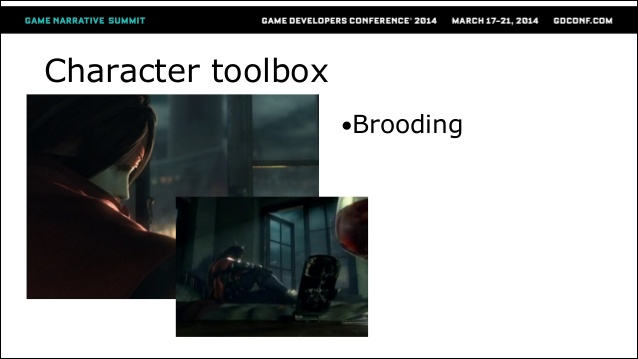


![a lot of female did not get into [Mirror's Edge] due to its difficult control scheme](http://i.imgur.com/i8rQ1cn.jpg)
