Showing posts with label heavenly sword. Show all posts

Sunday, 1 December 2013

The Marketing Double Standard

In advertising, much like in sitcoms, it's not uncommon for men to be portrayed as bumbling, useless figures while women are the down-to-earth, intelligent beings who make all the right decisions and often have to clean up whatever mess the man in their life has made. There's an entire series on Youtube called Misandry In The Media that shines a spotlight on commercials featuring stupid, hapless, perverted, irritating male characters and the women who have to put up with them.

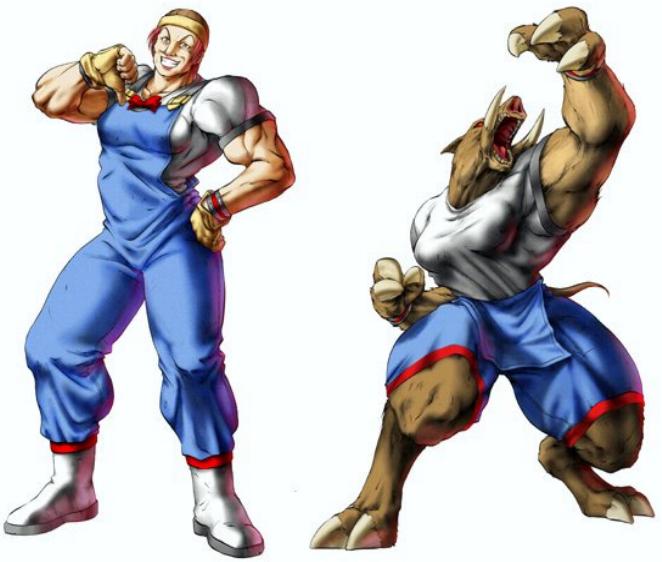
Even though commercials for gaming don't fall back on the same sexist portrayals of men as often as other products do, it does occasionally still crop up. Last year, I mentioned how mind-boggling it was that Ninja Theory used male genital mutilation to advertise Heavenly Sword at E3 2006 (in the appropriately-named "Groin" trailer) in a way that no game developer would ever dream of doing with women:


Over the last couple of weeks, the double standard has cropped up again. The Xbox One has given us a couple of very clear examples of how acceptable it is to mistreat men while being unacceptable to use negative portrayals of women.

It started with a light-hearted letter on the Xbox website, supposedly for people to customise and send to their significant others to persuade them to buy an Xbox One. It's only available in the US, so I haven't been able to view the letter itself, but I believe it can be viewed here if you're in the US and want to check it out. For anyone who can't, here's a screenshot:

Left-click for larger view.
Immediately, this letter faced a backlash on Twitter and from journalists, who believed that the letter pandered to stereotypical viewpoints about women; lines like "you'd rather knit than watch me slay zombies" and "did I mention how beautiful you are" indicate that this is supposedly a man speaking to a woman.

... Except it doesn't. The letter uses completely gender-neutral terms and any words or phrases with green text can be customised with different ones. "Beautiful", for example, can be changed to "handsome" instead. Both the sender and the recipient can be either male or female, in other words, so it's astounding that so many journalists reporting on the letter -- some of whom even acknowledge that the letter is customisable, making their outrage all the more baffling -- immediately believe that this is a man sending the letter to his female partner when it could be addressed to either sex, from someone of either sex:
"What was intended to be a cute, customizable form meant for men to convince their girlfriends to buy XBox One consoles instead brought Internet ire to Microsoft."
- Michael Thomas, Digital Journal - "'Sexist' Xbox One ad forces Microsoft to rewrite"
"Microsoft put together an online letter template to help men ask their significant others for Xbox One consoles — either as a holiday gift or requesting permission to get the system for the household.
The ad tries to be cute with the thinking an 'explanation (and a little sucking up)' will get the woman to budge. But some see the effort as sexist and enforcing gender stereotypes."
- Samantha Murphy Kelly, Mashable - "Microsoft's 'Sexist' Xbox One Ad Stirs Controversy"
"Microsoft changed the default language Wednesday on a fill-in-the-blanks form on an Xbox website, which appears to give men talking points to sell women on the merits of the new Xbox One videogame console."
- Shira Ovide, Ian Sherr & Evelyn M. Rusli, Wall Street Journal - "Xbox Changes Wording of ‘Hey Honey’ Letter After Sexism Complaints"
"Microsoft has created the most insanely sexist ad for the Xbox One after presumably binge-watching Mad Men and missing the point entirely.
Or at least that's the only explanation I can come up with for its comically regressive US web-based ad for Xbox One that assumes its audience is full of males attached to sneering harpies who like to knit, love fitness, and hate video games.
The ad in question suggests that men want an Xbox One, but their female significant other will chide them for it. To counter this oppressive, domestic force, Microsoft has written a letter to your stereotypical shrew explaining the benefits of Xbox One to women who never lived past 1912."
- Jeffrey Matulef, Eurogamer - "Microsoft slammed for sexist Xbox One ad"
"“Man,” you may have said recently, “I wish my girlfriend/wife/mistress would let me buy one of those cool new Xbox One consoles.” “If only there was someone who could talk to her about it for me,” you may have exclaimed! Well good news, gamer guy: Microsoft has a shamelessly sexist open letter you can email to the non-gaming lady in your life."

Some articles are less reactionary than others but it's hard to believe so many of them take the stance of "it's sexist against women". As marketing campaigns go, I can't see it being particularly successful -- is the customisable letter going to persuade anyone any better than a list of the Xbox One's features would? -- and, honestly, the idea of poking fun at a partner not being interested in gaming is a silly way to sell a games console. Having said that, Microsoft made an effort to make the letter gender-neutral. There's nothing to say that it's not a female gamer sending this to her male partner who would "rather knit than watch me slay zombies" (which I think is too over-the-top to be taken seriously anyway). So it's an example of dumb advertising but Microsoft at least took steps to avoid offending people, something they made clear when they apologised and changed the letter.

If only the same could be said for their "His & Hers" Xbox One commercial:


In this video, a man is watching sports on the Xbox One. His girlfriend enters the room, uses the Kinect's voice commands to switch to Dead Rising 3, to the man's protests, and then orders him to get her a beer. He complies but finds that they're out of beer. His girlfriend orders him to go to the store. He does so. The "joke" is that the girlfriend can command her boyfriend as easily as she can with the Xbox One's voice recognition.

Basically, Microsoft have fallen back on the same sitcom stereotypes that I mentioned at the start of the blog; a useless doormat of a boyfriend with the same "yes dear" attitude that sitcom husbands typically have when confronted by their by-the-numbers "strong, independent" wife. However, and I can't quite believe I'm writing this, the advert has been praised for subverting stereotypes.

Before I get into that, let's read some of the Youtube comments from that particular video, shall we?

Left-click for larger view.
I apologise for that picture being so large that it won't fit on the blog unless resized but basically, the vast majority of comments on that video imply that the only people who dislike the video are stupid, illiterate, fat, ugly, whiny, sexists, virgins, "butthurt", "fucksticks" and/or "dudebros".

Man, we're so lucky that gaming is a boy's club, aren't we? Who knows what kind of abusive, sexist things would be said about men if it wasn't!

Basically, their interpretation is that the commercial subverts stereotypes because it's a woman telling a man to get back in the kitchen and get her something, in the same way that women face online abuse by people who tell them to "get back in the kitchen and make me a sandwich".

I'm sure that was the intention, just as I'm sure the commercial was intended to subvert stereotypes. It doesn't work, in as much as the man in this particular relationship is as stereotypical as the majority of men in both sitcoms and advertising but, as is always the case, the woman's portrayal is the important one. The man is irrelevant.

So let's say that by having a woman tell a man to get back in the kitchen, the commercial attempted to subvert stereotypes. Do Microsoft truly think that making misandric jokes about men is somehow making a point or striking a blow against sexism towards women? Or are they just running the risk of normalising "get back in the kitchen" jokes for the sake of a very petty commercial? By using sexist advertising to market their product, feminist critics of the games industry have lost what little weight the "women are often faced with 'get back in the kitchen' jokes while playing online" argument had; I know for a fact that, when faced with that argument in the future, I'm going to respond with, "so what? Microsoft used that same 'joke' against men to help sell the Xbox One". It's Heavenly Sword all over again. When anyone points to the website Fat, Ugly or Slutty for examples of the ways women are mistreated online, there's an entire comments section of a Youtube video we can point to for examples of men being described using phrases like "fat little man-dodos", "14-year-old virgins" and "man tears". The commercial hasn't made any strides towards equality.

For all the misandric comments about "man tears", there are actually very few people criticising the commercial, leading me to suspect that the comments section of the video is heavily-moderated. However, I did manage to find this comment thread:

Left-click for larger view.
In this particular comments thread, one feminist Youtuber says that they are offended by the commercial because it doesn't promote gender equality. Others tell them that they are not a feminist.

I think Julie De Santos hits the nail on the head here, before being quickly dismissed by people claiming she "misses the point". My criticism of this commercial and the Youtube comments honestly has nothing to do with the content but rather the reactions to it; the blatant double standard where an explicitly misandric advertisement is praised while an implicitly misogynistic (if that) letter promoting the Xbox One is decried. Microsoft gave an apology for one but not the other and I'm sure nobody is guessing which one. Where's the consistency? Where's the backlash against the "His & Hers" Xbox One commercial and the comments to it?

The only article that I could find even mentioning the "His & Hers" advertisement was from Gameranx, in a piece that praised the commercial while pointing out how the makers of the customisable letter were guilty of "not getting it".
"[On the customisable letter] However, despite the lack of gender specific pronouns, many have noticed that the structure still comes off as a stereotype: the ole "gotta ask the ball and chain" trope that permeates heteronormal relationships. It's almost as if the initial ad was rejected and key phrases switched in the interest of not coming off as sexist. A noble pursuit, to be sure, but one rather clumsily executed in this case.
This attempt at gender neutrality seems to follow a new strategy for Microsoft, who recently released a commercial that adequately challenged some of the general preconceived notions about the target audience for the Xbox One. Entitled "His and Hers," the following ad features a woman gamer who kicks her boyfriend off the couch while he's watching sports to play a video game.
It almost boggles the mind how a company that came up with the advertisement above could also be responsible for the former ad copy. But gotta give 'em props for trying."
- Ian Miles Cheong, Gameranx - "Is This Xbox One Ad Sexist?"

Little wonder that this particular article was written by Gameranx editor-in-chief, Ian Miles Cheong; someone who, back during the #1ReasonWhy movement, posted a link on Twitter to his Tumblr, featuring a very misandric poem by Carol Diehl, which suggested everything from men being unable to know what it's like to be raped to being oblivious to the feeling of having the appearance of their private parts mocked.


On occasion, I've defended game journalists for the lack of coverage about certain issues if I feel like they're not significant enough to be covered but this isn't like a few sexist comments on an obscure Facebook page that aren't a big enough issue for journalists to cover. This is an advertisement for a major next-gen console. I would expect some coverage for it beyond Ian Miles Cheong's brief praise. It isn't like I think this issue deserves special treatment but the fact is that a lot less significant gender issues in gaming have been given a lot more coverage because, typically, they involved women as the victims and not men.

Take Carolyn Petit as an example. Back when the backlash occurred over the 9.0 score she awarded to Grand Theft Auto V, some people started up a petition on Change.org called "Gamespot Staff: Fire Carolyn Petit". That particular petition was taken down incredibly quickly and a new one started up that, as of this writing, has a grand total of 46 signatures (and several people only signed it to comment on how stupid it was). It's a far cry from the 22559 comments currently on Gamespot's review of Grand Theft Auto V and not what I'd call indicative of any kind of sexism in the gaming community.

Left-click for larger view.

So why is it that this particular non-issue was covered by sites such as MCV UK, Las Vegas Guardian Express, Chaos Hour and System Wars Magazine? A couple of months ago, I criticised a video on Youtube by Jamin Warren and PBS Game/Show that compared Anita Sarkeesian to Rosa Parks. In that particular video, Warren brought up the petition as a reason why "we need Anita Sarkeesian's feminism". While these aren't sites or videos I regularly read people discussing online, they still covered the subject. That's more than I can say about this.

Likewise, something I'm fairly sure I've never written about is the "Beat Up Anita Sarkeesian" game that sprang up around the time of her Kickstarter campaign. Some of you may have heard about it, since it's one of the subjects constantly brought up whenever the abuse Anita suffered is mentioned. It's been talked and written about by Anita herself. Basically, it was a game hosted on newgrounds.com where the player clicked on a photograph of Anita repeatedly until her face became more and more bruised. Given that it's had such a long-lasting legacy when the subject of sexism in the gaming community comes up, you wouldn't think it was made by just one person and taken down from Newgrounds within a day. Does it make the motive or feelings behind it any less despicable? No. Is it undeserving of the reputation it received? Yes. I'm not going to link to any sites because I don't particularly want to give them traffic but just type "Beat Up Anita Sarkeesian" into a search engine and you'll find articles on it by the Huffington Post, New Statesmen, Destructoid and more.

Then there's an article from The Wire, titled "Gamers Can't Handle the New Female Head at Xbox" by Rebecca Greenfield. Greenfield's justification for this claim? A handful of comments from gamers, several of which aren't even sexist.

So again, I don't think the "His & Hers" commercial deserves special treatment. However, because of the blatant double standard when it comes to male portrayals, it isn't receiving even basic treatment. Misandric marketing combined with single-minded journalism focused only on politically-correct articles leaves us with a sexist commercial I'll be surprised if anyone covers.

The odd thing is that the "His & Hers" video posted above was actually a mirror. The one on Xbox's Youtube channel has more views, more comments and yet a lot less sexism in the comments section. I've no idea how that worked out the way it did.

Finally, although I know that engaging with Youtube commenters is a fool's errand no matter what, there is one from the comments section above that I'd like to mention, from a Youtuber called Nimbose:
"What's funny is that some of the guys who hate this commercial are probably those who tell women 'shut up and get me a sandwich' on a daily basis.
Hmn.  Looks like someone can't take what they dish out."
That final line, about not being able to take what they dish out, is the part I'm interested in. Using that same logic, does that mean it's now open-season on making "get back in the kitchen" jokes, since Microsoft have done it with the Xbox One? It's been "dished out" towards men ... so presumably, male gamers can "dish it out" towards women as they please from now on and female gamers won't be allowed to complain because Microsoft already insulted men in the same way? Or at least any complaints will be met with, "well, it looks like some people can't take what they dish out".

I'm guessing that won't happen.

Abusive online comments towards women aren't going to end because a console manufacturer created an advert featuring an insulting portrayal of men. If anything, it'll just encourage more abusive comments and, as long as the "His & Hers" advert goes uncriticised, all the misandric advertising has done is remove any way of defending against the "get back in the kitchen" comments! If nobody steps up to criticise the advert that shows men getting back in the kitchen funny, why would anyone step up to criticise the "get back in the kitchen" jokes aimed at women that the online trolls find funny? If you're willing to promote the sexist advertisting double standard -- criticising the letter, not criticising the commercial -- why would anyone bother to help women?

Simply put, if nobody criticises the "His & Hers" advertisement in the same way they did the customisable letter ... I don't know how gaming can ever be referred to as "a boy's club" with a straight face and it's clear why blogs like this one need to exist.

Saturday, 24 August 2013

Reversing The Sexes

I've been really bored lately, even with Dragon's Crown. I played Gone Home recently too but thought that was a letdown. While I suspect there'll be something to write about following Gamescom, it's all very slow-going right now. Not that there's a shortage of gender issues concerning men in video games to write about but, it has to be said, it's so much easier to write about current issues and have links at my fingertips than it is to hunt down pictures and videos myself. Still, with nothing else to do, let's talk about reversing the sexes.

A few days ago, I read a comment on Youtube that said something along the lines of "reversing the sexes is  a standard defensive, kneejerk response to accusations of sexism in video games". I can't recall the video I saw it under (and after spending most of the day searching, can't find it either) but that statement left me scratching my head. Hypothetically reversing the sexes of a situation has always, to me at least, seemed like an easy and effective way to examine whether it's sexist or not. In fact, people like me who get involved in the bubble of gender issues can forget how easy it is to become bogged-down with complicated terms (like "patriarchy", "hypoagency", "rape culture" and other phrases that I like to steer clear of while writing this blog) so reversing the sexes is actually an incredibly useful, accessable tool to people who aren't as interested in gender issues; it's easy to do and doesn't overcomplicate any issues. So let's try a few.

There's a moment in Star Wars: Knights Of The Old Republic that always confused me; the player character meets a hunter on Tatooine who is stranded and needs the player's help. The wife of this hunter has rigged his hunting droids to explode if he takes another step. He had no choice but to wait for help, possibly dying of thirst in the process. The hunter isn't smart enough to figure out how to disarm them, so he asks the player character for help. It isn't the situation itself that's questionable -- even if it is the Star Wars equivalent of a bumbling husband being at the mercy of his more intelligent wife -- but if the player chose Bastila Shan, a female Jedi and something of a mentor to your own character, to accompany them, she has some eyebrow-raising things to say about the hunter's situation:


Bastila says, "I say leave him". The hunter replies with, "you're pretty heartless for such a pretty lady, you know?" Bastila responds, "I take it back. Let's congratulate his wife".

To me, this always seemed like a huge overreaction, especially for the supposedly good-natured Bastila. So much for "the Jedi do not believe in killing their prisoners", as she states earlier. Leaving prisoners to die of thirst, however, is apparently completely acceptable.

The uploader of that Youtube video comments that, as out-of-character as it may seem, it hints at Bastila having anger issues that would later be used to turn her to the dark side. Personally, I find it a bit hard to connect "irritation over clumsy come-ons" with "dark lord of the Sith". Not that I think the uploader is incorrect but it seems like an odd thing to foreshadow side-switching with.

So do you think it's sexist? I'm torn. The hunter isn't portrayed as a sympathetic character; using droids to hunt is a no-no in KOTOR and he has a habit of flirting with women in spite of being married. Plus, in spite of Bastila's comments, the player earns Light Side points for helping the hunter, so it doesn't seem like the game is encouraging punishing the hunter for his comments. On the other hand, it takes a lot to advocate murder (and congratulate the murderer) just because you're irritated over someone's pick-up lines.

Reverse the sexes and I think there's only one big difference; it sounds a lot more harsh to me to think of a male Jedi offering to congratulate an unintelligent woman's husband for plotting to murder her. It would come across as unbelievably petty for a male character to be so irritated by some (admittedly obnoxious) come-ons to advocate such a serious act of domestic violence. As we know, however, domestic violence against men isn't awarded the same seriousness as it is against women. Having said that, I'm still coming down on the side of "not sexist", solely because the player is rewarded with Light Side points for helping the hunter.

Helpfully, there are a few games that provide surprisingly accurate gender-flipped counterparts to each other in spite of the fact they're more-or-less unrelated. Take Heavenly Sword and Resident Evil 4 as an example:


And back when I wrote "The Violence Double Standard", I brought up a moment in Final Fantasy XIII when Lightning punched Snow -- her sister's boyfriend -- twice in the face for failing to keep her sister safe.


I went on to say, "according to Square-Enix, she was conceived as "a female version of Cloud", from Final Fantasy VII. I must've missed the version of Final Fantasy VII where Cloud clocks Tifa in the jaw angrily. Twice." It was only this month that I received a long reply in the comments that ended with a link to this video from Final Fantasy VII, where Cloud attacks Aeris in a moment of stress. Skip to 14:40:


Comparing these four moments is a good way to highlight the differences when violence is portrayed against colleagues in games. They are, more or less, gender-flipped versions of each other.

The big difference, first of all, is that the men aren't in control of their actions when they attack the women. In Resident Evil 4, Leon is being controlled by the parasite inside his body and in Final Fantasy VII, Cloud's stress causes him to have an out-of-body experience; literally, a ghostly image of Cloud appears that the player controls while the corporeal Cloud attacks Aeris and the player is unable to stop him in any way. In contrast to the two of them, both Nariko in Heavenly Sword and Lightning in Final Fantasy XIII are well aware that they're harming their own colleagues. So it's acceptable for female characters to hit male ones (which is shocking, I know) but for male ones to hit female ones requires a trance of some kind.

It's also worth noting the reaction to each one. Nariko's choking of her fellow clanmember is broken up quickly but there isn't any concern shown for the man. Lightning punching Snow is practically ignored by their fellow teammates. Certainly, no concern is shown for Snow. On the other hand, Ada reacts to being choked by kneeing Leon in the ribs and stabbing him in the thigh to break him out of his trance. He ends up thanking her for this. So no matter who is being choked and who is doing the choking, violence against the male character ends up being acceptable in both situations. In Final Fantasy VII's case, the remaining party member (Barret, in the video above) quickly rushes in to knock Cloud out and prevent him from hurting Aeris any further.

It seems like trances are an easy way to have violence stay reasonably inoffensive; reverse the sexes of either the Leon or Cloud attacks and they're practically the same. The hero doesn't come across as any worse because of the attack, regardless of his/her sex or the sex of the victim. Part of the reason for that is because the attack isn't the important part, whereas the trance is; both Leon and Cloud attack women because it's such an extreme action, it shows how far their sanity is slipping. Women attacking male characters on their own side is just ... a quality. Game audiences aren't supposed to think anything of it, except perhaps "I'm glad that guy got taught a lesson". As a result, reversing the sexes of the Heavenly Sword and Final Fantasy XIII attacks does make things seem worse; a male character in complete control of his faculties choking or punching a woman who refuses to fight back is just asking to be called out for its misogyny.

I suspect its moments like these -- strikes against male characters by female ones -- that make up the majority of examples that don't really stand out until we reverse the sexes. They're so quickly dismissed when they're against a male character that either we ignore them or we're supposed to ignore them. Take Bioshock Infinite. It's a very basic example but Elizabeth strikes Booker DeWitt in the face with a wrench that isn't brought up again after it happens. It knocks him out-cold, giving Elizabeth enough time to flee but Booker still doesn't have a word to say about it.


I don't know if the gaming public is prepared to see a male character doing this to a woman, although I think it's possible to give gamers a bit more credit. Take the Mass Effect series as an example. It's possible for the main character, Commander Shepard, to punch a female reporter attempting to smear his/her (although for this example, let's go with "him") reputation in all three games. Sure, it's not the same thing, in quite a few significant ways; the reporter isn't on Shepard's side, punching her is a "Renegade" option and, as previously mentioned, Shepard can be either male or female. Each of those points lessens the impact and controversy of a male character punching a woman. Even so, there doesn't seem to have been any backlash at all against the Mass Effect series for this. In fact, it's been praised because the reporter is intentionally unlikeable. Who knows if a male character intentionally punching, choking or bludgeoning a stubborn (like Snow) or sexist (like the clanmember) woman on their side could be as accepted as women doing it to men is now (irritatingly)?

As always, feel free to leave a comment or send me an e-mail at themalesofgames@gmail.com.

Saturday, 3 August 2013

Damsel in Distress: Part 3 - Tropes Vs Women in Video Games

I've noticed a spike in viewers today because Dragon's Crown has been released. I'd like to get around to making another blog about that but, unfortunately, I live in Europe and our release date for the game is "Q3/Q4 2013". Amazon's estimate is October. Still, it's my birthday soon so I'll probably import it for that.

Of the three damsel in distress videos that Anita Sarkeesian has planned, this is the one I've been looking forward to the most. To me, this is the one that could make or break her arguments. As this is the video that concerns male damsels in distress -- or the "dude in distress" as she calls them -- how Anita treats this issue could be what sets the tone for the whole series.

At least to Anita's critics, this video could be the turning point. Maybe she'll try to justify the existence of male captives and attempt to dismiss it as an issue entirely. If that's the case, it's nothing particularly new and her critics have been justified in calling her arguments and examples cherry-picked and biased. On the other hand, maybe she'll treat male captives with the analytical eye they deserve; maybe she'll notice that they're not that different from female captives and perhaps she'll notice that men are tortured more often to create sympathy. If that's the case, maybe Anita can win over a few cynics. Maybe her videos won't be seen as a propaganda piece anymore and instead a more reasonable, if deeply flawed, analysis of sexism in video games for both men and women. When writing about part two of Anita's damsels in distress series, I stated, "when it comes to gender stereotypes, her heart is in the right place". That opinion has wavered a bit since then but who knows? Maybe Anita can come good at last and her silencing of others, her plagiarism of other people's videos and her misquoting of studies will just be stumbling blocks along the way.

I just hope that Anita has kept her own tweet in mind while making this video:


As of this writing, I haven't seen the video. So let's see what Anita has for us ...


Before I watched this video, I wanted Anita to say one of two things in this video; the first would be, "the dude in distress is a horrible, damaging trope because male damsels often have to go through torture and unsympathetic treatment that female damsels often don't". That's not quite my position -- I don't particularly mind damsels in distress if it makes sense in terms of the story but I do question why male characters have to be tortured to gain player sympathy -- but that would be something. The other thing I was hoping Anita might say would be, "I think having male damsels in distress is great because it's a deconstruction of gender roles and shows that the damsel plot device isn't gender-specific. It's a sensible and progressive attitude for developers to take regarding kidnapped characters".

Anita didn't take either of these stances on the subject. In fact, she didn't say much on it at all; only a third of the twenty-three-and-a-half minute video focused on the "dude in distress" and it was sharply dismissed with nothing more than a, "it's sexist when it's a woman. It's fine when it's a man". The rest of the video focused on more damsels in distress, with some focus on the use of "ironic sexism" in games.

So it looks like Anita has, in fact, chosen to be sexist by denying and dismissing the sexism against men that permeates our culture. You'd think she'd know better.

The funny thing is just how few games featuring "dudes in distress" Anita listed. She mentioned a grand total of six. I'd also like to point out that this was the first time I was made aware of the fact that, in Anita's eyes, the "distressed" character has to be the opposite sex of the hero character. Before now, I was operating under the assumption that the sex of the "damsel" was important but the sex of the hero was completely irrelevant. Even so, six games is still an incredibly small number to highlight. There was no mention of any of the games with male damsels listed in KiteTales' response to Anita's first video, all of which did feature female characters saving male ones. She didn't go into, say, Onimusha, a series that featured women saving men in all three games of the original trilogy. She didn't mention Raiden in Metal Gear Solid 2, having to be released from his torture device by a woman. Oh, and she didn't bring up this blog's favourite go-to game for sexism; Heavenly Sword. It wasn't long after she mentioned these six games that she rattled off a lengthy list of indie and mobile games featuring damsels in distress, as if to lessen the significance of the six games featuring "dudes in distress" that she brought up.

Still, let's focus on Spelunky, a game that Anita focused on because she believed it highlighted the difference between the "dudes" and the "damsels". Here's a couple of points Anita made beforehand:
"First there’s been no shortage of men in leading or heroic roles in video games or in any other creative medium for that matter. In fact one recent study found that only about 4% of modern titles are exclusively designed around a woman in the leading role. Since men are still largely the default for protagonists, the rare dude in distress plotline does not add to any longstanding gendered tradition in storytelling."
It's worth mentioning that the 4% statistic doesn't mean the other 96% of modern titles are exclusively designed around a male leading character; that 96% includes sports games and games where your character's sex is optional, bear in mind.
"Second, and perhaps more importantly, damsel’ed female characters tend to reinforce pre-existing regressive notions about women as a group being weak or in need of protection because of their gender, while stories with the occasional helpless male character do NOT perpetuate anything negative about men as a group since there is no long-standing stereotype of men being weak or incapable because of their gender."
First of all, there's nothing to suggest that damseled female characters reinforce any stereotypes about women as a whole; individual damsels do not represent women as a whole. They're also not necessarily weak or in need of protection because of their gender (and I'd be surprised if there were any games out there that outright stated that). Those are both stigmas that Anita herself has attached to female damsels. Much like her declaration that damsels in distress are more like property than people, it's a conclusion that Anita has arrived at without evidence. The stereotype may exist but a damsel in distress doesn't perpetuate it simply by existing.

Anyway, Spelunky was singled-out by Anita because the 2012 HD remake of the game featured the ability to switch out the large-chested female damsel with a "Chippendales-style hunk" or even a dog. So it was the perfect game to focus on the differences between male and female damsels. In Anita's own words:
"Setting aside the fact that – if a female character is easily interchangeable with a dog then its probably a pretty good indication that something is wrong – Merely providing an optional gender-swap is not a quick and easy fix, especially where stock character style damsels are concerned.
The two may appear the same, but they don’t mean the same thing in our culture.  This [damsel] is still a problem while this [dude] is not. Again because one reinforces pre-existing stereotypes about women, while the other does not re-enforce any pre-existing stereotypes about men."
Anita's argument is "these types of token role reversals do absolutely nothing to diminish the issues inherent in using the trope in the first place" but this is nothing more than her opinion. If anything, I think the fact that a female character being interchangeable with a man or a dog is a good indication that the gender (or even species) of the damsel isn't an issue; it is an easy fix, in that the damsel isn't particularly relevant to the story, nor is her gender and the fact is that she can't reinforce a pre-existing regressive notion about women as a group if she doesn't necessarily have to be a woman.

Not to mention that the hero doesn't have to be male, something that Anita failed to mention; even in the original game, the player could unlock a mode to play as a damsel and save spelunkers, rather than the other way around. The HD remake added playable female characters too.

This is another case of creating an unwinnable situation for developers. Regardless of the effort put in by the developer to create a more progressive game -- removing the gender issue entirely by providing the option of female playable characters and male (and animal) damsels in distress -- it's dismissed for its progressiveness and derided for its perceived sexism; when talking about "ironic sexism", Anita had no problem stating:
"In Spelunky the damsel can be knocked out, picked up, carried around and thrown at enemies before rewarding the player with an extra heart via a smooch of victory (if you manage to get her limp unconscious body to the end of each level while still alive that is)."
However, doesn't this completely ignore the facts that Anita provided above? The damsel doesn't have to be female but Anita still uses the game as an example of "ironic sexism" (in this case, parodying the uselessness typically displayed by damsels in distress). Again, I have to ask why isn't the issue removed when the genders are switched? In fact, if Anita can hold up the female Spelunky damsel as an example of a character reinforcing stereotypes about being weak and incapable, couldn't I do the same for the male Spelunky damsel and say that being thrown at enemies is an example of male disposability and reinforces the fact that we don't care about men in games? Which wouldn't make any sense because the gender of both the protagonist and damsels can be picked by the player.

Putting aside all the specifics, I can't help but call this what it is; hypocrisy. An attempt to rid gaming of female damsels while coming up with flimsy justifications -- or excuses, more accurately -- to keep male ones. We have to go back to the tweet at the beginning of this blog post; she's denying and dismissing the sexism that permeates our culture. It's Anita wanting to have her cake and eat it too. To plant her flag on the moon of victimhood and claim it for womankind, if I may use a horrible metaphor.

While that might sound like a snarky and grandiose thing to accuse Anita of, here's a couple of examples that I think will clarify it; one of the six (six!) games that featured a male damsel was a game called Primal, featuring the female protagonist's boyfriend, Lewis, being kidnapped by evil forces. The protagonist, Jen, develops some powers and goes to get him back. That's a very simplified version of the game's events but it sums up the basics. What Anita didn't mention is that Lewis, in addition to being a damsel in distress, is also the final boss of the game, having been brainwashed (again, an oversimplification), and he dies shortly after his defeat. There's a hint that he could return after his death but, if the after-credits scene is anything to go by -- Jen reading to Lewis while he is comatose -- it isn't a certainty. There isn't any movement in Lewis to hint that he'll awaken.


My big problem with Anita's coverage of this is that, while there's a hint in her video that Lewis dies, there's no mention of him being the final boss. There's no mention of Jen being the one who kills him. Given that the meat of Anita's second damsels in distress video was about the implications of domestic violence when a male protagonist attacks his brainwashed (or otherwise coerced) girlfriend in a video game, mentioning these facts would be the minimum I'd expect her to do.

Also, it really does have to be said that the lack of focus on protagonists saving damsels of their own sex damages Anita's point; like I said earlier, up until this video I was under the impression that the sex of the damsel was the only important thing, rather than the sex of the damsel and the protagonist. I'm willing to wager that more men are in need of rescue in games starring male protagonists than in games starring female protagonists. Yes, I understand that's due to a lack of female protagonists -- and more varied protagonists is something I'm entirely in favour of -- but there's a plethora of male captives to be found in games with male protagonists and by refusing to include them, Anita isn't painting a complete picture. It makes the "dude in distress" out to be rarer than it actually is.

Even worse is one of the links Anita provided as a source on her website. It's a link to a PDF file called "Spelunky & Sexism", archived from a site called "How To Not Suck At Game Design". It brings up the option to switch sexes (and species) of the protagonist and damsels in Spelunky and states "this is very progressive and forward-thinking. Great concept". After that, it quickly goes downhill (excuse the few spelling and grammatical errors. They were present in the original source):
"But in a concrete manner, it makes everything even worse. Since saving is not an option, you get to choose not who to save, but who to exploit and abuse. Since we do not have as much problems in pop culture and society with abuse of men for being men, the buff guy is not that much problematic as a damsel style. It still is kinda ugly to witness, but at least it does not endorse common real-life abuse.

Animal abuse on the other hand is quite real, so smacking a dog around and using the dog as shuriken, maybe accidentally killing him, really does not feel any better, then doing it with another human being."
If you've read some of my previous posts, you might know that concern over domestic violence against men was the "main" issue that caused me to identify as a men's rights activist. To say that the paragraphs quoted above make me uncomfortable is an understatement. In fact, I don't think I've ever read anything quite as ignorant about gender issues in the many years I've followed video game websites. This is stating the obvious but domestic violence against men is also "quite real" -- without wanting to be especially preachy about the issue, hopefully this article can shine a small spotlight on an incredibly widespread issue -- and not only is the writer of the paragraphs not above treating the abuse of men as secondary to the abuse of women but also the abuse of dogs.

None of the scenarios outlined endorse any kind of abuse -- whether the damsel is a man, a woman or a dog -- but it's quite despicable that the writer treats male victims of abuse as non-existent. I would've thought it'd be worse that the abuse of men in popular culture wasn't considered an issue and that's why it should be criticised, rather than swept under the rug as "not that much problematic". Unfortunately, the writer of the paragraphs above takes an attitude of "if it ain't broke, don't fix it" or "if the masses don't consider it an issue, I won't make it one". How a site can completely unironically be titled "How To Not Suck At Game Design" and then provide such a blatant double standard, I'll never know.

So both Anita and her sources are determined to dismiss the poor treatment of men to perpetuate the victimhood of women. Even so, this may be the first time I've been more irritated by Anita's sources than her videos. Having said that, in spite of the speech I've written above, there wasn't very much in Anita's videos to feel annoyed by. Oh, it was bad; if you thought Anita was judgmental of Shigeru Miyamoto, wait until you see how she treats indie developers. Although apart from that, the rest of the content was just there and aside from Spelunky, I'm mostly critical of what wasn't in Anita's videos rather than what was. So her sources bother me a lot; there aren't any misquoted studies this time around (as far as I'm aware) but a couple of the sites linked to are just complaints about Fat Princess.

Which leads us to the content that makes up the second two-thirds of the video and honestly, I don't have much to say about it. There are only three things I want to write about regarding Anita's commentary on "ironic sexism".

One. Personally, I've always thought that no topic should be off-limits for comedy. I hope I'm not the only one who wonders how Anita would react if she watched a controversial stand-up comedian. It's certainly within an indie developer's right to portray the damsel in distress -- or anyone else -- satirically. It doesn't have to fall within the bounds of Anita Sarkeesian's narrow view of satire; "There is a clear difference between sexist parody and parody of sexism. Sexist parody encourages the players to mock and trivialize gender issues while parody of sexism disrupts the status quo and undermines regressive gender conventions."

Some of the games listed certainly deconstructed and parodied the damsel in distress more than Anita gave them credit for but earned criticism because they didn't fit her definition of "parody". More on that in a second. This really is a case of "if you don't like it, don't play it" though. Satire is not Anita's to dictate and trying to do so just makes her seem entitled.

Two. When talking about indie games, Anita falls into the same traps as she did in her first episode when discussing retro games; rather than simply accepting that developers either don't have the time, the budget or just the wish to implement a deep storyline. Her accusations towards Super Meat Boy stand out in particular; she shows the game's intro sequence, which is an almost frame-for-frame remake of the the intro sequence from 1989's Adventures Of Lolo. Rather than accept it for the homage that it is, Anita brands it "a shallow meta-commentary" and criticises it for not "challenging or disrupting what the damsel in distress trope says about the role of women in such narratives".

... Who said the developer had to? Anita goes on to praise games such as Fez and Superbrothers: Sword & Sorcery EP simply because they don't fit this mould. The problem here is that there's nothing wrong with Super Meat Boy paying homage to a retro game with its intro sequence but it still faces Anita's ire because ... it's not the retro quality she wants to see in a game. Again, this comes across as very entitled on her part. Rather than listing examples of games with damsels in distress, she's passing judgment based on preferences. This isn't the critical analysis that Anita claimed on her blog. It's closer to a soapbox or pulpit.

Three. This quote:
"The bad ending of the indie game Eversion (2008) features a similar joke; when the hero finally reaches the princess, she turns into a monster and eats you alive.
A similar end game punchline can also be found in Castle Crashers (2008). After you’ve saved the 4th princess, and then fought and killed your friends over who gets to claim her, it turns out that she has horrible clown face.
In each case the joke derives from the fact that after completing the long and perilous journey to save his woman, our hero is hilariously cheated out of his “rightful” reward."
When I watched the video for the first time, the exact thought that ran through my head was "okay, so the male hero is the butt of the joke; he gets eaten in one ending and in the other, he's deprived of any satisfaction when it turns out the princess has a clown face (and therefore has probably tricked the hero)". So how did Anita follow that up?
"In other words the comedy comes at the damsel’s expense."
 ... How? No, really, I mean how!? Only Anita Sarkeesian could see a princess eating a male hero as a sign that the damsel is being made fun of.

If I might go off on a tangent here, a few years ago I was watching any and all US comedy that I could to see if anything caught my attention. I became a fan of a few series that I'd never seen before, like Cheers and Scrubs, while some others fell by the wayside, like King Of Queens. One of the series that didn't make the cut was a sitcom called Just Shoot Me, starring David Spade. One episode featured Spade's character faced with the prospect of having a threesome with two women and as a result, he was able to persuade every male character he ran into that day to help him out because none of them wanted to ruin every man's dream (sarcasm) of being with two women at the same time. Here's the relevant part of the episode on Youtube. It ends with him being tricked, the two women who promised to have a threesome with him orchestrating an argument so they'd have an excuse to go back on the deal.

In this case, we're supposed to laugh at Spade's character. He's the butt of the joke. His sexuality and lack of sexual gratification is the butt of the joke. All the men who help him and appear at the end to applaud him are the butt of the joke too; they've all been fooled and we're meant to laugh at men for being so gullible.

The reason I'm writing all this about Just Shoot Me is because I heard a theory that Anita said "the comedy comes at the damsel's expense" because the damsel's value is supposedly lessened in the eyes of the male heroes because they turn out to be ugly (and therefore, not what the hero wants or expected). I couldn't disagree more; the damsels are no worse off than they were when the male protagonist thought they were just regular old princesses. The male protagonists, however, are David Spade's character in Just Shoot Me. They're the dorks and losers who don't get the reward they were hoping for and we're supposed to laugh at them for it. The damsels aren't devalued in any way. The damsels win.

The male protagonist is made to look stupid in these situations (or dead, in Eversion's case). While I see them as individual instances, the fact is that if Anita really is against "reinforcing pre-existing stereotypes", she really could do worse than starting with Castle Crashers. Given that Anita somehow manages to warp even that around to being offensive to women, however, that's obviously never going to happen.

Anyway, that brings this lengthy post to an end. I'd like to say that I won't watch another Feminist Frequency video but I think we all know that's a complete lie. Besides, with a brand new topic, the next time I write about a Feminist Frequency video, it'll seem more fresh. I really can't stress enough just how little of this video interested me. If anything, I was just disappointed that Anita acted so predictably, dismissing "dudes in distress" without much of a fanfare or even an interesting argument. If not for Spelunky, this blog would be much, much shorter. Again, we just have to look back on Anita's hypocritical tweet -- which I honestly did take a screenshot of before I ever saw the video -- and realise that the chances of her ever giving men's issues a fair hearing are zero.

Well, whatever. Feel free to leave a comment or send me an e-mail at themalesofgames@gmail.com.

Saturday, 2 March 2013

Good Female Characters

Even though I spend a lot of my time agonising over the treatment and portrayal of male characters in video games, they're not the only ones who get the short end of the stick. There are lots of very strong, interesting and intelligent female characters in games. Lots of them. However, they're often dismissed because of the way they look, the way they're dressed or simply because they're not in a game made by Valve.

By now, I'm sure you know that Aliens: Colonial Marines wasn't well-received. Well, last week on Gamespot, writer Carolyn Petit posted an article of hers, "Fear of a Woman Warrior", that, among other things, criticised Aliens: Colonial Marines for adding female multiplayer characters late in development:
"First, there's the ill-fated Aliens: Colonial Marines. A Reddit post, picked up and reported on by Kotaku, indicated that female marines, rather than being part of the game from the earliest stages of development, were a last-minute feature request. Let that sink in for a second. Female marines were a feature request, a special addition, a change made to the game at the last minute. This is difficult for me to wrap my head around. During Colonial Marines' development, people working on the game declared their abiding reverence for the film Aliens. It's hard for me to believe in this reverence, not just because the game ultimately failed to deliver an experience worthy of the Aliens name on any level, but because any reasonable understanding and appreciation of what made Aliens a great film acknowledges the important role of women in it. Women are not hard to come by in the film. In fact, they're pretty damn important. One might even say that they're the equals of their male counterparts. Crazy, I know! The notion of a vision of the Aliens universe without women in it seems like about as major a betrayal of the source material as I can imagine.
And yet, somehow, for years and years, development on Aliens: Colonial Marines progressed, apparently without anyone stopping to say, 'Hey. You know how there are women in Aliens? Remember Vasquez, the tough-as-nails marine? Remember Ferro, the dropship pilot who says, "We're in the pipe, five by five"? Remember how Sigourney Weaver was the star of all the Alien movies? Well, I just had this crazy thought. What if we put some women…in the game?!'
Women should not be an afterthought in an Aliens game."
The funny thing about this is that I already knew female marines were added to Aliens: Colonial Marines late in development and not because of a Reddit post, which was then reported on Kotaku. I knew about it because last July, Gamespot posted news about the fan petition to include female multiplayer characters in Aliens: CM. So how on earth did it take Carolyn this long and another website to learn about it when it was posted on her very own site, eight months ago?

That's besides the point though. For all of the failings of Gearbox Software, the developer of Aliens: Colonial Marines, adding female characters is not one of them. Ideally, yes, they would've had enough intelligence to realise the significance of women in the Alien series and added them early on, but they didn't. When it came to their attention that they'd dropped the ball, however, they went out of their way to add them. And yet even that effort is criticised in articles like this one. Why? They should be praised for listening to the fans and correcting their mistake, not criticised for the original error.


It isn't just the female characters in Aliens: Colonial Marines that suffer. Appearance is one of the major deciding factors for the critics about whether a female character is good or bad. In Carolyn's article, she praises Lara Croft and Samus for being two examples of female characters from highly successful franchises, only to dismiss them for their sex appeal just two paragraphs later. Or at least their sex appeal being used as a reward players/to advertise the game (which I find highly hypocritical, considering Gamespot has adverts for affiliate sites at the foot of the article, advertising features like "The 20 Hottest Daughters From The Sports World" and "Hottest WAG of Each NFL Team". Apparently, criticising female video game characters for their sex appeal is fine but Gamespot'll be damned if it's going to refuse to objectify real women to gain money from referrals!).

Lara Croft is a particularly strong example of this, much like the Aliens: Colonial Marines one. This is a character who, for years, has been held up as a (if not the) prime example of objectification in video games. In some circles, her appearance would be more important than the games she starred in. So when Crystal Dynamic made the effort to revamp her appearance, giving her a more realistic figure, it would presumably be well-received, wouldn't it? Not the case, at least for Tomb Raider. After the game was displayed at E3, she was immediately faced with criticisms such as "she suffers sexual assault" and "she makes orgasm noises when hurt". Neither of which are true, of course; it's the critics seeing what they want to see. It was the same with Aliens: Colonial Marines; if Gearbox Software leave out female marines, they're blamed for leaving out female marines. If they include female marines, they're blamed for not having them in the first place.

What feminist critics of the gaming industry, such as Carolyn Petit, are doing is creating a no-win situation. I don't want to spend too much longer on Carolyn's article but she goes on to write about a man I'm not familiar with called Ryan Creighton:
"In a blog entry posted on Gamasutra last month, Ryan Creighton, a designer on Spellirium, confessed that his game is dominated by white male characters 'for fear of someone calling me out for my non-white or non-male character being stereotypical, offensive, or - at the absolute worst - outright racist or sexist.'
"The world of writing and designing games is tremendously male-dominated; sadly, this absurd fear of creating complex, human women who star in games is not limited to Creighton, but is a widespread problem."
Carolyn criticises Ryan Creighton's decision to leave out non-white and non-male characters, calling it "an absurd fear" but given that she just wrote an entire article about the pitfalls of creating female characters -- criticising some of the examples that fall into them -- how is it absurd in the slightest? At some point, game developers like Ryan Creighton just ask "why bother?" and don't add female characters at all because women like Carolyn Petit have created a no-win situation. And we're going to see a lot more attitudes like Ryan Creighton's in the future if feminist gamers don't start appreciating that the entire industry is bending over backwards to make them feel welcome and all they're doing is throwing it back in the industry's face. They're biting the hand that feeds them, so developers will naturally start doing what's sensible and avoid female characters altogether because they don't want to navigate the minefield of getting female characters "right". As a result, female characters are the ones who are going to suffer, as feminist critics can't appreciate the good qualities of the characters that they're given.

That's enough about the article but certainly not the end of the good female characters. Let's talk about Soul Calibur because there's no shortage of good female characters there. Yet nobody ever praises Talim, Xianghua, Seung Mina, Hilde, Amy, Cassandra and (at a push) Tira because they're too busy criticising the breast sizes of Ivy, Taki and Sophitia. Three great characters, all dismissed by feminist critics because of the way they look. It baffles me that women would do that, since they're judging other women on their looks far, far more harshly than any male gamer ever would. They're the ones seeing them as sex objects to get rid of rather than interesting characters to keep. The same applies to the Dead Or Alive series, albeit to a lesser extent; the women are the poster girls for the series and the men receive far less recognition. However, the makers of Dead Or Alive have also made no effort to hide the titillating aspects of the series, with titles like Dead Or Alive: Extreme Beach Volleyball under their belts.

Women in fighting games in general tend to be given the "they're objectified, so they're no good" dismissive attitude. I'm going to take a moment to discuss the double-edged sword that comes with a phrase like that; male characters who are judged on their appearance aren't taken seriously. I think being a female character who is dismissed because of her appearance is much worse, however, because there are so many great ones out there who don't receive the recognition they deserve because of their outfit or breast size.

Take Tekken as an example. For Tekken Tag Tournament 2, Namco Bandai offered a swimsuit alternate costume for every character in the game as a pre-order bonus (and later through a free update). They did provide swimsuit costumes for both male and female characters, interestingly -- here's the trailer, if you want some examples -- but what surprised me was the differences between swimsuits for different male characters. Attractive, muscular male characters, like ninety percent of the Tekken cast, are given the skimpy fundoshi outfit (which you can see a real-life version of here, if you don't mind seeing a man's behind). Then there are the characters like Wang, Dr. Bosconovitch, Bob and Ganryu; old or overweight. Unattractive, in other words. They're given old-fashioned beachwear that completely covers their entire body, like the kind seen on this TV Tropes page.

As surprising as it might sound, I was actually mildly offended that they'd do something like that. The Ganryu outfit, in particular, is confusing, since he only wears a sumo mawashi for his regular costume anyway. It was the costume for Bob that irritated me though, in no small part because Tekken Tag 2 added Slim Bob; a thin version of the normally-overweight Bob. He first appeared in Bob's Tekken 6 ending and was added as a playable character in TTT2.

You can customise each character's appearance in Tekken Tag Tournament 2 and Slim Bob, like most of the other male characters, has an option to be shirtless. Regular Bob doesn't. As mentioned above, Slim Bob has a fundoshi swimsuit costume, like all the other attractive male characters. Regular Bob doesn't. Slim Bob even has an outfit reminiscent of Lee Chaolan's bondage outfit (which I've featured on this blog before), as it has a similar emphasis on his perfectly-sculpted abs:


Call me picky but I can't help feeling that there's something ... unjust about giving a thin version of a fat character some alluring costumes and not giving the fat version the same treatment. So for all the talk from feminist critics that male characters are a lot more varied than female ones, that's true but they also face the barbed treatment of being judged on their looks. Attractive men are given outfits to emphasise their physical attractiveness, unattractive ones are given a sheet to put over their hideousness, essentially. Maybe this is all just a personal gripe I have with Tekken.

Would I like to see more varied female characters in video games? Yes. Does that mean game developers are doing something wrong right now? No. They could just be doing things more right, if that makes sense (although I certainly will say that Gearbox Software messed up by not giving female characters a larger role in Aliens: Colonial Marines from the start). So I recommend feminist video game critics stop judging characters like Soul Calibur's Ivy based on their looks because they're only hurting female characters in general. We could certainly use a few more characters like the wonderful Mitsuko from Bloody Roar but that doesn't mean we need fewer Ivys. If appearance was taken out of the equation, I think feminist critics would be a lot more appreciative of how many great female characters there really are and how judging them on their appearance is actually very petty. Hell, even Nariko from Heavenly Sword has faced criticism for her appearance and the most skin she shows is her midriff. Small-chested, no shots of her rear, no sexual dialogue ... and yet I've still seen her turn up on lists of sexualised female characters, presumably by people who've never played the game. Although if you've read anything I've written on Heavenly Sword before, you'll understand why I don't consider her a great female character.

And that's before we get to the great female characters who don't face this kind of dismissive criticism. Chell from Portal. Jade from Beyond Good And Evil. Jennifer Mui from Mercenaries. Mona Sax from Max Payne. Elena Fisher from Uncharted. Alyx Vance from Half-Life. Zelda. Jill Valentine and Claire Redfield from Resident Evil. Almost every female Final Fantasy character.

A lot of these characters aren't given the recognition they deserve because they're overshadowed by talk of how video games feature nothing but women with big boobs and a tendency to get kidnapped. Not only do I think that does a disservice to the developers who worked so hard on these characters, I think it does a disservice to the characters. If great female characters are truly what you want in games, feminist critics, try to realise it when you have them. Understand that being sexually attractive doesn't negate the other qualities of a character and -- it's been said before but never hurts to hear it again -- male video game characters are sexually appealing too. Not because it's a "male power fantasy", which is an eye-rolling explanation I hear batted around far too often nowadays, but because traits given to our male heroes, whether muscular and square-jawed or androgynous with perfect hair, look appropriate to gamers in the West or Japan, depending on the game.

And if you're looking for more great female characters, Awesome Lady Tropes has you covered.

As always, feel free to leave a comment or send me an e-mail at themalesofgames@gmail.com.

Sunday, 25 November 2012

Women as Men's Motivation

I wrote about damsels in distress last time but didn't write all I wanted to on the subject. I've been thinking about it quite a lot since then and have some thoughts I wanted to bring up.

In video games, as well as television shows, films and comic books, there's this idea that women are a motive for men to save the world/defeat the bad guy. In my previous blog post, I used this in reference to damsels in distress but it happens in other situations too. For example, I know comic book readers will be familiar with the idea of "women in refrigerators"; for those who have never heard of it, it's the idea that a female character is killed off solely to create drama for a male character. She becomes a plot device rather than a character in her own right (she lacks agency, something I wrote about in my last post). I'm not going to go into the concept any more than that -- this is a blog about video games rather than comic books and this is just an example anyway -- but just for the sake of this example, let's assume that the "women in refrigerators" concept is completely flawless. The reason it creates drama is because the woman is the catalyst for the man to do something, even if that "something" is get depressed. The problem is that a man is dependent on a woman for mental and emotional stability in this situation. He relies on her and that's what I want to write about today.

Having said that, "women in refrigerators" and women dying in general isn't a good example for this; that should illicit a strong reaction and it often does when male characters die too, right? Not only that but for me to criticise the lack of independent male characters in video games when female characters are being killed off left and right would be rather hypocritical; in my last blog, didn't I write that it irritated me that men were treated as expendable so often in games but feminist critics focused on women's lack of agency instead? So that's why I used the qualifier "let's assume that the 'women in refrigerators' concept is completely flawless". Because actually, it's very flawed. Not only does it ignore male character deaths for the same reasons (or trivialise them, or try to justify them) but has also been blown out of proportion by fans, often branding all female character deaths as examples and even rarely to the point where comic book fandom can deem a mischaracterisation or reducing a female character's exposure in a superhero team book to be an example of "women in refrigerators".

However, it's a fine example of a lack of independent men. So how does this apply to video games?

Well, think about the heroes who save damsels in distress. Mario. Corvo. Crash Bandicoot in his very first game, before Naughty Dog wised up and made the sequels' plotlines about saving the world instead. I briefly went into this about Dishonored but the damsels in distress in these situations are characters that feminist critics would describe as lacking in agency. Like I said last time though, how can Corvo be considered to have anything resembling "agency" if he lacks any mental and emotional independence? How can Mario and Crash?

These characters need their damsels in order to function as effective heroes; without the women, they're nothing. They may as well not exist. They are entirely reliant on the female characters in this situation. Maybe not physically, but certainly emotionally. It's the bumbling sitcom dad, needing his more-intelligent wife to constantly bail him out of the mess he's got himself into. He's reliant on her just like our heroes require the women in these situations to make them the heroes they are.

The women's necessity for mental and emotional stability is even there when men aren't involved. Let's go back to my old favourite, Heavenly Sword. Before the final battle, Nariko basically states that she only fights for Kai, her sort-of-adopted little sister. While Kai was very briefly a damsel in distress, she's also proven herself to be a more capable fighter than any of the all-male clanmembers, who also serve as damsels in distress at one point. She proves herself to be a more capable fighter than Nariko's father and the clan leader, Shen, who is a male version of a damsel in distress too. Nariko fights for none of them, even though they're more in need of her help. In fact, after Kai fends off Shen's attackers, she cartwheels right past him to go and help Nariko. Shen has no value; he provides no emotional or mental stability for either of the female heroines by that point. They look out for each other and nobody else.

Before anybody thinks that I'm just picking on Heavenly Sword (again), it's not the only one. Let's look at Final Fantasy XIII and its sequel, XIII-2. Lightning and Snow do everything for Serah, who is Lightning's sister and Snow's fiancée. This, in spite of the fact that Lightning spends a large chunk of the game partnered with Hope, a teenage boy who could really use her guidance rather than her cold indifference. Fang and Vanille are two women who are insanely protective of each other. In XIII-2, both the hero, Noel, and the villain, Caius, are set on their quests because of their adoration for Yuel, a teenage girl. The only male character from either game who earns this emotional/mental stability value is Dajh, the son of Sazh, and that's probably only because he's an innocent little boy. None of the other male characters receive this sympathy.

This even applies to female characters when it makes little-to-no sense; in the first inFamous game, Cole McGrath split up with his girlfriend, Trish, before the beginning of the game and runs into her a few times throughout the story. Even if you're going for an altruistic playthrough of the game, Trish is incredibly standoffish towards Cole. And if you're going for an evil run of the game, he still mourns her after her unavoidable death. She earns sympathy because she's female, nothing more. Her negative qualities are ignored and Cole, dependent on Trish for his emotional stability, is shown to be so smitten with her that it's remarkable he doesn't scribble "Cole + Trish 4 Eva" in a notebook during cutscenes. Again, a male character who is physically independent but mentally and emotionally helpless.

You might be wondering what my big problem with this is. I'd like to say that I'm not necessarily saying that the portrayal of men in these situations is worse than women so frequently being damsels in distress (although they don't always have to be damsels, as mentioned above). Over the course of debates with people online over men's issues, the phrase has often come up that "this isn't a zero-sum game". That's correct, of course. It isn't. Where feminists and men's rights activists differ is they have different opinions on which sex is in more urgent need of help, or believe that solving the problems of one sex will go further towards helping the other than just focusing on that sex in the first place would.

The problem is that female characters are motivation for others to continue on/succeed at their quest, in a way that male characters aren't. There's been such a huge rallying cry for characters who fit into the "strong, independent woman" archetype over the past fifteen to twenty years. Yet for all the talk of sexism not being "a zero-sum game", there's been no criticism of developers who make these male characters that basically pander to an outdated form of chivalry. The criticism of damsels in distress boils down to the idea that the female character shouldn't need a man to rescue her. However, the opposite isn't true; "men need women" is the message being sent out by a lot of these games. While our media happily hands women the "you don't need a man" attitude that is routinely applauded, even heroes in games -- and films and television series, lest we forget -- are tainted by developers that think the purpose of men is to cater to women. The men lack independence even while there's been a huge push for -- and focus on -- "strong, independent women". So if fixing gender issues isn't "a zero-sum game", why wasn't this male emotional dependence on women decried along with women's physical dependence on men?

If fixing gender issues isn't "a zero-sum game", goodness knows what it'd be like if it was. As always, leave a comment or send me a message at themalesofgames@gmail.com 

Saturday, 17 November 2012

No "Off Switch"

PLEASE NOTE: This post contains spoilers for Dishonored.

This one's not going to be an analysis of men's issues in video games but I'd like to spend at least one post writing about what goes through my mind when I come across a sexist issue in games. I started thinking about it when I saw this Tweet from Anita Sarkeesian:
"Just waited in line to pick up a copy of Halo 4 at midnight. Gearing up for some serious Sexy Sidekick trope research!"
It made me think about the different reaction I have to sexism in games compared to Anita. I don't know if this was a one-off for Anita or not but gender issues are probably the last thing on my mind whenever I pick up a game. You could say that it was more justified in Halo 4's case; Cortana is more prevalent in Halo than, say, Elena's punching of Drake was in Uncharted, so it makes sense that "Sexy Sidekick" is on Anita's mind while picking up Halo 4 more than female-on-male abuse was on mine when I purchased Uncharted 2.

Other games might have a different effect. If there was a sequel to Heavenly Sword, I'm confident that I'd think back to the sexism in the first game because it was so prominent. If the trailer for Metal Gear Solid: Ground Zeroes suddenly showed Meryl (which I know is impossible because of the time period), I'd probably think back to her misandric behaviour in Metal Gear Solid 4.

However, for the most part, gender issues don't cross my mind while purchasing games. I get the feeling critics of men's rights would say something along the lines of, "well that's because there are fewer men's rights issues to worry about in gaming" but the answer is simpler than that; I see games as entertainment first and worry about the gender issues second.

So I don't consider gender issues before buying the game, which leaves me to do it while playing, when it occurs. It isn't ideal, since real-life issues tend to take you out of the game's universe, but it can't be helped. There isn't an off switch where you decide not to consider gender issues. I'll give you an example of when this happened to me recently, with Dishonored. There will be spoilers ahead, so only read if you've completed the game or don't care about the game's story being spoiled.


Basically, Dishonored is about a group of evil politicians who conspire to murder an Empress and frame her Royal Protector, Corvo (the player character), in order to seize power for themselves. As Corvo, your job is to subdue or murder all the conspirators and rescue the Empress' daughter, Emily, so she can ascend to the throne.

Corvo isn't alone in his plan to save Emily. He's joined by the Loyalists, people who believe that Corvo wasn't responsible for the Empress' murder. Around three-quarters of the way through the game, the big twist is that the Loyalists betray Corvo because they want to further their own interests too.

At first, this took me out of the game because the "main" Loyalists were all male, so it seemed like we were going down the "all men are scumbags" route once again. It was as if Corvo was being set up as the only good male in the game, solely because he was loyal to women (the Empress and Emily). Luckily, this wasn't the case; the game changes depending on whether you cause a lot of chaos or not and in my Low Chaos playthrough, three male characters remained heroic. So it seems like I was worrying over nothing.

If anything, Bethesda, the makers of Dishonored, seemed to make an effort to avoid gender issues in Dishonored. As well as making sure there was a reasonable mix of good and evil with the men, they did the same with the women (although the evil men outnumber the evil women by a long way). While Emily is kidnapped twice in the game, two men are also held captive at certain points during the game. And with the Empress being lionised throughout the game and Emily being a tomboyish princess, it seems like the feminist audience don't need to worry about the lack of good female characters.

... Or do they?

To paraphrase someone from a forum I frequent, "the women in Dishonored are plot devices. The Empress does nothing but get killed. The princess gets captured. Things happen to them, they don't do things. Lack of agency".

The agency argument is always an odd one. It doesn't matter that so many men in the game are scumbags compared to only two women. It doesn't matter that the majority of deaths are of men, as always. Women lacking agency is considered to be a significant issue for feminists in games.

There's precisely one character in Dishonored who has anything that I could describe as "agency" and that's Corvo. Although he suffers the exact same pitfall that most men rescuing "damsels-in-distress" fall into; his worth is only defined by how valuable he is to women. Corvo has no personality of his own and exists solely to take orders from others (usually the Loyalists, although he does it all to benefit Emily). He could easily be compared to Mario, as could Emily be compared to Princess Peach. The female character is the valuable one in both of these situations and the man's worth is defined only by how useful he is at any given time. If he's about to rescue the Princess, he's valuable. If he's about to fall to his death, he's disposable. The woman is still the important one.

The lack of agency isn't necessarily true of the women in Dishonored anyway. A morally ambiguous character by the name of Granny Rags can be fought late in the game if you go off the beaten track and she's by far the most powerful enemy in the game. Likewise, one of the Loyalists who doesn't betray Corvo -- Cecelia -- was the only person sensible enough to create a safehouse away from the pub that the Loyalists use as a hideout. It comes in handy.

I didn't intend for this to be a lengthy analysis of Dishonored so I'll finish quickly; all-in-all, I concluded that Dishonored had a reasonably even split, favouring women slightly. In spite of the fact that the lone female assassination target reeks of tokenism, at least Bethesda made the effort to include a female target. That's something to be praised. The trio of male Loyalists who betray Corvo is questionable but the three remaining good male Loyalists are strong enough characters for it to be less of an issue. One male is killed during the betrayal but so is a female. Emily is kidnapped twice in the game but two male characters are held captive too.

Anyway, I went off on a bit of a tangent with the agency talk there. The point was that even though I've never considered gender issues while buying a game, like Anita, I've considered them while playing. In Dishonored's case, it was during the Loyalists' betrayal and occasionally when Emily made her tomboyish statements. Although if I was paid $160,000 to make videos about gender issues, like Anita, I'd probably think about about them more often.

As always, leave a comment below or send me an e-mail at themalesofgames@gmail.com.