Wednesday, 24 October 2012

A Criticism of Rhianna Pratchett

This post will be much shorter than some of the others I've written and, yes, we're back on the subject of Tomb Raider.

For those of you who don't know who Rhianna Pratchett is, she's a professional writer who has worked on games such as Heavenly Sword, Mirror's Edge and the Overlord games. She's also the daughter of Terry Pratchett, writer of the Discworld series. More to the point, she's the lead writer of the Tomb Raider reboot.

She did an interview with Gamespot a few days ago, discussing the game, and I have a few issues with it. Here's just a few of the quotes from the interview:
Pratchett has the task of finding a side to Lara's personality that has been lost over the years in favour of an increasingly clichéd male sexual fantasy.

"[The way Lara was portrayed] shifted the focus away from what was particularly cool about her: the tough, action heroine and archaeology lover," Pratchett says. "It made me feel that these were games aimed squarely at guys, and therefore weren't necessarily for me."

"In the past developers have definitely forgotten about the brains bit [when dealing with female game characters], mainly because that’s an aspect of a character that can’t be depicted visually, it has to be done through smart dialogue and appropriate action. There’s absolutely nothing wrong with a female character being attractive, even sexy, it’s just when it’s done in a purely 'tits out for the lads' way that it becomes rather embarrassing."
I should state that the last Tomb Raider game I played was Tomb Raider: Legend. So maybe someone can enlighten me; in Anniversary and Underworld, did Lara Croft suddenly stop loving archaeology and stop being tough? Did she suddenly lack intelligence and wit? From the Tomb Raider games I played, Lara was not lacking in any of the areas Pratchett criticised her for but, who knows, maybe something happened in the two latest Tomb Raider games. We'll give her the benefit of the doubt and if anyone wants to inform me of how true Pratchett's statements are, that'd be very welcome.

However, something I do take issue with is this assumption of what Lara is vs. what she should be. It's even more pronounced later in the interview. It reminds me of our old friend Anita Sarkeesian. Like Sarkeesian, Pratchett views a character in a certain way that others may not share. Unlike Sarkeesian -- at least for the time being -- Pratchett is in a position to change that character to be more to her liking.

That's a big, big problem. First of all, while I have no problems with characters being changed for legitimate reasons, I take issue with the idea that a character is in some way not "right" unless they're changed to fit a certain mould. Let's say Pratchett's right and Lara had lost her lustre in Anniversary and Underworld. If she wishes to restore Lara's personality as a witty archaeology-lover, that's fine. There's a chance she may want to do something else, however, that I'll take a moment to explain:

In a previous blog, I wrote, "I'm a member of a comic book forum, amongst others, and I rarely visit there any more because every other thread is about the portrayal of women in comics and more diversity on superhero teams". The threads about the portrayal of women in comic books ranges from their appearance (expect eye-rollingly hypocritical attitudes to the unrealistic appearances of men vs. the unrealistic appearances of women) to personalities. Normally, there'll be something along the lines of "DC is much better than Marvel in regards to female characters" and plenty of Marvel-blaming for not doing more to promote female heroes.

This is willfully ignoring the fact that whenever Marvel puts out a book starring a female character, it gets cancelled, often long after the sales numbers said it should be. Ms. Marvel, She-Hulk, X-23, S.W.O.R.D. ... the list goes on. Yet Marvel continue to do so, even though it's bad business to keep putting out books that get cancelled! Inevitably, the cancellation of these titles will be met with responses of "this just proves the inherent sexism of comic book readers" and "are male readers just incapable of relating to female characters?" This just ignores the fact that a ton of male superheroes have had their books cancelled too. Ghost Rider, Moon Knight and my old favourite, the critically-acclaimed Captain Britain & MI:13. Hell, Dr. Strange has never been able to hold down a series. Obviously, none of these examples are evidence of sexism against men, and they're not, but none of the cancellation of the superheroines' series are either. That doesn't stop the fans -- if you can call them that -- from crying misogyny at every opportunity.

Anyway, that's just to give you an idea of what comic book fandom has become. The point is that in the attempts to keep these female characters' series afloat, several superheroines -- Wonder Woman, the aforementioned Ms. Marvel -- are pigeonholed into the "strong, independent woman" archetype. Earlier this year, Ms. Marvel was rebranded as Captain Marvel and given a popular female writer (Kelly Sue DeConnick, who has also appeared at Comic-Con's deeply patronising "Women Of Marvel" panels) in the hope that her book would survive. Time will tell if she will but just take a look at Comic Book Resources' preview of the first issue. It's something to behold; the misogynist villain offset by Captain America's heroic obedience. It's particularly jarring if you're a comic book fan; the villain being fought in that issue, Absorbing Man, was actually part of a supervillain duo with his wife, Titania. So of all the villains to make a misogynist, the married man who reguarly worked alongside a woman was a bizarre choice.

Kelly Sue DeConnick and Rhianna Pratchett are completely different people, however. There's a very good chance Lara won't end up being the silly battler of misogyny that Ms. Marvel has become. Although there is a point in all this; Pratchett has this idea that there is something wrong with a female character that needs to be fixed and she has an idea about how to fix it. She also is rather outspoken about the industry as a whole, as the "developers have definitely forgotten about the brains bit [when dealing with female game characters]" sentence above states. There's also this quote from Wikipedia, from when she was featured in Edge magazine's 'Game Industry's 100 Most Influential Women' list: 
"Games narrative is getting better, but we still have a long way to go. As the industry looks towards attracting a greater share of the mainstream audience, improving the way our games are told, as well as how they are played, will be more important than ever."
Now here's my criticism of Pratchett; this idea that there's something wrong with games or with characters. In my experience, Lara Croft was not a broken character in need of reinvention. Perhaps the games themselves needed a boot up the backside to make them fresh again (speaking of which, has any of the Tomb Raider reboot gameplay footage convinced anyone of that? Or is it all focused on the narrative?) but Lara Croft has been an all-around well-received character since her creation in the mid-nineties. Pratchett saw this woman as someone who needed to be fixed.

Likewise, her view of the gaming industry. "It's getting better" is something you say about sick people after an operation, not about writing in the gaming industry. Plus, and this is my real issue with Pratchett, if the quality of her writing is anything to go by, to put down the industry's writing as a whole (as well as Lara's characterisation in previous Tomb Raider games) is the pot calling the kettle black.

I don't like writing this kind of criticism, as it's not strictly about the portrayal of men or women in video games. However, I've played three of the games Pratchett has been the lead writer for and taken issue with the content in all of them. I'd have to play Overlord 1 and 2 to refresh my memory but I can recall the big reveals of the final bosses receiving very little build up. Don't quote me on that, however, because it's been a long time since I played the games. The other Rhianna Pratchett game I've played was Heavenly Sword. And between the misandry and unexplained plot elements, I think I said all there was to say about Heavenly Sword a few posts ago.

So not only has this woman has taken it upon herself to brand a beloved gaming icon as "wrong" and as someone whose sexiness was "done in a purely 'tits for the lads' way", she's also been put in charge of writing for that character. How insulting is it towards men that Pratchett outright said Lara was no longer a good character and the only ones who would like her were men, because of her appearance? Why not just say "guys are perverts" and get it out of the way? While we're on the subject, I hate the fact that Gamespot -- always a paragon of "unbiased" reporting -- states "Pratchett has the task of finding a side to Lara's personality that has been lost over the years in favour of an increasingly clichéd male sexual fantasy" as if it's a fact rather than Pratchett's opinion and nothing more.

I'm not going to say anything as ridiculous or unfair as "Pratchett is a useless writer". She's not. Heavenly Sword had hope. Overlord 1 had some good ideas. If she cuts down on the arrogance and, in Heavenly Sword's case, the incredible amount of misandry, she might be onto something decent. We'll have to wait and see in Tomb Raider's case but I'm not hopeful for the moment. To sum up, this attitude that there's something "wrong" with storytelling in the gaming industry or with female characters that she dislikes is insulting to everyone in the gaming industry who's ever written a script. It's even more insulting to the previous writers of the Tomb Raider games. And remember guys, even if you like a female character's personality, if Rhianna Pratchett thinks there's something wrong with her, she'll think you just like her because she's sexy and you like ogling hot girls!

I'm posting less these days, I've noticed. Not because of a lack of stuff I could write about but some wouldn't make for very good reading. For example, I'm tempted to write about the poor portrayals of men in Heavy Rain but the more I think about it, the more I think it'd just be a list of character names with a description next to them. I could write about the expendability of males in games but where do you start with a topic that big? It would probably be the easiest blog I ever had to write, given how prevalent it is, but couldn't you just hold up gaming as a whole? We occasionally hear the laughable sentence "gaming is institutionally misogynistic", so it'd be the perfect counterpoint to that. But isn't it a bit too ... obvious? To the point where it doesn't even need to be written about?

Anyway, thanks for reading and, as always, you can leave a comment below or sent me an e-mail at themalesofgames@gmail.com. Feel free to suggest a topic. I'm off to play Dishonored!

Sunday, 14 October 2012

Nerdbaiting!

I came across an article a few weeks ago that I want to write about here but I have to give a bit of context first. There was a writer on Destructoid by the name of Ryan Perez. At some point, he Tweeted that he believed that actress, writer and internet "celebrity" Felicia Day was "a glorified booth babe" and asked the question, "does she actually contribute anything useful to this industry, besides retaining a geek persona?". After a massive outcry from many, many of Felicia's friends, fans and coworkers, Ryan lost his job. I'm not going to go into that too much because, (A) it happened four months ago and (B) I'm more interested in what happens in games than what happens outside of them. Although that piece of information will come up later on and on the off-chance that Ryan Perez ever reads this blog, he has my sympathies.

With that out of the way, let's get into the main point of this blog; what is nerdbaiting?

You know how a game comes along every so often featuring a character modelled on and voiced by a real-life actor or celebrity? Quantic Dream did this for most of the characters in Heavy Rain, for example, and they've picked out Ellen Page for its spiritual successor, Beyond: Two Souls. Other examples include Max Payne's character model in the second game being based on actor Timothy Gibb and, if I remember correctly, there was a Playstation 1 game called Apocalypse that starred Bruce Willis in the lead role. So this has been going on for a while.

Nerdbaiting has a few definitions but the one that has to do with gaming is connected to the paragraph above; imagine if the celebrity chosen wasn't based on their star status (like Page and Willis) or because they were right for the role (like Gibb and the Heavy Rain characters). Imagine if they were chosen just because they had a certain significance to a portion of the gaming audience.

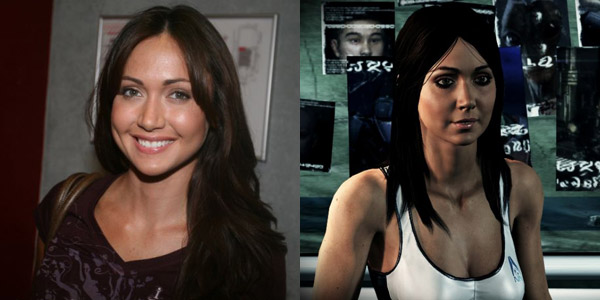
Much like Jessica Chobot, on-camera host and staff writer for IGN. She has also made appearances on G4 shows and writes a blog for Maxim. The character of Diana Allers in Mass Effect 3 was modelled on and voiced by Chobot.


There were only two reasons for Chobot to be chosen for this role; firstly, because BioWare wanted to appeal to IGN and secondly, to appeal to the tiny segment of the audience with a love of Jessica Chobot. I hate to make assumptions but I suspect the majority of Chobot's fans follow her work for IGN most closely and, of course, IGN deals with games, comic books, etc, so it's safe to say that it's a fine site for "nerds" to hang out (and I use the term positively. I'd describe myself as a nerd). Chobot has no acting or voice acting experience but was chosen to play Diana Allers nonetheless.

It's worth mentioning that Diana Allers plays no role in the Mass Effect 3 story. From what I recall, you don't need to talk to the character at all. Yet, in true Mass Effect fashion, you can completely pursue a romance with her. More on that later.

Then we have Felicia Day, who is a more acceptable choice in one respect ... and a much worse one in another:


Felicia Day is as sensible a choice for a video game voice actress as anyone else as, unlike Chobot, she's a professional actress and has experience as a voice actress. The top picture above is from an online web series she wrote and starred in called Dragon Age: Redemption and the picture below is the in-game model of Tallis, the character she played, in a Dragon Age expansion pack.

Now, strictly speaking, I have nothing against Felicia Day. I have no opinion of her, in fact. However, she was the focal point of Ryan Perez being removed from his position as a writer for Destructoid. As mentioned earlier, shortly after describing Day as a "glorified booth babe" and questioning what she added to the gaming industry, everyone from random Felicia Day fans to her coworker Wil Wheaton banded together to arbitrarily brand Perez' comments "misogynistic". Those comments were not misogynistic in the slightest. "Booth babe" may have been used derogatively but was it so bad that it was necessary to instigate a witch hunt (that really is the only suitable term for it) against Ryan Perez? Absolutely not. As far as I know, Day herself didn't respond to or comment about the Tweets from Perez and I commend her for not getting involved. I may be wrong about that, however, so feel free to correct me if so.

So, to recap, that's wealthy Star Trek and The Big Bang Theory alumni and reader of audio books, Wil Wheaton, leading the charge to have a man fired for making non-sexist comments against his co-worker.

This article at AVoiceForMen spoke on it further and is where I first learned of the issue, so you can go there to read more. I posted this back in my article about Anita Sarkeesian and Feminist Frequency but it's worth posting again. Make sure to watch the "4 Friendly Reminders About Women and Video Games" video posted in that article too. The final thing I'll say about this whole issue is that it made me completely ashamed to be a gamer. Getting a man fired goes far beyond a fandom reacting negatively to their favourite celebrity being criticised. It was downright amoral and, as I said before, a witch hunt.

Anyway, what does all this have to do with nerdbaiting? To answer that, we have to go back to the article I mentioned in the very first sentence of this blog. I came across an article a few weeks ago when looking for details about the Ryan Perez issue. I'm not going to link to it here because I don't want to give them free publicity -- even though their site is undoubtedly more popular than my little strip of rantings and ravings -- but if anyone dislikes that I don't provide a source, I'll be quoting directly from the article, so you can probably find it by using one of the sentences to search yourself.

First of all, the writer of this article actually made a couple of points I agreed with. "I don’t believe a woman’s place is anywhere other than where she wants to be," cropped up early in the article. Very good. "Now the question here is whether or not Perez would still be employed by them had he not caught the attention of people like Wheaton and Baldwin. The answer is, yeah, heprobably [sic] would," came later. Not half bad. Unfortunately, those are the only good things in the article. That's it.

To give you a quick rundown of what's said, the writer makes the same Tomb Raider/Hitman Absolution argument that I criticised in my second post on this blog. In his few paragraphs about Anita Sarkeesian, he had the typical reaction; acknowledging the abuse but none of the legitimate criticisms or concerns about her project. In fact, he actually said, "I will click the like button on every single video Anita Sarkeesian produces even if she says something that I completely and absolutely disagree with". He approved of Perez' firing. He used Hostel 2 as an example of sexism in Hollywood without acknowledging Hostel 1. Oh, and he stated "videogames are inherently misogynistic" towards the end.

Criticising all of the above would be pointless. While I've already written about a couple of the points, the "videogames are inherently misogynistic" line is what makes me just dismiss this one out of hand because the writer of the article and myself are operating on two completely different wavelengths. However, there is one paragraph from the article that I do want to closely critique, and that is the following about Ryan Perez' question about what Felicia Day contributes to the gaming industry:

I really shouldn’t have to explain this, but considering the amount of crap I’ve had to wade through while researching this bloody thing I’m going to anyway - it really is a very, very stupid question. Because Felicia Day is an actor. Not a game designer. Not a developer. Not a publisher. She’s an actor. So of course she doesn’t contribute to “the industry” by decoding the bugs from CoD or coming up with new and interesting ways to use a Wii nunchuk. Instead she contributes to gaming by, and pay attention because this will turn your entire life upside down, being a successful celebrity who happens to really like video games. She is a walking embodiment of all that should be right with gaming culture. She’s charming, articulate, and has a genuine passion for pixelated entertainment. Also she defies stereotypes of what a gamer should be, simply by being Felicia Day. In the seemingly never ending war between a mainstream media that will all too often portray gamers as hairy palmed, sweat filled, butter balls, Day is one of the few people walking the planet who is actually doing it right. She proves you can be successful, have social skills, and yet somehow also be a fan of video games at the same time. That is her contribution. She’s an ambassador for the rest of us.

Alright, let's look at this closely, particularly the second half. "She is a walking emodiment of all that should be right with gaming culture" and so on. From that point on, not only does this read as a rather creepy love letter that a stalker would shove through a letterbox, but it also does an absolutely wonderful job of summing up exactly why nerdbaiting is so insulting.

Let's compare Felicia Day to the people the writer compares her to; the "hairy palmed, sweat filled, butter balls". While the writer of that article was using them as an example of what the mainstream media thinks of gamers, the writer himself apparently agrees; "Day is one of the few people walking the planet who is actually doing it right". So those of us who aren't Felicia Day -- those of us who apparently lack the success and the social skills, in other words -- we're all doing it wrong and should bow down before the Almighty Felicia. And if we don't? We might just get fired too!

Now let's say that one of these "butter balls" was to write some Dragon Age fanfiction. Presumably, it'd sit on a website for a while and gather some comments. When a random gamer does something like that, that's what happens. When Felicia Day writes fanfiction? It's turned into a webseries and Felicia earns a Dragon Age expansion pack devoted to her character. Frankly, even the most successful Dragon Age fanfiction couldn't reach that height. Even if the writer was successful and had social skills, do you think he or she would get his/her own character in the game modelled on him/her if they were a "hairy palmed, sweat filled, butter ball"? Is there any chance of that happening?

Make no mistake; Felicia Day was not chosen for Dragon Age: Redemption or Dragon Age II's expansion pack just because she's an actress and voice actress. She was chosen because she is that popular amongst gamers (to the point that her co-workers were able to rally enough people to get a man fired). She was chosen because she's "nerdy". She was chosen because she's "hot". The same can be said for Jessica Chobot. Why isn't Geoff Keighley of GameTrailers appearing in any games? He's charming, he's articulate, he's good-looking! But as of this writing, he's yet to make an appearance.

So is it any wonder that -- surprise, surprise -- not everyone is going to shower Felicia Day with praise the same way the writer of that article did? It's nothing to do with petty jealousy over Day receiving the recognition and preferential treatment that, say, other Dragon Age fanfiction writers don't. It's simply the dislike that comes from the assumption that we should be in love with Day just because she's an attractive girl who likes gaming. That's why Ryan Perez was fired. He didn't. The same goes for Jessica Chobot, albeit to a lesser extent. She was just there because ... why not? Attractive, nerdy, popular. Bearing all this in mind, what's wrong with segments of the gaming population feeling insulted by their inclusion in Mass Effect 3 and Dragon Age II? Are we supposed to be happy about the developers painting us all with the same brush? Assuming we'll all love Felicia Day because we're all nerds and she apparently appeals to us? Sorry but that's blatant nerdbaiting.

As a bonus, it's worth pointing out that both of the games featuring these women allowed the player character to also pursue a romance with them too. This is going to sound very cynical but I can almost imagine an advertising campaign that says, "hey nerdy male gamer! Have you ever wanted to date a hot nerd girl like Jessica Chobot or Felicia Day? Well now you can!" Of course, that didn't happen.

I know that people reading this will take into account that both of the games above were made by BioWare, so these are actually isolated incidents. You're right about that, completely. I don't want to make out like this is indicative of gaming at large or in any way an epidemic. At the same time, I don't want this to become a wider issue. I'm actually using "nerdbaiting" in a lesser-used context; I've heard it used more often to describe something minor, like an internet meme being quoted in a game to make the "nerdy" players who get the reference laugh. So keeping in mind that this form of nerdbaiting is actually very rare, I want people to take two things away from this blog:

A) Developers; stop trying to so blatantly appeal to nerds with someone you perceive to be a popular (female, attractive) nerd icon. It's insulting to men and it's insulting to women. Use someone more appropriate for the role.
B) Gamers; reel in the rabid fanboy/girlism a bit. That doesn't go for many of you, obviously, but you might want to reconsider the next time you decide to start a backlash against someone just because they don't share your opinions.

I think that's it. As always, you can leave a comment below or send me a message at themalesofgames@gmail.com. I'll just leave you with one final thought from the writer of the article you've been reading about in this blog:

And when the history of games is etched in to stone, Felicia Day will probably be deemed to be more important than, oh I don’t know, an ill-conceived reboot of Tomb Raider.

... Yeah ... let's wait and see how that one works out ...

Wednesday, 3 October 2012

The Sexism Of Heavenly Sword

Hey all. Another long blog.

I know it sometimes seems like I fall back on the same games on this blog -- Heavenly Sword and Tomb Raider, or at least Lara Croft -- but trust me, it's not intentional. I actually intended to write about something else in this post but, thanks to a slow internet connection, I wasn't able to get onto YouTube to do some research. So we end up back at Heavenly Sword, which I've finally played through again.

First of all though, an apology; I stated a few posts back, and elsewhere online, that Heavenly Sword features only male enemies. That turned out not to be true and I'm sorry for misleading anyone who's never played the game. Ninety-nine percent of Heavenly Sword's enemies are male but there's that one percent that isn't. That's actually important because, for all my talk of how much I dislike the groin attacks against the "all-male" army in HS, the groin attacks can all be done against female opponents too. I want my research on this blog to be accurate, so I have no problem setting the record straight.

That aside, there's still plenty of stuff in Heavenly Sword worth talking about. I hope people who've played Heavenly Sword forgive me for this but since a lot of the sexism in the game takes place in cutscenes, I'm going to be explaining the whole story for people who've never played the game. Expect heavy spoilers. So first things first, here are the characters you need to know about:


 Top Row, L-R:

Nariko: The game's main character and narrator. Wields the Heavenly Sword for most of the game.

Kai: Also a playable character. Uses a crossbow. She became Nariko's "kind of" adopted little sister at some point before the game's beginning, after her mother was killed (more on that later). I'm not sure if she has mental disabilities or if she's simply "quirky" but she treats battles as if they're a game.

Shen: Nariko's father. Leads the clan that Nariko and Kai are a part of. The clan's job is to protect the Heavenly Sword at all costs. Described by Nariko as "a tutor first, a father second". That'll be important later on.

Clan Member: Honestly, I just included the clan member in this picture because I didn't want an odd number of faces. Clan members are all male and all serve the same role; to be selfish, cowardly, helpless and sexist against Nariko.

Bottom Row, L-R:

Bohan: The game's main villain. A rapist. Played by Andy Serkis.

Flying Fox: One of Bohan's "generals". Really annoying voice. Killed Kai's mother.

Roach: Bohan's son. He suffers from mental disabilities and Bohan hates Roach calling him "daddy". Frequently suffers verbal abuse at the hands of Bohan but loves him anyway.

Whiptail: Bohan's "consort". I have a theory on Whiptail's role and treatment in the game that I'll go into at the end.

Now onto the game's story. It opens with Nariko narrating about a prophecy that stated, "a deity would be reborn, in the body of a mortal man". Nariko was born instead and many of her people view her as a curse because she was born female rather than male. At the start of the game, Bohan's army attacks the clan because he wants the Heavenly Sword. One of the clanmembers voices his displeasure with this turn of events and states it's because of Nariko, since she's a curse. This earns him a choking from Nariko.


Now basically, even if you've only played this far, it kind of sets the tone for the game; we've already received the message that "being female is a curse". Even her fellow clanmembers voice this opinion, earning themselves a choking from Nariko in return. Let's start with the "being female is a curse" part; already, the more "Genre Savvy" player will know what's going to happen. It removes any doubt that Nariko will screw up in some way or fail at her quest. Now, I'm not specifically blaming Heavenly Sword for that, since the hero rarely fails in any game, but it actually stops Nariko from being a hero just because she can be; her sex is being insulted and degraded by being described as a curse and that makes her a representative of womankind in this fictional universe.

The choking is unpleasant for more obvious reasons; a male hero could never choke a female hero and still be considered heroic. Even if a woman referred to the man as a "curse", you wouldn't see him choke her in response. The only example I can think of in gaming is in Resident Evil 4, where Leon becomes possessed by the parasite infesting his body and attempts to choke Ada (who isn't even especially heroic). This earns Leon a knife to the leg and a swift knee in his midriff, to free him of his possession. The clanmember didn't do the same to Nariko, obviously.

Anyway, at some point during Bohan's attack, the clan flee their base but Shen tells Nariko to stay behind to fend off the attackers. She's also left in charge of the Heavenly Sword, which seems like a bizarre thing to do, since the clan is running away from the attackers but she's standing her ground against them and she's all alone. It works, however, and she survives the assault while the clan make their escape. Once she's done, Nariko has to escape too, and it's during this part of the game that we get a truly excellent piece of dialogue.

The first time I played this part of the game, five years ago or so, one of the enemies you ran into mocked Nariko for being "an under-dressed angel". I actually really liked that. It was clever and self-deprecating, willing to joke about one of the minor features that so many messageboards would be up in arms over; yes, the main character is female and yes, she's wearing somewhat "inappropriate" clothing for battle. It was what TV Tropes would call a "Lampshade Hanging". However, that was five years ago. This time I played the game, the enemy said something even better: "Take that carving knife back to the kitchen, wench". A "stay in the kitchen" insult! Just in case you weren't aware that women in Heavenly Sword are treated like crap, there's that hi-larious line of dialogue. So if you think Ninja Theory were being unfair by making Nariko's clan sexist, don't worry, a soldier in Bohan's army managed to top it by being more sexist.

At the end of this part, it turns out that the clan didn't escape after all. Bohan makes his first speaking appearance, with Shen as his prisoner. Shen is badly beaten and Nariko appears sympathetic. She decides to make use of the Heavenly Sword (which mustn't be done) rather than just protect it. Bohan sends some soldiers to attack Nariko, as an excuse to give the player a tutorial on how to use the sword. During this fight, you can hear Bohan say, "Bring me that sword. If she still happens to be attached to it, so much the better." Yes, Bohan is implied to be a rapist. This becomes even more overt later on.

Nariko runs, unable to defeat every single one of Bohan's army there and then. As Shen and the rest of the clan are taken back to Bohan's base to be held captive, Nariko is reunited with Kai, who managed to escape by hiding. Now, it's reasonable to think that Kai is better at hiding than the rest of the clan, which is why they didn't hide (or maybe they did, but were found) but let's recap; all the male clanmembers are taken prisoner. Both the female clanmembers were able to escape. Worst of all? This isn't even the male clanmembers' lowest point in the game. In any other game, it might be, but not Heavenly Sword. The epitome of their uselessness comes up shortly afterwards.

We get a cutscene introducing us to the villains. This is meant to be an analysis rather than a review but it comes across as a bit forced; they spend time talking about each villain, then moving onto the next without so much as a line of dialogue explaining why. We have Flying Fox, a creepy teleporting man who speaks in a very irritating voice. There's Whiptail, a scantily-clad snake-fish lady who is also Bohan's "consort". Many of her lines are about how much she admires him. And there's Roach, who is a huge overweight beast with mental disabilities and suffers verbal abuse from his father, Bohan, and the occasional object thrown at his head. However, he loves Bohan and can't seem to grasp that Bohan hates him.

Nariko is able to rescue the male clanmembers, except Shen. The first thing they do is thank Nariko for rescuing them but, when she suggests they help her find Shen, they selfishly refuse. They only care about their own lives. Then, the same clanmember that thanked Nariko says Shen was foolish to trust her with the Heavenly Sword … even though she just used it to rescue them. So the clan continues to be sexist towards Nariko and now decide to show their true cowardly colours. This is the epitome of their uselessness.

Shen is found by Nariko soon enough, being held captive by Whiptail. Earlier in the game, Nariko narrates a tale of a recurring dream she has of her father, Shen, killing her. After Shen is freed, Whiptail reveals that this stems from a moment when Shen wanted to kill Nariko at birth but couldn’t. Nariko actually reacts angrily at Shen not killing her and tells him to leave her. Somehow, I can’t imagine Mario basically telling Princess Peach to piss off after rescuing her. Combined with the rescue of her fellow clanmembers, there seems to be a recurring theme of Nariko rescuing men who she then deems unworthy of rescue. According to the game, Nariko and Kai are the only heroic souls in a sea of complete jerks.

Shen makes his escape, having suffered injuries while being held prisoner. Kai uses her crossbow to kill all of Shen's attackers. When he's finally to safety, Shen holds his arms out for a hug but Kai runs past him because she only cares about saving Nariko. Shen says, "I have led hundreds of men through life and death. Why do these girls never listen to a word I say?" It's kind of amusing but also sad because of how true it is and how little it makes sense; even before basically giving him a big "screw you" after rescuing him, Nariko was disobedient and disrespectful towards Shen. She ignored his orders to help Kai and it turned out that she was right to do so. I have no idea why it was so important to have Shen come off as wrong in that situation. Why not have him tell Nariko to go and help Kai? Without it, and with his capture, he comes across as an ineffective leader. Bear in mind that this is a man who was described as "a tutor first and a father second" and who tried to murder his own daughter at birth. So he's hardly winning father of the year but apparently, he's no good at being a leader either. He's portrayed as useless so the two women can be portrayed as wonderful. Lionising women at the cost of men.

Meanwhile, Nariko is fighting Whiptail. Heavenly Sword shows cutscenes during boss battles and during one of Whiptail's cutscenes, Nariko mocks the gashes on her cheeks with the sentence, "Was it your master who turned you into a slit-faced psycho?" Whiptail reacts with a shocked expression but that doesn't necessarily mean that Bohan did cut her cheeks. She could've been shocked at the insult in general. She neither confirms nor denies that Bohan made her look the way she did but the implication is that someone sliced those markings on her cheeks. I'm inclined to think it was Bohan but, without it being conclusive, I'll leave that one alone.

Anyway, Nariko defeats Whiptail but is knocked out in the process, meaning Bohan can finally get his hands on the sword, which is lodged in Whiptail's chest. Bohan taunts Nariko's actions by saying, "You’d never see me rescuing my father, the crusty old pervert", continuing the trend of bad fathers. Bohan runs his hands suggestively across Whiptail’s legs even while she’s dying and then, after exchanging a few "sympathetic" words, he snaps her neck and turns his attention back to the sword without a second’s thought. Remember earlier, I said that Flying Fox killed Kai's mother? There seems to be another trend in Heavenly Sword of the villains showing how evil they are by killing women. That's the threshold that turns regular bad guys into complete monsters. Whiptail wasn't exactly good but she was probably the least evil of Bohan's generals and, frankly, by being the victim of Bohan's uncaring murder, she becomes a martyr; all of a sudden, this horrible man she loved shows his true colours and how little he cares for women by murdering the woman closest to him. Honestly, the only thing worse would be if Whiptail switched sides and joined the good guys. That would really hammer the "men are evilz" point home. Actually, as I come to think of it now, Whiptail may be the only character Bohan kills in the game. Ditto for Kai's mother and Flying Fox.

With Nariko taken prisoner, Bohan taps his codpiece with his fingers suggestively and mentions to Nariko that they should “get to know each other a little better”. This is the more overt display of Bohan's wish to rape Nariko I mentioned earlier.

Bohan puts the Heavenly Sword in his armory and makes the classic villain mistake of leaving the hero alone rather than killing her on the spot. So Kai has snuck into Bohan's base and she visits Nariko in prison. Nariko wants Kai to get the Heavenly Sword back and Nariko says, "I don’t have anyone else", because, of course, the male clansmen were too injured, selfish or cowardly to help. This is an interesting bit: during the conversation, Nariko mentions being alone. Kai says, "Kai was alone once. But then Nariko found Kai. And Kai wasn’t alone. And Nariko wasn’t alone either". Wait a second … unlike Kai, Nariko was never alone. She always had Shen and the clan. So the only explanation for Kai’s "Nariko wasn’t alone either" remark is that men don’t count as company and either Nariko, Kai or both only value women as companions.

So Kai goes to get the Heavenly Sword back from the armory but to do that, she needs a password. And to get that, she finds the guard captain who knows the password, points her crossbow at his crotch and threatens to fire. Obviously, this is treated as comedy.


I'd like to pause for a moment because I'm sure people will point out that other games/films/television shows have treated groin attacks as comedy. Heavenly Sword is nothing new on that front. Why single out Heavenly Sword?

Well, I don't want people to think I'm singling out Heavenly Sword because there are other games with uses of groin attacks that I object to. However, it is slightly different in a number of ways. Most notably, it actually serves a purpose in the storyline; unlike, say the one-hit-kill groin shots in Metal Gear Solid and Johnny Cage's crotch-punch from Mortal Kombat, Kai threatening the guard in Heavenly Sword with genital mutilation earned her the password. She was actually rewarded for threatening to destroy a man's genitalia. What's the reward in Mortal Kombat and Metal Gear Solid? Removing a bit of your opponents health and a one-hit-kill, respectively. There are other ways to do those things in those games. However, even after Kai destroyed his hiding place, the guard captain refused to talk. He spoke up immediately as soon as his genitalia was threatened. So the message, apparently, is "women, you can get what you want from men if you threaten to mutilate their genitals. And it's not a bad thing to do, it's funny!"

You also have to take into account that because this happens during a cutscene, it's not comparable to the MGS or MK examples; those serve a purpose in gameplay while the scene pictured above could've been completely avoided if Ninja Theory didn't want it in the game. There is no equivalent in Metal Gear Solid or Mortal Kombat. Remember the keycards in Metal Gear Solid 1? You usually received a new one after each boss fight, to access new areas. Imagine if Snake had to threaten every boss' genitals while saying funny lines to get them. Sniper Wolf's death would certainly be a lot less depressing, although to say it would be in bad taste is an understatement.

There's also the issue of the misandrist themes in the rest of the game. Unlike MGS and MK, there aren't any positive male characters in Heavenly Sword. On its own, the threat of a groin attack from the quirky comic relief character of the game might serve as the fun little one-off joke that it was meant to be. Combined with the rapist, woman-killing villain (who later gets a completely serious elbow to the groin), his woman-killing sidekick general, the ineffective leader and father of the heroine, the sexist bad army, the sexist good army and the flawless heroines, a far worse light is shed on the supposedly-funny threat of genital mutilation.

Anyway, back to the game. Kai gets the Heavenly Sword back but Flying Fox attacks her. This is where we learn that he killed Kai's mother and kept her corpse on display in the armory as a trophy. So Kai has a flashback to this and runs away from Flying Fox, who she's terrified of.

For his own entertainment, Bohan pits Nariko against her clanmates – who were apparently recaptured off-screen, without mention – and states this simple outcome; “last man standing lives, everyone else dies”. For some odd reason, however, there’s no in-fighting between any of the male members of the clan. As soon as you gain control of Nariko, it’s everyone vs. her. I think this was just to make the game less hectic than a free-for-all but it certainly comes across as odd. All the male clansmen want to kill Nariko but she’s given the option to kill or paralyse all of them. Maybe they figured she was bound to win unless they banded together against her? It's probably best to not read too much into that one, since I think it was a deliberate gameplay choice rather than just to show how sexist the clan was against Nariko. Again.

So, Nariko wins, Kai gives her the sword back and Nariko goes on to fight Roach. Not much to say here. Nariko wins but Roach survives. Nariko escapes. Flying Fox almost kills Kai, Nariko fights him, Kai ends up with enough life left in her to land the killing shot on Flying Fox, as revenge for killing her mother.

Nariko finally returns to the clan, carrying an injured Kai in her arms. She gives Shen the cold shoulder when he greets her. While Kai was kidnapped, Nariko narrates that when she found Kai, she didn’t want her to face a life of battle. So when Nariko returns to the clan, we get this exchange:

Nariko: "That is why I have returned."
Shen: "To fight for us?"
Nariko: "No. To fight for her."

In other words, it’s only Kai’s future that Nariko cares about. Not the other male clanmembers. Strictly speaking, hasn’t Nariko already failed to save Kai from a life of battle? Surely, there are better examples of innocents than a girl who has murdered hundreds but no; it’s Kai, and only Kai, that Nariko cares about.

Bohan's army attacks again and during a cutscene, Shen acknowledges his failure to be a father to Nariko with the sentence, "I know that in my desire to be your tutor, I neglected you as a father. It was a poor decision, for me and for you". Nariko replies with, "if you hadn’t, I probably would’ve died a long time ago". It’s pretty much the only moment of father-child bonding you see in Heavenly Sword but it also has what TV Tropes refers to as "unfortunate implications"; Nariko outright says that she values Shen more as a tutor than a father. Combined with Bohan’s verbal and physical abuse of Roach, the game practically sends the message that "fatherhood isn’t needed". At best, there’s no value in it and at worst, fathers are abusive scumbags. Shouldn't the game have pointed out that teaching a child to protect themselves is part of being a father?

Anyway, typical final battle stuff happens; Nariko fights army, then fights Bohan, elbows Bohan in the groin during the final quick-time event and wins the fight. During the final cutscene, Bohan gets his eyes pecked out by a Raven-God that he worships (it's complicated) and, just as Nariko wants to kill him, Roach shows up and begs her to stop. He says he wants to take care of Bohan and finally, Bohan seems to acknowledge him as his son. So maybe I need to amend my previous paragraph; fathers are worthwhile people after they've suffered severe injuries. Only incredibly severe though. Shen is captured and beaten? Not good enough. Bohan has his eyes pecked out? Yeah, alright.

Nariko dies at the end of the game -- the sword eventually kills whoever uses it -- and she gives it to Kai to hide. That's that.

So let's look over the characters again. Nariko and Kai are flawless. Shen is useless as a father and ineffective as a leader. Bohan is an abusive father, a rapist and a woman-killer. Flying Fox is a woman-killer too. The bad army is sexist. The good army is sexist. Out of all these characters, Shen is slightly sympathetic but you only sympathise with him because Bohan's treatment of him is so brutal. You could fit any character in his place and the audience reaction would be the same. There's literally no other reason to care about Shen; he tried to kill Nariko at birth and Nariko herself admitted he was better as a tutor rather than a father; emotionless rather than emotional. Roach, who I haven't written much about in this blog, is actually the only male character who's sympathetic and that's because he suffers from mental disabilities and has an abusive father. Plus, lest we forget, even though I learned that there are female enemies in the game and you can perform the same groin-attacking moves on them that you can on the males, the ratio of male-to-female enemies really is more than 100:1. The female enemies are so few in number that I had to replay an area with female enemies just to do more groin-attacking moves, to make sure they could be used. So 99% of the enemies you slaughter are male.

What about Whiptail? Well she's an interesting one because I have a theory that she represents everything that feminists criticise in games. She's scantily-clad. Her dialogue is sexual. She only exists to serve a man. She's even the first boss and the first character to be killed. Just to make it clear that all these things are bad, she's a villain. Nariko and Kai are everything that Whiptail isn't. In spite of what feminist critics of Nariko might say, she's not an example of an over-sexualised female character. The only skin she shows is on her arms, legs and midriff. She's reasonably small-chested. Her outfit doesn't reveal her cleavage. There are no gratuitous shots of her rear. None of her dialogue is sexual. The same goes for Kai and, being a teenage girl, her outfit is even less sexual, covering her midriff. The heroines are complete opposites of the villainess; they are enlightened while she is stuck in a dark age.

The thing is, I've heard certain works described derisively as "a male fantasy". Usually any show or film where an unattractive man ends up with an attractive woman. So why isn't something like Heavenly Sword described as "a feminist fantasy" or at least "a misandrist fantasy"? I don't think I've ever heard those phrases used outside of stories featuring female-only utopias. However, if I had to come up with a mainstream work that fit that description, Heavenly Sword would be it.

So is Heavenly Sword an awful game that you should never, ever play? No, actually, it's not. It's worth playing once. Rent it, if you can. I said in a previous post that games can feature content that deeply offends you, but you can still enjoy them if the gameplay is good enough. Heavenly Sword is one of those games. It won't keep you playing for months on end but it's fun for a little while. I like the blocking system and the quick-time events are nowhere near as annoying as I remember them being. Probably because I played games featuring much worse QTEs since then.

Phew! So that's finally over and done with. Sorry that this blog took so long, by the way. As always, contact me at themalesofgames@gmail.com or leave a comment below if you want to give feedback or suggest a topic for a blog post.

Sunday, 23 September 2012

The Objectification Double Standard


This is a very long blog. Put aside some time.

The very first blog I wrote on gender issues in video games was about two things; a “Games For Girls” advertising campaign here in the UK at the time and the subject of attractive men and women in video games. This was way back in January of 2008 on Gamespot. First of all, I'd like to point out that I did object to women being objectified in video games if it was particularly blatant, such as Dead Or Alive: Xtreme Beach Volleyball or a Metal Gear Solid 4 trailer from the 2007 Tokyo Game Show that featured Dr Naomi Hunter talking into a video camera and it just happened to bump into her cleavage. You can watch it in the first fifteen seconds of this video, if you're interested.

However, outside of extreme examples, I was reasonably indifferent to the idea of attractive women in videogames. While I know there are certain parties who react strongly to every female character who shows a bit of skin or has a large bust, I don't fit into that group. Here's a paragraph from my old blog on Gamespot:

"The traditional heroine in a videogame is, apparently, any lead female character with large breasts. This stereotype presumably comes from Lara Croft but it's astonishing how few female characters follow this model. In so many developer videos discussing character design and the lead female character, it's often said that they seek to "break the stereotype" of the videogame heroine. Aside from Lara, there are very few noteworthy cases of this. Nariko, despite being scantily-clad, had small breasts. Jennifer Mui from the Mercenaries games, Alyx Vance from Half-Life 2 and Elena Fisher from Uncharted: Drake's Fortune were all fully clothed with a normal, proportionate physique. As are all of the Final Fantasy women up until FFX-2. In fact, Lara Croft herself's breasts were reduced in size for Tomb Raider Legend, although more of her midriff was shown and her bum was "peachier" than ever as a compromise."

Even five years ago, Lara and Nariko were my go-to female examples. Although that last line about Lara is even truer today than it was then; the Tomb Raider reboot seems to have dispensed with Lara's exaggerated physical attributes entirely. Here's a picture that was hosted on GamesRadar:


So while I do object to the more blatant examples of objectification in games, I don't see anything particularly wrong with scantily-dressed female characters or women with an emphasis on the more sexually-appealing parts of their body. Such as Lara, or the majority of female fighting game characters, sans boob jiggle. I could do without that, even if the majority of fighting games don't do it to the same level as Dead Or Alive.

I don't see it as damaging or detrimental to the female characters who are portrayed this way. After all, Lara Croft was awarded "Most Successful Video Game Heroine" by the Guinness Book Of Records. That says more than enough to state that Lara has done well enough to stand on her own two feet as a character, rather than just as an attractive fictional woman. Basically, I think the critics need to get over their dislike of female characters who show more skin than they'd like or have a body type they disagree with or "grunt in a sexual manner when hurt". None of those qualities are anywhere near as detrimental to a female character as the critics think.

We also need to deal with the fact that, yes, there are issues with the appearance of men in video games. I'll say right off the bat that I don't feel anywhere near as strongly about the appearance of men in games as I do about violence against them. That's obviously the more significant issue. I'll also say that I have absolutely no doubt that women are sexually objectified more than men in games. However, that's not to say that the appearance of men doesn't play a role in video games at all and I have taken issue with the appearances of some male characters in games before.


Top row, L-R: Cloud, Reno, Sephiroth, Vincent (Final Fantasy VII), Squall (Final Fantasy VIII), Zidane (Final Fantasy IX), Tidus (Final Fantasy X).
Bottom row, L-R: Vaan, Larsa (Final Fantasy XII), Dante (Devil May Cry 3), Octavianus (Shadow Of Rome), Jutah (Silent Bomber), Sion (The Bouncer), Wander (Shadow Of The Colossus).

I don't want it to seem like I'm picking on the Final Fantasy series in the above image. I was just looking at my games collection when making that picture and the Final Fantasy games were the first ones my eyes went to.

I'm not as irritated by the young male "pretty boy" characters, or "bishonen", in video games as I used to be. The first time I read about size zero models and Barbie dolls creating an "unrealistic standard of beauty" (keep that sentence in mind) for women was when I was a teenager. However, this was also the period when the Final Fantasy series was at its peak and that was my main exposure to the characters above. For me to be irritated by them, they had to have two qualities: handsomeness (obviously) and "Mary Sue" characteristics. For those who don't know what a Mary Sue is, here's an excerpt from TV Tropes to describe it:

"She's exotically beautiful, often having an unusual hair or eye color, and has a similarly cool or exotic name. She's exceptionally talented in an implausibly wide variety of areas, and may possess skills that are rare or nonexistent in the canon setting. She also lacks any realistic, or at least story-relevant, character flaws — either that or her "flaws" are obviously meant to be endearing."

"The canon protagonists are all overwhelmed with admiration for her beauty, wit, courage and other virtues, and are quick to adopt her as one of their True Companions, even characters who are usually antisocial and untrusting; if any character doesn't love her, that character gets an extremely unsympathetic portrayal."

That paragraph describes a female character but a male variant -- the "Marty Stu" -- exists. So appearance alone wasn't enough for me to be irritated by bishonen characters. They also had to display Mary Sue characteristics. Sure enough, some of the characters above don't display those traits (but they'll be just as relevant later on), such as Octavianus and Wander, but there are also several who do. And I apologise to Final Fantasy fans but their main characters were often prime offenders.

Let's start with Squall, since his example is the best, in my opinion. When I was a teenager, I was a lot more shy than I am now and Squall was a very aloof character in FFVIII. I read his dialogue and thought, "OMG I can sooooo relate". Then I grew a bit older, played FFVIII again and realised that Squall was actually a stand-offish jerk. Yet over the course of the game, Squall is made "commander" of Balamb Garden (the headquarters of FFVIII's good guys), in spite of the fact that, as far as I know, he was only made a SeeD (special forces agent) that year. One of the most recent promotions to SeeD, in other words, so he wouldn't be qualified to lead. At another point, Rinoa, the love interest, is lecturing Squall on how the party all wishes he would trust them enough to talk to them more, to the point that she eventually says, "we all love you. There, I said it". But why does the rest of the party love Squall? You could argue that he's done things worth respecting as their leader but love? That was too farfetched for me, especially since he insulted most of them at various points during the game.

I don't want to go into every single one but the other characters have similar examples; Jutah lectures his female commanding officer (and love interest) to prove how battle-hardened he is to the player. Tidus is a cocky douchebag who irritates strangers by climbing all over them and stealing their binoculars but Yuna (the love interest, again) still wants to make him one of her "Guardians" only two days after meeting him and after they've had only a few conversations. Dante, especially in his Devil May Cry 3 incarnation, was the most ridiculous show-off you could ever see in a video game. He gets stabbed by demons to no effect, spouts silly lines and nods his head to awful music on his jukebox ... all at the same time. Be honest, DMC fans; if you met a guy in real life who acted like Dante -- not a demon hunter, just a random guy in your office -- you would think, "what a jackass", right? In fact, I was probably the only person who was happy about his DmC redesign. Not because I thought it was good but because everyone finally hated him as much as me! There are more examples for each character but I get the feeling this blog will be long enough as it is.

Now why is all this important? Well being a bishonen on its own is fine but when it's combined with the traits of a Mary Sue, it becomes a problem. It equates good looks with success because a character like Squall is awarded a huge promotion when there are, presumably, people far more qualified for the job. It equates good looks with popularity because love interests and party members immediately gravitate towards these feminine male characters regardless of negative qualities, such as Tidus being made Yuna's guardian in spite of the fact that he's a boastful ass who she barely knows. For anyone who's not a perfect-looking specimen of humanity and has the same flaws that everyone else does, all these infallible male models can become annoying after a while.

To show that I'm not being unfair towards bishonen characters, I'll give you a few examples that I don't mind because they lack the Mary Sue qualities. Octavianus in the above image is one. His femininity actually plays a role in the gameplay; all but one of his gameplay sections involve stealth and he can adopt disguises to avoid detection. One of the disguises he can use is a maid's uniform, so it'd look very odd if he was a burly hero. He also displays a knack for speaking in a woman's voice during a cutscene. This is a far cry from FFVII's Cloud, who, during his crossdressing adventure, is described as "a tough-looking guy like that". Besides, Shadow Of Rome is a game that doesn't skimp on masculine male characters; the other player character, Agrippa, is a mountain of a man. Likewise, I mentioned in a previous blog that I'm probably one of the few people who liked Final Fantasy XIII and one of the bishonen characters in FFXIII was Hope, a teenage boy. During the game, Hope blames fellow party member Snow for allowing his mother to die and mentions how much of a jerk his father is. He's wrong on both counts. So for once, the teenage idiot in an FF game is treated like a teenage idiot. That's a realistic and praiseworthy portrayal of a teenager who blows things out of proportion and misunderstands the situation, rather than silly stoic/arrogant warriors that teenagers in other FF games are.

There's also an issue with series' that replace their masculine male characters with more feminine ones after several games to appeal to the demographic that is used to bishonen main characters. While the West equates square jaws, broad shoulders and big muscles with masculinity, Japan is the opposite, seeing more feminine characteristics as the height of masculinity instead. So, as an example, Devil May Cry 3 was a prequel, so DMC2's masculine Dante was replaced with a more feminine one. However, Capcom didn't want Devil May Cry 4 to be another prequel, so they aged Dante up and added -- surprise, surprise -- cocky smartarse Nero into the mix too.

Seem familiar?

So with all my criticism of bishonen characters, you'd think I'd love masculine male characters, right? Not quite. Earlier, I wrote, "I'm not as irritated by the young male "pretty boy" characters, or "bishonen", in video games as I used to be." That's because they've largely become a minority in the current generation of consoles, to be replaced by this:

That's an image from IGN called "The devolution of character design". You can see their point.

In recent years, games have become home to the "gritty" and "badass" characters over other types. They'll talk in a gruff voice, they'll probably mix a few curse words into their sentences and, the worst part in my opinion, they'll deliver "joke" lines that aren't actually funny ... but aren't meant to be either. They're meant to add to the character's "badass" persona and nothing else. They'll have a slight edge and they're intended to make the player smile, but in a "OMG that person is so badass" way rather than a "OMG that line was so funny" way. I don't know about everyone else but this character archetype doesn't appeal to me; rather than finding them "badass", I find them boring.

Let's just focus on appearance for the meantime though. Take a look at this bunch:

Clockwise from top left: Chris Redfield (Resident Evil), King (Tekken), Nathan Hale (Resistance), Marcus Fenix (Gears Of War).
These are all examples of various face and body types you're likely to see on male characters in games:
Chris Redfield is your typical modern Hollywood action hero; not the most masculine hero you'll ever see but, hey, he's athletic, he's got stubble and he speaks in a dull voice. He fits the criteria.

King is an odd one. According to Tekkenpedia -- not the most reliable source, I know -- he's 6'6". I used to watch wrestling (don't judge me) and, even though it's not impossible for a wrestler that tall and with a perfectly-sculpted muscular body to perform standing moonsaults and flipover hurricanranas (Frankensteiner), it's rare. Mexican wrestlers are usually shorter and with more lithe physiques than King. Still, this is a game with fighting robots and people who can transform into devils, so maybe we're not meant to take it seriously.

Nathan Hale is a prime example of a modern video game hero. He emphasises the "gritty" nature of the archetype, more than Chris Redfield, and Resistance was a PS3 launch title, meaning he predates many of the IGN characters above. In fact, at the time of Resistance's release, he may have been the most generic example of this type of character.

Marcus Fenix is a square-jawed mass of muscles who, along with his squadmates, slips "F-bombs" into every sentence. I would be fine with this if he was parodying this kind of gritty character in some way, just as Duke Nukem was for eighties action heroes, but he seems to be intended to be a serious example. Sure, the Gears Of War dialogue is less serious than that of most sci-fi games but Fenix is still intended to be an example of the ultimate "badass" character.

I know this blog is long enough already but trust me, I'm building up to a point with all of this. However, before we get to it, there's one more video game hero we need to mention:


Yep. Ryu of Street Fighter fame.

The reason I've singled out Ryu is because, as you can see above, he's run the gamut of appearances of the years, from feminine to masculine. Compare the first image to the second and third ones. The hair and cheeks are rounder, softer. His body is muscular, without question, but it suits his youthful features. The second picture is ... odd, to say the least. His hair is more spiky but curved at the back, his jaw is lower and his cheeks more angular. His body, on the other hand, is frighteningly muscular! I'm not quite sure what the artist was going for but I'm reasonably confident that they didn't want him to look like he was hooked on steroids. Just focus on the face instead. The third picture continues the trend. The third Ryu's jaw is the lowest of all and his hair is spiky all over. His neck is the thickest and his cheeks aren't curved at all.

Now, I'm sure there are plenty of people reading everything I've written here and thinking, "well so what? This doesn't really prove anything about the appearance of men in video games. All you've said so far is that bishonen Mary Sues annoy you. The Ryu pictures were even just different art styles and you used that as proof!" Yes, and that's the point; no matter who the developer or character designer is, they all have one thing in common; they all have a different idea about what masculinity is. If you asked five different character designers to all design their idea of a masculine male hero, they would return to you with five different male characters with very different physical attributes emphasised.
To the critics who would either (A) criticise Lara Croft as a bad female character because of her breast size (or any other female character) or (B) say that male objectification in games doesn't happen, can you honestly look at any of the pictures above and say that certain male physical attributes aren't emphasised over others?  Can you say that Ryu's muscles in the second picture aren't more prominent than the ones in the first because the artist had a different idea of how to emphasise Ryu's masculinity? Or that the first one doesn't have softer features than the first because both artists had different definitions on what a male hero should look like? Can you say that King's muscles make much sense for a man who can perform standing moonsaults, rather than them simply being aesthetically pleasing for the designer? Or Cloud -- "a tough-looking guy like that" -- giving off a different idea of "masculine" than Nathan Hale?

Basically, we've got the whole gamut of face and body types here and a whole mess of "unrealistic standards of beauty", exactly like female characters in video games. You could argue that it doesn't show their sexual characteristics as prominently but their masculine ones? That's all there is to any of these characters, even the ones who, by our Western standards, seem feminine. Half the characters look androgynous and half should be filling the pages of Muscle & Fitness. They're all bombarding us with the message: "This is what a male hero looks like. This is masculinity".

I'd like to point out one final thing that a reader said to me in an e-mail. He said, "just to be clear, I don't believe any game designers are evil because they use ideal or powerful features in characters". I completely agree with that. Game developers are allowed to make the game they want to make. For all the talk of "gamer's entitlement" surrounding something like the complaints about the Mass Effect 3 ending or DLC on release, what is demanding a change in character designs if not gamer's entitlement? Let's just try and deal with it because you know what? I'd hate it if games featured nothing but realistic characters. We're on the road to that already with the IGN examples above and I dread to think where we'll be in years to come if the trend towards realism continues.

As always, leave comments below or contact me at themalesofgames@gmail.com if you have any feedback or suggestions.

Wednesday, 19 September 2012

Anita Sarkeesian and the Feminist Frequency Fail

Sorry for the long wait since the last blog, everyone. I've been working a few ideas and wasn't entirely sure which one to go with for this blog. One of the reasons I created this blog was in response to several articles about sexism on gaming websites, including one on Gamespot about Anita Sarkeesian of Feminist Frequency. For those of you who don't know, Sarkeesian is the woman who used Kickstarter to fund a project analysing misogyny against women in video games, which she claims will be very in-depth and comprehensive.


I'm unconvinced. I have no doubt that Sarkeesian provides in-depth analysis in as much as, say, she wants to prove that women are objectified in games, so she holds up a picture of Catwoman from Arkham City, maybe watches a video of her provocative hip-wiggling walk and then says, "there, that's an example". However, that's not giving the full picture of the game or the character or her role, as we discussed in the previous post. Why do I think that's what Sarkeesian would do? Well a while ago, she made a video all about examples of poor female characters in video games and one of the examples she included was Nariko from Heavenly Sword. Now, I don't begrudge the character's inclusion at all but for Sarkeesian's use of the character gives a very biased view of Heavenly Sword. For her, it's just another example to bolster her case of misogyny but in actual fact, it's nowhere near as one-sided as that. See "The Violence Double Standard" for more.

So writing a blog post about Sarkeesian and Feminist Frequency is what I've settled on. Both being fans of TV Tropes, I think I can provide the flipside to her viewpoint. While she wishes to showcase tropes such as "Distressed Damsel", there's a smorgasboard of tropes about the discrimination against men in the media, from violence and rape double standards to "disappeared dads" and "the sitcom trinity" ("The Unfair Sex", "Women Are Wiser" and "Closer To Earth"). Seriously, if you haven't visited TV Tropes before, you're missing out! It's a wonderful site and the only "mainstream" site that actually acknowledges sexism against men.

Naturally, I'd have to wait for more of Sarkeesian's videos to be released before I can critique her arguments. I'd like to think I wouldn't have to but looking down her list of planned videos, I'm not too hopeful:
  • Damsel in Distress - Video #1
  • The Fighting F#@k Toy - Video #2
  • The Sexy Sidekick - Video #3
  • The Sexy Villainess - Video #4
  • Background Decoration - Video #5
  • Voodoo Priestess/Tribal Sorceress - Video #6
  • Women as Reward - Video #7
  • Mrs. Male Character - Video #8
  • Unattractive Equals Evil - Video #9
  • Man with Boobs - Video #10
  • Positive Female Characters! - Video #11
  • Video #12 - Top 10 Most Common Defenses of Sexism in Games
There are a couple of those videos that stand out to me. Firstly, "Man with Boobs". One of the things I've noticed about Sarkeesian's work is her tendency to sort characteristics into "male" and "female". For example, male qualities are "independent", "decisive" and "violent" (of course) while female qualities include "shy", "weak" and "hysterical". You've probably spotted a flaw here already; by categorising these traits as "masculine" and "feminine", Sarkeesian is enforcing the gender roles that she should be combating. So why isn't she? Well, it makes it easier to prove the argument she's trying to make. Obviously, these traits aren't inherently masculine or feminine -- there are plenty of shy men and violent women, just as an example -- and Sarkeesian assigned sexes to them herself. So by categorising "weak" as a "feminine" trait, Sarkeesian can use all the examples of weak women in video games, television shows and movies to prove a trend of institutionalised misogyny while ignoring the weak male characters.

Give this video by Instig8iveJournalism a watch. The first couple of minutes gives a visual demonstration but watch the whole thing. It's an interesting insight into Sarkeesian's idea of "in-depth" analysis:


Basically, the flipside of the paragraph above and the point, I'm guessing, of the "Man with Boobs" video, is that while men with feminine traits (or negative masculine traits, which don't exist according to Sarkeesian's table of traits) are ignored by Sarkeesian, women with masculine traits will be part of her analysis. However, while female characters who display characteristics such as strength, self-confidence, decisiveness and independence would be praised by other people who enjoy strong female characters, Sarkeesian's view is different; as those are all "masculine" traits, any women who show these traits are actually just adopting male traits and are therefore not strong female characters. So can we expect to see Nariko, Lara Croft and every woman from a fighting game in Sarkeesian's "Man with Boobs" video? Time will tell.

This is the second part of Instig8iveJournalism's piece on Anita Sarkeesian. I don't have much to say about this other than I find her methods for earning more money to be highly disturbing:


To sum up that video, Anita was moderating the comments on the first video posted on this blog but she let some of the more misogynist ones through. Why? To stir the pot, use them as proof of a misogynistic trend in video games and then claim the sympathy card in a high-and-mighty response on her blog. It paid off, to the tune of twenty-five times the amount of money she asked for on her Kickstarter. I'm not saying it was all due to the comments but I know the feeling of disagreeing so strongly with someone that you want to do something just to rub their faces in their failure. The trolls on IMDB were the reason I bought Scott Pilgrim Vs The World on DVD ...

I'd like to point out that I don't support misogynistic comments but you know what? Sarkeesian was moderating every comment on her video. She could've done something about them if she actually felt they were morally wrong and not just a method of earning more cash.

Back to her planned videos: it's the final one in the series that irritates me most. "Top 10 Most Common Defenses of Sexism in Games". I'm a member of a comic book forum, amongst others, and I rarely visit there any more because every other thread is about the portrayal of women in comics and more diversity on superhero teams. The issue, however, is a certain image that was going around a few years ago that you can see here, if you can stand the straw feminism at work:

http://girl-wonder.org/girlsreadcomics/?p=66

They've added links to why each square is "considered ridiculous or insulting" since I last saw it but if anything, that just makes it even more ridiculous. The typical attempts to justify and trivialise objectification of men while claiming that it oppresses women. Read this excerpt, as an example:

"If your reaction is “But I like it and therefore it cannot possibly be sexist!” then you need to check out the concepts of “male privilege” and “patriarchy”. In your own time, please, but some good places to start are listed at the end of this column."

So does that mean that the women writing that blog who accept bumbling dads, expendable males and violence against men in the media without complaint are admitting to female privilege and a matriarchy at work? I have to wonder. It also implicitly states "anything I denounce as sexist IS sexist and you can't possibly say otherwise". Because you have privilege.

Anyway, that's going off-topic and I don't have time to counter every arrogant "nope, you're wrong!" point they make. The point is that presumably, the writers of that blog added the explanations because they were running into the exact same argument that I was making when I first saw that image; pre-empting an argument with the points made by the opposition is NOT a valid substitution for a counter-argument. What would happen whenever I ran into that image was there'd be a debate somewhere on the forum about the objectification of women in comic books. Someone would point out that men are drawn unrealistically too. Someone would show that image. The first person would then say, "uhh ... but men are drawn unrealistically too". The second person would show that image again. Basically, they figured it acted as some ultimate trump card to any argument while, in actual fact, it just showed the second person was incapable of debating properly. Either that or they believed that because something was written on a mock-up bingo card, it was somehow a fact and that meant it wasn't up for discussion.

What I'm concerned about is that Sarkeesian's "Top 10 Most Common Defenses of Sexism in Games" will be exactly the same thing. Not points to be debated but silly subjective statements that she believes prove her correct. In fact, I've seen articles with titles like that before, notably on Cracked. If that was anything to go by, Sarkeesian will miss the point and fail to realise that people in blogs, her comments section and wherever else aren't defending sexism in games, they're criticising her for failing to accurately represent sexism in games, i.e. against men as well as women. After all, it's much easier to claim that these people are defending misogyny rather than admit that misandry might exist in games too.

I'd like to leave you with another short article on Anita Sarkeesian from AVoiceForMen. I'm not a close follower of AVfM but I have to thank them for A) introducing me to the two Instig8iveJournalism videos used in this blog post and B) this fantastic article. It actually affected me quite deeply and I've never been so ashamed to be a gamer as when I finished that article. Thank you to Dean Esmay for writing it and make sure to watch the two videos by women embedded in that article. They're both very good, one giving a far more succinct criticism of Sarkeesian than I have and the other criticising the attitude towards women in video games by other female gamers/bloggers.

As always, if you have any suggestions for the subjects of future blog posts, leave it in the comments or send me a message at themalesofgames@gmail.com.