Friday, 12 April 2013

My Struggles With Sexualised Males

I've been in two minds about whether to write about this or not because it involves revealing some things about the way I look that I'd rather not. I'm sure there are a few of you out there who are still like me; not keen on uploading your photos to Facebook and other social media sites and reserving them for people you befriend online. So describing my appearance is frustrating but, in this case, I think it's necessary. It's more personal than usual but I promise that this'll be the one and only time I rely on anecdotal evidence.

First of all, I've never considered myself particularly attractive and my teenage years, in particular, weren't the best. Spots were a problem. I don't believe I've ever been fat but I have struggled with my weight. I wear glasses. The thing that bothers me most about my appearance, however, is I have difficulty smiling. It looks awkward, feels awkward and, when combined with an unbearable shyness in my teens, made me a target for comments like "cheer up" from my teachers. That was incredibly annoying and I hated being singled out over it.

It seemed to stop after I finished secondary school and I forgot all about it until last year. My mother began creating a few items to sell at craft fairs and I went with her to help set up the table, take care of the money and things like that. The last time the two of us went to a craft fair, one of her friends came to visit her late in the day. I minded my own business but I caught his eye a few times and, shortly after, he said something like "there's no harm in smiling, you know".

It might seem childish or overly-sensitive but whenever I'm faced with a situation like that, from my teachers or my mother's friend, I just want to say "fuck you". What difference does it make to them how I look? How dare they judge me on my appearance? And why should I change what I'm doing to please them? I don't think there's anything wrong with looking unhappy and, for all he knew, I could've had good reason to look unhappy. It's probably a lot ruder to give that "cheer up, might never happen" approach to a complete stranger, since you don't know why they look unhappy, than it is to just let them frown.

Of course, I didn't say "fuck you". That's uncivilised and not something I could've got away with in school. What you really do when faced with comments like those is try to laugh them off and act like you don't care. Like when someone tells an unfunny joke at work but you laugh along anyway because you think it'd be rude not to. It's a pain but it's just what you're supposed to do.

It's not to say that I never smiled or that I was always shy. Naturally, when I was with my friends, we found enough to keep each other entertained and I smiled as much as anyone else. I came out of my shell when I was with them. One of the things we had in common was a love of video games.

This was the tail end of the fifth generation of consoles and the beginning of the sixth. We were all predominately Sony fanboys, so the Playstation 1 and 2 were our main consoles. We tended to argue a lot over different series though. Off the top of my head, the only two series I can remember us all liking were Metal Gear Solid -- teenage boys could earn hours of enjoyment performing impressions of Snake and Colonel Campbell -- and Final Fantasy.

One of my friends was a bigger Final Fantasy fan than I was and it was because of him that I ended up buying Final Fantasy VIII. On his recommendation, I also rented Final Fantasy X, which led to me buying that too. As much as I enjoyed the games, the main characters always irritated me:

The main culprits. Cloud, Squall and Tidus.

It wasn't their looks alone that I took issue with. It was the fact that they could do no wrong. Girls seemed to gravitate towards them. They were always popular, even when it didn't make sense for them to be (Squall was surly and distant, as was Cloud at the start of FFVII). And yes, their looks played a big part of my dislike towards them. They were always the best-looking members of their teams and they were the stars of their games, so I associated popularity with attractiveness for a long time. More importantly, none of the boys in my school looked like they did. From what I remember, they were more feminine-looking than all the girls too ...

For a while, I did relate to Squall though. I mistook his stand-offish attitude for shyness and even his teacher (Quistis) had fun at the expense of his unsocial personality, much like my own teachers enjoyed doing. It was only when replaying FFVIII in later years that I realised Squall was actually an uncaring jerk. Final Fantasy VIII had quite a few moments that unintentionally made me dislike their attractive characters more. For example, there's a character called General Caraway, the father of Rinoa, one of the game's party members. It's strongly implied that Rinoa's mother, Julia, only married Caraway because he was there to comfort her when "her true love went off to war and never came back". Her "true love" was the ultra-feminine Laguna, who was Squall's father and also a playable character in flashbacks:

Armed with a machine gun in battle. And a hair straightener outside of it.

Rinoa, for some unexplained reason, utterly hates having Caraway as her father but he doesn't do anything to warrant it. He's actually very protective of her, although "protective" in his case does mean attempting to lock Rinoa inside her home so she won't put herself in danger by interrupting a military operation (which she does). Rinoa goes so far as to take her mother's maiden name and join a rebel group that opposes her father's army. I know it was unintentional but it does seem like Square made sure to avoid giving credit to anyone outside the attractive, important main characters. There's another case like this involving a very minor character named Nida kind of being undermined as soon as he's introduced that bothered me too. It might sound insignificant but it all adds up.

I don't want to say that the attractive male characters offended me but I did resent them. I certainly felt self-conscious when either I had to deal with crap that they didn't because of the way I looked. I felt the same way about these men as critics of the fashion industry did about size-zero models; "it creates an unrealistic standard of beauty". They were the closest us boys had to Barbie, who faced similar criticisms. I didn't tell my friends this, of course, but I made sure to mention that I disliked the characters. When they asked why, I said I felt like they were portrayed as being able to do no wrong (which was partially true. They rarely screwed up).

So what does all this have to do with this blog, about men's issues in gaming? Well put it this way; have you ever brought up the unrealistic standards of beauty that male video game characters face and have been hit with the argument "it's a male power fantasy"?

Bullshit.

There are no qualities in a Final Fantasy character that I fantasise about having myself. Dismissing the argument that men are portrayed unrealistically because it's a "male power fantasy" makes about as much sense as dismissing arguments against size zero models because being thin is a "female beauty fantasy". It's a way for the critics to have their cake and eat it too; they want to portray unrealistic female body types as a problem but don't want to acknowledge that male characters face the same issue.

It's interesting to note that when advocating for more female protagonists -- which I'm all for -- a line often comes up about there being "enough straight white male" characters, particularly with brown hair. By itself, that's fine but presumably the reason many female gamers want to see more female protagonists is because they identify more with female characters than male ones. However, I hope they aren't thinking that men feel the same way about male characters because that's a mistake.

There's nothing to say that I identify with a straight white male protagonist any more than I identify with every straight white guy I see walking down the street. The experiences he has been through in his life are unlikely to be the same as my experiences. Besides, if I'm playing a game that involves shooting person after person, how can I identify with them anyway? I can't relate to these people and usually, that's fine; it allows me to be unconcerned with playing as a female space marine or a purple dragon or ... the Hulk. In fact, depending on how they're written, I could easily relate more to any of those characters than I could a straight white male protagonist. To think that I identify more with them because we share a sex, skin colour and sexual orientation is very shallow reasoning. In fact, in the case of Final Fantasy characters, I actually relate to them even less than I normally would.

Oh, and on the "male power fantasy" argument ... as much as I enjoy smashing things up as the Hulk, I wouldn't want to be the Hulk. That's no fantasy of mine.

So I really hope people who've made the "male power fantasy" argument before read this and realise that that's not the case. How I felt about feminine-looking male Final Fantasy characters may be the same way another teenage boy feels about muscle-bound male Tekken characters or the plethora of shaved-headed, tough-talking male characters from modern games (just in case anyone's forgotten, here's IGN's take). Don't think that just because female characters are sometimes large-chested or their breasts bounce that women have the monopoly on being offended over appearance.

On the off-chance that there are any young men reading this who are upset about the appearances of men in video games and the media? Don't worry, it gets better. You'll stop caring as much when you get older. One thing I realised is that sometimes video game characters suck. Video games aren't the be-all and end-all of storytelling and you can find yourself disliking characters and stories in otherwise good games. They're not a big deal. I mentioned all the flaws I have at the beginning of this post. Now, I still have some of those flaws, including the inability to smile properly, but I've found quite a few things I like about myself too. I've become more comfortable with the way I look. I'm not saying "you must like yourself immediately!" though because you don't have to. It'll come with time.

One last thing before I go. I came across a link to this Tumblr today, by artist Aaron Diaz, featuring an "Inspired by Anita Sarkeesian's Tropes vs Women" original concept for a Legend Of Zelda game, with Zelda as the hero:


On its own, it looks kind of cool ... but I also can't help but point out a few things wrong with it. Firstly, a gender-flipped version of a Zelda game, featuring Zelda as the hero and Link as a "noble but naïve" prince ... still features a male villain? Secondly, there's at least one characteristic there that Anita Sarkeesian would actually dislike; she criticised Zelda in the main LoZ series for being kidnapped in several games as soon as she returns to her "stereotypically feminine" form. I can't imagine she'd be too pleased about Zelda spending an entire game dressed in masculine attire.

Thirdly ... the Zelda series has always done a good job of appealing to everyone. Between a heroic (albeit mute) male character, a wise female character (which "Prince Link" isn't) and cutesy visuals, it appeals to men, women and children equally. Because of little touches, I think the artist's "Clockwork Empire" is specifically designed to appeal to feminist critics more than any other group. Not to say that it doesn't look like it could be fun but let's examine a few things:
  • Female hero breaking gender roles.
  • "Naïve" male prince with rather effeminate outfit (the puffy shoulders are reminiscent of the dresses in old cartoons and on Disney princesses like Snow White).
  • Male villain. Still. Just sayin', it kind of stands out.
It is a really interesting concept, so I don't want to talk it down too much. Unfortunately, not much consideration is given to the male characters (or audience).

As always, feel free to leave a comment below or e-mail me at themalesofgames@gmail.com. I don't check it every day but I promise I'll get back to you if you write.

Monday, 1 April 2013

I Hate the Gaming Community

I do, or at the least the members of the community in high-profile positions. Journalists and certain developers. It's been one of those frustrating weeks, so this'll probably be more of a rant than a well thought-out blog and I intend to keep it short. Two things have been bothering me: the refusal to accept any opinion that isn't thoroughly pro-feminist, including Anita Sarkeesian's videos, and the attitude that the industry needs to mature while significant members of it refuse to mature themselves.

Let's start with Cliff Bleszinski, game designer for Epic Games (developer of Gears Of War). Back on March 11th, he posted a blog about Anita Sarkeesian that we've come to expect from individuals in the industry. Endless praise of Anita and the continued dismissal of all of her critics as "trolls". At this point, it's old news, but talking about Feminist Frequency over the last few days on forums, I can't help but take issue with some of Bleszinski's claims.

Basically, it's occurred to me that many of Anita's supporters have a worldview that is so set in stone that it would shatter if they ever acknowledged that there is some genuine criticism of Anita Sarkeesian. Their fingers would leap from their hands and run away from their keyboards rather than type, "you know, the critics might have a point". When it comes to the claims Anita makes, there's a general attitude of "we hold these truths to be self-evident, so criticism can easily be dismissed as nonsensical trolling". It doesn't matter how many points are made about Anita's lack of objectivity, cherry-picked examples, questionable money-making methods and censorship, the critics continue to be included with the abusers.

I was looking through some responses to Anita last night -- either to her Damsels In Distress: Part 1 video or her original Kickstarter -- and it's remarkable how many of them make an effort to point out that they think she's tackling important issues ... but she's just making a hash of it. They want to make it clear that they support the issues, or at the very least are not flinging insults and abuse in her direction, but they just think Anita is handling it badly. The Amazing Atheist spells it out with, "if you're expecting some stupid "pwnage" video, you're going to be disappointed". Kite Tales -- with my new favourite video on the subject -- spends the beginning and end of her video stating how much she respects Anita's opinion and hopes that the two sides of the argument can work together to create a better whole. Even one of her Kickstarter backers, while otherwise praising her, berates her for refusing to answer her criticism.

These people will all be ignored by the mainstream gaming press. It doesn't matter how much work went into their videos, they'll still be dismissed along with the misogynists. All this just makes me wonder what the point is.

For example, take a look at this paragraph from Bleszinski's blog:
"We’re the gamers, the dorks. We’re the ones who were on our computers during prom. We’re the ones that were in the back of the lunch room who were playing D&D instead of tossing a football around on the quad. We were supposed to be the open, friendly ones, the ones who welcomed all into our wonderful geeky circle.

We’re not supposed to be a mob that’s storming the gates with our pitchforks and torches.

We’re not the bullies."
Okay Cliff, fair enough. We're not the bullies. So why are we being treated as if we are? Why is sexism in gaming blamed on "privileged manchildren" and "dudebros", which is bullying in itself? Those of us who are in the back of the lunch room playing D&D, why are we being treated like sexists by publishers who think games won't sell with women on the box? Why do game journalists agree with that?
"More than that, it's kind of creepy to me that so few female leads, if any at all, are actually allowed to be in straight relationships, lest it incur the homophobic insecurity of the male audience."
Yes, it's a Jim Sterling quote. What he's saying here is that basically, female leads in straight relationships would only appeal to female gamers because the straight male gaming audience is too homophobic to enjoy it.

Game journalists and supporters of Anita Sarkeesian have this idea that the only reasons anyone could possibly oppose their brand of "equality" in gaming is because they oppose equality. Not because they oppose their arguments or methods of doing things. As Bleszinski said:
"Heaven forbid a woman actually take a magnifying glass to our beloved hobby and actually try to unravel and figure out why things are the way they are in the effort that somehow she might change things?"
And from Rock, Paper, Shotgun:
"All this talk of sexism isn’t going away, nor should it. The gaming industry’s sick, and the symptoms are plain as day. Mystifyingly often, however, the immediate reaction to even the faintest hint of that suggestion is “No, nuh-uh! You just want to censor expression! Give me one good reason we actually need to change.”* Well, if you really want to move beyond “Because jeez, it’s basic human decency to treat someone else the way you’d like to be treated,” Dragon Age III lead writer David Gaider’s got a laundry list of practical reasons for you.

*This can also be translated as “I’m a blathering numbskull. Gobble gobble gobble ptttthrtppt” I’m sorry. I tried to be mature. Instead I just made you read more of the article."
It's clear that journalists don't want to listen. They want to blame. There are plenty of places they could go to online if they want reasonable feedback about sexism in gaming but they've instead adopted an "us vs. them" mentality, even though it makes no sense. They've invented a mythical oppressor; a white teenager who shouts sexist slurs into his microphone while playing online multiplayer. This is the person they wish to blame everything on and it's a stereotype they force everyone who disagrees with the popular opinion into, especially if they're a straight white male.

However, let's take a look at some of the well-reasoned arguments against Anita Sarkeesian, from both her Kickstarter and her Damsels In Distress: Part 1 video. InuitInua, for example, who is female. Kite Tales, who made this video after Anita's Kickstarter video (as well as the one linked to above), is female too. This comment from a woman named "Elsa" has also been doing the rounds. And that's before we get to male examples such as The Amazing Atheist above, Thunderf00t, Instig8ive Journalism and J.J. McCullough. All of whom are doomed to be ignored by mainstream gaming journalism.

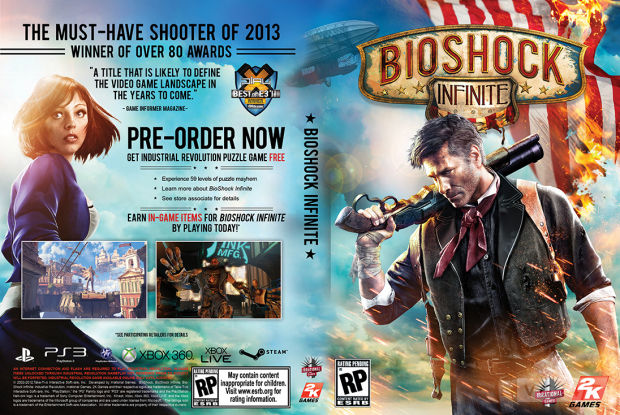
As I said, all of this makes me wonder what the point is. How long can gaming journalists and developers go without acknowledging that Anita Sarkeesian may not have all the answers? That men may face issues in games too? That putting Elizabeth on the back of the Bioshock Infinite box wasn't a big deal because she was only a supporting character?


It wasn't the first and it won't be the last but it was the only one singled out. As someone who has played Bioshock Infinite from beginning to end, the critics made a mountain out of a molehill. There was nothing so special about Elizabeth that she deserved a spot on the front cover any more than Emily in Dishonored, Kai in Heavenly Sword or Ashley Graham in Resident Evil 4.

I was going to write about controversy over the IGDA hosting a party with "inappropriate" dancers but ... I can't be bothered, so I'll keep it short. All I'll say is this is what they looked like:


Sounds to me like the IGDA just wanted to create a party atmosphere by putting on some entertainment that happened to feature dancing women. From the way it's been treated -- two people resigned (although one was leaving anyway) over the "inappropriate" "objectified" women -- people have been acting like strippers were giving lapdances. I've read people making the claim that it didn't belong in a professional setting, which sounds like an excuse to me. I can understand that being said about the ridiculous Adria Richards debacle (which I'm not explaining. Just Google "Donglegate") but this was entertainment put on by the International Game Developers Association. It was done by the professionals so the other professionals could enjoy themselves.

In a link to Eurogamer I posted above, in an article about Remember Me -- Capcom's upcoming sci-fi game starring a female protagonist -- they write about how the gaming industry won't mature if it isn't more accepting of female protagonists, which I agree with. Cliff Bleszinski also echoed David Cage's sentiment about the industry needing to "grow up". However, how on earth is our industry ever going to grow up if we take such an immature attitude towards (A) other people's opinions and (B) inoffensive entertainment at the Game Developers Conference? The games industry has much more basic and fundamental strides it needs to take if it wants to mature, never mind the ones where money is involved.

Rant over.

By the way, I'm not too pleased with any of my articles about Anita Sarkeesian. I feel like I've given a decent argument about her work but it's spread out over three blog posts. I'm not happy with it and I think all of the others I've linked to in this post have given better arguments than me. Particularly Kite Tales. As I said, it's my new favourite video on the subject. I still have more to say about Anita though ... and I hope her Damsels In Distress: Part 2 video gives me the material to write a better blog. I know I can do better.

As always, leave a comment below or write to me at themalesofgames@gmail.com

Thursday, 21 March 2013

Men are the Expendable Gender

Sorry I haven't updated for a while. I know I'm a slow updater anyway but I was sick all of last week.

It's a given that if a game developer needs some generic enemies to kill of in a game, men will be the ones to fill the role. Unless the game features monsters as the primary enemies, men are the ones who will be the main victims of the hero's gun-toting, sword-swinging adventure.

It's no secret why this is the case. If I may wear my Anita Sarkeesian historian hat for a moment, we're used to society portraying men in combat roles. In real life, men make up the majority of soldiers and the most hazardous jobs are performed predominately by men. In popular culture, we see men being gunned down by James Bond in movies, Jack Bauer on television and The Punisher in comic books, just to list a few examples. Of course, they occasionally fight a female villain or two but the average person they shoot or beat up is male. The standard enemies, usually without names and who only serve to provide token resistance for the hero, who quickly kills them to show off his/her abilities. It's so frequent and the audience is so used to seeing it by now that we don't bat an eyelid when they die. This is part of being expendable. The same goes for enemies in video games.

Right away, I'll say that this isn't necessarily a bad thing. I don't want it to sound like I'm crusading against violent games or even ones that predominately feature men as enemies. That attitude leads to things like the German version of Half-Life, which featured robots instead of marines (as well as no blood and doctors/security guards who sat down and shook their heads instead of dying). It's completely fine to use men as enemies in games. They're as good as anyone else, such as women, monsters, robots, etc.

The key words there are "as good as". The problem is when game developers go out of their way to portray violence against men as more acceptable than any other victim of it.

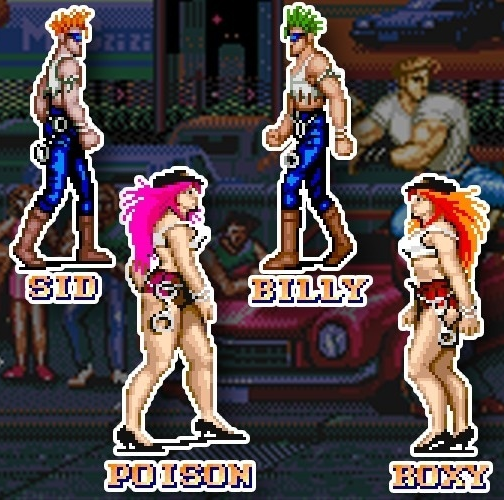
For example, back when the side-scrolling beat 'em up Final Fight was released in 1989, the Japanese version of the game featured two female enemies called Roxy and Poison. For the American release of the game, Roxy and Poison were removed from the game and replaced with two male punk characters called Sid and Billy, because "hitting women was considered rude". It was originally suggested that Roxy and Poison be considered male-to-female transsexuals -- this is how the famous confusion began over Poison's sex -- but supposedly, Capcom's developers figured that "wasn't enough" to deter critics of the two female enemies (wisely, in my opinion) so they replaced them entirely.


There's a site I found that has a good name for this trend; "Sidbillies". The writer of this article at ScrollBoss shows examples from other nineties' games like Sonic Blast Man, Ninja Warriors Again and Sunset Riders. The most interesting game mentioned, however, is Final Fight 2. The reason being that the second game in the Final Fight series had a playable female character, Maki. So it seems like the Final Fight series was embracing equality for the first time, having both heroic and villainous male and female characters ... but once again, the female enemies, Eliza and Mary, were removed in the American version and replaced with male ones, Robert and Leon.

In a way, this is actually worse than the German version of Half-Life replacing the marines with robots. That was done because someone determined that violence against human beings was completely wrong, so the human enemies were replaced with something non-human. It was ridiculous but morally, I can't fault them for it. The makers of Final Fight (and the other games listed on ScrollBoss) decided that violence against women was wrong ... but violence against men was completely fine, or at least more acceptable. It's one thing for this to be the case in the first Final Fight, where the three playable characters were all male, but it's quite another in the second, where one was female. You could justify having Sid and Billy in the first game if you were wary about encouraging male-on-female violence. The flipside to that, however, is because there's a female playable character in Final Fight 2 but there are no female enemies, Capcom are inadvertantly encouraging female-on-male violence. It makes me wonder why Maki was left in the game at all; is beating up men as a woman considered progressive in a way that men beating up women isn't?

Capcom aren't the only ones guilty of this and it certainly didn't die out with 2D games. Even though sprites are gone, so female characters can't simply be papered over with male ones, developers have come up with a much easier way of avoiding controversy; leaving out female enemies altogether. 

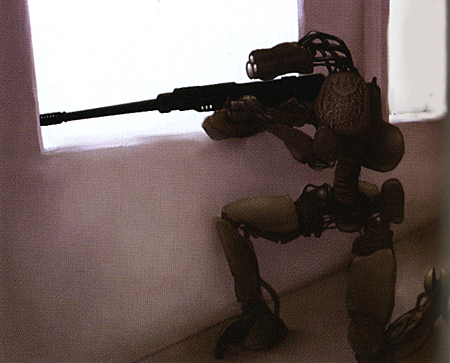
Lots of game developers seem to have (figuratively) taken their cues from Final Fight 2 by doing this. Back in one of my first blog posts, I said that the villainous Civil Protection in Half-Life 2 probably did feature women in its ranks but their voices were altered and their feminine physiques hidden underneath the Civil Protection’s bulky security outfits (or perhaps their bodies were altered too). However, this doesn't let Half-Life 2 off the hook because they still appear to be male to the audience, while the good guys -- resistance members -- feature both men and women in their ranks. During development, Valve apparently intended to make the Overwatch Sniper enemy female but, looking at the concept art, there's very little there that I could describe as "female". It looks very robotic, so there aren't many female qualities to be found. Unlike the Civil Protection in the final game, who still look human, act human and fall like human beings when they're killed.

An argument that I've heard both for and against female soldiers in games is about realism; people opposed to them argue that it'd be unrealistic because women only account for a small percentage of the military in real life (and only now in the US are being considered for combat roles). People in support of female soldiers in games point out that realism isn't really an issue when you're dealing with fiction, at least in a lot of games.

Personally, I think the realism argument doesn't make sense for either side when you think about games like Final Fight 2, Half-Life 2 or Final Fantasy VIII, which all featured female characters on the good side but only male characters on the evil one. Unless the developers of these games intended to make the villains out to be huge misogynists -- which they didn't -- there's no real reason for female characters to only be on the heroic side.

I would love to see more generic female soldiers and warriors in games, particularly on the opposing side. Because as it stands now -- and not just in the games mentioned above but Uncharted, Metal Gear Solid, Mercenaries, Tomb Raider and many, many others -- we're used to seeing men being killed. In all of those games, it's our objective to kill men, and only men (excluding the occasional boss). This is developers treating men as disposable and unimportant. So the realism argument falls flat when one side is single-sex and the other is co-ed. It's very unrealistic ... but it's also completely sexist because men are the only ones the player is meant to kill. That overshadows the realism argument.

Interestingly, Bethesda came up with another way to emphasise male disposability when making Fallout 3. One of the perks -- special abilities the player character could earn when levelling-up -- available to the player was to cause ten percent extra damage to characters of the opposite sex. However, because there were many, many more male enemies in Fallout 3 than female ones, the perk was a lot more useful if playing as a female character. It's minor but nevertheless puts a greater emphasis on killing men than women. As a result, two extra perks were added to Fallout: New Vegas to award the damage bonus against members of the same sex.

The Lady Killer and Black Widow perks.

Surprisingly, EA is one of the few developers I've seen with a decent split when it comes to the sexes of enemies in their games. Mass Effect, Dragon Age and Kingdoms Of Amalur: Reckoning all seemed to have a fair balance between male and female enemies (as well as aliens and monsters). Of course, Mass Effect heavily influenced the other two but they're all separate games nonetheless. They all serve to treat women the same as men.

There's an alternative to having an even split between male and female enemies; making everyone in the game only male or female. Surprisingly, it's not as crazy as it sounds. Starhawk only featured a single female character (who picked up a gun and joined the battle towards the end of the single-player mode, just like the men) but it worked for the setting; Starhawk was going for a "space western" theme and, given that most gunslingers were male, it suited the game. All the enemies seemed to be male too but they were just monstrous enough that it didn't really matter. Hunched over, with odd skin colours and bones that were on the outsides of their bodies. However, even though Starhawk managed to make it work, I wouldn't recommend it for every game. Although even that was better than emphasising male disposability with male enemies and mixed heroes.

Long story short, the idea that it's more acceptable to kill one sex over the other disturbs the hell out of me and I hope to see more female enemies in games in the future. This isn't a case of a lack of women in games anymore, as it was back in the days of Final Fight. Gaming has evolved to a point where women are in games now ... but developers are paranoid about making it the player's job to kill them in the same way they kill men.

To close, here's Lara Croft brutally killing men. Enjoy! 


Saturday, 9 March 2013

Damsels In Distress: Part 1 - Feminist Frequency Returns

Anita Sarkeesian posted the first video of her Tropes Versus Women in Games project, so let's get right to it:


A transcript is also available at the Feminist Frequency site. This video deals with damsels in distress in games that were released pre-2000 (with the exception of Star Fox Adventures). Part two will highlight examples up to the present-day.

I don't have as much to say about the video as I thought I would, partly because I've gone over some of her arguments before but also because I was never a Nintendo owner. I had an Amiga and then a Playstation when I was young. I did own an N64 but my Playstation was always my priority when it came to owning games. So I can't leap to the defence of Mario and Zelda -- Anita's two staples of this video -- as much as some others can and, obviously, I don't have $158,000 at my disposable to invest in the games Anita has. I'll do my best anyway.

First of all, Anita does seem to be making an effort to be more professional than she used to be. She goes into historical examples of the damsel in distress, from Perseus to the pulp magazines of the early-to-mid-1900's. It seems to be an attempt to give the video some gravitas and her argument more weight but personally, I thought it did more to hurt the argument; it shows how ingrained the damsel in distress plot device is in our society and how unlikely it is to change because of Anita's criticism.

Let's start with Anita's critique of the writing in these games. The impression I got from the video was that Anita shows either an unwillingness or inability to understand the time period she's discussing; she refers to the hero rescuing the damsel in distress as an "excuse plot" and "lazy justification". Some of my regular readers will recall that I've actually been over this before: 
"In the case of the damsel in distress, that's a trope that was used long before video games had writers, or at least writing as a main focus, and it was used as an excuse to put the main character on an adventure ...
Should these games be held to a different standard, just because they're old? Well, I'm not saying that but it's important to recognise that storytelling wasn't as important then as it is today and gameplay was everything."
Back then, I also said, "let's just say that these are my first impressions and what I hope Anita will end up putting in the video". She did, as it turns out. So these games did have excuse plots, as Anita says, but it was intentional because gameplay was the priority. There was never an issue with how women were portrayed either because they were unlikely to be scrutinised by mainstream critics without good cause, like the violence in Mortal Kombat.

I can't help but wonder if Anita will acknowledge the ways that games have improved. Annoyingly, I've written about this before too:
"It'd do the games listed a disservice if it wasn't mentioned that so many of them have gone to great lengths to eliminate damsels in distress from their games. Take Crash Bandicoot as an example. Tawna, Crash's girlfriend from the first game, is featured on Anita's Tumblr and it's also a classic case of primitive storytelling. The second game featured vastly superior writing, got rid of Tawna and added Crash's brainy little sister Coco to the roster too. In the third game, Coco became a playable character. Even Resident Evil has come along in leaps and bounds since Resident Evil 4, adding female co-op companions in 5 and 6 in place of Ashley Graham.

Speaking of which, I have a question: does having a damsel in distress in a game somehow negate the strong female characters? If Ashley Graham is a strike against the Resident Evil series, shouldn't Jill Valentine, Claire Redfield, Ada Wong and Rebecca Chambers all work in its favour? Isn't there some leeway given to games that have a
good record for female characters? Because the problem with the way Anita is framing this trope -- and all the tropes she intends to talk about -- is "damsels in distress = bad". That's a problem. It's an attitude that limits creativity and reduces the number of elements writers are allowed to use.

I want to stress again that these are just my first impressions. So we'll wait and see what Anita actually delivers in her first video and I'll have more to say on the subject then."
I don't wish to brag but I do seem to have a good handle on Anita's presentation. Sure enough, the damsels in distress video did feature brief clips of both Tawna from Crash Bandicoot and Ashley Graham. I think we'll have to wait until next time to hear more about Ashley though.

The one game that I want to focus on that Anita did mention, however, was Prince Of Persia. She criticised both the original 1989 game (which I owned on the Amiga) and the 3D remake on modern consoles for featuring the Sultan's Daughter as a damsel in distress. I can't help but wonder if she'll include the Sands Of Time series and the reboot. Can we expect to see the strong Farah, Kaileena and Elika being praised or does the damsel in distress of the original game overshadow those three? We'll probably have to wait until Anita's "good female characters" video(s).

Prince Of Persia comes up again later but before I get to that, I want to write a little about Dinosaur Planet, a game Anita discusses at the start of the video. As she describes it:
"The game was to star a 16 year old hero named Krystal as one of the two playable protagonists. She was tasked with traveling through time, fighting prehistoric monsters with her magical staff and saving the world. She was strong, she was capable and she was heroic."
Dinosaur Planet would go on to become Star Fox Adventures, the third game in the Star Fox series, and Krystal would go from being the heroine to being the damsel in distress. I can see how it would be frustrating to have a (possibly) strong female character taken away from you like that. However, I'd like to compare Anita's reaction to Krystal to her reaction to Super Mario Bros. 2, where Princess Peach was a playable character for the first time.

There are probably some people reading this, particularly Mario fans, who know that the version of Super Mario Bros. 2 released outside of Japan was actually a game called Yume Kōjō: Doki Doki Panic that was given an overhaul and turned into a Super Mario game for the West. The original characters were changed to Mario characters instead. Take a look at what Anita has to say about it: 
"However the Japanese game already had 4 playable characters, so the designers opted to include Toad and the Princess to fill the two remaining slots, building directly on top of the older pre-existing character models. So really, if we’re honest, Peach is kinda, accidently playable in this one.
Still, she had the awesome ability to float for short distances, which came in really handy especially in the ice levels."
So Anita praises Peach's abilities in this game but dismisses her because she's "kinda accidentally playable in this one", as it wasn't originally a Mario game.

Hold on though, couldn't you say the same thing about Krystal in Star Fox Adventures? She's "kinda accidentally a damsel in distress" because it wasn't originally a Star Fox game? After all, Dinosaur Planet was another game that was revamped into a different one with more name value. So shouldn't that one not count -- or not be as bad an offender -- because it was originally a different game entirely?

I don't think so. I think the logical thing to do would be to dislike Star Fox Adventures more and consider Krystal a worse example of a damsel in distress but be more grateful that Super Mario Bros. 2 made Princess Peach a tough and fun female character to play as. For some reason, however, Anita seems determined for Peach to maintain her status as a damsel in distress; even without the Super Mario Bros. 2 example, Anita dismisses her appearances in the Smash Bros. series because they're spin-offs. "Outside the core Super Mario titles", as she states. I don't understand why Anita does this. She practically begs for fewer damsels in distress but comes up with rather superficial reasons to dismiss the characters when they're taking action. Remember the no-win situation I wrote about last time? It's still there.

One thing that Anita doesn't seem to realise about Princess Peach that even I, as a non-Mario player, understand is that she established many of the tropes for damsels in distress -- in video games, at least -- and therefore being a damsel in distress is expected of her. Anita is a fan of TV Tropes, isn't she? So how has she never heard of the "Trope Codifier"? Someone (or something) that embodies many of the traits and characteristics of a particular trope. In this case, the damsel in distress. Yet in spite of Princess Peach actually being such a notable example, Anita would like her (and Zelda) to take on a role as an action star in her own right.

I know that doesn't sound so bad -- more strong female playable characters is a good thing, isn't it? -- but why Peach in particular? Why such a notable example of a damsel in distress? Why not create a character specifically for that purpose, like Lara Croft, Alyx Vance, etc, etc. than reappropriate Princess Peach?

Well, as I wrote in my quote above, the way Anita is framing this trope is "damsels in distress = bad". They have no place in Anita's ideal view of gaming. Personally, I disagree with this. I believe there's a place for damsels in distress -- both male and female -- in gaming and to want to eliminate it as a plot device entirely is a desire to clip the wings of creativity.

One final thing I'd like to point out about this first video is, of course, the treatment of men. When talking about Double Dragon at the end of the video, Anita says:
"The now iconic opening seconds of the 1987 beat-em up arcade game Double Dragon has Marian being punched in the stomach, throwen [sic] over the shoulder of a thug and carried away. In several versions her panties are clearly shown to the player while being abducted.
The game has been remade, re-released and ported to dozens of systems over the last 25 years, ensuring that Marian will continue to be battered and damseled for each new generation to enjoy. Most recently Double Dragon Neon in 2012 re-introduced new gamers to this repressive crap yet again, this time is full HD."
The problem is that earlier on in the video, Anita shows clips of several men who are captured at certain points during the game. I know she wrote to her Kickstarter backers that the "dude in distress" was something she wanted to cover in the damsel in distress videos but I sincerely hope that this wasn't it. We saw clips from Metal Gear Solid, the original Prince Of Persia, GoldenEye, The Legend Of Zelda: The Wind Waker, Star Fox Adventures and Metal Gear. For one thing, all of the examples Anita gave from those games involved the main character, so it'd make for a poor game if the hero had to sit around and wait for someone else to rescue them (which actually was an option in Metal Gear Solid; the Cyborg Ninja would come to Snake's rescue if the player was unable to escape. Since I could never get the "ketchup as blood" or "hide under the bed" tricks to work, it was also the option I always took).

In short, if Anita doesn't mention "dude in distress" examples that even I have been able to come up with, questions will be asked. I'm confident that she will, possibly in a third video, but she'll attempt to come up with justifications for them in a way that she doesn't for damsels in distress.

Anyway, on the subject of men who are in captivity, Anita has this to say:
"Let’s compare the damsel to the archetypal Hero Myth, in which the typically male character may occasionally also be harmed, incapacitated or briefly imprisoned at some point during their journey.

In these situations, the character relies on their intelligence, cunning, and skill to engineer their own escape — or, you know, just punching a hole in the prison wall works too. [Metal Gear reference]
The point is they are ultimately able to gain back their own freedom. In fact, that process of overcoming the ordeal is an important step in the protagonist’s transformation into a hero figure.

A Damsel’ed woman on the other hand is shown to be incapable of escaping the predicament on her own and then must wait for a savior to come and do it for her."
There are three points to be made about this: firstly, because Anita is using examples of main characters and comparing them to women who aren't main characters, it's false equivalence. The two can't be compared because the developers of the six games listed above wanted their prison escapes to be playable sections in the game. It would be closer to compare something like being arrested in Grand Theft Auto; "inescapable of escaping the predicament on [his] own and then must wait for a savior to come and do it for [him]" (who usually wasn't seen but in GTA: Vice City, we occasionally heard Tommy Vercetti's lawyer, Ken Rosenberg, pleading Tommy's innocence whenever he was arrested). That's a closer comparison and that's still using a main character. For that matter, the Metal Gear Solid heroes all needed help escaping too. There was the aforementioned Cyborg Ninja in MGS1, Olga Gurlukovich releasing Raiden from the torture device in MGS2 and The Sorrow giving Snake the radio frequency to open the door to his cell in MGS3. They were all helped, or had the option to be helped.

The second point is the way Anita ignores female heroes who use their intelligence, cunning and skill to engineer their own escape. In my last blog post, I linked to a video of Rubi Malone from Wet escaping torture. Her escape happened a bit too suddenly for my liking but still, it happened. She shows no weakness or fear while being tortured either. Final Fantasy X's Yuna would qualify here too, while held captive in the Via Infinito. She starts alone but can meet up with other imprisoned party members along the way. In spite of their help against regular enemies, Yuna fights the boss of the area on her own and is more than capable of defeating him.

It's frustrating that all of my examples come from games that were released post-2000 (with the exception of Metal Gear Solid) but I'll treat it the same way I did before Anita posted the first video; these are just my first impressions, so let's wait and see if Anita actually delivers what I think she will.

The third point is simply this; if Anita takes issue with Marian being battered at the beginning of Double Dragon, how can she show Snake from Metal Gear Solid, who received much worse while he was in captivity and consider it less of an issue just because he escapes on his own? Is it because Marian is innocent while Snake is battle-hardened? I could see how that would make a difference if Snake simply received a punch in the stomach too but the severity of his torture was so much worse too. Sorry but if violence against fictional women is a serious enough issue that Anita feels the need to refer to it as "repressive crap", shouldn't the same weight be given to games where fictional men are victims of violence?

And by the way, these guys are villains! Since when has it been wrong to show villainous people doing villainous things? The game makes it clear that violence against women is discouraged and the people doing it have no redeeming qualities whatsoever.

I've spent a long time writing this and probably forgotten as much as I've written. There are a few things that I wanted to write that I've either just plain forgotten or that we have to wait until Anita's second video to find out. So I suppose that'll do for now. I would like to say that I wish Anita would stop using terms like "patriarchy" and "male power fantasy". To me, terms like those always mean the same thing: "I've finished thinking". Anita's examples have always come across as rather biased in my opinion, so the least that she could do to make them more palatable is to express them with plain English and not terms that plenty of people question anyway. Because then, all she's doing is backing up questionable research with more questionable research and wading through the first level of nonsense, such as patriarchy, to get to the second, the actual videos is something that can turn people off.

I also didn't mention much about the money she earned from the Kickstarter. Well, it doesn't look like it made much of a difference to the video quality. There's a snazzy new intro but that's about it. I was hoping the $158,000 was for more than the games and to live off but I guess that wasn't the case. Other people will have more to say on the money than me (such as this entertaining write-up, which is more informal than mine but also more entertaining) but I do have one question; what on Earth did she need the original $6,000 for?

The final thing I'll leave you with before I go is one of Anita's videos that I only got around to watching very recently, about Twilight. It's only 1:21 long. See if you find it as condescending towards men as I do:


She basically treats men like children. She claims that the guys she spotlighted wanted Edward to be "physically abusive", which was not the case. They actually said they wanted him to be "badass". She wants you to hate Twilight for the reasons she hates it and not the reason that you hate it. Different opinions apparently aren't welcome in Sarkeesia. Which is probably why she disables the comments.

According to gaming sites around the time of the Kickstarter, this is the woman we should've been supporting. We should've been decrying the sexism against women and supporting Anita's brand of sexism against men.

I wonder if there's more of that to come in future videos.

Saturday, 2 March 2013

Good Female Characters

Even though I spend a lot of my time agonising over the treatment and portrayal of male characters in video games, they're not the only ones who get the short end of the stick. There are lots of very strong, interesting and intelligent female characters in games. Lots of them. However, they're often dismissed because of the way they look, the way they're dressed or simply because they're not in a game made by Valve.

By now, I'm sure you know that Aliens: Colonial Marines wasn't well-received. Well, last week on Gamespot, writer Carolyn Petit posted an article of hers, "Fear of a Woman Warrior", that, among other things, criticised Aliens: Colonial Marines for adding female multiplayer characters late in development:
"First, there's the ill-fated Aliens: Colonial Marines. A Reddit post, picked up and reported on by Kotaku, indicated that female marines, rather than being part of the game from the earliest stages of development, were a last-minute feature request. Let that sink in for a second. Female marines were a feature request, a special addition, a change made to the game at the last minute. This is difficult for me to wrap my head around. During Colonial Marines' development, people working on the game declared their abiding reverence for the film Aliens. It's hard for me to believe in this reverence, not just because the game ultimately failed to deliver an experience worthy of the Aliens name on any level, but because any reasonable understanding and appreciation of what made Aliens a great film acknowledges the important role of women in it. Women are not hard to come by in the film. In fact, they're pretty damn important. One might even say that they're the equals of their male counterparts. Crazy, I know! The notion of a vision of the Aliens universe without women in it seems like about as major a betrayal of the source material as I can imagine.
And yet, somehow, for years and years, development on Aliens: Colonial Marines progressed, apparently without anyone stopping to say, 'Hey. You know how there are women in Aliens? Remember Vasquez, the tough-as-nails marine? Remember Ferro, the dropship pilot who says, "We're in the pipe, five by five"? Remember how Sigourney Weaver was the star of all the Alien movies? Well, I just had this crazy thought. What if we put some women…in the game?!'
Women should not be an afterthought in an Aliens game."
The funny thing about this is that I already knew female marines were added to Aliens: Colonial Marines late in development and not because of a Reddit post, which was then reported on Kotaku. I knew about it because last July, Gamespot posted news about the fan petition to include female multiplayer characters in Aliens: CM. So how on earth did it take Carolyn this long and another website to learn about it when it was posted on her very own site, eight months ago?

That's besides the point though. For all of the failings of Gearbox Software, the developer of Aliens: Colonial Marines, adding female characters is not one of them. Ideally, yes, they would've had enough intelligence to realise the significance of women in the Alien series and added them early on, but they didn't. When it came to their attention that they'd dropped the ball, however, they went out of their way to add them. And yet even that effort is criticised in articles like this one. Why? They should be praised for listening to the fans and correcting their mistake, not criticised for the original error.


It isn't just the female characters in Aliens: Colonial Marines that suffer. Appearance is one of the major deciding factors for the critics about whether a female character is good or bad. In Carolyn's article, she praises Lara Croft and Samus for being two examples of female characters from highly successful franchises, only to dismiss them for their sex appeal just two paragraphs later. Or at least their sex appeal being used as a reward players/to advertise the game (which I find highly hypocritical, considering Gamespot has adverts for affiliate sites at the foot of the article, advertising features like "The 20 Hottest Daughters From The Sports World" and "Hottest WAG of Each NFL Team". Apparently, criticising female video game characters for their sex appeal is fine but Gamespot'll be damned if it's going to refuse to objectify real women to gain money from referrals!).

Lara Croft is a particularly strong example of this, much like the Aliens: Colonial Marines one. This is a character who, for years, has been held up as a (if not the) prime example of objectification in video games. In some circles, her appearance would be more important than the games she starred in. So when Crystal Dynamic made the effort to revamp her appearance, giving her a more realistic figure, it would presumably be well-received, wouldn't it? Not the case, at least for Tomb Raider. After the game was displayed at E3, she was immediately faced with criticisms such as "she suffers sexual assault" and "she makes orgasm noises when hurt". Neither of which are true, of course; it's the critics seeing what they want to see. It was the same with Aliens: Colonial Marines; if Gearbox Software leave out female marines, they're blamed for leaving out female marines. If they include female marines, they're blamed for not having them in the first place.

What feminist critics of the gaming industry, such as Carolyn Petit, are doing is creating a no-win situation. I don't want to spend too much longer on Carolyn's article but she goes on to write about a man I'm not familiar with called Ryan Creighton:
"In a blog entry posted on Gamasutra last month, Ryan Creighton, a designer on Spellirium, confessed that his game is dominated by white male characters 'for fear of someone calling me out for my non-white or non-male character being stereotypical, offensive, or - at the absolute worst - outright racist or sexist.'
"The world of writing and designing games is tremendously male-dominated; sadly, this absurd fear of creating complex, human women who star in games is not limited to Creighton, but is a widespread problem."
Carolyn criticises Ryan Creighton's decision to leave out non-white and non-male characters, calling it "an absurd fear" but given that she just wrote an entire article about the pitfalls of creating female characters -- criticising some of the examples that fall into them -- how is it absurd in the slightest? At some point, game developers like Ryan Creighton just ask "why bother?" and don't add female characters at all because women like Carolyn Petit have created a no-win situation. And we're going to see a lot more attitudes like Ryan Creighton's in the future if feminist gamers don't start appreciating that the entire industry is bending over backwards to make them feel welcome and all they're doing is throwing it back in the industry's face. They're biting the hand that feeds them, so developers will naturally start doing what's sensible and avoid female characters altogether because they don't want to navigate the minefield of getting female characters "right". As a result, female characters are the ones who are going to suffer, as feminist critics can't appreciate the good qualities of the characters that they're given.

That's enough about the article but certainly not the end of the good female characters. Let's talk about Soul Calibur because there's no shortage of good female characters there. Yet nobody ever praises Talim, Xianghua, Seung Mina, Hilde, Amy, Cassandra and (at a push) Tira because they're too busy criticising the breast sizes of Ivy, Taki and Sophitia. Three great characters, all dismissed by feminist critics because of the way they look. It baffles me that women would do that, since they're judging other women on their looks far, far more harshly than any male gamer ever would. They're the ones seeing them as sex objects to get rid of rather than interesting characters to keep. The same applies to the Dead Or Alive series, albeit to a lesser extent; the women are the poster girls for the series and the men receive far less recognition. However, the makers of Dead Or Alive have also made no effort to hide the titillating aspects of the series, with titles like Dead Or Alive: Extreme Beach Volleyball under their belts.

Women in fighting games in general tend to be given the "they're objectified, so they're no good" dismissive attitude. I'm going to take a moment to discuss the double-edged sword that comes with a phrase like that; male characters who are judged on their appearance aren't taken seriously. I think being a female character who is dismissed because of her appearance is much worse, however, because there are so many great ones out there who don't receive the recognition they deserve because of their outfit or breast size.

Take Tekken as an example. For Tekken Tag Tournament 2, Namco Bandai offered a swimsuit alternate costume for every character in the game as a pre-order bonus (and later through a free update). They did provide swimsuit costumes for both male and female characters, interestingly -- here's the trailer, if you want some examples -- but what surprised me was the differences between swimsuits for different male characters. Attractive, muscular male characters, like ninety percent of the Tekken cast, are given the skimpy fundoshi outfit (which you can see a real-life version of here, if you don't mind seeing a man's behind). Then there are the characters like Wang, Dr. Bosconovitch, Bob and Ganryu; old or overweight. Unattractive, in other words. They're given old-fashioned beachwear that completely covers their entire body, like the kind seen on this TV Tropes page.

As surprising as it might sound, I was actually mildly offended that they'd do something like that. The Ganryu outfit, in particular, is confusing, since he only wears a sumo mawashi for his regular costume anyway. It was the costume for Bob that irritated me though, in no small part because Tekken Tag 2 added Slim Bob; a thin version of the normally-overweight Bob. He first appeared in Bob's Tekken 6 ending and was added as a playable character in TTT2.

You can customise each character's appearance in Tekken Tag Tournament 2 and Slim Bob, like most of the other male characters, has an option to be shirtless. Regular Bob doesn't. As mentioned above, Slim Bob has a fundoshi swimsuit costume, like all the other attractive male characters. Regular Bob doesn't. Slim Bob even has an outfit reminiscent of Lee Chaolan's bondage outfit (which I've featured on this blog before), as it has a similar emphasis on his perfectly-sculpted abs:


Call me picky but I can't help feeling that there's something ... unjust about giving a thin version of a fat character some alluring costumes and not giving the fat version the same treatment. So for all the talk from feminist critics that male characters are a lot more varied than female ones, that's true but they also face the barbed treatment of being judged on their looks. Attractive men are given outfits to emphasise their physical attractiveness, unattractive ones are given a sheet to put over their hideousness, essentially. Maybe this is all just a personal gripe I have with Tekken.

Would I like to see more varied female characters in video games? Yes. Does that mean game developers are doing something wrong right now? No. They could just be doing things more right, if that makes sense (although I certainly will say that Gearbox Software messed up by not giving female characters a larger role in Aliens: Colonial Marines from the start). So I recommend feminist video game critics stop judging characters like Soul Calibur's Ivy based on their looks because they're only hurting female characters in general. We could certainly use a few more characters like the wonderful Mitsuko from Bloody Roar but that doesn't mean we need fewer Ivys. If appearance was taken out of the equation, I think feminist critics would be a lot more appreciative of how many great female characters there really are and how judging them on their appearance is actually very petty. Hell, even Nariko from Heavenly Sword has faced criticism for her appearance and the most skin she shows is her midriff. Small-chested, no shots of her rear, no sexual dialogue ... and yet I've still seen her turn up on lists of sexualised female characters, presumably by people who've never played the game. Although if you've read anything I've written on Heavenly Sword before, you'll understand why I don't consider her a great female character.

And that's before we get to the great female characters who don't face this kind of dismissive criticism. Chell from Portal. Jade from Beyond Good And Evil. Jennifer Mui from Mercenaries. Mona Sax from Max Payne. Elena Fisher from Uncharted. Alyx Vance from Half-Life. Zelda. Jill Valentine and Claire Redfield from Resident Evil. Almost every female Final Fantasy character.

A lot of these characters aren't given the recognition they deserve because they're overshadowed by talk of how video games feature nothing but women with big boobs and a tendency to get kidnapped. Not only do I think that does a disservice to the developers who worked so hard on these characters, I think it does a disservice to the characters. If great female characters are truly what you want in games, feminist critics, try to realise it when you have them. Understand that being sexually attractive doesn't negate the other qualities of a character and -- it's been said before but never hurts to hear it again -- male video game characters are sexually appealing too. Not because it's a "male power fantasy", which is an eye-rolling explanation I hear batted around far too often nowadays, but because traits given to our male heroes, whether muscular and square-jawed or androgynous with perfect hair, look appropriate to gamers in the West or Japan, depending on the game.

And if you're looking for more great female characters, Awesome Lady Tropes has you covered.

As always, feel free to leave a comment or send me an e-mail at themalesofgames@gmail.com.